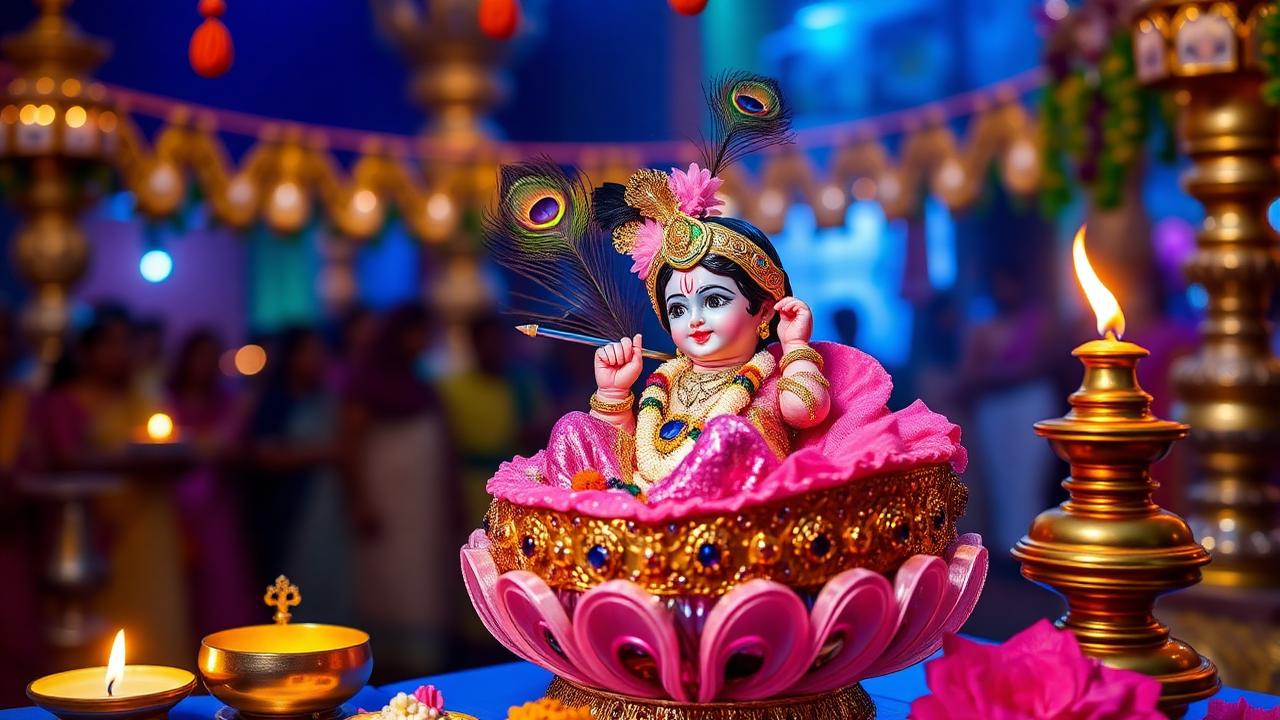
Why Krishna Has 108 Sacred Names - Not Just One
When Krishna walked the earth, He played 64 different roles in His mortal lifetime - son, brother, friend, lover, husband, charioteer, teacher, statesman, warrior, philosopher. No single name could capture all of Him.
The Padma Purana, Bhagavata Purana, and the Gopal Sahasranama collectively name Him 1008 names. Of these, 108 are the most sacred - known as the Krishna Ashtottara Shatanamavali (108 Holy Names of Krishna). These 108 are the ones recited at every Krishna temple, every Janmashtami, every dawn at every Vaishnava home.
The number 108 is not arbitrary in Sanatan Dharma:
- 12 zodiac signs × 9 planets = 108
- 27 lunar mansions × 4 quarters each = 108
- 108 marma points (vital energy centers) in the human body
- 108 Upanishads in the complete Vedic canon
- 108 mukhi rudraksha - the rarest and most powerful bead
- Distance from Earth to Sun = 108 × Sun's diameter (and to Moon = 108 × Moon's diameter)
When you chant Krishna's 108 names with a 108-bead mala, you are aligning with cosmic mathematics itself.
Each name unlocks a specific blessing:
- Some names (like Govinda, Gopal) bring divine protection of cows, family, livelihood
- Some (like Madhava, Madhusudana) destroy enemies and removers of suffering
- Some (like Hrishikesh, Yogeshwara) awaken inner consciousness and meditation
- Some (like Devakinandana, Yashodanandana) invoke Krishna's family love and warmth
- Some (like Murari, Mukunda) directly grant moksha
The Brahma Vaivarta Purana declares: 'Krishna naam ka jap, ek baar bhi shuddha bhaav se kiya jaaye, toh paap-koti haran karta hai.' (Even one chant of Krishna's name with sincere devotion destroys crores of sins.) Imagine the power when you chant ALL 108 names in sequence.
🙏 The Vandnaa App's 108 Names module includes audio of each name in Sanskrit pronunciation, English translation, and a guided 108-jap mode where the app counts your repetitions automatically.
Complete List of 108 Names of Lord Krishna
Each name begins with Om and ends with Namah. Recite all 108 in one sitting, ideally with a 108-bead tulsi or rudraksha mala.
Names 1-27 (Family & Childhood Names): 1. Om Krishnaya Namah - The Dark One, The Attractive One 2. Om Kamalanathaya Namah - Lord of Lakshmi 3. Om Vasudevaya Namah - Son of Vasudeva 4. Om Sanatanaya Namah - The Eternal 5. Om Vasudevatmajaya Namah - Son of Vasudeva (alternate form) 6. Om Punyaya Namah - Embodiment of Virtue 7. Om Lila-manushavigrahaya Namah - Who Took Human Form for His Lila 8. Om Shrivatsakaustubhadharaya Namah - Wearer of Shrivatsa Mark and Kaustubh Gem 9. Om Yashodavatsalaya Namah - Beloved of Yashoda 10. Om Hari - The Remover of Sins 11. Om Chaturbhujatta-chakraasi-gada-shankha-aamburudaakaaraya Namah - He Who Holds Chakra, Sword, Mace, Conch, and Lotus in Four Arms 12. Om Devakinandanaya Namah - Joy of Devaki 13. Om Shrishaya Namah - Lord of Shri (Lakshmi) 14. Om Nandagopapriyatmajaya Namah - Beloved Son of Nanda Gopa 15. Om Yamuna-vega-samharine Namah - Restrainer of Yamuna's Speed 16. Om Balabhadrapriyanujaya Namah - Beloved Younger Brother of Balabhadra (Balarama) 17. Om Putana-jivita-haraya Namah - Slayer of Putana's Life 18. Om Shakatasura-bhanjanaya Namah - Breaker of Shakatasura 19. Om Nandavraja-jana-anandine Namah - Joy of People of Nanda's Vraja 20. Om Sachichidananda-vigrahaya Namah - Embodiment of Existence-Consciousness-Bliss 21. Om Navaneeta-vilipta-angaya Namah - Body Smeared with Butter 22. Om Navaneeta-natanaya Namah - Butter-Dancer 23. Om Anaghaya Namah - The Sinless One 24. Om Navajaladhara-shyamalaya Namah - Dark like a Fresh Rain Cloud 25. Om Vraja-anganabhushanaya Namah - Ornament of Vraja Women 26. Om Adhrushyaya Namah - Beyond Sight 27. Om Sahasraksaya Namah - Possessor of a Thousand Eyes
Names 28-54 (Vrindavan-Lila Names): 28. Om Pitavasase Namah - Wearer of Yellow Garments 29. Om Hari - Remover of Sufferings 30. Om Vanamaline Namah - Wearer of Forest-Flower Garland 31. Om Madhusudanaya Namah - Slayer of Demon Madhu 32. Om Govindaya Namah - Protector of Cows 33. Om Yadunandanaya Namah - Joy of Yadu Dynasty 34. Om Ravalalokana-priyaya Namah - Beloved of Radha 35. Om Ramaya Namah - Pleaser of All 36. Om Damodaraya Namah - One With a Rope Tied Around His Waist 37. Om Murare Namah - Slayer of Demon Mura 38. Om Yogeshwaraya Namah - Lord of Yoga 39. Om Yogi-jana-priyaya Namah - Beloved of Yogis 40. Om Achyutaya Namah - The Infallible 41. Om Pundarikaakshaya Namah - Lotus-Eyed 42. Om Ananta-shaayine Namah - Reposing on Ananta (Cosmic Serpent) 43. Om Gopalanaya Namah - The Cowherd 44. Om Shyamalalitaya Namah - Dark and Charming 45. Om Madhava-priyaya Namah - Beloved of Madhav 46. Om Naraharine Namah - Man-Lion (Narasimha aspect) 47. Om Manmathaya Namah - God of Love 48. Om Madhusudanaya Namah - Destroyer of Demon Madhu 49. Om Kanjalochanaya Namah - Lotus-Eyed 50. Om Sahasrajite Namah - Conqueror of Thousands 51. Om Bhuvanapaalakaya Namah - Protector of the World 52. Om Madhusudana-priyaya Namah - Beloved of Madhusudan 53. Om Yogi-rashine Namah - King of Yogis 54. Om Krishnaaya Namah - The Attractive One
Names 55-81 (Wisdom & Power Names): 55. Om Niranjanaya Namah - The Spotless 56. Om Akshay-vishnuye Namah - Eternal Vishnu 57. Om Avyaya-roopine Namah - Of Imperishable Form 58. Om Sanatanaya Namah - The Eternal 59. Om Sahasra-paataya Namah - Of a Thousand Feet 60. Om Sahasra-mukhaya Namah - Of a Thousand Faces 61. Om Sahasra-naamne Namah - Of a Thousand Names 62. Om Vishweshvaraya Namah - Lord of the Universe 63. Om Vishva-vandyaya Namah - Worshipped by All 64. Om Vishvamaya-vinashanaya Namah - Destroyer of World-Illusion 65. Om Anantaya Namah - The Infinite 66. Om Achintyaya Namah - Beyond Thought 67. Om Brahmane Namah - The Supreme Brahman 68. Om Brahmacharine Namah - The Celibate Student 69. Om Brahma-vidaya Namah - Knower of Brahma 70. Om Brahma-roopine Namah - Of Brahma's Form 71. Om Para-brahmane Namah - The Supreme Absolute 72. Om Parameshvaraya Namah - Supreme Lord 73. Om Para-shaktaye Namah - Of Supreme Power 74. Om Paramatmane Namah - The Supreme Soul 75. Om Adity-aaditaye Namah - Sun of Suns 76. Om Vasudevasutaaya Namah - Son of Vasudeva 77. Om Devarshaye Namah - Sage Among Devas 78. Om Aryaya Namah - The Noble One 79. Om Yashasvine Namah - Famous 80. Om Param-purushaaya Namah - The Supreme Person 81. Om Sat-ya-samkalpaaya Namah - Of Truthful Will
Names 82-108 (Mahabharata & Liberation Names): 82. Om Hiranya-rethase Namah - Of Golden Semen (cosmic creator) 83. Om Su-arnaaya Namah - Of Beautiful Limbs 84. Om Loka-aatmane Namah - Soul of the World 85. Om Loka-bhaavanaaya Namah - Creator of Worlds 86. Om Loka-aadhyakshaaya Namah - Overseer of Worlds 87. Om Loka-paalaaya Namah - Protector of Worlds 88. Om Loka-pitre Namah - Father of Worlds 89. Om Loka-pitamahaaya Namah - Grandfather of Worlds 90. Om Saraswataaya Namah - Source of Saraswati (knowledge) 91. Om Para-kalakshaaya Namah - Beyond Time 92. Om Adhokshajaaya Namah - Beyond the Senses 93. Om Akhaalmaaya Namah - Beyond All Forms 94. Om Vidhaatre Namah - The Ordainer 95. Om Punya-mukhyaaya Namah - Foremost in Virtue 96. Om Punyakaayaaya Namah - Of Virtuous Body 97. Om Punya-pradaaya Namah - Giver of Virtue 98. Om Yogeshvaraaya Namah - Lord of Yoga 99. Om Yoga-pataye Namah - Master of Yoga 100. Om Yoga-vide Namah - Knower of Yoga 101. Om Yoga-sandhayine Namah - Connector through Yoga 102. Om Mukundaaya Namah - Giver of Liberation 103. Om Madhuraaya Namah - The Sweet One 104. Om Yogiine Namah - The Eternal Yogi 105. Om Janardanaaya Namah - Punisher of Wicked Men 106. Om Vasishtaaya Namah - Of Sage Vasishta's Lineage 107. Om Vaarunijaaya Namah - Of Varuna's Origin 108. Om Govindaaya Namah - Protector of Cows (the closing salutation, said with greatest love)
End the recitation with: 'Iti Shri Krishna Ashtottara Shatanamavali Sampoornam. Sarvabhyo Bhagavate Krishnaaya Namah.' (Thus completes the 108 Names. Salutations to Lord Krishna who is everywhere.)
A full recitation takes about 12-15 minutes if done slowly, with a name on each bead of a 108-mala.
How to Chant the 108 Names - Complete Daily Vidhi
Best Time: Brahma Muhurat (4:00 AM – 5:30 AM) is ideal. Second-best: any time before 11 AM. Third option: between 6 PM and 8 PM. Avoid jap during Rahu Kaal each day.
Best Days: Daily is best. If you must pick one day, Wednesday (Krishna's day) and Ekadashi (Vishnu's day) are most powerful. Janmashtami is the day of maximum benefit (1 jap on Janmashtami = 108 jap on a normal day).
Best Direction: Face East (where the sun rises) or North (where Mount Meru stands).
Mala Selection:
- Tulsi mala (108 beads) - most recommended for Krishna; tulsi is sacred to Vishnu/Krishna
- Vaijayanti mala - Krishna's own beloved mala (red+yellow seeds), used in temples
- Kamal-gatta mala (lotus seeds) - for prosperity-focused jap
- Rudraksha mala - works but is more associated with Shiv; use only if tulsi unavailable
- Avoid: wood mala that is not tulsi, plastic mala, broken mala
The Day-by-Day Practice:
Step 1 - Pre-jap Preparation (5 minutes): Bathe (or wash face and hands at minimum). Wear clean yellow, white, or saffron clothes. Sit on a wool, silk, or kusha grass aasan (NEVER on bare floor - this leeches the energy). Place your mala in your right hand.
Step 2 - Light the Diya: A ghee or sesame-oil diya. Place fresh flowers (yellow marigold or white lotus preferred) and a tulsi leaf before Krishna's image.
Step 3 - Sankalp (1 minute): 'I, [name], on this [day], chant the 108 sacred names of Lord Krishna for the welfare of my family, removal of my sins, and awakening of my devotion. Krishnaaya Namah.'
Step 4 - Begin the 108-Name Recitation: Hold the mala between thumb and middle finger of your right hand. Cross the index finger DOES NOT touch the mala (index represents ego). Start with the 'meru' bead (the largest, closing bead) - but do not cross over it.
For each bead, say one name. Move to next bead with each name. From bead 1 to bead 108, you have completed one full mala - and the 108 names of Krishna.
Step 5 - At completion, do NOT cross the meru bead. Reverse direction by physically turning the mala. This rule preserves the energy.
Step 6 - Final Salutation (1 minute): 'Iti Shri Krishna Ashtottara Shatanamavali Sampoornam. Sarvabhyo Bhagavate Krishnaaya Namah.' Touch the mala to your forehead and place it back on its altar (never throw or place on the floor).
Step 7 - Brief Meditation (5-10 minutes): Close eyes. Visualize Krishna's form (preferably the Vrindavan-childhood image with flute). Feel His presence. Stay in silence.
Step 8 - Dedicate the Punya: Mentally offer the punya of this jap to: (a) your family's well-being, (b) your specific need or wish, (c) all sentient beings. This 'tripartite dedication' multiplies the punya 3x as per scripture.
Total time: 25-30 minutes daily for full vidhi. If you have only 15 minutes, do steps 1, 4, 6, 7 (skip preparation and meditation but never skip the actual jap).
Maintenance: Restring or clean the mala every 6 months (wipe with cow ghee + tulsi water). When a mala bead breaks, immediately replace it (do not continue with broken mala).
Exploring the Profound Meanings Behind Krishna's 108 Names
Each of Lord Krishna's 108 names is a compressed theology - a single Sanskrit word that encapsulates a divine attribute, a cosmic function, or a transcendent quality. Understanding even a few of these meanings transforms the act of chanting from repetition into meditation.
Govinda (गोविंद): From "Go" (cows/senses/earth/speech) + "Vinda" (one who finds/gives/protects). This is perhaps Krishna's most beloved name, carrying multiple layers: Protector of cows (the literal pastoral deity), one who nourishes the earth, and the master of the senses (Go also means "the senses" in Vedantic usage). When you call "Govinda," you invoke protection of all life - from the humblest animal to the subtlest perception.
Madhusudana (मधुसूदन): Slayer of the demon Madhu. But esoterically, "Madhu" means sweetness, intoxication, or attachment. Madhusudana is thus the one who destroys our intoxication with worldly sweetness - the divine force that cuts through maya. Chanting this name is particularly powerful when confronting attachment or addiction.
Achyuta (अच्युत): "The infallible, the immovable." This name asserts Krishna's absolute reliability - he who never falls, never fails, never abandons. In the Bhagavad Gita, Arjuna uses this name when addressing Krishna, invoking this quality of divine steadfastness at the moment of personal crisis. Chanting Achyuta during times of uncertainty calls upon the indestructible nature of divinity.
Vasudeva (वासुदेव): "Son of Vasudeva" (the literal meaning) but also - in Vedantic interpretation - "the all-pervading one" (from "Vasu" = abode, dwelling place + "Deva" = divine). This name signals Krishna's identity with the Brahman - not merely a historical person but the cosmic principle that dwells in all beings. The Vishnu Sahasranama begins with Vishvam, Vishnur, Vashatkaro, Bhutabhavya Bhavatprabhu, then Bhutakrit - and "Vasudeva" appears as name 332, connecting to the cosmic dwelling principle.
Murari (मुरारि): "Enemy of Mura (the demon)" - Mura was a multi-headed demon killed by Krishna. Esoterically, "Mura" relates to obscuration of the self by darkness. Murari is thus the destroyer of spiritual darkness, the one who removes the multiple heads of delusion that separate us from our true nature.
Parthasarathi (पार्थसारथी): "Charioteer of Partha (Arjuna)." This name encapsulates the entire Bhagavad Gita in one word - the Supreme taking the role of a servant (driver) to guide the human soul (Arjuna/Partha) through the battlefield of existence. The divine becomes the vehicle through which we navigate life's most difficult passages.
Shyamsundar (श्यामसुंदर): "Beautiful dark one." The dark complexion of Krishna represents the infinite sky, the vast ocean, the unfathomable depth of consciousness. True beauty is not the pale gold of ordinary light but the dark blue-black of infinite depth. This name teaches that the divine is most beautiful precisely where it transcends ordinary perception.
Understanding even 10-15 names deeply is more transformative than rushing through all 108. The Vandnaa app includes audio recitation of all 108 names with their meanings, so you can listen while commuting, cooking, or relaxing - making this profound vocabulary part of daily life.
Specific Benefits of Chanting Different Krishna Names
Hindu devotional tradition prescribes specific Krishna names for particular life situations. This is not superstition - it reflects the understanding that each divine name activates a distinct quality of consciousness in the chanter. Just as different mantras have different effects (Gayatri for intellect, Mahamrityunjaya for healing), different Krishna names address different needs.
For financial stability and prosperity: Chant "Govinda" and "Damodara" - these names connect Krishna to his role as nourisher and protector of life's necessities. 108 repetitions on Thursday morning are traditionally prescribed.
For removal of obstacles and enemies: "Keshava" (one with beautiful hair - but also, killer of the demon Keshi) and "Madhusudana" are specifically invoked for protection against obstacles, unseen adversaries, and legal disputes. The Vishnu Sahasranama commentary by Adi Shankaracharya specifically notes Keshava's power to destroy obstacles.
For marriage and relationships: "Gopala" (cowherd, beloved of the gopis) and "Madana Mohana" (enchanter of Madana/Cupid himself) are chanted by those seeking a suitable life partner or wishing to harmonize existing relationships. These names invoke Krishna's quality of unconditional love.
For academic success and mental clarity: "Murali" (flute-player) and "Jnana Gamya" (attainable through knowledge) are chanted by students. The flute represents the purified ego-instrument through which divine music flows - the mind emptied of ego becomes a vessel for divine intelligence.
For protection of children: "Balagopal" (child Krishna) is invoked for the health, protection, and flourishing of children. Parents traditionally chant this name when children are ill or facing difficulties in school.
For spiritual liberation: "Achyuta," "Ananta" (limitless), and "Purushottama" (greatest of all beings) are the names for those on the path of moksha - dissolution of ego into the divine. These names are prominent in the Bhagavad Gita, the scripture of liberation.
For grief and loss: "Madhava" (lord of Lakshmi, lord of spring) and "Hari" (the remover) are chanted during grief. "Hari Om Tat Sat" is the classic utterance at the moment of death - Hari as the remover of the pain of separation.
For courage and strength: "Damodara" (one whose belly was bound by Yashoda) reminds the devotee that the Supreme is accessible to love, not force. Paradoxically, the remembrance of divine humility (the Lord bound by a mother's love) generates courage in devotees. Also: "Ranachura" (one who left the battlefield - referring to a specific episode where Krishna strategically retreated) - sometimes the divine teaches that wisdom is more powerful than force.
The Vandnaa app includes a curated Name Oracle feature - enter your current life situation and receive the corresponding Krishna name with its meaning and chanting instructions.
Complete Ritual for Chanting 108 Names of Krishna: Step-by-Step Guide
The 108 names of Krishna can be chanted as a standalone sadhana or incorporated into the broader Vishnu puja. The complete ritual takes 20-30 minutes and is traditionally performed on Thursday (Guruvar) morning, though it can be done daily.
Preparation: Set up your altar with a murti or image of Lord Krishna. Light a ghee lamp and a stick of sandalwood or rose incense. Offer fresh flowers - tulsi leaves are especially sacred to Vishnu/Krishna. Place a glass of water (which you will offer as Panchamrit or drink as prasad after). Sit on a clean mat or wooden seat, facing east or north.
Achamana (purification of the mouth and hands): Sip water three times while reciting: 1. "Om Achyutaya Namaha" - swallow 2. "Om Anantaya Namaha" - swallow 3. "Om Govindaya Namaha" - swallow
Touch your eyes, ears, nose, and heart with wet fingertips. This is the traditional purification before any Vishnu puja.
Sankalpa (intention-setting): Hold water in your cupped hands and state your sankalpa aloud: "I am taking the 108 names of Lord Krishna with the intention of [state your purpose - devotion, protection, healing, liberation]. May this offering be received by Lord Krishna." Pour the water at the base of the image.
Dhyana shloka (visualization): Before beginning the names, recite the Krishna dhyana shloka to establish the divine form in your mind. A common one: "Karpura Gauram Karunavtaram, Sansara Saram Bhujagendra Haram..."
Chanting the 108 Names: Use a mala (rosary) of 108 beads. Hold the mala with your right hand, using your middle finger and thumb (never the index finger, which is considered pointing, not receiving). Start from the bead next to the "Sumeru" (the large central bead). Move one bead per name, chanting each name with "Om [Name] Namaha." Upon completing the 108, do NOT cross the Sumeru - reverse direction to begin again if chanting multiple rounds.
Offerings after chanting: Offer akshata (uncooked rice mixed with kumkum) - take three pinches and offer at the feet of the image while saying "Govindaya Namaha." Light a camphor lamp and perform aarti while singing or reciting a short Krishnaarti. Conclude with a moment of silence in gratitude.
Weekly schedule suggestion:
- Monday: Chant for peace (focus on names like Shanta, Shantida)
- Tuesday: Skip (Tuesday is dedicated to Hanuman/Mars)
- Wednesday: Chant for communication and work success
- Thursday: Full ritual - Thursday is Krishna's primary day
- Friday: Chant for love and relationships (Madana Mohana focus)
- Saturday: Light chanting only
- Sunday: Chant for energy, vitality (Surya/Govinda connection)
The Vandnaa app provides audio of all 108 names with correct Sanskrit pronunciation, so you can chant along correctly even without knowing Sanskrit. Available offline once downloaded.
Integrating Krishna's Names Into Everyday Life Beyond Formal Puja
The greatest devotees of Krishna history records - Mirabai, Surdas, Tukaram - were not primarily ritualists. Their devotion permeated every waking moment. The ideal of bhakti yoga is not an hour of worship followed by an ordinary day, but a continuous undercurrent of divine remembrance that colors all activities with the presence of the beloved.
Krishna nama during daily activities: "Hare Krishna Hare Krishna, Krishna Krishna Hare Hare / Hare Rama Hare Rama, Rama Rama Hare Hare" - the Mahamantra - was specifically designed for kali yuga as a continuous, non-ritual chant requiring no special preparation, posture, or time. It can be chanted while cooking, walking, driving, or doing any mechanical task. The Chaitanya Mahaprabhu movement spread this understanding across India and the world: nama sankirtana (continuous name-chanting) as the primary spiritual practice for the modern age.
Name as response to daily events: Many Krishna devotees develop the habit of mentally invoking a specific name in response to life events. When food is beautiful - "Govinda." When a child laughs - "Balagopal." When work succeeds - "Jagannath." When facing fear - "Abhaya" (the fearless one). When confused - "Jnana Gamya" (attainable through knowledge). This practice gradually makes every moment a puja, every experience a conversation with the divine.
Writing japa (Likhita Japa): Writing Krishna's names in a notebook - "Shri Krishna Shri Krishna" repeated 108 or 1008 times - is a powerful practice for those whose minds wander during spoken japa. The physical act of writing slows the mind and deepens the impression. Many serious devotees maintain a dedicated japa notebook. Some keep count: 1 mala = 108 repetitions, with the goal of writing a lakh (100,000) of a specific name over weeks or months.
Name-sharing in conversation: Saying "Jai Shri Krishna" as a greeting, "Krishna Kripa" when thanking someone, or "Govinda Govinda" as an expression of wonder - these are ways the divine name lives in social interaction. In Gujarat and Maharashtra, "Jai Shri Krishna" has largely replaced "hello" among devotees. This embedding of the name in ordinary communication ensures that no hour passes without contact with the divine.
Night practice: Before sleep, recite mentally: "Achyuta Ananta Govinda" three times. According to Vishnu Purana, this practice cleanses the karma of the day and ensures peaceful, sattvic sleep. Many report that mantras recited just before sleep continue to resonate in the subconscious, creating a beneficial effect on dream states.
Name and breath: Advanced practitioners synchronize Krishna's names with the breath - "Go-" on the inhale, "-vinda" on the exhale; "Kri-" in, "-shna" out; "Ha-" in, "-ri" out. When this becomes natural, the remembrance of Krishna becomes as continuous as breathing itself. This is what the Gita means by "think of me at all times" (sarva-kaleshu mam anusmara).
The Vandnaa app features nama-chanting reminders throughout the day - a gentle bell and a Krishna name at configurable intervals, supporting the development of continuous remembrance as a daily practice.
The 108 names of Krishna are not a task to complete but a vocabulary to inhabit. As you chant more, you begin to see every quality the names describe - beauty, wisdom, playfulness, protection, transcendence - in the fabric of daily life. That recognition is the beginning of bhakti.
Common Questions From Devotees
Do I need to know Sanskrit to chant the 108 names of Krishna?+
No - sincere intention matters more than perfect pronunciation. Krishna Himself says in Bhagavad Gita 9.26: 'Whatever is offered with love, even a leaf, a flower, a fruit, or water, I accept.' Start with whatever transliteration you can manage - Roman script with Hindi script alongside is fine. Listen to the Vandnaa App's audio recitation 5 times before your first solo attempt. Within 30 days, your pronunciation will naturally improve. The energy of devotion (bhakti) is what reaches Krishna, not Sanskrit grammar. Even chanting just 11 names with full love is more powerful than chanting all 108 mechanically.
What if I miss a name or skip a bead during jap - does it ruin the punya?+
No - the punya is not ruined. If you realize mid-jap that you skipped a bead, simply chant the missed name (or any name with deeper sincerity) and continue. If you complete the full 108-mala but realize later that you skipped one or two names, chant 'Krishnaaya Namah' 11 times at the end as compensation - this is the standard scriptural correction. The only way to actually 'ruin' the jap is by being mentally absent (thinking of work, rotating mala while looking at phone, etc.). Better to chant 50 names with full presence than 108 names while distracted.
How long until I see results from chanting Krishna's 108 names daily?+
The Bhagavata Purana describes a clear timeline. Days 1-21: Internal calmness rises - anxiety naturally reduces. Days 22-40: Sleep quality improves dramatically; many people report fewer bad dreams. Days 41-90: External life situations begin shifting - blocked finances open up, strained relationships heal, opportunities appear. Months 4-6: A noticeable change in 'who you are as a person' - devotees report deeper patience, more discrimination between good and bad choices, instinctive avoidance of harmful situations. Year 1+: Spiritual transformation - direct experiences of Krishna in dreams, visions, or signs in waking life. The progression depends on consistency. Skipping even 2 days a week slows the timeline. Daily, without exception, accelerates it. The Vandnaa App's tracking helps maintain consistency.
Can children chant the 108 names of Krishna?+
Absolutely - and Krishna especially loves child devotees (He was a child Himself in Vrindavan). For children aged 5-10, start with just 11 names (the most familiar - Krishna, Govinda, Gopal, Madhusudana, Vasudeva, Nandalala, Yashoda-nandana, Murari, Hari, Mukunda, Damodara) repeated 11 times each. For 10-15 year olds, the full 108 once daily is appropriate. Make it joyful, not a chore - chant together as a family, sing with music, light a small diya. A child who grows up chanting Krishna's names develops natural calmness, sharper memory, and stronger immunity (per several Ayurvedic studies on children doing daily mantra jap). Some traditional families even time the start of formal jap to fall on a child's 8th birthday - symbolic of Krishna's age when many of His leelas began.
Is the Vishnu Sahasranama (1000 names) better than the 108 names of Krishna?+
Both are extraordinary, but they serve different purposes. Vishnu Sahasranama is a complete philosophical text - 1000 names that cover every aspect of Vishnu's cosmic role (creator, preserver, destroyer, beyond all). It is a single composition by Bhishma in the Mahabharata, takes 35-45 minutes to recite, and is best done weekly or on Ekadashi. Krishna Ashtottara Shatanamavali (108 names) is more personal and immediate - focused specifically on Krishna's leelas and approachable forms (the boy in Vrindavan, the friend of Arjuna, the protector of devotees). 12-15 minutes daily, perfect for ongoing devotional life. Recommended approach: chant the 108 names DAILY (your daily devotional anchor); chant Vishnu Sahasranama on EKADASHI (the deeper philosophical engagement). Together they create a complete Vaishnav practice.
About the author
Acharya Vinaya Kapoor · M.A. Sanskrit, Mantra & Stotra Studies
Acharya Vinaya holds an M.A. in Sanskrit from Banaras Hindu University and writes the mantra and stotra commentary on Vandnaa. Her focus is on accurate pronunciation, traditional context, and helping modern readers connect with classical texts.
Meet the Vandnaa editorial team →Explore on Vandnaa
Related Articles
Hare Krishna Maha Mantra – Lyrics, Meaning & Benefits
9 min read
Govardhan Puja 2026: Date, Annakut Bhog Vidhi, Krishna's Mountain-Lifting Katha & Mantras
11 min read
Krishna Janmashtami 2026: Date, Midnight Puja Vidhi, Mantras & Complete Vrat Guide
11 min read

Brahma Muhurat: What It Is, 11 Scientific Benefits & How to Wake Up at 4 AM Without Failure
9 min read