
What Pancha Mahabhuta Means & Why It Matters
Pancha Mahabhuta literally means 'the 5 great elements'. According to Hindu philosophy (Samkhya, Vaisheshika, and Ayurveda), the entire material universe - including your physical body - is made of just 5 fundamental elements:
- Prithvi (Earth) - solidity, structure, weight
- Apas/Jal (Water) - fluidity, cohesion, taste
- Agni/Tejas (Fire) - heat, transformation, light
- Vayu (Air) - movement, breath, touch
- Akasha (Ether/Space) - emptiness, sound, vibration
Each element has specific properties, governs specific body parts, and corresponds to specific senses:
| Element | Property | Body Part | Sense | Chakra | |---|---|---|---|---| | Prithvi | Solid | Bones, muscles, skin | Smell | Mooladhara | | Apas | Liquid | Blood, lymph, plasma | Taste | Swadhisthana | | Agni | Heat | Digestion, metabolism | Sight | Manipura | | Vayu | Gas | Breath, nervous system | Touch | Anahata | | Akasha | Space | Empty cavities, mind | Sound | Vishuddha (& above) |
When all 5 elements are balanced in your body, you experience: physical strength, emotional stability, mental clarity, spiritual openness. When even ONE is imbalanced, problems emerge in specific predictable patterns.
This concept is the foundation of:
- Ayurveda (entire system of Indian medicine - built on the 5 elements + 3 doshas which are combinations of these elements)
- Yoga (Asanas specifically work on different elements)
- Vastu Shastra (homes are designed to balance the 5 elements in space)
- Hindu temples (every temple has specific element-zones)
- Diet & cooking (Indian thali traditionally has 6 tastes which balance all 5 elements)
This blog covers each element in detail - its qualities, imbalance symptoms in your body and life, and how to balance each through diet, breath, and daily practice. By the end, you will be able to self-diagnose your elemental imbalance and start a balancing routine.
Each Element Detailed - Imbalance Symptoms & Balancing Methods
1. PRITHVI (Earth) - Solidity, Structure
- Imbalance - Excess: weight gain, lethargy, attachment to material possessions, stubbornness, depression
- Imbalance - Deficiency: weakness, brittle bones, instability, anxiety about basic needs
- Balance through:
- Foods: root vegetables (carrots, potatoes, beets), grains (rice, wheat), nuts and seeds
- Asanas: Mountain pose (Tadasana), Tree pose, Standing poses
- Mantra: 'Lam' (Mooladhara beej)
- Practice: Walk barefoot on grass/soil 15 min daily; gardening; physical labor
- Color to wear: Red, brown, earth tones
2. APAS / JAL (Water) - Fluidity, Emotion
- Imbalance - Excess: edema, heaviness, weeping, over-sentimentality, depression with crying
- Imbalance - Deficiency: dehydration, dry skin, emotional flatness, inability to feel
- Balance through:
- Foods: water-rich foods (cucumber, watermelon, coconut water), fruits, juices
- Asanas: Cobra, Pigeon, Hip-opening flows
- Mantra: 'Vam' (Swadhisthana beej)
- Practice: Spend 1 hour weekly near water (lake/river/ocean); take long baths; swim
- Color to wear: Blue, silver, white
3. AGNI / TEJAS (Fire) - Transformation, Will
- Imbalance - Excess: acidity, anger, ulcers, skin rashes, aggression, burnout
- Imbalance - Deficiency: poor digestion, cold body, lack of motivation, low confidence
- Balance through:
- Foods: spices (turmeric, ginger, cinnamon, cumin), warming foods (soups, kheer)
- Asanas: Boat pose, Warrior poses, Sun Salutations
- Mantra: 'Ram' (Manipura beej) - also 'Aditya Hridaya'
- Practice: Surya Arghya daily; sit in sun 15 min/day; eat by 7 PM (gives digestion time)
- Color to wear: Yellow, gold, orange
4. VAYU (Air) - Movement, Breath
- Imbalance - Excess: anxiety, racing thoughts, restless legs, gas/bloating, dryness
- Imbalance - Deficiency: stagnation, feeling 'stuck', breathing problems, low energy
- Balance through:
- Foods: cooked, warm, oily foods (avoid raw and dry); ghee in meals
- Asanas: Pranayama (Anulom Vilom, Bhastrika, Kapalabhati), gentle flows
- Mantra: 'Yam' (Anahata beej)
- Practice: Daily pranayama 15 min; avoid excessive travel; reduce screen time
- Color to wear: Green, sky blue, soft purple
5. AKASHA (Ether/Space) - Emptiness, Vibration
- Imbalance - Excess: scattered thoughts, dissociation, feeling 'spaced out', mental noise
- Imbalance - Deficiency: rigidity, inability to receive new ideas, claustrophobia, trapped feelings
- Balance through:
- Foods: light foods, fasting (especially on Ekadashi), pure water, herbal teas
- Asanas: Headstand (with caution), Lotus pose, seated meditation
- Mantra: 'Hum' (Vishuddha) and 'Aum' (Ajna/Sahasrara)
- Practice: 11-minute silent meditation daily; spend time in open spaces (parks, mountains, beach); declutter your home
- Color to wear: White, sky blue, violet
Diagnosing your dominant imbalance: Look at your symptoms. The 1-2 most prominent symptoms point to your imbalanced element. For most people, a single element is dominantly imbalanced (60-70%) while others are mildly off. Address the dominant first; others often correct as a result.
Pancha Mahabhuta in Yoga and Puja - How Ritual Works With the 5 Elements
Every element of Hindu puja directly engages one of the five elements (Pancha Mahabhuta). Understanding this transforms puja from a set of actions into a coherent system of elemental engagement.
How Puja Addresses All 5 Elements:
Prithvi (Earth):
- The clay diya (mitti ka diya) - made from earth
- Fruits and food offerings (naivedya) - grown from earth
- Flowers (pushpa) - the earth's expression of beauty
- The idol or murti itself (made from clay, stone, or metal - all earth forms)
- Physical bowing and prostration (your body touching the earth - Saashtanga pranam)
Jal (Water):
- Panchamrit (five liquids offered to the deity)
- Abhishek (bathing the deity)
- Gangajal sprinkled on worshippers
- Kalash (sacred pot of water) at every major puja
- Tarpan (water offering to ancestors)
Agni (Fire):
- The diya flame - fire element directly present
- Havan (fire sacrifice)
- Aarti (the moving lamp) - fire in motion, distributed to all
- Agarbatti (incense) - fire transforming material into subtlety
Vayu (Air):
- The shankha (conch) blown - creates a specific sound frequency that vibrates the air
- The temple bell (ghanta) - its sound vibrates air and drives away negative energies
- Fanning the deity with a chamara (yak-tail fan) in traditional puja
- The fragrance of incense carried on the air
Akasha (Space/Ether):
- The mantra - sound vibrates in space; the mantra fills the sacred space
- The temple or puja room itself - the sacred space created by intention
- Silence after mantra - the space between sounds
- The Bindu (the dot of the tilak) - represents akasha, the point of infinite potential
The Complete Offering (Shodashopachara - 16-Item Puja):
A complete puja traditionally uses 16 items (Shodashopachara) - a deliberate engagement of all 5 elements multiple times. When you see a temple priest performing an elaborate puja, he is systematically addressing each element in a prescribed sequence to create a balanced, complete engagement.
In Yoga (Pancha Mahabhuta Asana Practice):
Yoga asanas are categorized by which elements they primarily engage:
- Earth asanas: Grounded standing poses (Tadasana, Warrior series) - stability, weight-bearing
- Water asanas: Flowing, fluid sequences (Surya Namaskar flow, vinyasa) - adaptability, release
- Fire asanas: Core-activating, heat-building (Navasana, Kapalbhati pranayama)
- Air asanas: Backbends, chest-opening (Ustrasana, Chakrasana) - expansion, breath
- Space asanas: Savasana, meditation - stillness, receptivity
Vandnaa App's Yoga and Puja sections explain how each practice relates to the Pancha Mahabhuta - so your morning yoga and evening puja form a complementary pair.
5-Element Meditation (Bhuta Shuddhi): The Complete Practice

Bhuta Shuddhi (elemental purification) is a meditation practice from Tantric yoga that systematically purifies and balances all 5 elements within the body. It is practiced before major pujas and can be a standalone meditation.
The 5-Element Zones in the Body:
According to Tantric anatomy, the 5 elements reside in specific body regions:
- Prithvi (Earth): Muladhara chakra - base of spine, the perineum, the solid structures
- Jal (Water): Svadhisthana chakra - lower abdomen, reproductive organs, fluid systems
- Agni (Fire): Manipura chakra - solar plexus, digestive fire, metabolic energy
- Vayu (Air): Anahata chakra - heart center, lungs, the breath
- Akasha (Space): Vishuddha chakra - throat, the voice, the inner space
The Bhuta Shuddhi Practice (15 minutes):
Preparation: Sit in a clean, quiet space. Spine erect. Close your eyes.
Phase 1 - Earth Purification (3 minutes): Bring your awareness to the base of your spine. Imagine a square golden shape glowing at the Muladhara. With each inhale, feel your connection to the earth - the weight and support beneath you. With each exhale, release anxiety, instability, and fear. The mantra: "Lam" - silently repeat 21 times.
Phase 2 - Water Purification (3 minutes): Move awareness to the lower abdomen (below the navel). Imagine a crescent moon shape, silver-white, glowing here. With each breath, feel the flow of water in your body - blood, lymph, digestive juices. Release emotional blockages, rigidity, and attachment. Mantra: "Vam" - 21 times.
Phase 3 - Fire Purification (3 minutes): Awareness to the solar plexus (above the navel). A downward-pointing red triangle burning here. Feel the warmth of your digestive fire. Inhale and feel power, purpose, and will. Exhale and release anger, excessive ambition, and control. Mantra: "Ram" - 21 times.
Phase 4 - Air Purification (3 minutes): Awareness to the heart center. A six-pointed star shape in green/blue. Become aware of your breath - each inhale expanding the chest, each exhale softening the heart. Release grief, old love wounds, and isolation. Inhale compassion. Mantra: "Yam" - 21 times.
Phase 5 - Space Purification (3 minutes): Awareness to the throat. A circle of blue or purple light. Become aware of the space within your body - the hollow of the lungs, the space between heartbeats, the silence between thoughts. Rest in pure awareness. No mantra needed - just silence.
Closing: Sit for 2 minutes in silence. Slowly open your eyes. This practice can be done before morning puja to prepare the inner environment.
Vandnaa App's Meditation section has a 15-minute guided Bhuta Shuddhi audio in both Hindi and English with gentle music background.
Eating by the Elements: Ayurvedic Food Guide Based on Pancha Mahabhuta
Ayurveda is, at its foundation, a system of managing the 5 elements within the body through diet, lifestyle, and seasonal adjustments. Understanding which foods carry which elemental qualities gives you a practical daily framework.
Element-Food Correspondences:
Earth Foods (Prithvi): Characteristics: Heavy, dense, nourishing, slow-digesting Examples: Root vegetables (sweet potato, yam, beet), dairy (especially cheese and butter), rice, wheat Effect: Grounding, stabilizing, building mass and tissue Good for: Vata imbalance (anxiety, weight loss, instability) Excess causes: Heaviness, sluggishness, Kapha increase
Water Foods (Jal): Characteristics: Liquid, cooling, hydrating, flowing Examples: Coconut water, cucumber, watermelon, sweet fruits, yogurt, milk, soups Effect: Cooling, hydrating, anti-inflammatory Good for: Pitta imbalance (inflammation, anger, acidity, heat) Excess causes: Kapha increase, mucus, lethargy
Fire Foods (Agni): Characteristics: Heating, sharp, transforming, energizing Examples: Ginger, pepper, mustard, chili, garlic, onion, coffee, fermented foods Effect: Digestion-strengthening, warming, activating Good for: Vata and Kapha imbalance (slow digestion, cold, lethargy) Excess causes: Pitta increase (inflammation, anger, skin rash, acidity)
Air Foods (Vayu): Characteristics: Light, mobile, dry, cold Examples: Raw vegetables, beans (especially when undercooked), crackers, popcorn, dried fruits Effect: Lightening, activating, drying Good for: Kapha excess Excess causes: Vata increase (bloating, gas, anxiety, constipation)
Space Foods (Akasha): Characteristics: Subtle, expansive, minimal Examples: Water (the most space-like substance), mild herbal teas, fasting itself Effect: Creating inner space, reducing heaviness, purifying Good for: All types in excess; particularly for Kapha reduction
The Seasonal Element Diet:
Ayurveda recommends adjusting your diet seasonally to match the dominant external element:
- Summer: Reduce Fire foods (ginger, chili), increase Water foods (coconut, cucumber, cool fruits)
- Winter: Increase Earth and Fire foods (root vegetables, ghee, ginger), reduce Water and Air foods
- Monsoon: Reduce Water foods (the external water is already dominant), increase Fire foods (ginger tea, pepper) to prevent Kapha accumulation
- Autumn: Balance between Water and Earth foods; transition period
Puja Naivedya and Elements:
The traditional puja offering of 5 sweets or 5 fruits (Pancha Naivedya) is a symbolic offering of all 5 elements - each sweet or fruit corresponding to an element. Even prasad distribution is a form of elemental sharing.
Vandnaa App's Ayurveda & Yoga section includes daily elemental food recommendations based on your dosha type and the current season.
Pancha Mahabhuta in Your Home - Vastu Shastra's Elemental Logic
Vastu Shastra (the Hindu science of space) is fundamentally an application of Pancha Mahabhuta principles to architecture and home arrangement. Each direction of the home is associated with a dominant element, and placing the correct activities in each direction maintains elemental harmony.
The 5 Elements and Their Directions:
North-East (Ishanya) - Water: The most sacred corner of the home. Water element dominates here. This is why:
- Puja room should be in the North-East (water purifies; prayers flow like water)
- Water bodies (aquarium, small fountain) thrive here
- Meditation corner belongs here
- Keep this corner clean, open, and uncluttered - clutter in the water corner blocks spiritual and financial flow
South-East (Agneya) - Fire: The fire corner. Kitchen belongs here because:
- Fire used for cooking belongs in the fire zone
- East receives morning sunlight (activation energy for fire)
- Do NOT place bedroom in the South-East (fire energy disrupts sleep)
South-West (Nairitya) - Earth: The earth/weight corner - the most structurally stable direction. This is where:
- Master bedroom belongs (heaviest room, most grounding - earth supports rest)
- Heavy storage (almirahs, safes, lockers) belong
- The home's structural pillars and walls should be heaviest in this direction
North-West (Vayavya) - Air: The air corner. This direction rules:
- Guest room (guests come and go like wind)
- Dining area (food should circulate and be shared, like air)
- Garage (vehicles move, like air)
Center (Brahmasthana) - Space/Akasha: The central area of the home should be open, unbuilt, and ideally open to the sky (a courtyard in traditional Indian homes). This is the Akasha zone - the sacred space of the home where all elements meet.
Practical Vastu Element Fixes:
- Missing North-East water corner: Place a small pot of clean water (change every 3 days) or a small mirror in the North-East
- Kitchen in the wrong place: If the kitchen cannot move, place a small copper water vessel (representing the water element) in the North-East to compensate
- Heavy objects in the center (Brahmasthana): Remove pillars, heavy furniture, or clutter from the center of the home - this blocks the akasha zone's energy
Vandnaa App's Vastu Guide provides room-by-room elemental placement advice for the most common home layouts in India.
Healing and Balancing the Five Elements Within You
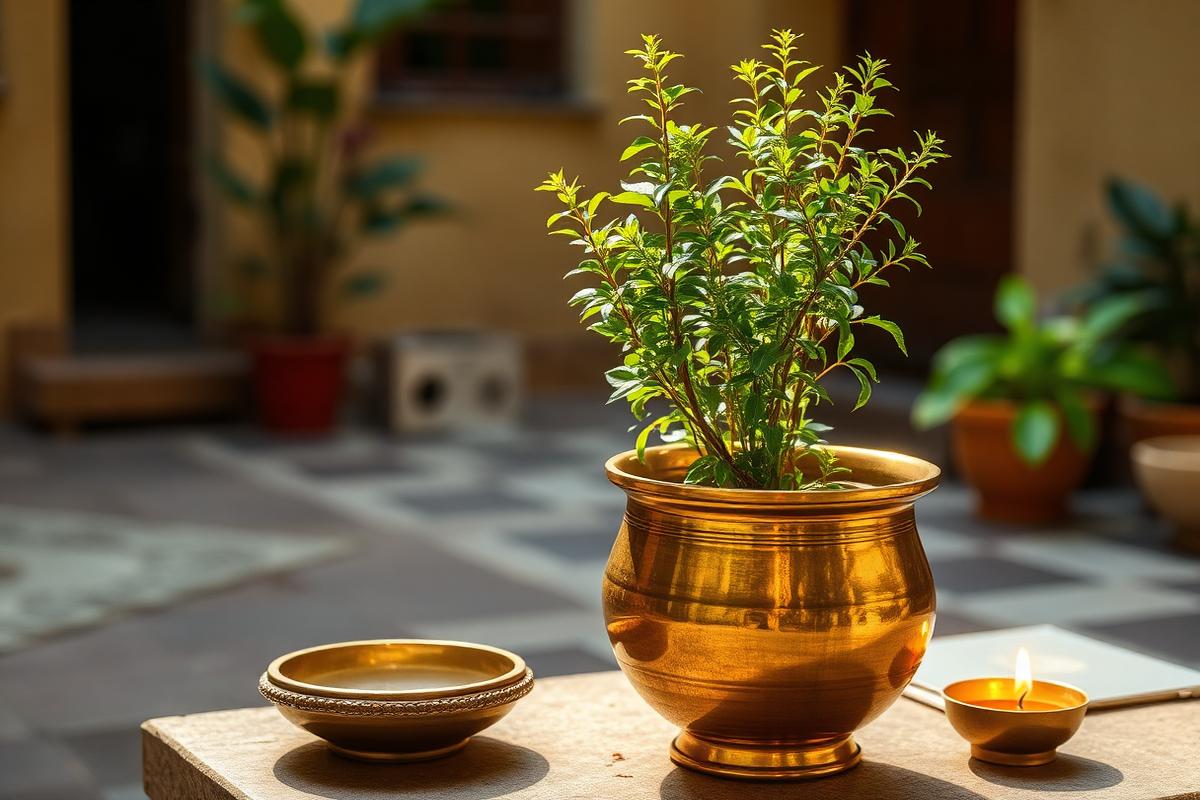
When the five elements fall out of balance within us, physical and emotional symptoms arise - and ancient wisdom traditions offer specific healing practices to restore harmony. Pancha Bhuta therapy is a cornerstone of both Ayurveda and yoga, addressing imbalances through element-specific interventions that go beyond diet into breath, movement, environment, and ritual.
Prithvi (Earth) Healing: When you feel anxious, ungrounded, or scattered, the earth element needs strengthening. Walk barefoot on grass or soil - this practice, known as "earthing" or grounding in modern wellness, is called prithvi sparsha in Sanskrit. Eat root vegetables, establish daily routines, and practice shavasana (corpse pose) deeply. Place your hands in soil - gardening is one of the most effective prithvi healing practices. The color yellow activates prithvi energy. In puja, offer turmeric and mustard seeds to deepen your connection.
Jal (Water) Healing: Emotional suppression, rigid thinking, and dehydration signal water imbalance. Immerse yourself in natural water - rivers, lakes, or the ocean - whenever possible. Practice flowing yoga styles (vinyasa). Consume water-rich fruits, coconut water, and clear broths. The mantra "Om Varuna Namah" honors the deity of water. Perform jal puja by offering water to the sun at dawn, mentally releasing what no longer serves you. The color white enhances jal energy.
Agni (Fire) Healing: Low energy, poor digestion, lack of motivation, or depression indicate diminished fire. Light a ghee lamp and gaze at the flame (trataka) - this stimulates the solar plexus chakra where agni resides. Eat warming spices - ginger, black pepper, cinnamon. Practice Surya Namaskar at sunrise. Perform havan or yagna, even a simplified home version with camphor. The color red and orange activate agni. Chant the Gayatri Mantra facing east at dawn - it specifically invokes solar fire energy.
Vayu (Air) Healing: Stagnation, heaviness, overthinking, and respiratory issues signal air imbalance. Pranayama is the primary vayu healing - alternate nostril breathing (Nadi Shodhana) and bellows breath (Bhastrika). Spend time outdoors in natural wind. Eat light, airy foods - leafy greens, sprouts. Practice dynamic movement like dancing or running. The color green enhances vayu. The Pavana mantra and Hanuman worship support air element healing.
Akasha (Space) Healing: Feeling constricted, lacking creativity, or overwhelmed by noise indicates space depletion. Create physical space - declutter your home. Spend time in silence, particularly in meditation. Chanting and sound healing (singing bowls, bells) expand akasha within. The color sky blue enhances this element. Simply sitting quietly in an open area - a rooftop, a meadow - is profound akasha healing.
The Vandnaa app provides guided elemental meditations and daily puja rituals for each mahabhuta, helping you identify your current imbalances and restore harmony through consistent spiritual practice.
Pancha Bhuta healing is not complicated - it begins with awareness. Notice which element feels depleted in your life right now, and apply even one practice consistently. Ancient seers designed these remedies from direct observation of nature's patterns, and they remain as effective today as they were thousands of years ago.
Common Questions From Devotees
How does Pancha Mahabhuta relate to Ayurveda's 3 doshas (Vata, Pitta, Kapha)?+
Direct relationship - doshas are combinations of elements. Vata = Air + Ether (movement and space). Pitta = Fire + Water (transformation and fluid). Kapha = Earth + Water (solidity and cohesion). Knowing your dominant element helps identify your dominant dosha automatically. If your fire is too high, you have excess Pitta. If your air is too high, you have excess Vata. If your earth is too high, you have excess Kapha. Most people have a 'prakriti' (natural constitution) where 1-2 doshas are dominant from birth, and a 'vikriti' (current state) where current imbalances differ. Both Pancha Mahabhuta and dosha analysis should be considered for full Ayurvedic understanding.
Can I be deficient in two elements at the same time?+
Yes, very common. Most people have one dominant imbalance and one or two secondary imbalances. Common combinations: (1) Excess Air + Deficient Earth (anxious, ungrounded - typical city professional), (2) Excess Fire + Deficient Water (irritable, dry skin - high-stress lifestyle), (3) Excess Earth + Deficient Air (lethargic, stuck - sedentary lifestyle), (4) Deficient Akasha + Excess Earth (rigid, materialistic - over-attached to physical world). For multiple imbalances: address the most dominant first for 21 days, then second for 21 days, then maintain. Trying to balance everything simultaneously is overwhelming. Sequential focus works better. The Vandnaa App's elemental diagnostic identifies your top 2 imbalances automatically.
How long does it take to balance an imbalanced element?+
Typical timeline: 21 days for noticeable shifts, 41 days for measurable change, 90 days for full transformation. Mild imbalances respond faster (2-3 weeks); severe imbalances take longer (3-6 months). Key to faster results: consistency. Daily practice of element-balancing diet + asana + mantra produces results in 21 days. Sporadic practice (twice a week) takes 3-4 months for the same shift. Most importantly: do not stop after seeing initial improvement. The full balance comes after 90 days. After that: maintain with reduced intensity (just 5-10 min daily) - the balance holds. Many devotees report life-changing results from a single dedicated 90-day elemental practice.
Are the 5 elements universal or just a Hindu concept?+
Universal - multiple ancient cultures arrived at similar 5-element systems. Hindu/Vedic = Earth, Water, Fire, Air, Ether. Chinese (Wu Xing) = Wood, Fire, Earth, Metal, Water (different elements but same systemic approach). Greek (Aristotle) = Earth, Water, Fire, Air, Aether. Buddhist (Mahabhuta in Pali) = same as Hindu. Tibetan = same plus space. Native American medicine wheel = 4 directions + center = 5 elements. The fact that diverse cultures independently developed 5-element cosmologies suggests these elements correspond to REAL aspects of nature that humans across the world observed. The Hindu Pancha Mahabhuta system is the most developed and integrated with medicine (Ayurveda), yoga, and Vastu - making it directly practical for modern life.
About the author
Pandit Ravindra Sharma · Vedic Rituals & Bhakti, 22+ years
Pandit Ravindra is the Vandnaa editorial team's resident specialist on aarti, chalisa, and daily devotion. He has performed home and temple pujas across Varanasi and Delhi for over two decades and contributes the bhakti-focused articles on this site.
Meet the Vandnaa editorial team →Explore on Vandnaa
Related Articles

7 Chakras Explained: Meaning, Mantras, Imbalance Symptoms & How to Balance Each
13 min read

Brahma Muhurat: What It Is, 11 Scientific Benefits & How to Wake Up at 4 AM Without Failure
9 min read

Vastu for Sleeping Direction: Which Side Should Your Head Face? (Complete 2026 Guide)
9 min read

Why We Offer Water to Surya: 7 Spiritual Reasons + 4 Scientific Findings & Daily Vidhi
10 min read