Who is Adi Lakshmi?
Among the eight forms of Ashta Lakshmi, Adi Lakshmi holds a special place as the first and original form. The word Adi means 'the beginning' or 'primordial', and this form is worshipped as the source form of the goddess, from which the other seven aspects of Lakshmi are said to flow.
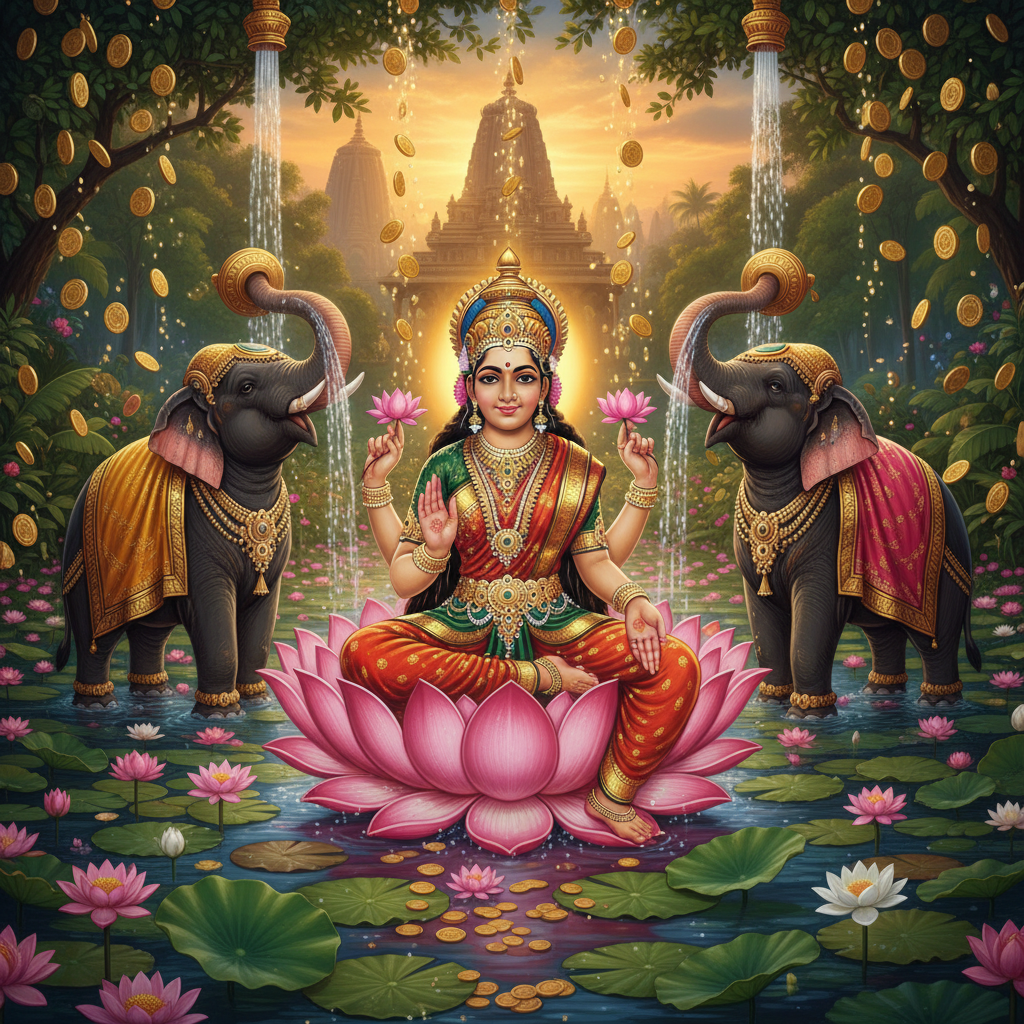
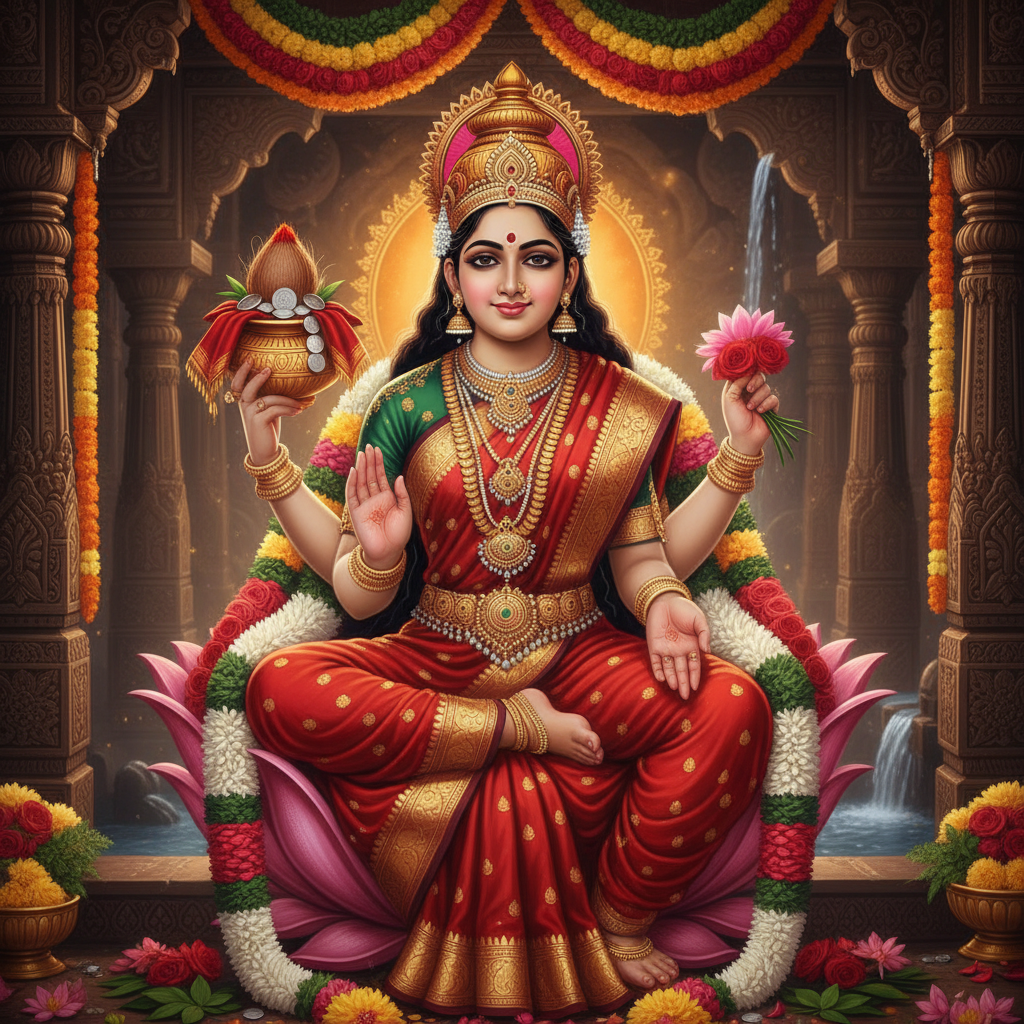
In temple sequences and the Ashtalakshmi Stotram, Adi Lakshmi is usually named first, honoured as the root of all abundance before devotees move on to grain, courage, victory and the other specific blessings. She is often depicted seated with a gentle, motherly countenance, radiating calm rather than the more dynamic imagery of forms like Gaja Lakshmi or Veera Lakshmi.
Scriptural and Devotional Context
Puranic tradition describes Lakshmi as the eternal consort of Lord Vishnu, present with him in every one of his incarnations - as Sita with Rama, as Rukmini and Radha with Krishna. Adi Lakshmi represents this eternal, unchanging aspect of the goddess that exists before and beyond any single form.
Devotees understand Adi Lakshmi as similar in spirit to Maha Lakshmi, the supreme form of the goddess described in texts like the Lakshmi Sahasranama and Sri Suktam. She is not tied to one specific gift like grain or victory, but is honoured simply as the mother of all creation and the origin of grace itself.
Significance of Worshipping the Original Form
Worshipping Adi Lakshmi first, before the other seven forms, carries deep symbolic meaning. It reminds the devotee that every blessing - wealth, grain, courage, knowledge - ultimately comes from one divine source. Before asking for specific gifts, devotees pay respect to the root itself.
This is similar to how many pujas begin with an invocation to Ganesha before any other deity is worshipped. Adi Lakshmi's place at the start of the Ashta Lakshmi sequence teaches humility and gratitude - the reminder that no single blessing stands alone, and that all abundance flows from the same motherly grace.
How Devotees Worship Adi Lakshmi
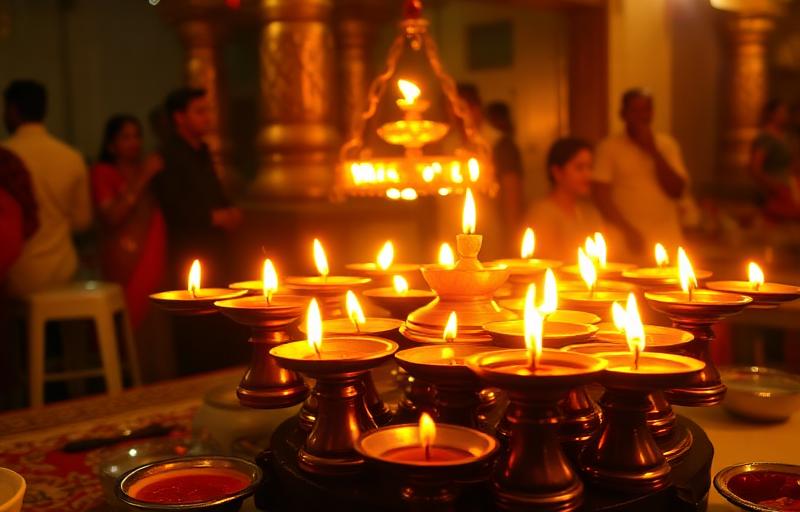
Devotees typically begin their Ashta Lakshmi worship with Adi Lakshmi, offering a lamp, fresh flowers and a simple prayer of gratitude before moving to the other seven forms. Chanting Om Shreem Mahalakshmyai Namaha while meditating on her calm, seated form is common.
Some devotees also recite the opening verse of the Ashtalakshmi Stotram, which honours her as worthy of praise from all beings and requests her eternal protection. The emphasis in this stage of worship is quiet reverence rather than asking for a specific outcome.
A Daily Reminder of the Source of Grace
For everyday devotion, Adi Lakshmi's significance lies in the reminder that gratitude should come before request. Before asking the goddess for wealth, health or success, a devotee pauses to acknowledge the source of all grace.
Keeping this spirit in daily life means beginning each day, or each act of worship, with simple thankfulness rather than a list of wants. As with all worship of the Divine Mother, this is an act of faith and love, not a transaction.
Reader Questions Answered
What does the name Adi Lakshmi mean?+
Adi means 'the beginning' or 'primordial'. Adi Lakshmi is worshipped as the first and original form of the goddess in the Ashta Lakshmi tradition, the source from which the other seven forms are said to flow.
Why is Adi Lakshmi worshipped first among the eight forms?+
Adi Lakshmi represents the root source of all abundance. Worshipping her first reminds devotees that every specific blessing ultimately comes from one divine source, encouraging gratitude before any request.
How is Adi Lakshmi different from Maha Lakshmi?+
Devotees often see Adi Lakshmi and Maha Lakshmi as closely related, both representing the supreme, original form of the goddess. In the Ashta Lakshmi tradition specifically, Adi Lakshmi is named as the first of the eight forms, honoured before the other seven specific blessings.
About the author
Pandit Mahesh Trivedi · Festival Traditions & Panchang
Pandit Mahesh leads the festival-date and Panchang content on Vandnaa. He cross-references multiple regional panchangs (Drik, Vaishnava, Bengali, Marathi) for every festival date published on the site.
Meet the Vandnaa editorial team →