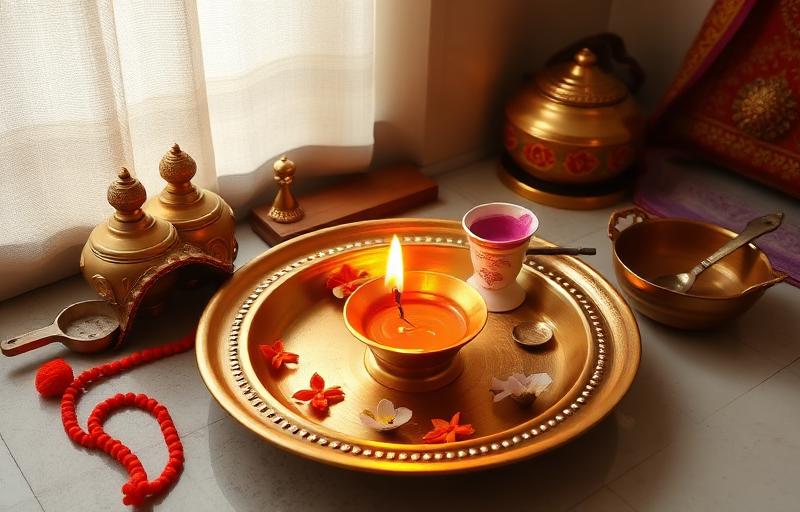
The Hill of Three Rivers
Amarkantak sits in Anuppur district of Madhya Pradesh, on the Maikal range at the point where the Vindhya and Satpura hills meet, at around a thousand metres.
What begins here:
- The Narmada, which rises at the Narmada Kund and flows west to the Arabian Sea
- The Son, which rises at Sonmuda a few kilometres away and flows east to join the Ganga
- The Johila, a smaller river which also rises nearby
What is at the town:
- The Narmada Kund, a walled tank enclosing the spring, surrounded by a compact group of temples
- A cluster of Kalachuri period temples of the tenth and eleventh centuries
- Sonmuda, the viewpoint at the source of the Son, at the edge of an escarpment
- Kapildhara and Dudhdhara, waterfalls on the young Narmada a short distance downstream
- Mai ki Bagiya, a grove associated with the goddess
- Ashrams, dharamshalas and a steady population of resident sadhus
What makes Amarkantak matter is simple geography given religious meaning. Two rivers that will end up in different seas, more than a thousand kilometres apart, start on the same hill and turn away from each other.
A place where that happens was never going to be treated as ordinary ground.
The Narmada Kund
The centre of Amarkantak is a tank, not a temple, and the arrangement around it is worth walking slowly.
What is there:
- A stone tank, walled and stepped, enclosing the spring from which the Narmada is held to rise
- Around twenty small temples ranged along and around the enclosure
- Shrines to Narmada herself, to Shiva, to Kartikeya, to Annapurna, to Durga, to Surya and to others
- Ghats where pilgrims bathe and offer
- A constant traffic of priests, sadhus, vendors and pilgrims in a very small space
What pilgrims do:
- Snan in the kund or at the ghats
- Puja at the Narmada shrine, with flowers, coconut and lamps
- Floating deepdaan, lamps set on leaf boats
- Parikrama of the kund itself
- Taking Narmada water home in a sealed vessel
A note on the water. The kund is a shallow enclosed tank in a busy pilgrimage town, and its water is not treated. Bathing is the practice, but do not drink from it, do not submerge your head, and do not bathe with an open wound. Devotion and waterborne infection are not in competition, and the second does not observe the first.
What the compression of the site does. Most great tirthas are large, and the sacred thing is at a distance, up a hill or behind a queue. At Amarkantak the source of one of India's great rivers is a tank you can walk around in three minutes.
That proximity is the point. A pilgrim can put a hand in the water that will eventually be a river a kilometre wide.
The River That Turned West
The Narmada does something no other major peninsular river does, and Amarkantak has a katha to explain it.
The geography first:
- Almost every large river of peninsular India flows east to the Bay of Bengal, including the Godavari, the Krishna, the Kaveri and the Mahanadi
- The Narmada flows west, through a rift valley between the Vindhyas and Satpuras, to the Arabian Sea
- The Son, rising on the same hill, goes east as expected
The katha as Amarkantak tells it:
- Narmada was to be married to Sonbhadra, the Son
- Her companion, the maid Johila, went ahead to see him, dressed in Narmada's ornaments
- Sonbhadra mistook her for the bride, or was taken with her, and the two were found together
- Narmada, humiliated, turned away and went west alone, and remained unmarried
- She is therefore called a kunwari river, and the tradition treats her as a virgin goddess
What the katha is doing. This is a story built to explain a landscape, which is one of the oldest functions of myth, and it does the job precisely. It accounts for the westward turn, for the Johila's separate course, and for the character devotees attribute to the river.
It also does something subtler. A river that goes alone, against the direction of every other river around her, is given a reason that makes the solitude a matter of dignity rather than accident.
Devotees of the Narmada speak of her with a particular protectiveness, and this katha is a large part of why.
The Narmada Parikrama
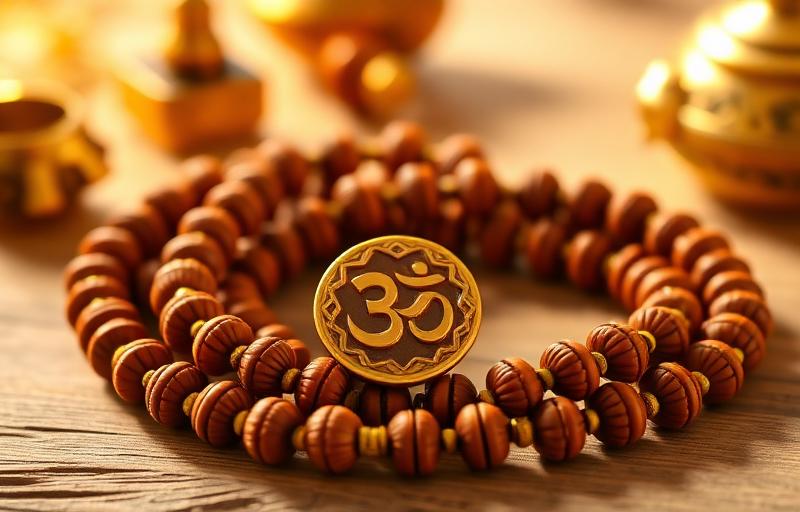
Amarkantak is one of the two ends of a pilgrimage that has no equivalent anywhere else in India.
What the parikrama is:
- The devotee walks the entire length of the Narmada on one bank, from source to sea, crosses, and returns along the other bank
- The full circuit is commonly given as around 2600 kilometres, and traditionally takes three years, three months and thirteen days
- It begins and ends at a chosen point, with Amarkantak and Omkareshwar the usual choices
- The rule is that the river is never crossed except at the permitted points, at the mouth and at the source
- Parikramavasis live on alms along the route, and villages on both banks have fed them for centuries
Why the Narmada in particular. Circumambulation of a deity or a shrine is ordinary practice. Circumambulating an entire river, along its whole length, is not, and the Narmada is the only major Indian river with an established tradition of it.
The reason is theological. The Narmada is regarded not as a river associated with a deity but as a goddess in her own form, present as the water itself. If she is the deity, then the correct devotional act is to walk around her, exactly as one would around an image.
The same logic produces the other Narmada practice worth knowing. Every stone taken from the riverbed is regarded as a shivalinga without needing consecration, and Narmadeshwar or bana lingas from this river are installed in home shrines across India.
A river that is herself divine turns her own bed into a quarry of lingas, and her own length into a circuit for pilgrims. Both practices follow from the same premise.
The Kalachuri Temples and the Falls
Amarkantak is not only a kund. There is older stone here, and it is easy to miss in the crowd around the tank.
The Kalachuri group:
- A cluster of temples of the tenth and eleventh centuries, from the period of Kalachuri authority in this region
- Built in stone, with the shikhara forms of the central Indian tradition
- Names in local use include the Karna Mandir and the Machhendranath temple, associated by tradition with the Kalachuri ruler Karnadeva
- They are compact, weathered and considerably older than the busier structures around the kund
They are worth finding. Most visitors to Amarkantak see the kund, buy prasad and leave, and never register that there are buildings here from before the Delhi Sultanate.
The waterfalls:
- Kapildhara, about six kilometres from the kund, where the young Narmada drops over a cliff in a single fall. The site is associated with the sage Kapila, and caves and ashrams stand nearby
- Dudhdhara, a short walk further down, a broader white fall named for its resemblance to milk
- The path down is steep and stepped, and the return climb is harder than the descent
Sonmuda:
- The source of the Son, at the edge of an escarpment with a long view over the plains below
- The contrast is the point. Stand here and the Son is heading for the Ganga and the Bay of Bengal. Walk back to the kund and the Narmada is heading for Gujarat and the Arabian Sea
Mai ki Bagiya, a grove of trees and flowers associated with the goddess, sits between them and is a quieter stop than anywhere near the tank.
Visiting Amarkantak
Getting there
- Amarkantak, Anuppur district, Madhya Pradesh, at around a thousand metres on the Maikal range
- Nearest railheads are Pendra Road in Chhattisgarh, roughly 35 km, and Anuppur
- Jabalpur is about 230 km and Bilaspur about 220 km, both with airports or major stations
- Road access is by hill roads, and the last stretch climbs
When to go
- October to March for clear weather and comfortable walking
- The monsoon, July to September, when the falls are at full volume and the hills are green, though roads and paths are difficult
- Narmada Jayanti, on the seventh day of the bright fortnight of Magha, the town's principal festival
- Mahashivratri and Amavasya days draw large numbers
What to see, in order
- The Narmada Kund and the temples around it, early morning before the crowds
- The Kalachuri temples, which most visitors walk past
- Sonmuda, for the escarpment view and the sense of the watershed
- Kapildhara and Dudhdhara, allowing time for the climb back
- Mai ki Bagiya
Practical notes
- Amarkantak is at altitude and gets genuinely cold from November to February. Carry warm clothing
- Accommodation is mostly dharamshalas, ashram guest houses and modest hotels. Book ahead around festivals
- Carry cash. Connectivity and card facilities are unreliable
- Wear proper shoes for the falls. The steps are steep and slippery when wet
- Do not drink the kund water, and take care at the falls, where rocks are slick and the drops are real
If you are starting a parikrama
- This is a serious undertaking of years, not a trek. Speak to the ashrams at Amarkantak, who have advised parikramavasis for generations
- Do not begin one on impulse or without arrangements for health, documents and contact with family
A closing thought. India has a great many holy rivers and a great many hills. Amarkantak is where you can stand between two rivers at the moment before they choose opposite sides of the subcontinent, which is a rarer thing to be able to do than any temple on it.
Frequently Asked Questions
Where is Amarkantak?+
In Anuppur district, Madhya Pradesh, at around a thousand metres on the Maikal range where the Vindhya and Satpura hills meet. Pendra Road in Chhattisgarh is the nearest railhead at roughly 35 km, with Jabalpur about 230 km and Bilaspur about 220 km away.
Which rivers rise at Amarkantak?+
The Narmada, which rises at the Narmada Kund and flows west to the Arabian Sea; the Son, which rises at Sonmuda and flows east to join the Ganga; and the Johila, a smaller river rising nearby. Two rivers ending in different seas begin on the same hill.
Why does the Narmada flow west?+
Geographically she flows through a rift valley between the Vindhyas and Satpuras. The katha at Amarkantak holds that she was to marry Sonbhadra, that her maid Johila went ahead wearing her ornaments and was mistaken for the bride, and that Narmada turned away and went west alone, remaining unmarried and called a kunwari river.
What is the Narmada Parikrama?+
Walking the entire length of the Narmada on one bank from source to sea, crossing, and returning along the other bank. The circuit is commonly given as around 2600 km and traditionally takes three years, three months and thirteen days. The river is never crossed except at the permitted points.
Why is every Narmada stone considered a shivalinga?+
Because the Narmada is regarded not as a river associated with a deity but as a goddess present in her own form as the water itself. Stones from her bed are held to need no consecration, and Narmadeshwar or bana lingas from this river are installed in home shrines across India.
What else should I see at Amarkantak?+
The Kalachuri temples of the tenth and eleventh centuries, which most visitors walk past; Sonmuda at the source of the Son; the Kapildhara and Dudhdhara falls on the young Narmada; and Mai ki Bagiya, a grove associated with the goddess. Allow time for the climb back up from the falls.
About the author
Pandit Ravindra Sharma · Vedic Rituals & Bhakti, 22+ years
Pandit Ravindra is the Vandnaa editorial team's resident specialist on aarti, chalisa, and daily devotion. He has performed home and temple pujas across Varanasi and Delhi for over two decades and contributes the bhakti-focused articles on this site.
Meet the Vandnaa editorial team →Explore on Vandnaa
Related Articles

Maa Narmada: The River Who Turned Back, and Why Every Stone in Her Is a Shivling
9 min read
Bhojpur: The Giant Linga in a Temple Nobody Finished
8 min read
Shesh Shaiya at Bandhavgarh: The Reclining Vishnu Inside a Tiger Reserve
8 min read
Asirgarh: The Fort Where Ashwatthama Is Said to Still Come
8 min read