Tallapaka
Tallapaka Annamacharya, called Annamayya, 1408 to 1503, is the first known composer of the kirtana in Telugu and the author of the largest devotional song corpus by any Indian poet.
His title: Pada Kavita Pitamaha, the grandfather of song poetry.
Where: Tallapaka, near Rajampet in Kadapa district, Andhra Pradesh.
His deity: Venkateswara of Tirumala, and nobody else, for ninety five years.
How he got there
The accounts say he went to Tirumala as a boy, walking up the hill, and that he composed his first sankirtana on the way, at the point where the shrine becomes visible.
That song, or one attributed to that moment, is Adivo Alladivo: there it is, over there, the hill of Hari, and it is still what people sing walking up.
He stayed. He became attached to the temple, was initiated into Sri Vaishnavism by Adi Van Satakopa Jeeyar of the Ahobila Matha, and composed for the rest of his life.
His family
All of them composed.
- His wife Timmakka, also Tirumalamma, who wrote Subhadra Kalyanam, generally identified as the earliest known work in Telugu by a woman
- A second wife, Akkalamma
- His son Pedda Tirumalacharya, who composed and who collected his father's work
- His grandson Chinna Tirumalacharya, who also composed and who wrote the biography of Annamacharya
So the corpus we have is a family project, assembled and preserved by the poet's son and grandson.
The scale
Thirty two thousand sankirtanas is the traditional figure, and unlike most such figures, this one is close to plausible.
Around 12,000 survive.
A song a day for most of ninety five years produces roughly that number, and the tradition says he made a vow to compose one a day and kept it.
The king
Saluva Narasimha Raya, ruler at Penukonda and later of the Vijayanagara throne, wanted him at court and wanted a song in his own praise.
Annamacharya refused. His position was that he composed for Venkateswara and for nobody else, and that praising a man in the terms reserved for the deity was not something he would do.
What the king did: had him imprisoned in chains.
What the accounts say happened: he sang, and the chains fell away.
What can be said historically: he refused royal patronage, at some personal cost, and did not compose the requested song. The king later became a devotee.
Compare Tyagaraja three and a half centuries later, refusing the Raja of Thanjavur with a song asking whether wealth is happiness. The pattern is old.
The Copper Plates
This is the best story in this entry and it is a story about archives.
What happened after he died
His son Pedda Tirumalacharya and later his grandson undertook to preserve the songs.
How they did it: they had them engraved on copper plates.
- Around 2,289 plates
- Engraved on both sides
- Around 13,000 sankirtanas recorded
- Deposited in a room in the Tirumala temple, adjacent to the sanctum
And then the room was sealed, and for reasons nobody now knows, it stayed sealed.
Four hundred years.
The temple continued. Millions of people came up the hill. The songs themselves largely dropped out of circulation, and Annamacharya became a name rather than a repertoire.
1922
The room was opened and the plates were found.
The discovery is credited to the work of Sadhu Subrahmanya Sastry, who was engaged in cataloguing temple records and who identified what the plates were.
What followed: the Tirumala Tirupati Devasthanams undertook the enormous job of transcribing, editing and publishing them, which took decades and produced the standard multi volume edition.
Around 12,000 songs came back into the world, having been out of it since the sixteenth century.
The problem with the plates
This is the honest part and it matters.
The plates carry the words. They do not carry the music.
Each song has its raga named at the top. Nothing else. No notation, no rhythm, no melodic detail.
Which means: the tunes Annamacharya composed are lost. Everything you hear today is a modern setting.
Who set them: musicians of the twentieth century, principally Nedunuri Krishnamurthy, Balakrishna Prasad, Rallapalli Ananthakrishna Sarma, and others, working from the named raga and the metre of the words.
And these settings are now what everybody knows. The famous versions of Brahmam Okkate, Nanati Bratuku, Adivo Alladivo, Bhavayami Gopalabalam and Ksheerabdhi Kanyakaku, including the M. S. Subbulakshmi recordings, are all twentieth century compositions to fifteenth century words.
Why say so. Because it is true, because the musicians who did it deserve the credit, and because it is an unusually clean example of a tradition being genuinely reconstructed rather than continuously transmitted.
A note on what survived and what did not
The copper plates preserved the words for four centuries in a sealed room, and the music, which was never written down, was gone.
That is a general fact about Indian music worth knowing: notation was rarely used, transmission was oral and personal, and when a line of teaching broke, what it carried was lost. Words on copper survive. Tunes in people do not.
Brahmam Okkate
The two categories
The corpus divides into two, and the division is explicit in the plates.
Adhyatma sankirtanas: spiritual songs. Devotion, philosophy, social criticism, the nature of the self, the impermanence of things.
Sringara sankirtanas: love songs, about Venkateswara and Alamelu Manga, also called Padmavati, his consort. They are erotic, they are often in the voice of the woman or of her companion, and they make up a very large portion of the whole.
The second category surprises people who come to him expecting only piety. It should not: the tradition of treating the relationship between deity and devotee, and between deity and consort, in the language of human love is old, continuous and central across the Alvars, the Gita Govinda, the Vaishnava padams and the whole bhakti field.
Brahmam Okkate
His most famous song, and one of the most direct statements on caste in Telugu.
What it says, in substance:
The supreme is one, the highest is one. The man who sleeps in a mansion and the man who sleeps on the bare ground have the same sleep. The one who has and the one who has not have the same hunger. The earth the brahmana walks on and the earth the outcaste walks on is the same earth. The same wind blows on both. The same sun. The same god has made both. Brahmam okkate: the supreme is one.
It is a series of comparisons, each pointing at something the two people share which is more fundamental than what separates them, and each is physical: sleep, hunger, the ground, the air, the sun.
And the refrain repeats the whole argument in three words.
The other songs everybody knows
- Adivo Alladivo: there it is, the hill of Hari, sung by people walking up to Tirumala
- Nanati Bratuku Natakamu: this life of ours is a play, and everything in it is a scene
- Bhavayami Gopalabalam: I contemplate the boy Gopala, in Yamuna Kalyani
- Ksheerabdhi Kanyakaku: a mangala harati, sung at the end of worship, especially at weddings and at Varalakshmi
- Jo Achyutananda: a lullaby to the child Krishna, sung in Telugu households to actual babies
- Muddugare Yashoda: Yashoda's child described as a series of jewels
- Vinaro Bhagyamu Vishnu Katha: listen, this is fortune
- Kondalalo Nelakonna: the one who dwells on the hills
- Sriman Narayana
- Podagantimayya: I have seen you
What his style is like
- Short, most of them: a pallavi and two to four charanams
- Simple Telugu, close to the spoken language, with proverbs and household idiom
- Concrete images: sleep, food, cloth, coins, doors, roads, animals
- Repetition as a structural device, particularly the refrain
- Singable by anybody, which is why they went into households
And the range is enormous because there are twelve thousand of them: lullabies, love songs, philosophical arguments, complaints, descriptions of the temple and the festivals, songs for particular days, and a great deal of social observation.
Tirumala
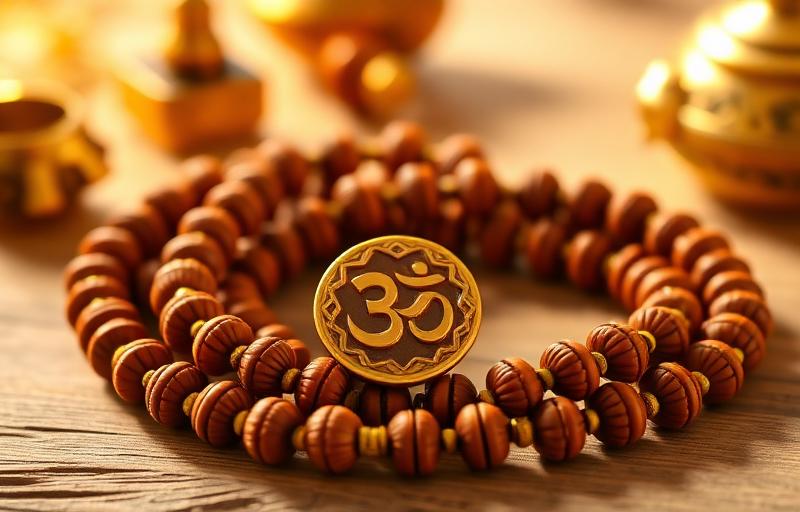
The place all of it is about.
Tirumala, in Tirupati district, Andhra Pradesh, is the hill shrine of Venkateswara, also Balaji and Srinivasa, and it is by most measures the most visited place of worship in the world.
Numbers: between fifty and a hundred thousand pilgrims on an ordinary day, several hundred thousand on a festival day, and tens of millions a year.
Why Annamacharya matters there: he is the temple's own poet. His songs are played on the hill, sung by the temple's own musicians, and taught by the Annamacharya Project of the Tirumala Tirupati Devasthanams, which was set up to make the recovered corpus singable and has been at it for decades.
Where to see him:
- The Sankirtana Bhandagaram, the room where the plates were kept, at the temple
- The plates themselves, in the TTD collection, with some on display
- Tallapaka, his village, near Rajampet in Kadapa district, with a memorial
- The Annamacharya Kalamandiram and related institutions at Tirupati
Annamacharya Jayanti: Vaishakha Shuddha Pournami, generally in May, observed with singing.
A practical note on Tirumala
Since this app is a devotional companion and people do go:
- Darshan is managed through a booking system and free and paid queues; check the official TTD channels rather than agents
- The walk up, the Alipiri steps, is around 3,500 steps and about nine kilometres, and takes most people four to six hours. Water and food are available on the route
- The tonsure, head shaving, is a common vow and is free at the temple's facilities
- Laddu prasadam is issued against the darshan ticket
- Avoid anybody offering to sell you faster darshan outside official channels. It is a recurring problem there and it is a scam
And the standing note this series makes: nobody should be charging you for access to a deity, for a blessing, or for a remedy. Temple entry and darshan are not commodities, and any person offering to arrange a special outcome for a fee is selling you something that is not theirs to sell.
What to Take From Him
One. A song a day for ninety five years.
The scale of the corpus is not the result of inspiration. It is the result of a daily commitment kept for most of a century, and the tradition is explicit that he vowed to compose one a day.
The transferable version: what produces a body of work is not the size of the individual effort. It is that the effort happened again the following day.
Two. Brahmam okkate.
The same sleep, the same hunger, the same ground, the same wind, the same sun.
It is an argument from the body, and it is the same move Chokhamela's wife Soyarabai makes in Marathi and Kanaka Dasa makes in Kannada and Devara Dasimayya makes in Kannada two centuries earlier.
Four traditions, four languages, the same argument: the distinctions you are enforcing do not go all the way down, and the things that do go all the way down are shared.
Three. He refused to praise the king.
He was imprisoned for it and did not compose the song.
The general form: he had decided in advance what his work was for, and the decision held under pressure because it had already been made.
Four. The plates.
Somebody in his family understood that what he had made would be lost unless it was put into a durable medium, and had twelve thousand songs cut into copper.
And it worked, across four hundred years and a sealed room.
And the corresponding loss: the music was not written down, so the music is gone, and everything sung today is a modern reconstruction.
Write down what matters. That is the whole lesson of this section and it applies to anything you know that nobody else does.
Five. Nanati bratuku natakamu.
This life is a play. Everything in it is a scene, everybody in it is playing a part, and none of the parts are the person.
It is a very old idea and he puts it in three verses of simple Telugu, and it is the kind of thing to keep for a day when something has gone badly.
A daily practice from this entry:
- Om Namo Venkatesaya, or Govinda Govinda, which is what people call out on the hill
- One sankirtana, listened to. Brahmam Okkate, Nanati Bratuku, or Ksheerabdhi Kanyakaku
- Jo Achyutananda if there is a baby in the house, since that is what it is for
- On Vaishakha Pournami, his jayanti
A closing thought
A boy walked up a hill in Andhra in the fifteenth century, saw the shrine come into view, and made a song about it, and then made one every day for the next ninety odd years.
His son and grandson had them cut into copper, two thousand two hundred and eighty nine plates of it, and put them in a room next to the sanctum, and the room was sealed.
For four hundred years millions of people walked past that wall on the way to see the deity those twelve thousand songs were about.
In 1922 somebody opened it.
The words were all there. The tunes were gone, because nobody had thought to write those down, and every version anybody sings today was composed in the last hundred years by musicians working backwards from a raga name at the top of a copper plate.
The Short Version
Who: Tallapaka Annamacharya, called Annamayya, 1408 to 1503, of Tallapaka near Rajampet in Kadapa district, Andhra Pradesh. The first known composer of the kirtana in Telugu and the author of the largest devotional song corpus by any Indian poet. His title is Pada Kavita Pitamaha, grandfather of song poetry.
His deity: Venkateswara of Tirumala, and nobody else, for ninety five years.
His family: his wife Timmakka wrote Subhadra Kalyanam, generally identified as the earliest known Telugu work by a woman. His son Pedda Tirumalacharya and grandson Chinna Tirumalacharya both composed, collected his work and wrote his biography.
The scale: 32,000 sankirtanas by tradition, which a song a day for ninety five years roughly produces. Around 12,000 survive.
The king: Saluva Narasimha Raya wanted a song in his own praise, Annamacharya refused on the ground that he composed for Venkateswara alone, and was imprisoned in chains for it.
The copper plates: his son and grandson had around 13,000 songs engraved on about 2,289 copper plates and deposited in a room at the Tirumala temple, which was sealed for four hundred years and opened in 1922. The plates carry the words and the raga name and no music, so all the tunes are lost and every version sung today is a twentieth century setting by musicians including Nedunuri Krishnamurthy and Balakrishna Prasad.
His famous songs: Brahmam Okkate, on the sameness of sleep, hunger, ground, wind and sun for the rich and the poor and the high born and the outcaste; Adivo Alladivo; Nanati Bratuku Natakamu; Bhavayami Gopalabalam; Ksheerabdhi Kanyakaku; Jo Achyutananda.
Jayanti: Vaishakha Shuddha Pournami, generally May.
What to keep: write down what matters, because the words on copper survived and the tunes in people did not.
Quick Answers
Who was Annamacharya?+
Tallapaka Annamacharya, called Annamayya, 1408 to 1503, of Tallapaka in Kadapa district, Andhra Pradesh. He is the first known composer of the kirtana form in Telugu and the author of the largest devotional song corpus by any Indian poet, with 32,000 sankirtanas by tradition and around 12,000 surviving. All of them are addressed to Venkateswara of Tirumala. His title is Pada Kavita Pitamaha, grandfather of song poetry.
What is the story of the copper plates?+
After his death, his son Pedda Tirumalacharya and grandson Chinna Tirumalacharya had around 13,000 of his songs engraved on about 2,289 copper plates, engraved on both sides, and deposited them in a room in the Tirumala temple next to the sanctum. The room was sealed and stayed sealed for four hundred years while millions of pilgrims walked past it. It was opened in 1922, and the discovery is credited to Sadhu Subrahmanya Sastry, who was cataloguing temple records. The Tirumala Tirupati Devasthanams then transcribed, edited and published them over decades.
Are the tunes we hear today Annamacharya's own?+
No. The copper plates carry the words and name the raga at the top of each song, and nothing else: no notation, no rhythm, no melodic detail. The tunes Annamacharya composed are lost. Everything sung today is a twentieth century setting by musicians working from the named raga and the metre of the words, principally Nedunuri Krishnamurthy, Balakrishna Prasad and Rallapalli Ananthakrishna Sarma. The famous versions of Brahmam Okkate, Nanati Bratuku and Ksheerabdhi Kanyakaku, including the M. S. Subbulakshmi recordings, are all modern compositions to fifteenth century words.
What does Brahmam Okkate say?+
That the supreme is one, and then a series of physical comparisons showing that what separates people does not go all the way down. The man who sleeps in a mansion and the man who sleeps on the bare ground have the same sleep. The one who has and the one who has not have the same hunger. The earth the brahmana walks on and the earth the outcaste walks on is the same earth. The same wind blows on both, the same sun, and the same god made both. It is one of the most direct statements on caste in Telugu, and the same argument from the body appears in Marathi in Soyarabai and in Kannada in Kanaka Dasa and Devara Dasimayya.
What are the sringara sankirtanas?+
Love songs about Venkateswara and his consort Alamelu Manga, also called Padmavati. They are erotic, often in the voice of the woman or of her companion, and they make up a very large portion of the surviving corpus, alongside the adhyatma sankirtanas which are the spiritual and philosophical songs. The division is explicit on the copper plates. Treating the relationship between deity and consort in the language of human love is old and central across Indian devotion, from the Alvars and the Gita Govinda through the whole bhakti field.
Why did Annamacharya refuse the king?+
Saluva Narasimha Raya, ruler at Penukonda and later of the Vijayanagara throne, wanted him at court and wanted a song in his own praise. Annamacharya's position was that he composed for Venkateswara and for nobody else, and that praising a man in the terms reserved for the deity was not something he would do. He was imprisoned in chains for the refusal, and the accounts say he sang and the chains fell away. What can be said historically is that he refused royal patronage at personal cost and did not compose the requested song, and the king later became a devotee.
About the author
Pandit Ravindra Sharma · Vedic Rituals & Bhakti, 22+ years
Pandit Ravindra is the Vandnaa editorial team's resident specialist on aarti, chalisa, and daily devotion. He has performed home and temple pujas across Varanasi and Delhi for over two decades and contributes the bhakti-focused articles on this site.
Meet the Vandnaa editorial team →