Annapurna Devi and Her Aarti
Annapurna is worshipped as a form of Parvati and the goddess of food and nourishment, depicted with a ladle and a bowl overflowing with grain. Her principal temple stands in Varanasi, right beside the Kashi Vishwanath temple, and tradition holds that even Lord Shiva himself once sought bhiksha, alms of food, from her.
This story carries a gentle teaching central to her worship: even renunciation and asceticism depend on nourishment, and food itself is treated as sacred, never to be taken for granted or wasted.
Her aarti is sung especially around Annapurna Jayanti, and in many households before or after the evening meal, as a simple act of gratitude for daily sustenance.
Annapurna Aarti - Representative Verses (Hindi)
Here are representative verses of the Annapurna Aarti in the traditional aarti style, offered as a devotional excerpt:
जय अन्नपूर्णा माता, जय जय जगदाता। भूखे को अन्न देकर, तृप्ति तुम्हीं से पाता॥ जय अन्नपूर्णा माता...
काशी नगरी वासा, शिव संग विराजे। भिक्षा तुमसे मांगे, स्वयं शंकर साजे॥ जय अन्नपूर्णा माता...
स्वर्ण थाल कर सोहे, अन्न भरी कटोरी। जो शरणागत आवे, ना रहे कभी थोड़ी॥ जय अन्नपूर्णा माता...
अन्न बिना ना जीवन, अन्न ब्रह्म समाना। तुमको अर्पित जीवन, करूं सदा गुणगाना॥ जय अन्नपूर्णा माता...
Meaning and Devotional Significance
The verse recalling Shiva seeking alms from Annapurna is one of the most cherished images in Kashi's devotional life. It suggests that even the greatest ascetic, who needs nothing of the world, still bows before the giver of food, showing that nourishment is not opposed to spirituality but foundational to it.
The line 'anna bina na jeevan, anna Brahm samana' (without food there is no life, food is akin to the divine itself) reflects the wider Hindu teaching that food, prepared and shared with reverence, is itself a form of worship. This is why devotees are encouraged to never waste food and to feed guests generously, treating hospitality as an extension of devotion to Annapurna.
Benefits of Singing Annapurna Aarti

As per tradition, devotees who sing the Annapurna Aarti with gratitude believe it brings:
- A household that never faces scarcity of food
- A deeper sense of gratitude at every meal
- Blessings for the kitchen and those who cook daily
- Grace in hospitality toward guests and the needy
- Reduced food wastage through mindful daily habits
- Overall prosperity and contentment within the home
These are held as matters of faith, best paired with the practical habit of sharing food and never letting it go to waste.
When and How to Sing This Aarti
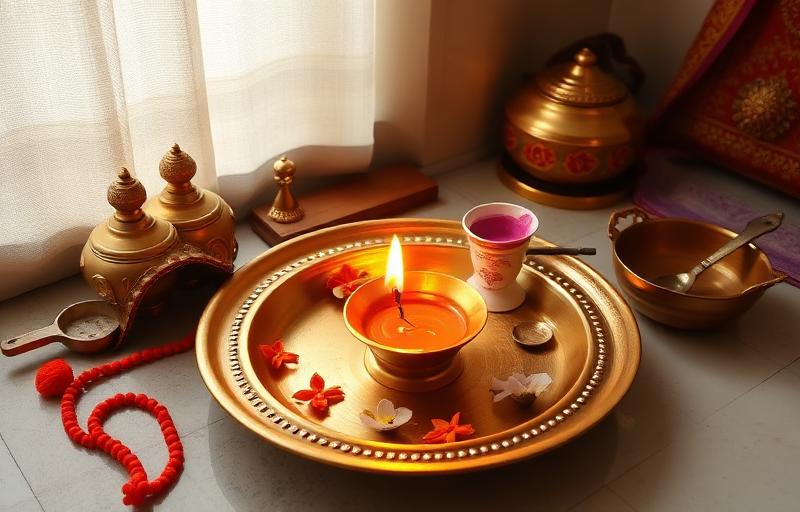
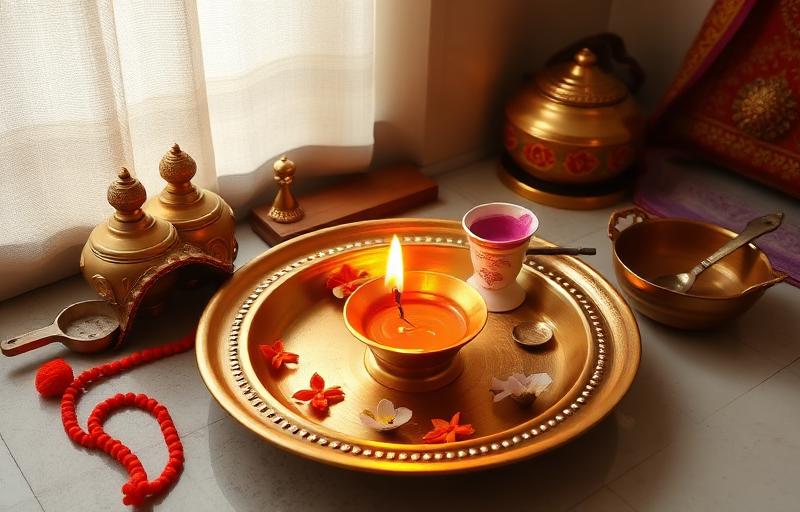
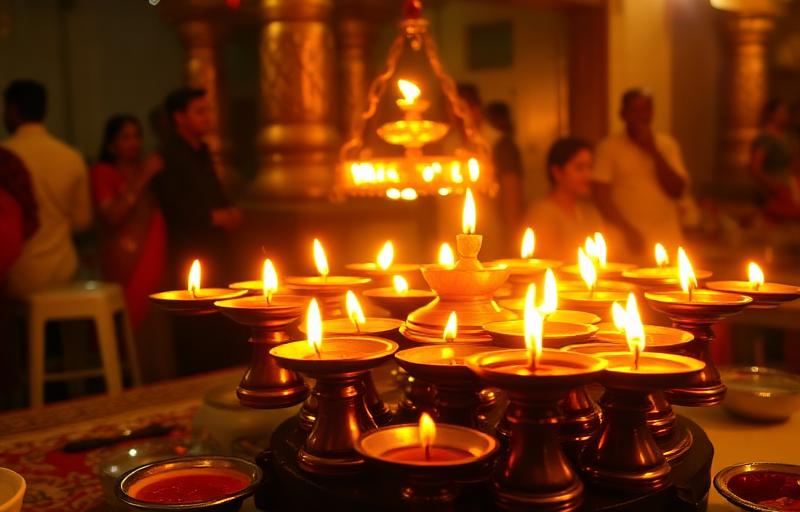
Annapurna Jayanti, observed on the Margashirsha Purnima, is her principal day of worship, when kitchens are cleaned, the first cooked food of the day is offered to her before the family eats, and the aarti is sung with a lit diya.
Many households also keep a simple daily habit: before the evening meal, offering silent thanks or singing a few lines of this aarti. As with all worship, this is an act of faith and gratitude, not a transaction, a way of remembering that daily food itself is a form of grace.
What People Ask Most
Where is the main Annapurna temple located?+
The principal Annapurna temple stands in Varanasi, right beside the Kashi Vishwanath temple, reflecting her close association with Lord Shiva in that sacred city.
What is the story of Shiva seeking alms from Annapurna?+
Tradition holds that Lord Shiva, the greatest ascetic, once sought bhiksha of food from Annapurna, showing that even renunciation depends on nourishment and that food itself is sacred.
When is Annapurna Jayanti celebrated?+
Annapurna Jayanti is observed on Margashirsha Purnima, when devotees clean their kitchens, offer the day's first cooked food to her, and sing her aarti with a lit diya.
About the author
Acharya Vinaya Kapoor · M.A. Sanskrit, Mantra & Stotra Studies
Acharya Vinaya holds an M.A. in Sanskrit from Banaras Hindu University and writes the mantra and stotra commentary on Vandnaa. Her focus is on accurate pronunciation, traditional context, and helping modern readers connect with classical texts.
Meet the Vandnaa editorial team →