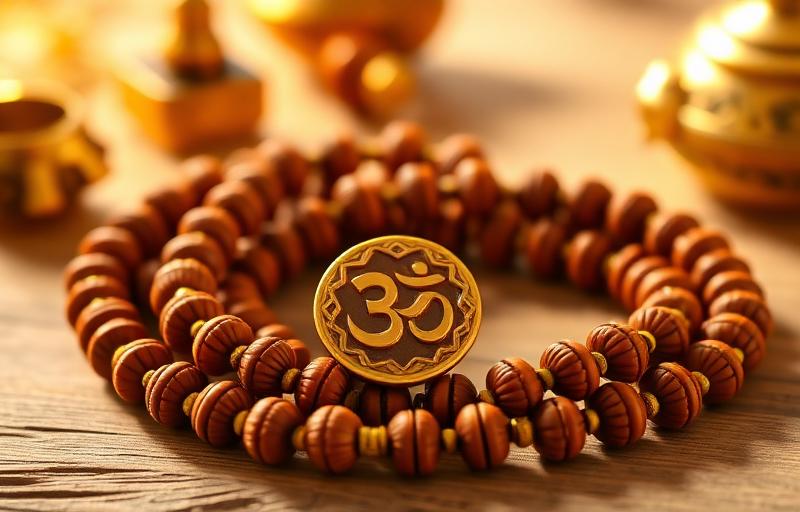
What Is the Asato Ma Sadgamaya Mantra
Asato Ma Sadgamaya is one of the oldest and most universal prayers in the world. It comes from the Brihadaranyaka Upanishad (1.3.28), part of the Shukla Yajurveda, and is traditionally called a Pavamana mantra - a purifying chant recited during the Pavamana offerings of the Soma ritual. Unlike mantras addressed to a particular deity, this prayer is addressed to truth itself. The seeker asks to be led on three journeys - from the unreal to the real, from darkness to light, and from death to immortality. Because it names no single god and asks for no material gain, it has crossed every boundary of sect and tradition. It opens school assemblies, yoga classes, interfaith gatherings and meditation retreats across the world, and its closing call of śāntiḥ three times makes it one of the great Shanti mantras of the Vedic tradition.
Full Mantra in Sanskrit with Transliteration
Here is the complete mantra as given in Brihadaranyaka Upanishad 1.3.28:
ॐ असतो मा सद्गमय । तमसो मा ज्योतिर्गमय । मृत्योर्मा अमृतं गमय । ॐ शान्तिः शान्तिः शान्तिः ॥
IAST transliteration: oṁ asato mā sad gamaya | tamaso mā jyotir gamaya | mṛtyor mā amṛtaṁ gamaya | oṁ śāntiḥ śāntiḥ śāntiḥ ||
Overall meaning: Om, lead me from the unreal to the real; lead me from darkness to light; lead me from death to immortality. Om, peace, peace, peace. The structure is deliberately simple - three parallel requests, each built on the same verb gamaya, lead me. The repetition creates a rhythm that is easy to memorise and deeply calming to chant, which is one reason the mantra has remained in continuous daily use for nearly three thousand years.
Word-by-Word Meaning of Asato Ma Sadgamaya
Each word of this mantra carries precise meaning. Here is the word-by-word breakdown: 1. oṁ - the primordial sound, invocation of the Absolute 2. asataḥ - from the unreal, from untruth, from non-existence 3. mā - me (lead me) 4. sat - to the real, to truth, to pure existence 5. gamaya - lead, take, guide 6. tamasaḥ - from darkness, from ignorance 7. jyotiḥ - to light, to knowledge 8. mṛtyoḥ - from death, from mortality 9. amṛtam - to immortality, to the deathless state 10. śāntiḥ - peace (repeated three times) Note that mā here means me, unlike in Gita 2.47 where mā means never. The same verb gamaya anchors all three lines - the seeker does not claim to walk alone but asks to be led, an attitude of humility that defines the entire prayer.
The Three Journeys - Deeper Meaning of the Mantra
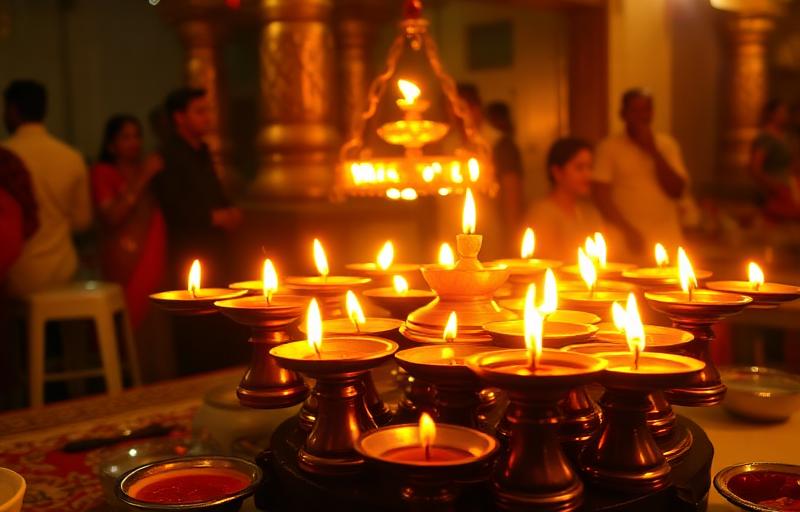
The three lines are not three separate wishes but one ascent described three ways. From the unreal to the real - asat is everything impermanent that we mistake for lasting, from possessions to opinions; sat is the unchanging reality beneath them. From darkness to light - tamas is not the darkness of night but of ignorance, the inability to see things as they are; jyotiḥ is the light of true knowledge. From death to immortality - the Upanishad does not promise that the body will never die. Mṛtyu here is the repeated dying of identifying with what perishes, and amṛtam is the recognition of the deathless Atman within. Read together, the journeys move inward - first correcting what we value, then how we see, and finally who we know ourselves to be. The mantra is a complete map of spiritual life in three lines.
When and How to Chant Asato Ma Sadgamaya
This mantra fits naturally into many moments of the day: 1. Morning prayer - chant it after bathing or during morning puja to set a truthful, clear intention for the day. 2. Before meditation - one slow recitation settles the breath and marks the transition from activity to stillness. 3. School assembly - it is among the most common school prayers in India because it asks only for truth, knowledge and inner light. 4. Evening aarti or satsang - many families close their evening prayers with it, ending the day in peace. 5. Difficult moments - when confused or grieving, the line tamaso mā jyotir gamaya becomes a direct appeal for clarity. Chant slowly, giving each line one full breath. Fold hands or sit with eyes closed, begin with oṁ, and let the three śāntiḥ at the end soften the body, the surroundings and the mind.
Benefits of Chanting This Shanti Mantra
Devotees and teachers across traditions describe consistent benefits from regular chanting: 1. Deep calm - the slow, repetitive structure naturally lengthens the breath and quiets mental chatter. 2. Clarity in decisions - praying daily to move from untruth to truth gradually sharpens honesty with oneself. 3. Reduced fear - the third line directly addresses the deepest human fear, the fear of death, and replaces it with the vision of an immortal Self. 4. A universal practice - because it names no deity, families of different sampradayas, and even interfaith households, can chant it together. 5. Better start and end to the day - as a school prayer it centres children; as an evening chant it releases the day's residue. The benefits compound with sincerity. Chanting while reflecting on even one of the three journeys turns a beautiful sound into a genuine inner practice.
Why Shanti Is Repeated Three Times
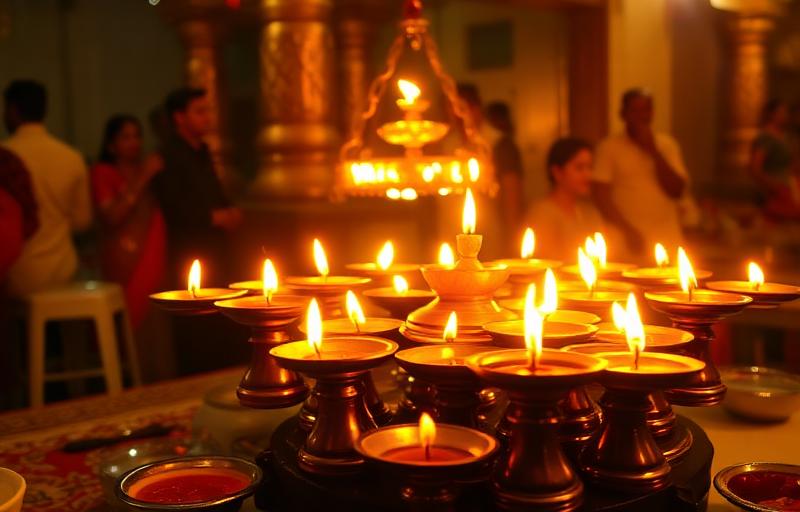
The triple śāntiḥ at the end is not decoration - it is a precise Vedic formula. Tradition explains that disturbance reaches us from three sources, and each repetition addresses one of them: 1. Ādhidaivika - disturbances from cosmic or natural forces such as storms, earthquakes and events beyond all human control. 2. Ādhibhautika - disturbances from the world around us, including other people, animals and circumstances. 3. Ādhyātmika - disturbances arising within our own body and mind, such as illness, anxiety and restlessness. By invoking peace three times, the chanter seeks harmony at every level of existence - the universe, the environment and the inner world. This is why nearly every Upanishadic Shanti mantra, not only this one, closes with the same threefold refrain. Saying the final śāntiḥ a little softer each time is a common practice that lets the sound dissolve into silence.
Quick Answers
Where does Asato Ma Sadgamaya come from?+
It comes from the Brihadaranyaka Upanishad, verse 1.3.28, which belongs to the Shukla Yajurveda. It is classified as a Pavamana mantra, a purifying chant from the Vedic Soma ritual.
What is the meaning of Asato Ma Sadgamaya in one line?+
It means: lead me from the unreal to the real, from darkness to light, and from death to immortality - a prayer for truth, knowledge and the realisation of the deathless Self.
Does the mantra promise physical immortality?+
No. The line mrityor ma amritam gamaya asks for freedom from identification with the perishable body and mind. Immortality here means realising the eternal Atman within, not an unending physical life.
When is the best time to chant this mantra?+
Morning after bathing and evening before or after aarti are traditional times. It is also ideal before meditation or study. There is no restriction - it can be chanted at any clean, quiet moment of the day.
Can people of any faith chant Asato Ma Sadgamaya?+
Yes. The mantra names no deity and asks only for truth, light and immortality. It is regularly used in schools, yoga classes and interfaith gatherings, and anyone may chant it with respect and sincerity.
How many times should I repeat the mantra?+
There is no fixed count. One slow, attentive recitation is enough for daily prayer. For japa practice, 3, 11 or 21 repetitions are common. Quality of attention matters far more than the number.
About the author
Acharya Vinaya Kapoor · M.A. Sanskrit, Mantra & Stotra Studies
Acharya Vinaya holds an M.A. in Sanskrit from Banaras Hindu University and writes the mantra and stotra commentary on Vandnaa. Her focus is on accurate pronunciation, traditional context, and helping modern readers connect with classical texts.
Meet the Vandnaa editorial team →