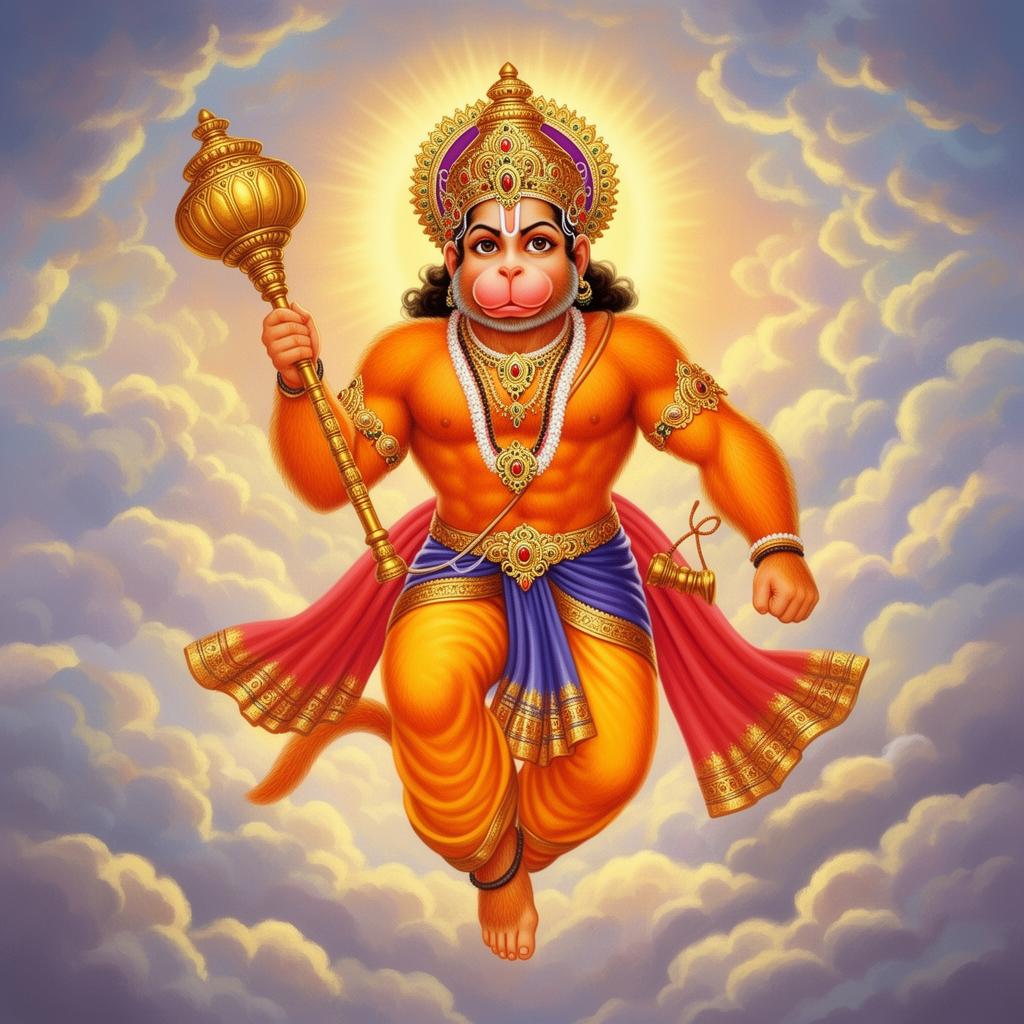
Why Hanuman Has 8 Forms - Not Just One
Lord Hanuman is the most widely worshipped deity in modern India - over 70% of Hindu households have his image somewhere. But almost everyone prays to him as ONE form: the kneeling devotee with folded hands or the airborne warrior carrying the Sanjeevani mountain.
The Hanumat Sahasranama Stotram (1000 names of Hanuman) and the Sundara Kand of Ramayana, however, describe 8 distinct forms of Hanuman - each with a specific role, a specific iconographic appearance, a specific mantra, and a specific category of problems it solves.
The 8 forms (Ashta Hanuman): 1. Bal Hanuman - child Hanuman (for children's protection, education) 2. Veer Hanuman - warrior Hanuman (for courage, victory over enemies, legal battles) 3. Bhakta Hanuman - devotee Hanuman (for spiritual progress, meditation, Ram-bhakti) 4. Das Hanuman - servant Hanuman (for humility, service, removing pride) 5. Sankat Mochan Hanuman - distress-remover (for chronic problems, blocked situations, emergencies) 6. Panchmukhi Hanuman - five-faced (for protection from black magic, evil eye, supernatural threats) 7. Mahaveer Hanuman - great warrior (for warriors, soldiers, those facing physical danger) 8. Surya-Nirakar Hanuman - sun-swallowing form (for healing, particularly chronic disease)
Each form is not 'a different god' - all 8 are Hanuman. But each form is the SPECIFIC manifestation suited for SPECIFIC needs. Worshipping the wrong form for your need is not harmful, but it is like calling a doctor when you need a lawyer - the response is partial.
This blog explains: what each form looks like, what specific problems each solves, the unique mantra for each, and which famous temple in India (or virtual darshan link) you can use to worship that form.
🙏 The Vandnaa App's Hanuman module includes audio of all 8 mantras with proper Sanskrit pronunciation, the complete Hanumat Sahasranama, virtual darshan from major Ashta Hanuman temples, and a 'which form for which problem' diagnostic tool.
All 8 Forms Detailed - Iconography, Mantras, When to Worship
1. BAL HANUMAN (Child Hanuman)
- Iconography: A small chubby child with a tail, often with the sun-fruit in his mouth, joyful expression
- Worship for: Children's safety, study success, removing childhood fears, protection from accidents
- Mantra: 'Om Hum Balaaya Namah.' (108 times)
- Best Day: Tuesday or Saturday
- Famous Temple: Bal Hanuman Temple, Jamnagar, Gujarat (continuous Ramdhun chanted for 53+ years - Guinness Record)
2. VEER HANUMAN (Warrior Hanuman)
- Iconography: Standing pose, mace (gada) raised, fierce expression, sometimes one foot crushing demons
- Worship for: Court cases, legal battles, victory over enemies, removing fear, professional competition, military service
- Mantra: 'Om Hum Veeraaya Vajra-Dehaaya Namah.' (Worship for those needing courage in confrontations)
- Best Day: Tuesday
- Famous Temple: Hanumangarhi, Ayodhya - believed to be one of the most powerful Veer Hanuman shrines
3. BHAKTA HANUMAN (Devotee Hanuman)
- Iconography: Kneeling pose, hands folded, eyes closed, listening to Sita-Ram, Ram-naam written on his chest visible
- Worship for: Deepening spiritual practice, meditation skill, removing distractions in worship, growing love for God
- Mantra: 'Om Hum Bhaktaaya Sri-Ramaaya Namah.'
- Best Day: Saturday (also for spiritual disciples), or any day during meditation
- Famous Temple: Sankat Mochan Temple, Varanasi - famous for the original devotee Hanuman sculpture by Tulsidas
4. DAS HANUMAN (Servant Hanuman)
- Iconography: Carrying Lord Ram's footwear (paduka) on his head, head bowed, humble posture
- Worship for: Removing arrogance, overcoming pride, learning humility (especially for those in positions of power, CEOs, politicians, leaders)
- Mantra: 'Om Hum Dasaaya Sri-Rama-Padapankaja-Daasaaya Namah.'
- Best Day: Any day in the morning before any major decision
- Famous Temple: Many Hanuman temples have a Das form, but specifically: the Hanuman Mandir at Tirumala (Tirupati) where Hanuman is shown as Vishnu's eternal servant
5. SANKAT MOCHAN HANUMAN (Distress-Remover)
- Iconography: Standing tall, one hand raised, other holding the gada, expression compassionate
- Worship for: ANY problem you are stuck in - chronic illness, financial blocks, broken relationships, recurring failures, family disputes - when you do not know which other deity to call
- Mantra: 'Om Hum Sankat-Mochan Hanumate Namah.' (108 times daily for 41 days clears most chronic problems per scripture)
- Best Day: Tuesday and Saturday
- Famous Temple: Sankat Mochan Hanuman Temple, Varanasi (the most-visited Hanuman temple worldwide for distress relief - established by Tulsidas himself)
6. PANCHMUKHI HANUMAN (Five-Faced)
- Iconography: Five faces - Hanuman (east), Narsimha (south), Garuda (west), Varaha (north), Hayagreeva (sky-facing). 10 hands holding various weapons. Most fierce form.
- Worship for: Protection from black magic (jadu-tona), evil eye (nazar), tantric attacks, supernatural threats, ghost-related issues
- Mantra: 'Om Hreem Hanumate Panchamukhaaya Namah.' (Highly protective; chant 108 times for shielding home and family)
- Best Day: Saturdays only (this is the most powerful form, takes Saturn's permission)
- Famous Temple: Panchmukhi Anjaneya Swamy Temple, Tirumala (South India's most powerful Panchmukhi shrine)
7. MAHAVEER HANUMAN (Great Warrior)
- Iconography: Massive form, holding Lord Lakshman's body in one hand and the Sanjeevani parvat (mountain) in the other, flying through the air
- Worship for: Soldiers, warriors, athletes, anyone in physically dangerous professions (police, fire, security)
- Mantra: 'Om Mahaveeraaya Vidhmahe, Vajra-Dehaaya Dhimahi, Tanno Hanumat Prachodayat.' (Hanuman Gayatri Mantra)
- Best Day: Tuesday
- Famous Temple: Mahaveer Mandir, Patna (one of India's largest temples, dedicated specifically to Mahaveer Hanuman)
8. SURYA-NIRAKAR HANUMAN (Sun-Swallowing Form)
- Iconography: Hanuman as a child reaching out to swallow the sun (which he mistook for a fruit). One hand stretched toward the sky, mouth open.
- Worship for: Healing, particularly chronic disease, illness in children, protection from sunstroke and sun-related health issues, jaundice (pitru dosh-related)
- Mantra: 'Om Surya-Aanya-Pradaaya Namah Hanumate.' (Sun-mover Hanuman)
- Best Day: Sunday (Surya's day) - or any sunrise time
- Famous Temple: Hanumangarhi, Ayodhya (the original 'sun-swallowing Hanuman' temple) and Anjaneya Temple at Hampi (Karnataka)
---
Quick Diagnostic Table: | Your Problem | Worship Form | |---|---| | Child sick, struggling in studies | Bal Hanuman | | Court case, legal trouble | Veer Hanuman | | Spiritual progress slow | Bhakta Hanuman | | Pride/arrogance issue | Das Hanuman | | Chronic stuck problem | Sankat Mochan | | Black magic, evil eye | Panchmukhi | | Physical danger, soldier life | Mahaveer | | Chronic disease | Surya-Nirakar |
Panchmukhi Hanuman - The Most Powerful Protective Form (Detailed)
Of all 8 forms, Panchmukhi Hanuman receives the most search and worship - because he handles the most fearsome problems: black magic, evil eye, tantric attacks, ghost-related issues, and supernatural threats. This section gives him the deeper treatment.
The Origin Story: During the Ramayana war, the demon Ahiravana (Ravana's brother) abducted Lord Ram and Lakshmana to the underworld (Patala). To kill them, he had to perform a specific sacrifice - but this required EXTINGUISHING five sacred lamps placed in five directions (east, south, west, north, and overhead) at the EXACT same moment. As long as one lamp burned, the brothers could not be killed.
Hanuman descended to Patala. He realised: a regular form cannot extinguish all 5 lamps simultaneously. So he assumed a five-faced form - each face blowing out one lamp at the precise moment.
- East face - Hanuman (the original): blew the eastern lamp
- South face - Narsimha (Vishnu's man-lion): blew the southern lamp
- West face - Garuda (Vishnu's vahan, the eagle): blew the western lamp
- North face - Varaha (Vishnu's boar avatar): blew the northern lamp
- Sky-facing face - Hayagreeva (the horse-headed wisdom form): blew the overhead lamp
All 5 lamps extinguished simultaneously. Ahiravana's sacrifice failed. Hanuman then defeated Ahiravana and rescued Ram-Lakshmana.
Why this is significant: The Panchmukhi form is the only Hanuman form that combines aspects of FIVE different Vishnu avatars/forms simultaneously. It is the most cosmically integrated form - covering all directions, all elements, and all attack vectors.
For modern devotees, Panchmukhi Hanuman is invoked specifically when:
- You suspect black magic / jadu-tona is being practiced against your family
- Recurring nightmares of being chased by dark figures
- Children waking up screaming from nameless fears repeatedly
- Family members suddenly developing personality changes (after meeting suspicious people)
- Unexplained losses of multiple kinds happening simultaneously
- A new home where previous occupants had violent or tragic events
Worship Vidhi for Panchmukhi Hanuman:
- Best day: Saturday
- Best time: Sandhya Kaal (twilight) or Brahma Muhurat
- Items: 5-wick ghee diya (panch-batti), 5 different colored flowers (one for each face), red kalawa, raw ginger (Hanuman's prasad), sindoor + chameli oil paste
- Apply sindoor-chameli oil paste on Panchmukhi idol at all 5 faces
- Light the 5-wick diya - keep it burning for 7 hours minimum
- Recite the Hanuman Bahuk (38 verses by Tulsidas, specifically for protection) - full text + audio in Vandnaa App
- Chant 'Om Hreem Hanumate Panchamukhaaya Namah' 108 times on a rudraksha mala
- Donate red cloth + sindoor + raw ginger to a Hanuman temple priest after worship
Maha Panchmukhi Anushthan (for severe cases): For very serious black magic or supernatural threats, do a 41-day intensive Panchmukhi anushthan: chant the mantra 1008 times daily for 41 days, light the panch-batti diya every evening, and visit any Panchmukhi temple at least once during this period. Most chronic supernatural attacks resolve within these 41 days.
12 Powerful Hanuman Temples for Each Form (Pilgrimage Map)

If you can travel to one or more Hanuman temples - visiting the right form's temple amplifies your prayer's effectiveness. Below are the 12 most powerful Hanuman temples in India, organized by form.
Bal Hanuman Temple, Jamnagar (Gujarat)
- Continuous Ramdhun chanted since 1964 (Guinness Record)
- Best for: bringing children, doing baby naam-karan, child education prayers
- Contact: Sindhu Sutra Hanuman Mandir Trust, +91-288-2666666
Sankat Mochan Hanuman Temple, Varanasi (UP)
- Established by Tulsidas himself (1500s)
- The MOST visited Hanuman temple worldwide for general distress relief
- Best for: stuck life situations, chronic problems, long-pending issues
- Open: 5 AM – 10 PM
Hanumangarhi, Ayodhya (UP)
- 76 steps lead up to the temple - climb represents devotion
- Original Veer Hanuman + Surya-Nirakar form
- Best for: courage, victory, removing obstacles
- Best time: After visiting the new Ram Mandir
Mahaveer Mandir, Patna (Bihar)
- Largest Hanuman temple in northern India
- Mahaveer-form
- Best for: military, police, soldiers, athletic achievement
Salasar Balaji, Rajasthan
- Famous for granting wishes (mannat)
- Veer + Sankat Mochan combined form
- Devotees report their wishes fulfilled within months of visit
- Best for: long-cherished wishes that have not materialized
Mehandipur Balaji, Rajasthan
- Famous for Panchmukhi-form healing of black magic / evil possession
- Most intense and disciplined visiting protocol - devotees must follow strict food rules
- Best for: anyone suspecting black magic / supernatural attack
- ⚠️ Only visit if you have done research; the protocols are strict and require commitment
Sankat Mochan Anjaneya, Hyderabad
- Largest Hanuman temple in South India
- Sankat Mochan + Veer combined
- Best for: South Indians; Andhra and Telangana devotees
Panchmukhi Anjaneya Swamy, Tirumala
- Combined with Tirupati visit (most famous Vishnu temple)
- Pure Panchmukhi form
- Best for: protection from supernatural threats, Ahiravana-style attacks
Anjaneya Temple at Hampi, Karnataka
- Believed to be Hanuman's actual birthplace (Anjaneya Hill)
- Original Surya-Nirakar form
- Best for: any prayer at the source
Yantrodharaka Hanuman Temple, Hampi
- Established by Sri Vyasaraja Tirtha (16th century guru)
- Specific Sankat Mochan + Bhakta Hanuman combined
- Best for: spiritual practitioners, gurus seeking deeper knowledge
Bajrang Bali Mandir, Allahabad (Prayagraj)
- At the Triveni Sangam - combined sacred site
- Best for: combination Hanuman puja + Ganga snan + Pitra dosh
Shri Hanuman Mandir, Connaught Place, Delhi
- Most visited Hanuman temple in Delhi
- Multiple forms in one temple
- Best for: working professionals; daily Tuesday/Saturday darshan
Visiting Etiquette:
- Wear simple clean clothes (avoid black, dark blue)
- No leather items
- Take a small offering (sweets, coconut, sindoor)
- Touch Hanuman's feet (paduka) first, then circle the temple clockwise 3 times
- Make your prayer SILENTLY in your heart - Hanuman hears the heart, not the lips
For those who cannot travel: the Vandnaa App offers virtual darshan from all 12 temples on a rotating daily basis.
Famous Ashta Hanuman Temples Across India: Where to Seek Each Form
Each of Hanuman's eight forms has specific temples across India that are considered swayambhu (self-manifest) or especially powerful seats of that form's energy. Pilgrimage to these temples - or virtual connection through prayer - allows devotees to work with each aspect of Hanuman's power specifically.
Anjaneya / Balaji (Child Hanuman) - Tirumala, Andhra Pradesh: The Hanuman shrine at Tirumala (adjacent to the Tirupati Balaji complex) is considered one of the most powerful Anjaneya seats. Pilgrims offer oil and sindoor here for general blessings and the removal of obstacles. The form here is standing, with mace in hand.
Veer Hanuman (Heroic Hanuman) - Sarangpur, Gujarat: The Kashtabhanjan Dada at Sarangpur is dedicated to the heroic, bhoot-banishing form of Hanuman. This temple is famous for removing the effects of black magic, evil eye, and psychological disturbances. Huge queues form on Saturdays. The murti here is particularly powerful - it was established by the Swaminarayan saint Gopalanand Swami.
Bhakta Hanuman (Devotee Hanuman) - Hampi, Karnataka: At the Anjaneya Hill in Hampi (believed to be Kishkindha from the Ramayana), the form of Hanuman as a pure devotee of Rama is worshipped. This is considered the birthplace of Hanuman himself. The trek to the hilltop temple is itself a spiritual practice.
Dasabhuja Hanuman (Ten-armed Hanuman) - Allahabad (Prayagraj): The Bade Hanuman Temple at Prayagraj houses one of the few Shayit (reclining) Hanuman images in India. The figure is partially submerged during flood season, returning each year - devotees take this as a divine sign. The ten-armed form is worshipped here.
Sankat Mochan Hanuman - Varanasi: The Sankat Mochan Temple in Varanasi, established by Tulsidas (author of Ramcharitmanas), enshrines the Sankat Mochan (remover of difficulties) form. This is one of the busiest Hanuman temples in North India, especially on Tuesday and Saturday. Tulsidas composed significant portions of the Ramcharitmanas at this location.
Mahaveer Hanuman - Patna, Bihar: The Mahaveer Mandir in Patna is one of the most visited temples in India (reportedly receiving 20,000+ visitors daily). The Mahaveer (great hero) form is worshipped here. The temple runs extensive charitable programs - food distribution, hospitals, and schools - in the tradition of Hanuman's selfless service.
Panchamukhi Hanuman - Rameswaram and Srirangam: The five-faced Hanuman (Panchamukhi) is worshipped particularly in South India. At Rameswaram, the Panchamukhi Hanuman is associated with the Ramayana's Lanka episode. At Srirangam, the form has its own shrine within the vast Ranganathaswamy complex.
Virtual parikrama: For devotees who cannot physically travel, the Vandnaa app provides photo darshan, mantras specific to each Ashta Hanuman form, and guided visualizations of each temple - making the divine connection possible from any location.
Mantras and Worship Methods for Each of the Eight Forms of Hanuman
Each of Hanuman's eight forms responds to specific mantras, offerings, and worship approaches. While the core Hanuman Chalisa honors all forms simultaneously, dedicated work with each form produces concentrated results in the specific domain that form governs.
Universal opening mantra (chant before invoking any specific form): "Om Namo Hanumate Rudraya Swaha" (Om, salutations to Hanuman, the Rudra-form, I offer this) This mantra invokes Hanuman's connection to Shiva (Rudra), establishing the worshipper's intention to work with the complete divine power.
For Anjaneya (child form) - obstacles and beginnings: "Om Anjaneyaya Namaha" 108 repetitions on Tuesday morning, offering sesame oil and red flowers. This form is invoked before any new undertaking - job interview, exam, journey, new project.
For Veer Hanuman (heroic form) - protection and enemy removal: "Om Veer Hanumate Namaha" Recite on Saturday with sindoor offering and mustard oil lamp. This mantra is also used for protection against black magic and negative entities. The mantra is recited 108 times while holding a copper vessel of water, which is then sprinkled around the home.
For Sankat Mochan (difficulty-remover) - when in crisis: "Om Shreem Hreem Kleem Hanumate Vijayate Namaha" This is the most commonly invoked Sankat Mochan mantra. Recite 21 times while facing south (Hanuman's direction in crisis situations). Suitable for any severe difficulty: health crisis, financial emergency, legal trouble, family conflict.
For Panchamukhi (five-faced form) - comprehensive protection: "Om Panchamukha Hanumate Namaha" Panchamukhi Hanuman is invoked for the protection of the entire family - each face protects a different direction and domain. This mantra is written 108 times (likhita japa) on a piece of paper and kept in the wallet or at the home threshold for continuous protection.
For Bahuk (servant/devotee form) - spiritual progress: "Om Rama Dootaya Namaha" This form honors Hanuman's role as the perfect devotee and messenger. Devotees recite this mantra when seeking to deepen their bhakti, purify their devotional practice, or overcome ego.
For Mahaveer (great hero) - courage and achievement: "Om Mahaveeraya Namaha" 108 repetitions on Tuesday with a jasmine garland offering. Ideal for those facing competitive situations: job applications, business competitions, legal battles. The "Mahaveer" mantra is also part of the opening of many kathakali and Yakshagana performances in South India.
For Kesari Nandan (son of Kesari) - family protection and lineage: "Om Kesari Nandanaya Namaha" This form honors Hanuman's earthly father. Invoked for the protection of children, family honor, and ancestral blessings. Recite on Thursday with banana offering.
Complete puja sequence for Ashta Hanuman worship: On special occasions (Hanuman Jayanti, or a Tuesday when you have time), you can worship all eight forms in sequence: light 8 small diyas, invoke each form with its specific mantra and offering, then conclude with a full Hanuman Chalisa recitation. This 45-60 minute puja is considered equivalent to a pilgrimage to all eight sacred sites.
The Vandnaa app includes guided audio for each Ashta Hanuman mantra with correct pronunciation, rhythm, and puja instructions - perfect for both daily use and festival worship.
Building a Daily Hanuman Practice: From Weekly to All-Day Devotion
Hanuman bhakti is unique in Hindu devotion because it scales from the simplest daily gesture to the most sophisticated lifetime sadhana. You can begin with 30 seconds and grow to hours of practice - the path is gradual and the deity is endlessly patient with sincere beginners.
The simplest start (5 minutes daily): Every morning, before looking at your phone, whisper "Jai Hanuman" three times. This is the beginning. It sounds trivially simple, but the practice of placing Hanuman as the first name spoken each day - before messages, before news, before worry - establishes his presence as a foundation. Over months, this simple habit restructures the day's energy.
Basic daily practice (15-20 minutes):
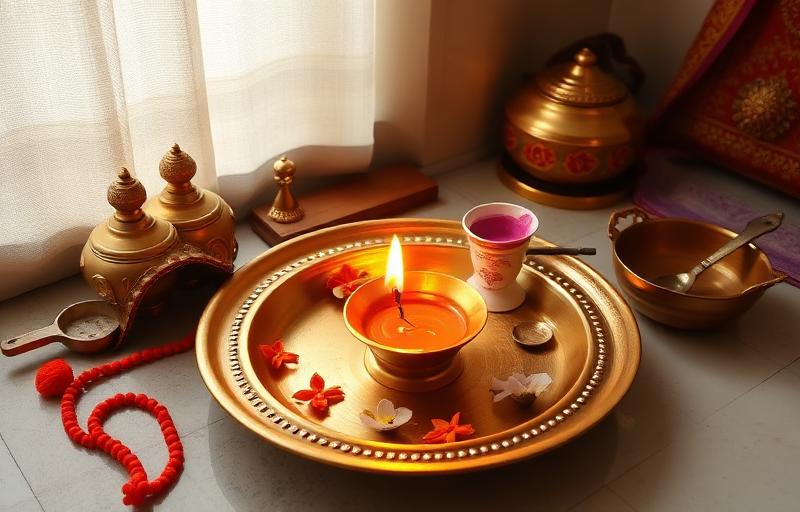
- Light a diya or incense before the Hanuman image
- Recite the Hanuman Chalisa once (takes approximately 10-12 minutes when spoken at a moderate pace)
- Apply sindoor to the murti's feet if you have one, or to your own forehead
- Sit quietly for 3-5 minutes after - this "listening" time is often when devotees report insights and inner guidance
Tuesday and Saturday deeper practice (30-45 minutes): These are Hanuman's primary days. The traditional offering is: oil lamp with sesame or mustard oil, garland of orange/saffron flowers, sindoor, betel leaves, and a banana. Chant Hanuman Chalisa twice, then the Sundar Kand from Valmiki Ramayana or Tulsidas's Ramcharitmanas (the chapter describing Hanuman's journey to Lanka - considered the most powerful text for protection).
Hanuman Jayanti (the peak festival): Hanuman's birthday (Chaitra Purnima - the full moon of the Chaitra month) calls for the most complete practice: 108 Hanuman Chalisa recitations (done by a group, or 12 recitations per day for 9 days), special abhishek (bathing the murti with Panchamrit), and community kirtan if possible.
Continuous remembrance throughout the day: Experienced Hanuman devotees develop a habit called "name-catching" - whenever a difficult thought, fear, or anger arises, they mentally invoke "Jai Bajrang Bali" before the thought completes. This is not suppression but redirection - the mind learns to turn toward the divine automatically in moments of difficulty.
Signs of growing Hanuman bhakti: Devotees report specific internal changes as their practice deepens: (1) fear diminishes gradually - specifically the physical sensation of fear in the chest; (2) unusual courage in situations that previously caused avoidance; (3) dreams featuring Hanuman or Rama; (4) a sense of being "held" or protected even in difficult circumstances. These are the traditional signs mentioned in Hanuman bhakti texts.
For those who feel distant from Hanuman: If Hanuman doesn't yet feel personally meaningful, begin with Rama. Hanuman is always found near Rama - start devotion to Rama through the Ramayana or Ramcharitmanas, and Hanuman will reveal himself naturally. They are inseparable in the devotional tradition.
Download the Vandnaa app for daily Hanuman Chalisa audio (both slow recitation and fast-paced versions), Tuesday and Saturday puja reminders, and special content for Hanuman Jayanti.
Quick Answers
Can I worship multiple forms of Hanuman simultaneously, or should I pick one?+
Both approaches work. Most devotees naturally migrate toward ONE form that suits their primary need (e.g., Sankat Mochan for general life problems, Panchmukhi for protection). However, you can absolutely worship multiple forms based on your phase of life: Bal Hanuman if you have young children, Veer Hanuman during a court case, etc. The ONLY rule is consistency once chosen - if you start a 41-day Sankat Mochan anushthan, complete it before switching to another form. Mixing forms mid-anushthan reduces effectiveness. After completing one anushthan, you can begin another for a different form.
Is Panchmukhi Hanuman dangerous to worship if I do not have a real black magic problem?+
Not dangerous, but unnecessary and may be 'too strong' for casual problems. Panchmukhi is the most fierce form - equivalent to calling 5 different deities at once. For general life issues (career, finance, relationships), Sankat Mochan or Veer Hanuman are better suited. Use Panchmukhi only when: (a) you have specific symptoms of supernatural attack, (b) a credible jyotish has confirmed dosh, or (c) you live in a location with known dark history. Casually invoking Panchmukhi for ordinary problems is like using a sledgehammer for a small nail - the energy is wasted. Save Panchmukhi for genuine crises.
Why is Saturday especially powerful for Hanuman worship?+
There is a beautiful story. Once Hanuman saved Lord Shani (Saturn) from Ravana's prison. Shani was so grateful that he promised: 'Hanuman, anyone who worships you on a Saturday - MY day - will not face my malefic effects (sade sati, dhaiya). My destructive power yields to your devotion every Saturday.' This is documented in the Hanuman Bahuk and the Shani Mahatmya. So Saturdays became the most protective day for Hanuman worship - particularly for those facing Saturn-related problems (sade sati, dhaiya, repeated obstacles, slow career growth, depression). Tuesday is also Hanuman's day (his birthday week), but Saturday's protection is uniquely about Saturn-Hanuman alliance against malefic forces.
How do I know which Hanuman form is responding to my prayers?+
Three subtle signs. (1) Dreams - devotees often see Hanuman in dreams within 7-21 days of consistent worship. The form he appears in (child, warrior, kneeling devotee, five-faced) tells you which form has heard you. Note the dream details. (2) Synchronicities - sudden movement on a stuck issue, unexpected help arriving, fears dissipating overnight. The TYPE of resolution matches the form (career = Veer; protection = Panchmukhi; chronic illness = Surya-Nirakar). (3) Internal experience - during meditation/chanting, you may feel one specific quality strongly: courage rising (Veer), tears of devotion flowing (Bhakta), inner shield forming (Panchmukhi), playful joy returning (Bal). Trust these signals - they are Hanuman's reply.
Should children specifically worship Bal Hanuman, or any form is fine?+
Bal Hanuman is most age-appropriate for children below 12 - they relate to a divine child like themselves. However, ALL forms work for children. The recommendation: introduce children to Bal Hanuman first (his stories of childhood mischief - eating the sun, breaking demon's jaws, playing in trees - captivate kids). As they grow, introduce them to Veer Hanuman (around 8-10), then Sankat Mochan (around 12-14), and Bhakta Hanuman (teenagers ready for spiritual depth). The progression matches mental development. Many traditional families gift children a different Hanuman idol every 5 years - a generational stepping-stone of devotion.
About the author
Acharya Vinaya Kapoor · M.A. Sanskrit, Mantra & Stotra Studies
Acharya Vinaya holds an M.A. in Sanskrit from Banaras Hindu University and writes the mantra and stotra commentary on Vandnaa. Her focus is on accurate pronunciation, traditional context, and helping modern readers connect with classical texts.
Meet the Vandnaa editorial team →Explore on Vandnaa
Related Articles
Hanuman Jayanti 2026: Date, Puja Vidhi, Sundarkand & 7 Most Powerful Hanuman Mantras
9 min read
Hanuman Chalisa Meaning, Benefits & How to Chant (हनुमान चालीसा अर्थ)
10 min read
Shani Jayanti 2026: Date, Powerful Remedies, Mantras & 7 Things You Must Do to Pacify Shani Dev
10 min read
Shani Sade Sati: 7½ Years of Saturn's Shadow - Symptoms, Phases, Remedies & Who's Affected in 2026
11 min read