The Deity - Ganesha as Ashtavinayak
Ashtavinayak literally means 'eight Ganeshas', referring to eight revered temples of Lord Ganesha in Maharashtra. Each shrine houses a swayambhu (self-manifested) murti of Ganpati, the remover of obstacles and lord of beginnings. The eight forms differ in the bend of the trunk, posture and story, yet each is worshipped as the same beloved Vighnaharta. Together they form a sacred circuit that devotees traditionally complete as one great pilgrimage.
Location and the Yatra Circuit
All eight temples lie in Maharashtra, clustered mainly around Pune district and nearby Raigad and Ahmednagar areas. They are best reached by road from Pune or Mumbai, with many devotees hiring a vehicle or joining an organised Ashtavinayak yatra tour. The traditional yatra usually begins and ends at Moreshwar (Morgaon), the foremost of the eight. The circuit can be completed in two to three days at a comfortable pace.
The Eight Ashtavinayak Temples
The eight shrines, in the traditional order, are: 1. Moreshwar (Morgaon) - the starting and foremost temple. 2. Siddhivinayak (Siddhatek) - the only one on the north bank of the Bhima river. 3. Ballaleshwar (Pali) - named after the devotee child Ballal. 4. Varadvinayak (Mahad) - the giver of boons. 5. Chintamani (Theur) - remover of worries and anxieties. 6. Girijatmaj (Lenyadri) - set in a hilltop cave, son of Girija (Parvati). 7. Vighnahar / Vighneshwar (Ozar) - destroyer of obstacles. 8. Mahaganapati (Ranjangaon) - the most powerful form. Each has its own katha and unique idol.
Significance of the Ashtavinayak Yatra
Completing the Ashtavinayak yatra is considered deeply auspicious, believed to remove obstacles, fulfil sincere wishes and bring success in new ventures, since Ganesha is the lord of beginnings. As each murti is self-manifested rather than installed, these shrines are seen as places where Ganpati's presence is especially alive. The journey is also a spiritual discipline of devotion, patience and gratitude, traditionally ending back at Morgaon to complete the sacred circle.
Darshan Timing and Yatra Tips
The temples generally open early morning and close at night with a midday break; timings differ slightly by temple, so plan around them. Tips: 1. Start early each day to cover the distances between shrines comfortably. 2. Lenyadri (Girijatmaj) involves a climb of steps, so wear comfortable footwear. 3. Follow the traditional order beginning and ending at Morgaon if possible. 4. Carry modest clothing, water and basic supplies for the road. 5. Visit during Ganesh Chaturthi or Magh Chaturthi for the most festive atmosphere, but expect larger crowds.
Ganesh Mantra to Begin the Yatra
Every undertaking begins with Ganesha, so chant before setting out:
Om Gan Ganapataye Namah
The loved prayer to Vighnaharta is also recited:
Vakratunda Mahakaya, Surya-koti Samaprabha. Nirvighnam Kuru Me Deva, Sarva-kaaryeshu Sarvada.
Chanting these with faith at each shrine is believed to clear obstacles from the path and bless the journey with success and joy.
Festivals at the Ashtavinayak Temples

The greatest celebration is Ganesh Chaturthi (Bhadrapada), when all eight temples overflow with devotees, decorations and continuous aartis. Magh Chaturthi (Ganesh Jayanti) is also celebrated grandly. Sankashti and Angaraki Chaturthi through the year draw special crowds, as each Chaturthi is dear to Ganpati. During these times the Ashtavinayak circuit glows with lamps, modak offerings and the joyful chant of Ganpati Bappa Morya.
Common Questions From Devotees
What does Ashtavinayak mean?+
Ashtavinayak means 'eight Ganeshas' and refers to eight ancient, self-manifested temples of Lord Ganesha in Maharashtra, each with its own form, story and grace.
Which are the eight Ashtavinayak temples?+
They are Moreshwar (Morgaon), Siddhivinayak (Siddhatek), Ballaleshwar (Pali), Varadvinayak (Mahad), Chintamani (Theur), Girijatmaj (Lenyadri), Vighnahar (Ozar) and Mahaganapati (Ranjangaon).
Where are the Ashtavinayak temples located?+
All eight are in Maharashtra, mainly around Pune district and nearby Raigad and Ahmednagar areas. They are best reached by road from Pune or Mumbai.
Where does the Ashtavinayak yatra begin?+
The traditional yatra begins and ends at Moreshwar (Morgaon), the foremost of the eight temples, completing the sacred circle. The circuit usually takes two to three days.
Why is the Ashtavinayak yatra significant?+
It is believed to remove obstacles, fulfil sincere wishes and bring success in new ventures, as Ganesha is the lord of beginnings. Each self-manifested murti is seen as especially alive with his presence.
Which mantra should be chanted at the temples?+
Chant 'Om Gan Ganapataye Namah' or the prayer 'Vakratunda Mahakaya'. Recited with faith at each shrine, these are believed to clear obstacles and bless the journey with success.
About the author
Pandit Ravindra Sharma · Vedic Rituals & Bhakti, 22+ years
Pandit Ravindra is the Vandnaa editorial team's resident specialist on aarti, chalisa, and daily devotion. He has performed home and temple pujas across Varanasi and Delhi for over two decades and contributes the bhakti-focused articles on this site.
Meet the Vandnaa editorial team →Explore on Vandnaa
Related Articles
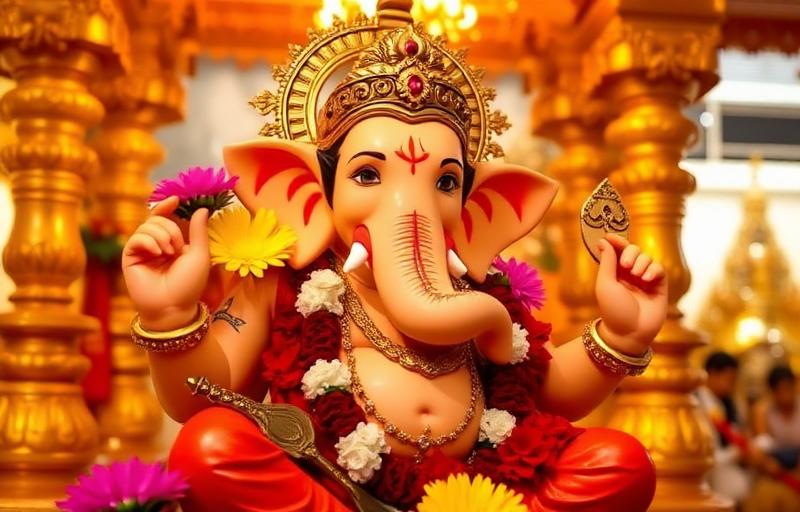
Ganesh Aarti Lyrics – Jai Ganesh Deva (गणेश आरती)
8 min read
Ganesh Chalisa Lyrics & Meaning in Hindi (गणेश चालीसा)
9 min read
Meenakshi Temple Madurai - Significance & Darshan
9 min read

Panchamrit - Meaning, 5 Ingredients, Significance & Puja Vidhi
8 min read
Home Mandir Setup - Direction, Vastu Rules, Dos and Don'ts
9 min read