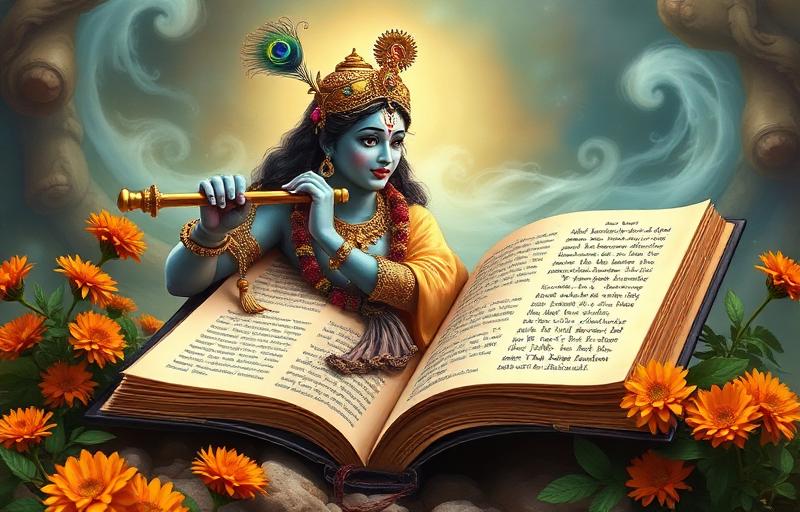
A Strange Interruption at a Grand Ceremony
After Yudhishthira's Ashwamedha Yajna, performed to affirm his sovereignty in the war's aftermath, an episode connected elsewhere in this series to Babruvahana's confrontation with Arjuna during the horse's wandering, the ceremony concluded with immense wealth distributed to Brahmins and the assembled crowd, widely regarded as one of the most generous and complete sacrifices of its kind.
At this moment of apparent triumph, a mongoose appeared, unusual in that half its body was golden while the other half remained ordinary fur, and, to the astonishment of those present, spoke, declaring that this entire elaborate sacrifice did not equal the merit of a single, much smaller act of charity it had once witnessed.
The Story of the Barley Meal
The mongoose explained itself by narrating a story from a place called Kurukshetra during a time of famine: a poor Brahmin family, a man, his wife, son and daughter-in-law, had gathered a small quantity of barley after days without food, enough to prepare a single, meagre meal, and were about to eat when a starving guest, a Brahmin himself, arrived at their door.
Each family member, in turn, gave the guest their own portion, the father first, then the mother, then the son, and finally the daughter-in-law, each convinced their own hunger mattered less than fulfilling the duty of hospitality to a guest in greater need, until all four portions had been given and the guest, finally satisfied, revealed himself as Dharma testing their sincerity before departing, leaving the family with nothing to eat themselves but having given everything they had without hesitation or resentment.
Why Only Half the Mongoose Turned Gold
The mongoose explained that, rolling in the grains of barley left scattered on the ground after this act of total giving, half its body had turned to gold on contact with the residue of such pure, selfless charity. Hoping to turn the rest of its body gold as well, the mongoose had since travelled the earth rolling in the remnants of every great sacrifice it heard of, including, most recently, Yudhishthira's own elaborate Ashwamedha, but had found none powerful enough to complete the transformation, confirming that the family's desperate, complete sacrifice during famine outweighed even an emperor's grand, wealth-abundant ceremony.
Having delivered this account, the mongoose departed, leaving the assembled court, including Yudhishthira himself, to absorb the lesson without argument, since Yudhishthira, the text notes, did not dispute the comparison, understanding better than most that generosity given at genuine personal cost carries weight no display of accumulated wealth can match.
What People Ask Most
Is this story part of the Mahabharata's main narrative or a separate text?+
It appears within the Ashwamedhika Parva itself, one of the epic's eighteen books, told as an embedded narrative delivered by the mongoose rather than narrated directly by the epic's own frame narrators.
Does the mongoose eventually turn fully gold in any version of the story?+
The story generally ends without this resolution, leaving the mongoose's search ongoing, which reinforces the point that such complete, desperate generosity is genuinely rare rather than something even further searching could easily locate.
Why is this episode significant for understanding Hindu views on charity?+
It is frequently cited as one of the clearest textual statements distinguishing the quality and cost of a gift from its quantity, with even the epic's own celebrated emperor's sacrifice presented as falling short of a poor family's total, self-sacrificing generosity.
About the author
Anjali Mehta · Editor, M.A. Religious Studies
Anjali is the managing editor for Vandnaa and oversees the festival and vrat coverage. She holds an M.A. in Religious Studies and reviews every published article for accuracy, accessibility, and tradition-fidelity.
Meet the Vandnaa editorial team →