Two Traditions, One Cultural Calendar
Assam's yearly calendar is marked by two deeply loved traditions, Bihu, the seasonal celebration tied to the agricultural cycle, and Durga Puja, the devotional worship of the Divine Mother observed across much of eastern India. Though rooted in different origins, one agricultural and cultural, the other explicitly devotional, these two traditions have grown to complement each other in Assamese life, often celebrated within weeks of one another.
For many Assamese families, the arrival of autumn brings both the joy of Durga Puja pandals and the community spirit long associated with Bihu gatherings, weaving devotion and culture into a single, cherished season.
Durga Puja's Place in Assam
Durga Puja is celebrated with great devotion across Assam, particularly in Guwahati, where elaborately decorated pandals draw devotees for days of worship honoring Goddess Durga's victory over evil. Given Assam's own long-standing Shakta tradition, centered on Kamakhya, devotion to the Divine Mother finds a natural and receptive home in the state during this festival.
Many Assamese households also observe their own regional customs alongside the wider Durga Puja rituals, blending Bengali-influenced pandal traditions with distinctly local practices passed down within Assamese families.
Where Bihu Meets the Devotional Calendar
Bihu, celebrated three times a year to mark different points in the agricultural cycle, carries its own devotional undertones, particularly Bohag Bihu in spring, when cattle are honored and blessings sought for a fruitful farming year. Kati Bihu, observed in autumn, falls closest to the Durga Puja season, and in many Assamese villages, this period becomes one continuous stretch of gratitude, first for the harvest and then for the Goddess's protection.
While Bihu itself is more a cultural and seasonal observance than a strictly devotional festival, its proximity to Durga Puja on the calendar means the two often feel, to many Assamese families, like two verses of the same seasonal hymn.
A Shared Spirit of Community and Gratitude
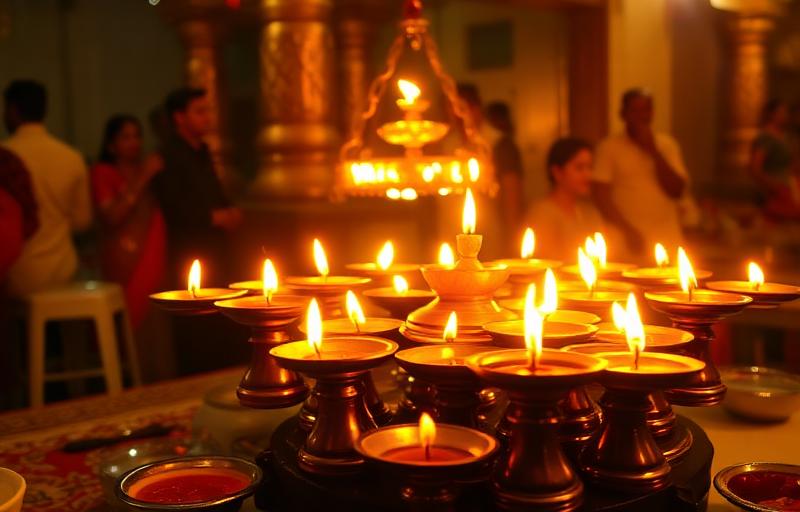
What unites Bihu and Durga Puja in Assam is a shared spirit, one of gratitude, community gathering and renewal. Families reunite, new clothes are worn, and neighborhoods come alive with music and shared meals, whether the occasion is a Bihu gathering or a Durga Puja pandal visit.
Devotees often describe this season as the most vibrant stretch of the Assamese calendar, where cultural celebration and devotional worship reinforce rather than compete with one another.
A Devotee's Takeaway
The way Bihu and Durga Puja sit together on Assam's calendar offers a gentle lesson in how devotion and culture can nourish one another, gratitude for the harvest flowing naturally into reverence for the Divine Mother.
For devotees visiting Assam during this season, witnessing both traditions side by side offers a fuller sense of how faith is woven into the everyday rhythms of Assamese life.
Quick Answers
How are Bihu and Durga Puja related in Assam?+
While rooted in different origins, one agricultural and the other devotional, Bihu and Durga Puja often fall close together on Assam's calendar, and many families experience the season as one continuous stretch of gratitude and celebration.
Why is Durga Puja significant in Assam specifically?+
Given Assam's long-standing Shakta tradition centered on Kamakhya, devotion to the Divine Mother finds a natural and receptive home in the state, making Durga Puja a deeply observed festival, particularly in Guwahati.
What is Kati Bihu and when is it observed?+
Kati Bihu is observed in autumn, one of the three annual Bihu celebrations tied to the agricultural cycle, and falls closest to the Durga Puja season on Assam's calendar.
About the author
Pandit Mahesh Trivedi · Festival Traditions & Panchang
Pandit Mahesh leads the festival-date and Panchang content on Vandnaa. He cross-references multiple regional panchangs (Drik, Vaishnava, Bengali, Marathi) for every festival date published on the site.
Meet the Vandnaa editorial team →