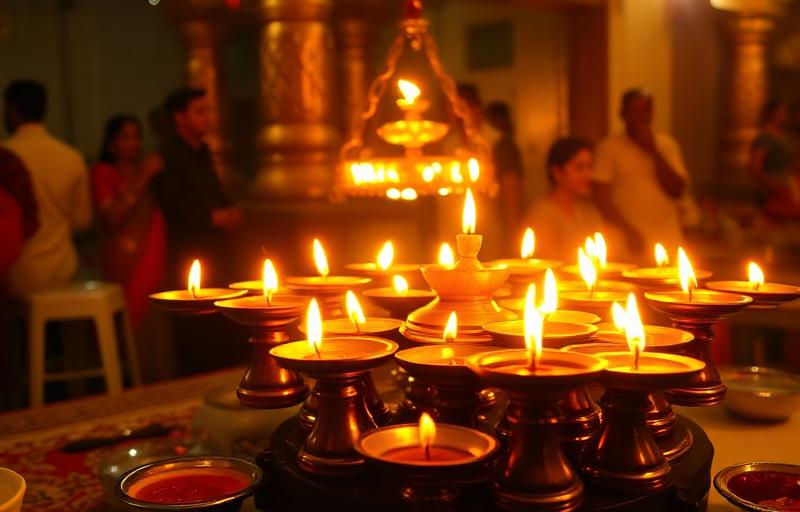
Who Baba Ramdev Is
Baba Ramdev, also called Ramdev ji, Ramsa Pir and Ramapir, is worshipped at Ramdevra, also known as Runicha, a village in Jaisalmer district of Rajasthan.
He is remembered as a Tanwar Rajput ruler of the fifteenth century whom devotees regard as an incarnation of Vishnu, and specifically of Krishna, born to answer the prayers of those who had no one to turn to. Tradition holds that he took samadhi at Ramdevra, and the samadhi is the centre of the shrine today.
His following extends far beyond Rajasthan:
- Across Gujarat, Haryana, Madhya Pradesh and Sindh, and among communities from those regions settled elsewhere
- Especially strong among Meghwal, Dalit and other communities who found in him a deity who explicitly refused to exclude them
- Among Rajput and agricultural families across Marwar who keep him as kul deity
- He is also revered in the region across faith lines, where he is addressed as Ramsa Pir, and the shrine has long been described locally as a place where that shared reverence is visible
What sets Baba Ramdev apart from most folk deities is not the miracles attributed to him but the social position his devotion took, which is stated openly at the shrine and is the first thing devotees mention.
The Teaching That Defines the Shrine
The kathas of Baba Ramdev include the usual elements of a folk deity's story, but the strand that carries his following is social.
In the tradition, Baba Ramdev refused the exclusions of his time. He ate with those his contemporaries would not eat with, accepted devotees from every community without distinction, and made his own shrine open in a period when many were not. His closest disciple in the tradition is Dali Bai, a woman he is said to have accepted as a daughter and who is revered alongside him at Ramdevra.
Devotees describe this not as reform in the modern sense but as the deity's own nature. The point in the kathas is never that he argued about equality. It is that he simply did not observe the distinction, and that people who had been kept out of other places found that at his door there was no outside.
That is why the shrine's following is what it is. For communities excluded from temple entry in earlier centuries, Ramdevra was a place where the question did not arise. Generations of families in Rajasthan, Gujarat and Sindh built their devotional life around that fact.
The jyot, the lamp lit in his name, and the songs sung through the night at his jagrans return again and again to this theme, and it is the reason his devotion has stayed strong while many contemporaries of his have faded.
The Jaat: Walking to Ramdevra in Bhadrapada
The Ramdevra jaat is the annual pilgrimage to the shrine, held in Bhadrapada, and it is among the largest walking pilgrimages in western India.
How it works:
- Groups set out on foot from towns and villages across Rajasthan, Gujarat, Haryana and Madhya Pradesh, some walking for many days
- Each group carries a neja, a tall flag, usually saffron, which is the marker of a Ramdev jaat and is offered at the shrine on arrival
- Walkers call out to the Baba as they go, and villages along the routes set up water points, food and rest camps for them
- The fair at Ramdevra runs for several days around Bhadrapada Shukla Dwitiya to Ekadashi, with the shrine open through much of the night
- Devotees complete vows, offer cloth, coconut, sweets, cash and wooden horses, since the horse is closely associated with him
The jaat is not organised by any central body. It runs on the same voluntary logic as the Pandharpur wari and the Kanwar yatra, with groups forming locally, walking together and being fed along the way by people who consider that feeding part of their own devotion.
For many families the jaat is the fixed point of the year. Members working in Surat, Ahmedabad, Delhi or the Gulf plan leave around it, and the walk is treated as the vow itself rather than as the means of reaching a temple.
Terah Taali and the Night of Jagran
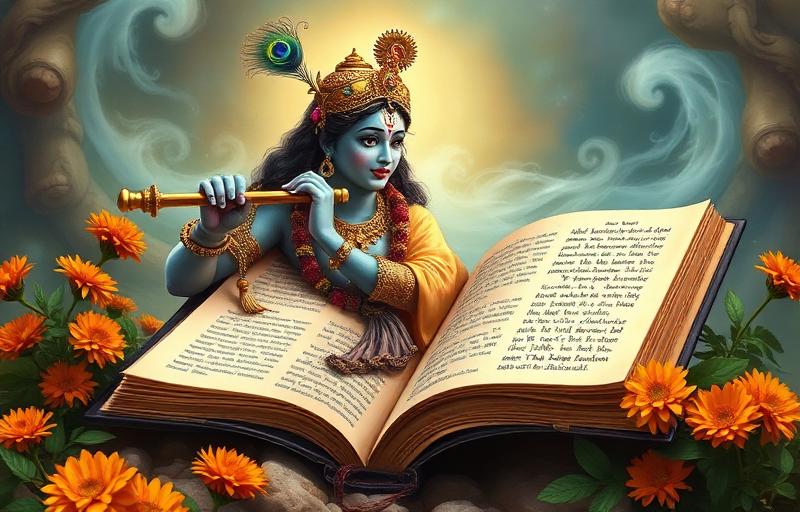
Baba Ramdev's worship has its own performance tradition, and the most distinctive part of it is terah taali.
In this form, women of the Kamad community, traditional devotees and performers associated with Ramdev worship, perform seated, with small manjeeras, metal cymbals, tied to their bodies at thirteen points, on the arms, wrists, elbows and legs. They strike them in complex rhythmic patterns while singing his praise, sometimes balancing pots or a sword during the performance.
Around this sits the wider devotional practice:
- Jagran and jamma, night long song sessions held in homes and at the shrine, where the Baba's kathas are sung
- Jyot, the lamp lit in his name during a jagran, treated as his presence for the night
- Bhajan mandalis that travel with the jaat, singing through the walk
- Wooden horses offered at the shrine, and the horse motif appearing across the devotion
What holds these together is that they are participatory. There is no separation between a priesthood performing and a congregation watching. The families keeping the vow sing, the performers are devotees, and the night runs until the singing ends.
For visitors, terah taali is often first encountered as a stage folk performance at cultural events in Rajasthan. Seeing it in its devotional setting, at a jagran or during the jaat, gives a completely different sense of what it is.
The Shrine at Ramdevra
Ramdevra is a small village that becomes a city for a few weeks each year.
At the centre is the samadhi of Baba Ramdev, with the samadhi of Dali Bai close by, and the two are worshipped together. Around them the complex has grown over the years with halls, accommodation and facilities for the enormous Bhadrapada crowds.
What devotees do at the shrine:
- Offer the neja carried on the walk
- Offer cloth, coconut, sweets and wooden horses
- Take darshan of both samadhis, since Dali Bai's place in the tradition is not secondary
- Sit for jagran in the surrounding grounds, where mandalis sing through the night
- Complete mundan and other family vows
Outside the jaat period, the village is quiet, and darshan is unhurried. The desert setting is stark, and the approach across Jaisalmer district gives a good sense of the distances that walkers cover during the fair.
Ramdevra is on the Jodhpur to Jaisalmer route, with Pokhran close by, and most visitors reach it by road from Jodhpur or Jaisalmer. During the fair, transport and accommodation across the district are stretched, so travel needs planning well in advance.
Why His Devotion Keeps Growing
Many folk deity traditions are contracting. Baba Ramdev's is not, and the reasons are worth setting out plainly.
- The teaching still answers something. A shrine whose founding principle is that no one is turned away continues to matter to families who remember what exclusion was, and to those who still encounter it.
- The jaat is portable. A pilgrimage that requires only the willingness to walk and a flag can be joined from anywhere, by anyone, at any economic level.
- Migration spread it. Families from Rajasthan and Gujarat carried the devotion to Surat, Mumbai, Delhi and abroad, and jagrans are now held wherever those communities live.
- The practice is communal. Jagran, jamma and terah taali are group activities, and a devotion that people do together survives better than one that depends on individual ritual.
- It sits comfortably within Hindu practice. Devotees keep Ramdev ji alongside their kul devi, Ganesh puja, Navratri and everything else, with no sense of conflict.
For devotees who cannot make the jaat, the customary practice at home is straightforward. Light a jyot in his name, hold or attend a jagran, feed people, and keep the promise you made in the terms you made it. That last part is the one his devotees consider non negotiable, and it is entirely in keeping with the story of a deity remembered above all for keeping his word.
Frequently Asked Questions
Who is Baba Ramdev of Ramdevra?+
Baba Ramdev, also called Ramsa Pir, is a folk deity worshipped at Ramdevra in Jaisalmer district of Rajasthan. He is remembered as a fifteenth century Tanwar Rajput ruler regarded by devotees as an incarnation of Vishnu, and his samadhi is the centre of the shrine.
Why is Baba Ramdev associated with opposing caste discrimination?+
In the tradition he refused the exclusions of his time, ate with those others would not, and accepted devotees from every community. His shrine was open when many were not, which is why communities kept out elsewhere built their devotional life around it.
Who is Dali Bai?+
Dali Bai is Baba Ramdev's closest disciple in the tradition, whom he is said to have accepted as a daughter. Her samadhi stands beside his at Ramdevra and devotees take darshan of both, since her place in the tradition is not treated as secondary.
When is the Ramdevra fair held?+
In Bhadrapada, around Shukla Dwitiya to Ekadashi, when walking groups arrive from Rajasthan, Gujarat, Haryana and Madhya Pradesh carrying saffron neja flags. The shrine stays open through much of the night during those days.
What is terah taali?+
Terah taali is the devotional performance associated with Baba Ramdev, in which women of the Kamad community perform seated with thirteen small manjeeras tied to their bodies, striking them in rhythm while singing his praise.
What is offered at Ramdevra?+
The neja flag carried on the walk, along with cloth, coconut, sweets, cash and wooden horses, since the horse is closely associated with him. Many families also complete mundan and hold jagrans at the shrine grounds.
About the author
Anjali Mehta · Editor, M.A. Religious Studies
Anjali is the managing editor for Vandnaa and oversees the festival and vrat coverage. She holds an M.A. in Religious Studies and reviews every published article for accuracy, accessibility, and tradition-fidelity.
Meet the Vandnaa editorial team →Explore on Vandnaa
Related Articles
Pabuji: The Rajasthan Deity Whose Temple Is a Painted Scroll
9 min read
Gogaji Jaharveer: The Serpent Deity of Rajasthan Worshipped From Churu to Punjab
9 min read

Khatu Shyam Katha - Barbarika's Devotion and Krishna's Boon
8 min read
Rajasthan's Rich Tradition of Folk and Clan Goddesses: An Overview
7 min read