What Is Baisakhi and When Is It Celebrated
Baisakhi, also spelled Vaisakhi, is celebrated in mid-April, usually around the 13th or 14th, marking both the ripening of the Rabi crop in Punjab and the solar new year. It falls in the same season as Puthandu, Vishu, Bihu and Poila Boishakh, all part of a wider pattern of mid-April new year festivals across India.
For Punjab's farming communities, Baisakhi is above all a festival of the harvest, a moment to pause, give thanks, and celebrate the reward of a full agricultural cycle.
A Day of Deep Significance
Baisakhi's roots lie in the agricultural calendar and the solar transition it marks, a moment Hindu tradition across North India has long treated as auspicious for new beginnings, much like Makar Sankranti in winter.
The day also holds great significance for the Sikh community as the day the Khalsa Panth was founded, and many Punjabi Hindu and Sikh families share in the season's festivities together, a reflection of Punjab's long tradition of shared devotion and community celebration around the harvest.
Rituals of the Day
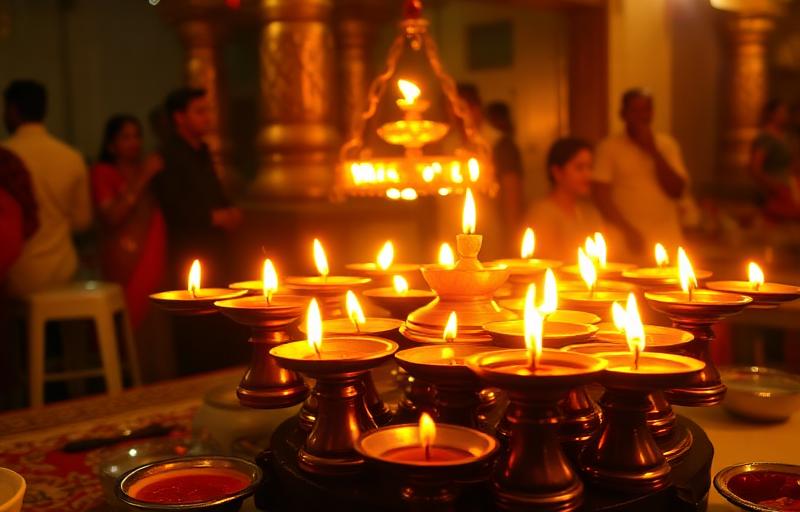
Baisakhi morning traditionally begins with a holy dip in a river, with large gatherings at sacred spots along the Ganga at Haridwar and at other pilgrimage sites across North India, believed to purify and bless the year ahead.
In Punjab's villages, the ripened wheat fields become the backdrop for community celebration, with farmers performing Bhangra and Gidda, the region's energetic folk dances, in gratitude for the harvest. Fairs, called melas, are held in many towns, and families gather to share festive food and mark the day with visits to temples and gurdwaras.
Baisakhi's Place Among Regional New Years
Like Puthandu in Tamil Nadu, Vishu in Kerala and Bihu in Assam, Baisakhi marks the same broad solar turning point, yet Punjab's expression of it is distinctly agrarian and communal, built around open fields, folk dance and large public gatherings rather than home rituals alone.
This outward, celebratory character, fairs, dance and music filling public spaces, gives Baisakhi its own unmistakable energy among India's spring harvest festivals, even as its underlying devotional gratitude for the sun and the season mirrors its counterparts elsewhere.
Gratitude and Festive Food
Prayers on Baisakhi are offered in gratitude to the divine for the harvest, with many families visiting temples to chant simple invocations of thanks and seeking blessings for the sowing of the next crop.
The festive table features the season's wheat harvest prominently, makki di roti with sarson da saag, kheer, and other Punjabi delicacies, shared generously with family, neighbours and visitors as an expression of the season's abundance.
A Festival of Gratitude for the Land
Baisakhi is a heartfelt reminder that the labour of the fields and the blessing of the divine are deeply connected, and that celebrating a harvest is itself a form of worship. The joy of Bhangra and Gidda is, at its heart, thanksgiving expressed through movement.
Worship is an act of faith and love, not a transaction, and Baisakhi's blend of holy baths, temple visits and communal celebration shows how devotion in Punjab has always walked hand in hand with the rhythm of the soil.
Common Questions From Devotees
What does Baisakhi celebrate?+
Baisakhi celebrates the ripening of the Rabi harvest in Punjab and marks the solar new year, a time of gratitude to the divine and the land for the season's abundance.
Where do people take holy baths on Baisakhi?+
Many devotees take a holy dip in the Ganga at Haridwar and at other sacred rivers and pilgrimage sites across North India on Baisakhi morning, a practice believed to purify and bless the new year.
How does Baisakhi relate to other Indian harvest festivals?+
Baisakhi falls in the same mid-April season as Puthandu, Vishu and Bihu, all marking the solar new year and harvest gratitude in their own regional way, showing the shared devotional thread running through India's spring festivals.
About the author
Pandit Mahesh Trivedi · Festival Traditions & Panchang
Pandit Mahesh leads the festival-date and Panchang content on Vandnaa. He cross-references multiple regional panchangs (Drik, Vaishnava, Bengali, Marathi) for every festival date published on the site.
Meet the Vandnaa editorial team →