
The Setting: Arjuna Asks Seven Questions
At the close of Chapter 7, Krishna mentioned adhyatma, karma, adhibhuta, adhidaiva and adhiyajna almost in passing. Arjuna, always eager to understand fully, opens Chapter 8 by asking Krishna to explain each of these terms clearly, and adds one more question of his own, how the wise remember Krishna at the moment of death.
This question about death is not asked out of fear alone. Arjuna is a warrior about to enter a battle where death is a real possibility, and he genuinely wants to understand what happens beyond the final breath.
The Core Theme: Brahman and the Moment of Death
Krishna answers each term in turn. Brahman is the supreme imperishable reality, adhyatma is one's own essential nature, karma is the creative force behind the coming into being of all creatures, adhibhuta is the perishable aspect of existence, adhidaiva is the cosmic divine principle, and adhiyajna is Krishna himself, present in the body as the one to whom all sacrifice is ultimately offered.
He then turns to the heart of the chapter, teaching that whatever state of being a person dwells upon at the final moment of life, that is what they attain after death, since the mind carries the shape of what it has been steadily practising all along.
Key Teachings Explained Simply
- Krishna teaches that whoever remembers him alone at the time of death, having practised steady devotion throughout life, attains him, since constant remembrance shapes the mind's final direction.
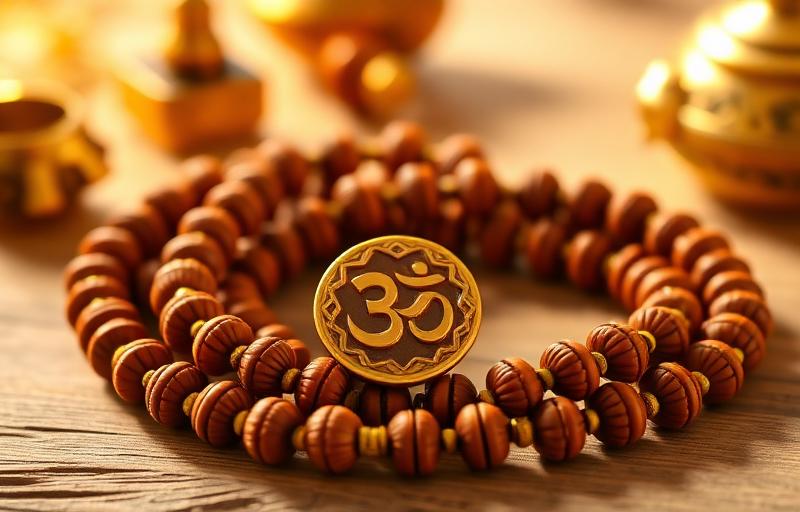
- Chanting the single syllable Om, representing Brahman, while holding Krishna in the heart, is described as a powerful support at the time of leaving the body.
- Krishna describes two paths after death, traditionally called the path of light and the path of smoke, one leading beyond return and the other back into the cycle of rebirth.
- He assures Arjuna that a true yogi who understands this teaching goes beyond even the results promised by scriptural study, sacrifice, austerity and charity, attaining the highest, eternal abode.
How This Chapter Answers Arjuna's Dilemma
Arjuna's dread of the battlefield was tied closely to a dread of death itself, the fear that dying in war might mean simply ceasing to exist or facing an uncertain fate. By explaining that the moment of death is shaped by a lifetime of steady inner practice, not by the manner of death, Krishna reframes death as a transition rather than an ending to fear.
This teaching gives Arjuna a reason to approach the battle without the paralysing terror of death, since a mind trained in devotion and duty has, in this teaching, nothing final to lose.
Practical Relevance Today
Few people today live with a battlefield ahead of them, yet everyone eventually faces the same uncertainty about death that troubled Arjuna. This chapter's teaching, that steady daily remembrance shapes one's final state of mind, encourages devotees to build a consistent practice of prayer or meditation now, rather than hoping to manage it only in a crisis.
It also gently reframes how one thinks about habits in general, whatever the mind returns to again and again in ordinary life is likely what it will reach for under pressure, making small daily devotion far from a minor matter.
The Takeaway
Akshara Brahma Yoga teaches that the imperishable Brahman is reached through steady, lifelong remembrance, not a single effort attempted only when death draws near. What the mind practises daily becomes what it holds onto at the final moment.
Building that quiet, constant remembrance of God through the ordinary days of life, tradition holds, is an act of faith and love, not a transaction.
Frequently Asked Questions
What does Krishna teach about death in Bhagavad Gita Chapter 8?+
Krishna teaches that whatever state of being a person remembers at the final moment of life is what they attain after death, so a lifetime of steady devotion naturally shapes a peaceful, focused final thought.
What are adhyatma, adhibhuta and adhidaiva in this chapter?+
Adhyatma is one's own essential nature, adhibhuta is the perishable aspect of all existence, and adhidaiva is the cosmic divine principle. Krishna explains these along with karma and adhiyajna in answer to Arjuna's questions.
Why is chanting Om important in Chapter 8?+
Om represents Brahman itself, and Krishna teaches that chanting it while holding him in the heart at the time of leaving the body is a powerful support for reaching the highest, eternal goal.
About the author
Anjali Mehta · Editor, M.A. Religious Studies
Anjali is the managing editor for Vandnaa and oversees the festival and vrat coverage. She holds an M.A. in Religious Studies and reviews every published article for accuracy, accessibility, and tradition-fidelity.
Meet the Vandnaa editorial team →