Biswakarma Puja 2026 Date, Tithi & Shubh Muhurat
Biswakarma Puja 2026 falls on Thursday, September 17, 2026.
This is Kanya Sankranti - the day the Sun enters the zodiac sign of Kanya (Virgo) according to the Surya Siddhanta solar calendar. Unlike most Hindu festivals which follow the lunar tithi system, Biswakarma Puja is tied to the solar transition - which is why it falls on 17 September every year in Bengali, Odia, Assamese, Tripuri, and Bihari calendars (occasionally September 16 or 18 in rare years).
Why the date is fixed:
The Sun takes approximately 365.25 days to complete one zodiac cycle. The transition from Simha (Leo) to Kanya (Virgo) happens around September 16-17 each year. Vishwakarma - the divine architect of the universe - is honored on this Sankranti because he is associated with the cosmic precision and order that the Sun's movements represent.
Shubh Muhurat 2026:
- Sankranti Punya Kaal: 6:30 AM to 11:30 AM (approximate - varies by location).
- Brahma Muhurta puja: 4:00 AM to 5:30 AM (most powerful for first puja).
- Morning puja: 7:00 AM to 9:00 AM (most common, families gather).
- Workplace/factory puja: 9:00 AM to 12:00 PM (employees gather).
- Avoid: Rahu Kaal 1:30 PM to 3:00 PM (Wednesday Rahu Kaal in 2026).
Regional naming - same festival, different spellings:
- Bengal, Odisha, Bihar, Jharkhand: Biswakarma Puja (বিশ্বকর্মা পূজা)
- Hindi belt (UP, MP, Rajasthan): Vishwakarma Puja / Vishwakarma Jayanti
- Assam, Tripura: Biswakarma Puja
- South India (Tamil Nadu, Karnataka): Vishwakarma Jayanti (less prominent)
- Nepal: Bishwakarma Puja
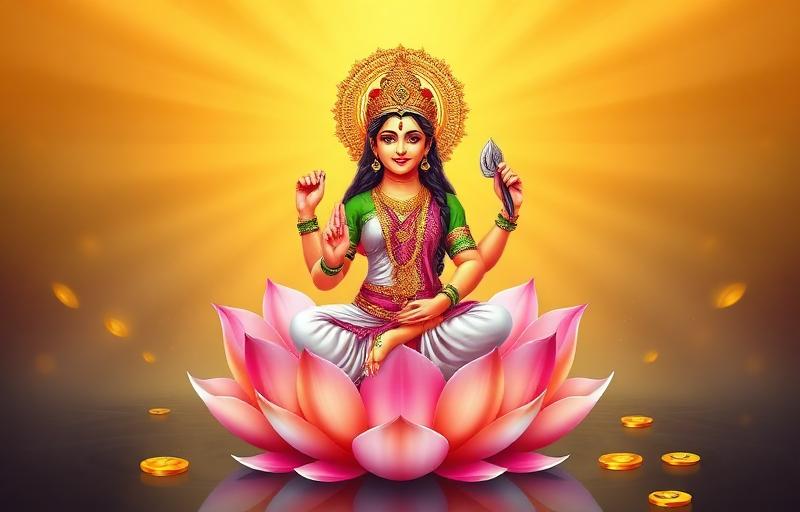
All spellings refer to the same deity - Vishwakarma, the divine engineer and creator of weapons, palaces, and the cities of the gods.
Complete Vidhi + Samagri List (Bengali & Odia Style)
Samagri (puja items) needed:
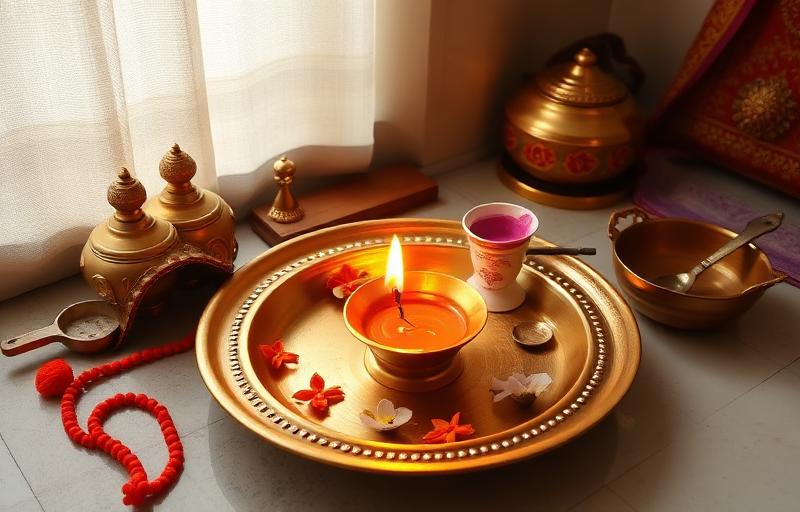
1. Vishwakarma idol or photograph (clay idol preferred - immersed after puja). 2. Red cloth (for altar covering). 3. Banana stalks (4 - placed at corners of altar). 4. Mango leaves (for toran and kalash decoration). 5. Kalash (copper or brass water pot). 6. Coconut (whole, with husk). 7. Rice grains (akshat) - mixed with turmeric. 8. Vermillion (sindoor), turmeric (haldi), sandalwood paste (chandan). 9. Flowers - red hibiscus, marigold, lotus (if available). 10. Incense sticks (agarbatti), camphor (kapoor), oil lamp (diya). 11. Fruits - banana, apple, pomegranate, coconut. 12. Sweets - laddu, sandesh (Bengali), pitha (Odia), kheer. 13. Tools/instruments of the worshipper - this is unique to Biswakarma Puja. Bring all tools of your trade: hammers, screwdrivers, computer, laptop, vehicle keys, machinery parts, etc. 14. Betel leaves (paan) and betel nuts (supari). 15. Sacred thread (kalava/mauli). 16. Ganga jal (Ganges water) for shuddhikaran.
Step-by-step vidhi:
Step 1 - Preparation (evening before, September 16):
- Clean the workspace/factory/workshop thoroughly.
- All tools and machines should be cleaned, oiled, polished.
- Decorate doorway with banana stalks and mango leaf toran.
- Set up the altar in northeast direction (Ishaan kon).
Step 2 - Morning shuddhikaran (4:00-5:30 AM):
- Take bath, wear clean (preferably yellow or red) clothes.
- Sprinkle Ganga jal on workspace and tools.
- Light a single diya facing east.
Step 3 - Establish kalash (7:00-9:00 AM):
- Fill kalash with water, mango leaves on top, coconut placed on leaves.
- Tie sacred thread around the kalash neck.
- Place kalash at center of altar.
Step 4 - Invoke Vishwakarma:
- Place idol or photo behind kalash.
- Apply sindoor + chandan + akshat on idol's forehead.
- Offer flowers, especially red hibiscus.
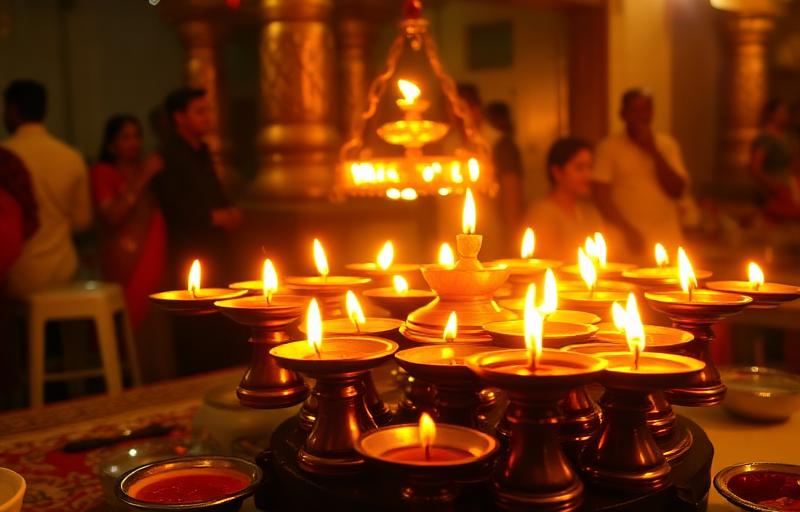
- Light 5 diyas in a row in front of the altar.
Step 5 - Recite mantras:
- Mool mantra: 'Om Vishwakarmaya Namah' - 108 times.
- Beej mantra: 'Om Aim Hreem Shreem Vishwakarmaya Namah' - 11 times.
- Recite Vishwakarma Chalisa (if available).
Step 6 - Tool puja (the unique ritual):
- Place ALL tools/machines/devices around the altar.
- Apply sindoor + chandan tilak on each tool.
- Tie kalava (sacred thread) on key machinery.
- Offer flowers and rice grains.
- Pray: 'May these tools serve righteously, never harm any living being, and bring prosperity to all who use them'.
Step 7 - Aarti and bhog:
- Perform aarti with camphor.
- Offer bhog - sweets, fruits, kheer.
- Distribute prasad to all employees/workers/family.
Step 8 - Conclusion:
- Sit silently for 5 minutes meditating on Vishwakarma.
- Promise to use tools ethically for the coming year.
- Idol immersion (visarjan) in evening or next day in a river/pond.
Bengali tradition unique elements:
- Sandesh and rasgulla as main bhog.
- Community pandals in factories and workshops.
- Aarti accompanied by dhak (drums) and conch.
- Kite flying in evening (especially in Kolkata).
Odia tradition unique elements:
- Pitha (rice cake) as bhog.
- Mahaprasad concept - all prasad cooked in one common kitchen.
- Workers and managers eat together as equals.
- Procession of decorated tools/vehicles through the area.
Workplace/Factory Worship - Who Celebrates & Why
Biswakarma Puja is uniquely the 'festival of workers' - the only major Hindu festival centered on workplaces rather than homes.
Who traditionally celebrates:
1. Engineers and architects - Vishwakarma is their patron deity. 2. Factory workers, machinists, mechanics - the people who use tools daily. 3. Carpenters, blacksmiths, goldsmiths, masons - traditional artisan castes. 4. Drivers - bus, truck, taxi, auto-rickshaw drivers worship their vehicles. 5. IT professionals - laptops, servers, and computers are puja-worthy tools. 6. Construction workers - cranes, mixers, scaffolding all worshipped. 7. Tailors, weavers - sewing machines and looms decorated. 8. Goldsmiths and silversmiths - their tools and ovens. 9. Electricians - their tools and meters. 10. Anyone whose livelihood depends on tools or machines.
Why this matters:
The ancient wisdom: 'Your tools are your divine partners.' When you respect your tools as sacred instruments, three things happen:
1. Tools last longer. Worship-day cleaning and oiling extends machinery lifespan. 2. Safety improves. Conscious appreciation of tools makes operators more careful. 3. Pride in work increases. Ritual recognition of one's trade builds craftsman identity.
In India's industrial belt (West Bengal, Odisha, Jharkhand, Bihar), Biswakarma Puja is a state-level holiday. Factories grant paid leave to workers. Companies organize community feasts. Inter-factory cricket matches and cultural programs happen.
Modern adaptations:
- IT companies in Bangalore, Hyderabad, Pune now organize Vishwakarma Puja - puja laptops, servers, data centers.
- Startups consecrate their first product, first server, first office.
- Drivers get day off to clean and worship their vehicle.
- Home-based freelancers worship their computer/desk setup.
- Restaurant kitchens worship their cooking equipment.
The deeper philosophy:
In Vedic thought, every act of creation is an act of Vishwakarma. When a carpenter shapes wood, when a programmer writes code, when a baker bakes bread - they are channeling Vishwakarma's creative energy. The puja is a yearly reminder: 'I am not just doing a job - I am participating in cosmic creation.'
This is why even non-religious workers participate - it elevates daily work into something meaningful and dignified.
Frequently Asked Questions
Why is Biswakarma Puja always on September 17 unlike other Hindu festivals?+
Most Hindu festivals follow the lunar (chandra) calendar where tithi changes annually relative to Gregorian date. Biswakarma Puja follows the solar (saur) calendar - it falls on Kanya Sankranti, the day Sun enters Virgo. Since Sun's transition is fixed in solar terms, this date stays September 17 (occasionally 16 or 18 in leap-cycle years). Vishwakarma is associated with cosmic order, so worshipping him on a solar Sankranti reinforces the connection between divine architecture and celestial precision.
Can I do Biswakarma Puja at home for my laptop and work tools?+
Yes, absolutely. Biswakarma Puja is open to anyone whose livelihood depends on tools - including modern tools like laptops, cameras, musical instruments, kitchen equipment. Place your laptop/tools on a clean cloth, apply small sindoor + chandan tilak, offer flowers, light an incense stick, chant 'Om Vishwakarmaya Namah' 21 times. Promise to use the tool ethically. This 10-minute ritual is fully valid and increasingly popular among IT workers, content creators, and home-based professionals.
What's the difference between Biswakarma and Vishwakarma spelling?+
Both refer to the same deity. The difference is purely phonetic - based on regional pronunciation: 'Biswakarma' (Bishwakarma) is how Bengali, Odia, Assamese, and Nepali speakers pronounce it, where the Sanskrit 'व' (va) becomes 'ব' (ba) in those scripts. 'Vishwakarma' is the Sanskrit and Hindi/Devanagari pronunciation. Both are correct; use whichever your tradition follows. The deity, mantras, and rituals are identical.
Is Biswakarma Puja a public holiday in 2026?+
Biswakarma Puja is a state-restricted holiday in West Bengal, Odisha, Jharkhand, and Tripura - factories, workshops, and many private offices observe paid leave. It is not a national holiday and is not observed in most of central/west India. Many central government offices in eastern India also remain closed. Check your state government calendar; if your workplace doesn't formally observe it, you can still take leave for puja or organize an in-office puja (common in IT and manufacturing sectors).
About the author
Pandit Mahesh Trivedi · Festival Traditions & Panchang
Pandit Mahesh leads the festival-date and Panchang content on Vandnaa. He cross-references multiple regional panchangs (Drik, Vaishnava, Bengali, Marathi) for every festival date published on the site.
Meet the Vandnaa editorial team →