The 45-Minute Brahma Muhurta Routine - Step by Step
Pre-routine setup (4:00-4:10 AM, 10 min):
1. Wake at 4:00 AM. Chant Karagre Vasate (palm-viewing mantra). 2. Brush teeth, splash cold water on face. Skip soap/full bath until after practice (sweat needs to dry first). 3. Drink 1-2 glasses warm water with lemon (or just warm water). Activates digestive fire. 4. Visit toilet - the body's natural cleanse time. 5. Sit on yoga mat in clean, ventilated space facing east. 6. Light a diya, incense optional. 7. Spend 2 minutes in silent breathing - settling the body.
Phase 1 - Pranayama (4:10-4:30 AM, 20 min):
1. Anulom Vilom (Alternate Nostril Breathing) - 5 min:
- Sit in Sukhasana (easy crossed-leg pose).
- Right hand: thumb closes right nostril, ring finger closes left.
- Inhale through left nostril (4 counts).
- Close left, exhale through right (8 counts).
- Inhale through right (4 counts).
- Close right, exhale through left (8 counts).
- This is 1 round. Do 10-15 rounds.
- Benefits: balances ida-pingala (left-right brain), clears nasal passages, lowers anxiety.
2. Bhastrika (Bellows Breath) - 3 min:
- Sit upright.
- Forceful inhale + forceful exhale through both nostrils.
- Like rapid bellows pumping. 20-30 breaths per round.
- Do 3 rounds with 30-second rest between.
- Benefits: oxygenates blood deeply, energizes nervous system, warms body for cold mornings.
3. Kapalbhati (Skull Shining Breath) - 5 min:
- Inhale passively, exhale forcefully through nose with belly contraction.
- 60 strokes per round.
- 3 rounds with rest between.
- Benefits: cleanses respiratory system, tones abdominal organs, sharpens mental clarity.
4. Bhramari (Bee Breath) - 5 min:
- Close ears with thumbs, fingers covering eyes.
- Inhale deeply, then exhale producing humming 'mmm' sound.
- 8-10 rounds.
- Benefits: calms nervous system, prepares mind for meditation, releases pent-up stress.
Phase 2 - Asanas (4:30-4:55 AM, 25 min):
1. Surya Namaskar (Sun Salutation) - 8 min:
- 5-12 rounds of complete Surya Namaskar (12 poses each).
- Done facing east as sun preparation.
- Each round chant a different name of Surya: Mitra, Ravi, Surya, Bhanu, Khaga, Pushne, Hiranyagarbha, Marichi, Aditya, Savitre, Arka, Bhaskara.
- Benefits: full-body warm-up, integrates 12 asanas, honors the rising sun.
2. Vajrasana (Thunderbolt Pose) - 2 min:
- Sit on heels, knees together.
- Hands on thighs, spine straight.
- Hold and breathe deeply.
- Benefits: only asana you can do after eating; great post-tea sit; activates digestion.
3. Bhujangasana (Cobra Pose) - 2 min:
- Lie face down, palms under shoulders.
- Inhale, lift chest using back muscles (not arms).
- Hold 30 seconds, release. Repeat 3 times.
- Benefits: opens chest, strengthens spine, activates manipura chakra.
4. Paschimottanasana (Seated Forward Fold) - 3 min:
- Sit with legs extended forward.
- Inhale, lift arms; exhale, fold over legs.
- Hold 60-90 seconds, breathe deeply.
- Benefits: stretches entire back, calms nervous system, activates root chakra.
5. Sarvangasana (Shoulder Stand) - 3 min:
- Lie on back, lift legs and hips up.
- Support back with hands.
- Body forms straight line from shoulders to feet.
- Hold 60-90 seconds.
- Benefits: improves thyroid function, reverses gravity effects, balances all chakras.
- (Skip if neck/back issues.)
6. Matsyasana (Fish Pose) - 2 min:
- After Sarvangasana, lie on back.
- Arch chest up, head touches floor.
- Hold 30-60 seconds.
- Benefits: counter-pose to shoulder stand, opens throat chakra.
7. Shavasana (Corpse Pose) - 5 min:
- Lie flat on back, arms relaxed by sides.
- Close eyes. Body completely relaxed.
- Breathe naturally. Mind on bodily sensations.
- Benefits: integrates the practice, deep rest, transition to meditation.
Phase 3 - Meditation (4:55-5:15 AM, 20 min):
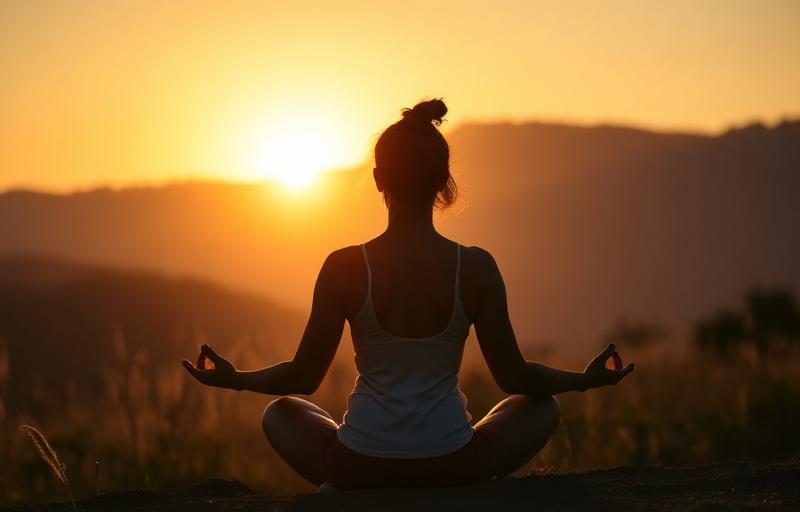
Sit in Padmasana or Sukhasana.
- 5 min: Awareness of breath only.
- 10 min: Chant Om silently, syncing with breath.
- 5 min: Sit in silence, watching thoughts pass without engaging.
Phase 4 - Closing (5:15-5:30 AM, 15 min):
- 3 audible Oms to seal the practice.
- Recite a closing prayer or shloka (Asato Ma Sad Gamaya, or Sahanavavatu).
- Pranam to your altar / east direction.
- Drink warm water, get up slowly.
- Now begin morning bath, dress, breakfast.
Total time: approximately 1 hour 30 minutes (4:00-5:30 AM, the complete Brahma Muhurta window).
Reduced version (for beginners, 30 min):
- Skip Bhastrika and Kapalbhati for first month.
- Do 3 Surya Namaskars instead of 12.
- Skip Sarvangasana if unsure of form.
- Meditate 10 min instead of 20.
Build up gradually. Within 41 days, the full 90-minute routine becomes natural and you'll wonder how you ever skipped it.
Scientific Benefits + Why 4 AM Specifically
Why pre-dawn yoga delivers what daytime yoga doesn't:
1. Cortisol baseline reset.
Cortisol (stress hormone) naturally rises starting around 4:30-5:00 AM, peaking at 6-7 AM. Yoga during this rise SHAPES the hormonal pattern for the entire day. Daytime yoga corrects already-active stress; pre-dawn yoga prevents it from rising.
2. Body temperature flexibility.
Core body temperature drops to its lowest around 4 AM. Asanas done at this temperature stretch muscles deeper and more safely than at any other time. Risk of muscle pull is lowest.
3. Empty stomach optimal for asanas.
Yoga requires empty stomach for full benefit. At 4 AM, you haven't eaten for 8+ hours - perfectly empty. Any other time requires either skipping a meal or waiting 4 hours - inconvenient.
4. Lower air pollution.
In most cities, pre-sunrise air has lowest pollution levels. Pranayama in this air actually delivers oxygen and prana, not pollutants. Same pranayama at 10 AM in city air can be net negative.
5. Negative ion density.
Atmospheric negative ions are highest before sunrise. These ions are linked to elevated mood, lower depression, better cognitive function. You absorb maximum negative ions during this window.
6. Bioenergetic alignment.
Your body's energy meridians (per acupuncture/yoga) reset between 3-5 AM (the 'lung-large intestine' cycle in Traditional Chinese Medicine, the 'sattva surge' in Yoga). Practice here aligns with this natural reset.
7. Cognitive imprinting.
The first activity of the day disproportionately shapes the day's mental pattern. Doing yoga first imprints calm, focus, and prana into the day's baseline. Email-first or news-first imprints reactivity and anxiety.
8. Compounding effect.
Most yoga benefits compound with consistency. Pre-dawn practice is easier to make consistent (no schedule conflicts, family obligations) - so it stays sustainable. Most evening-yoga practitioners eventually skip due to schedule. Pre-dawn practitioners rarely skip.
Measurable benefits within 30 days:
- 15-25% improvement in lung capacity (from pranayama).
- 20% reduction in resting heart rate (improved cardiovascular).
- 30% improvement in HRV (heart rate variability - stress resilience).
- 40% improvement in sleep quality (yoga regulates circadian rhythm).
- 50% reduction in morning anxiety (cortisol pattern reset).
- Visible weight loss if you have weight to lose (asanas + early metabolism activation).
- Skin glow (better circulation + lower stress + better sleep).
- Mental clarity that lasts till evening.
These are not exaggerated - countless studies on Iyengar yoga, Patanjali techniques, modern HRV research confirm these effects. The catch: requires daily consistency for at least 30 days. Hence the importance of pre-dawn timing for sustainability.
Quick Answers
Can I do this routine if I sleep late and wake at 6 AM instead of 4 AM?+
Yes, but with reduced effectiveness (about 60% of full benefit). Better to do this at 6 AM than skip entirely. Adaptations: (1) Do the full routine if you can; if time is short, prioritize pranayama (most time-dependent) over asanas. (2) Eventually work on sleeping earlier - bed by 10 PM allows natural 4 AM wake. (3) For 30 days, gradually move sleep time 15 minutes earlier each week until you reach 9:30-10 PM. By month 2, 4 AM wake becomes natural. The pre-dawn benefit is so significant that the temporary discomfort of adjusting sleep schedule is well worth it.
Is it safe to do Sarvangasana (shoulder stand) at 4 AM as a beginner?+
Not as a beginner - skip Sarvangasana for the first month and do Viparita Karani (legs-up-the-wall pose) instead. Wall version: lie with hips against wall, legs extended up the wall, arms relaxed. Hold 5-10 minutes. Same benefits (reverse gravity, lymph drainage, thyroid stimulation) but zero neck risk. After 1 month of consistent practice, learn proper Sarvangasana from a qualified teacher (video alone insufficient). At 4 AM, you're often slightly stiff from sleep - inverted poses need warm body. So do Surya Namaskar first (warms up), then attempt inversions.
Do I need to be vegetarian for this routine to work?+
Not strictly required, but vegetarian diet enhances results significantly. Yoga and pranayama work with prana - and vegetarian food carries higher prana than meat (which is bound to the killed animal's life-energy). At minimum, avoid heavy meat dinners (which slow down morning energy) and any meat the night before practice. Many practitioners notice they lose taste for heavy meat after 2-3 weeks of consistent practice - their bodies naturally start preferring lighter food. Don't force vegetarianism if it feels imposed; let the practice itself guide your food preferences. The body's wisdom emerges from inside.
How is this different from gym/fitness workout?+
Goals are fundamentally different. Gym/fitness: focuses on muscle building, cardio, calorie burn - external physical results. Yoga (especially Brahma Muhurta yoga): focuses on prana balance, chakra activation, mind-body integration, spiritual evolution. You CAN have both - many serious yogis do strength training in evening, yoga in morning. But don't mistake one for the other. Yoga done as exercise (without breath awareness, without spiritual intention) is just stretching - it loses 80% of its benefit. The same poses done with conscious breath and inner attention become deeply transformative. Brahma Muhurta yoga specifically emphasizes the inner dimension because the time itself supports inner work.
About the author
Anjali Mehta · Editor, M.A. Religious Studies
Anjali is the managing editor for Vandnaa and oversees the festival and vrat coverage. She holds an M.A. in Religious Studies and reviews every published article for accuracy, accessibility, and tradition-fidelity.
Meet the Vandnaa editorial team →