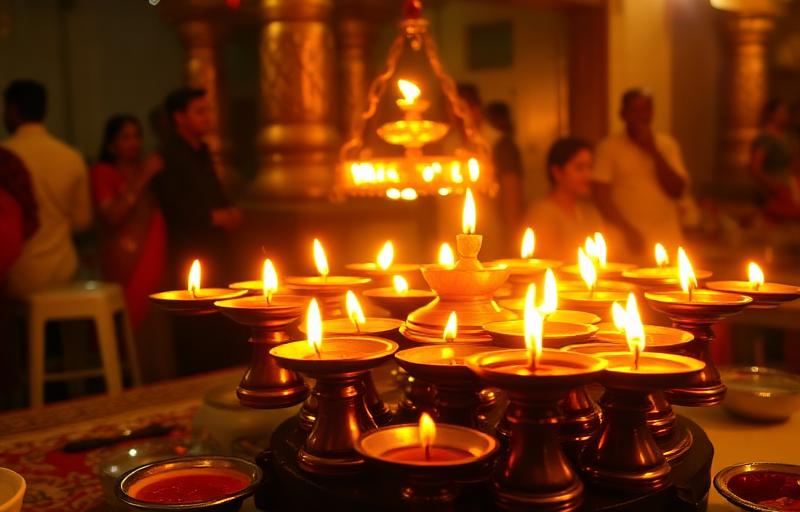
The Shrine at Munger
Chandika Sthan stands in Munger, on the south bank of the Ganga in Bihar, and it is among the oldest and most important Devi shrines in the state.
What is there:
- The sanctum where the Devi is worshipped, in a form that follows the pattern of eastern Shakti shrines rather than a conventional murti
- A temple complex built up over centuries, with additions from many periods
- Subsidiary shrines within the compound
- A location within a fort town whose history runs deep, with the Ganga a short distance away
The shrine is counted among the Shakti Peethas, and tradition holds that the left eye of Sati fell here. That identification governs everything about how the temple is used.
Munger itself is an old town, known for its fort, its association with the Pala period and later, and in modern times for the Bihar School of Yoga. Chandika Sthan predates all of that in the town's own account of itself, and it remains the shrine local families turn to first.
The Devi of the Eye
Because tradition places the left eye of Sati here, the shrine has a specific association that shapes the petitions brought to it.
What devotees come for:
- Relief from eye ailments, for themselves and for family members
- Vows made for the restoration or protection of sight
- Offerings made after treatment has succeeded, which is the commonest form of return visit
- General Devi petitions of the usual kind, for children, marriage, health and household wellbeing
An important point, stated plainly. Eye conditions are medical conditions. Cataract, glaucoma, infection, injury and diabetic eye disease all have effective treatments, and delay in seeking them causes avoidable and often permanent loss of sight.
Devotional practice at a shrine like this runs alongside medical care and never in place of it. Families who come here after successful surgery, and there are many, are honouring both. That is the practice the tradition itself supports, and it should be stated clearly at any shrine associated with healing.
The association also produces a particular kind of offering. Silver or metal representations of eyes are offered at shrines of this type across India, as a physical statement of the request or the thanks.
Worship and the Mundan Tradition
Worship at Chandika Sthan follows the eastern Devi pattern.
- Chunari, sindoor and bangles offered, particularly by married women
- Nariyal, sweets and flowers as bhog
- Havan performed by families for specific intentions
- Jagran sponsored by families completing vows
- Navratri in Chaitra and Ashwin as the fullest periods, with the largest crowds on Ashtami
- Tuesdays and Saturdays drawing steady local footfall
The temple is also one of the principal mundan sites of the region. The first tonsure of a child is performed here by families from Munger and the surrounding districts, and on busy mornings the courtyard is full of families, barbers and small children.
A note on animal offering. Like many eastern Shakta shrines, the tradition here has historically included animal sacrifice, and practice varies across shrines and over time, with many families now offering coconut, pumpkin or other substitutes instead. Where sacrifice continues it is governed by local custom and by law, and visitors uncomfortable with it should simply choose their timing, since ordinary days involve none of it.
The great majority of what happens at the temple, on any given day, is families arriving with a coconut and a request.
Munger and Its Sites
Munger is one of Bihar's older towns and holds several sites of interest around the Chandika Sthan.
Within the town and district:
- Munger fort, on the Ganga, with its gates, walls and the structures within
- Sita Kund, the hot spring a short distance out, associated with the Ramayana
- Chandika Sthan, the Devi shrine
- Bihar School of Yoga, founded in the twentieth century, which made Munger a centre for yoga instruction with an international following
- The Ganga ghats, used for snan and for the town's observances
- Kashtaharini ghat, associated in tradition with the Ramayana narrative
The town sits in the Anga country of tradition, the region associated with Karna in the Mahabharata, which is a strong element of local identity across Bhagalpur, Munger and the surrounding districts.
For a visitor, Munger works as a stop on a wider eastern Bihar circuit that can include Bhagalpur, Vikramshila, Sultanganj where the kanwar yatra begins, and Deoghar across the border in Jharkhand.
The Ganga is the connecting thread of that whole circuit, and much of what is worth seeing sits on or near her bank.
Shakti Peethas of the Region
Chandika Sthan is part of a cluster of Shakti sites across Bihar, Jharkhand and Bengal that together form one of the densest Shakta regions in India.
Some of them:
- Chandika Sthan at Munger, where the left eye is held to have fallen
- Mangla Gauri at Gaya
- Tara Chandi at Sasaram
- Thawe Bhawani in Gopalganj
- Mundeshwari in Kaimur, one of the oldest functioning temples in India
- Rajrappa in Jharkhand, where Chinnamasta is worshipped at the confluence
- Tarapith in Birbhum, Bengal
- Kamakhya in Assam, the greatest of the peethas
What makes this region distinctive within Shakta practice is the strength of its tantric traditions and the number of shrines associated with the Mahavidyas, the ten forms of the goddess, several of which have their most significant temples here.
For a devotee travelling through, the region rewards a circuit rather than single visits. Munger, Bhagalpur, Deoghar, Rajrappa and Tarapith can be done over several days, and the continuity between them becomes clear on the road in a way it does not on a map.
Visiting Chandika Sthan
Practical notes.
Getting there
- The temple is in Munger, on the south bank of the Ganga in Bihar
- Munger and Jamalpur stations serve the town, with connections through Patna and Bhagalpur
- Patna is about 180 km by road, and is the nearest airport
- Autos run within the town, and the shrine is well known to any local driver
When to go
- Navratri in Chaitra and Ashwin, when the temple runs at full scale
- Tuesdays and Saturdays for the weekly rhythm
- Mornings on ordinary days for a quiet darshan, and this is also when mundan ceremonies are performed
- Winter is the most comfortable season in Bihar
At the temple
- Offerings are chunari, sindoor, coconut, sweets and flowers, available outside
- Dress modestly and remove footwear at the designated place
- Follow the queue arrangements during Navratri, when crowds are heavy
- If you have come with an eye related intention, remember that this runs alongside medical care and not in place of it
Combining the visit
- Sita Kund, the hot spring nearby
- Munger fort and the Ganga ghats
- Sultanganj, where the kanwar yatra begins, and Bhagalpur further east
- Deoghar and Basukinath across in Jharkhand
A closing note. Shrines associated with a specific ailment carry a particular weight, because the people who come to them are usually frightened. Whatever else you do at Chandika Sthan, be gentle with the space and the people in it.
Common Questions From Devotees
Why is Chandika Sthan a Shakti Peeth?+
Tradition holds that the left eye of Sati fell here when her body was cut by Vishnu's chakra as Shiva carried it. That identification is why the shrine is particularly associated with eye ailments and with petitions for sight.
What do devotees ask for here?+
Relief from eye ailments for themselves and family, vows for the protection or restoration of sight, and offerings made after treatment has succeeded, alongside the usual Devi petitions for children, marriage, health and household wellbeing.
Should medical treatment be sought for eye problems?+
Yes, always and without delay. Cataract, glaucoma, infection, injury and diabetic eye disease all have effective treatments and delay causes avoidable, often permanent loss of sight. Devotional practice at the shrine runs alongside medical care and never in place of it.
Is mundan performed at this temple?+
Yes. It is one of the principal mundan sites of the region, and families from Munger and the surrounding districts bring children for the first tonsure. Mornings are the usual time and the courtyard fills with families and barbers.
What else is worth seeing in Munger?+
Munger fort on the Ganga, Sita Kund the hot spring a short distance out, the Ganga ghats including Kashtaharini ghat, and the Bihar School of Yoga which made the town a centre for yoga instruction with an international following.
When is the temple busiest?+
Navratri in Chaitra and Ashwin, with the largest crowds on Ashtami, and Tuesdays and Saturdays through the year. Ordinary weekday mornings are quiet and are also when mundan ceremonies are performed.
About the author
Pandit Ravindra Sharma · Vedic Rituals & Bhakti, 22+ years
Pandit Ravindra is the Vandnaa editorial team's resident specialist on aarti, chalisa, and daily devotion. He has performed home and temple pujas across Varanasi and Delhi for over two decades and contributes the bhakti-focused articles on this site.
Meet the Vandnaa editorial team →Explore on Vandnaa
Related Articles
Sita Kund at Munger: The Hot Spring Where Sita Is Held to Have Proved Herself
7 min read
Mangla Gauri of Gaya: The Shakti Peeth on the Hill Above the City of the Dead
8 min read
Bihula Bishahari: The Anga Katha of a Bride Who Argued With the Gods
9 min read
Maa Dewri: The Sixteen Armed Goddess Served by Tribal and Brahmin Priests Together
8 min read