What Is the Chandogya Upanishad
The Chandogya Upanishad belongs to the Sama Veda and is among the oldest and longest of the principal Upanishads, spanning eight chapters. Its name comes from the Chandogas, the priests who chant the Sama Veda's melodies during ritual.
It moves between many subjects, meditation on sacred chants and their syllables, cosmology, ethics, and some of the most memorable teaching dialogues found anywhere in the Upanishads, making it one of the richest single texts for a devotee to explore.
Uddalaka's Teaching to Shvetaketu
Its most celebrated passage is the dialogue between the sage Uddalaka Aruni and his son Shvetaketu, who returns home after twelve years of study, proud of his learning. Uddalaka asks whether he has learned that by which the unheard becomes heard, the unknown becomes known - knowledge of Brahman itself.
To teach this, Uddalaka uses simple, everyday examples: salt dissolved in water, invisible yet present in every part of it; a banyan seed, whose subtle essence, unseen, grows into a huge tree; rivers that lose their separate names once they merge into the sea. Through each example he leads Shvetaketu toward the teaching repeated nine times in this chapter: tat tvam asi - that thou art.
The Story of Satyakama Jabala
Another well-loved passage tells of the boy Satyakama, who wishes to study under a guru but does not know his father's lineage. His mother, Jabala, admits honestly that she does not know either, having borne him while serving in many households. Satyakama carries this exact, unflattering truth to the sage Gautama.
Gautama declares that only one born of a truthful lineage could speak so honestly, and accepts him as a student regardless of birth. The story is treasured as a teaching that truthfulness itself, not family name or status, is what qualifies a seeker for sacred knowledge.
How Devotees Reflect on This Teaching
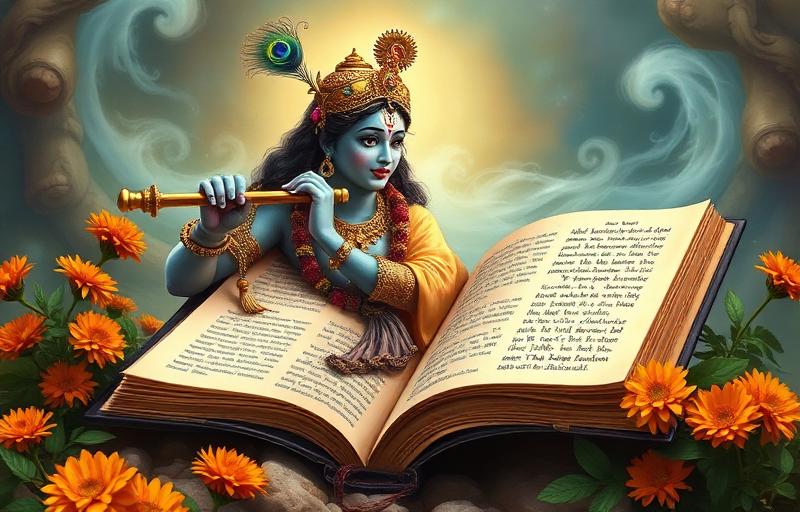
Devotees often return to the salt-in-water and banyan-seed examples as simple meditations - stirring salt into water and tasting it, or holding a tiny seed while imagining the tree within it, as tangible ways to sit with an idea that can otherwise feel abstract.
The Satyakama story, meanwhile, is frequently told to children not as ancient history but as living guidance: honesty matters more than appearances, and sincerity is recognised and rewarded, echoing the Upanishad's own trust that truth speaks for itself.
Benefits as Understood in Tradition
- Devotees believe reflecting on tat tvam asi gently dissolves the sense of separateness between the self and the ultimate reality
- The salt and banyan seed examples are said to make an abstract teaching easier to hold in daily awareness
- The story of Satyakama is believed to strengthen the value of truthfulness regardless of circumstance
- As per tradition, studying this Upanishad's varied chapters is considered a well-rounded foundation in Vedanta
A Simple Takeaway for Daily Life
The teaching tat tvam asi and the story of Satyakama, though ages apart in a single text, point to the same quiet truth: what we truly are is not separate from the ultimate reality, and how we live in small, honest moments reflects that truth more than any claim of status or learning.
Reflecting on the Chandogya Upanishad's stories and images, slowly and with an open mind, is an act of faith and love, not a transaction - each retelling offers something new to sit with.
Quick Answers
What does tat tvam asi mean in the Chandogya Upanishad?+
Tat tvam asi means 'that thou art', the teaching sage Uddalaka Aruni gives his son Shvetaketu, showing through examples like salt in water and a banyan seed that the individual self is not separate from the ultimate reality, Brahman.
What is the story of Satyakama Jabala about?+
It tells of a boy who honestly admits he does not know his father's lineage, and is accepted as a student by sage Gautama on the strength of his truthfulness alone, teaching that sincerity, not birth or status, qualifies a seeker.
Which Veda does the Chandogya Upanishad belong to?+
The Chandogya Upanishad belongs to the Sama Veda and is one of the oldest and longest of the principal Upanishads, spanning eight chapters.
About the author
Anjali Mehta · Editor, M.A. Religious Studies
Anjali is the managing editor for Vandnaa and oversees the festival and vrat coverage. She holds an M.A. in Religious Studies and reviews every published article for accuracy, accessibility, and tradition-fidelity.
Meet the Vandnaa editorial team →