Mangalvedha
Chokhamela, fourteenth century, died around 1338, is a Varkari saint of Mangalvedha, near Pandharpur, and he is the tradition's hardest and most necessary figure.
Who he was:
- Of the Mahar community, which under the caste system was untouchable
- A labourer. Mahars in the Deccan held hereditary village duties: removing dead cattle, working leather, acting as village watchmen and messengers, and doing whatever was assigned
- Born, in most accounts, at Mehuna Raja in Buldhana district, and settled at Mangalvedha
- Married to Soyarabai, who is a saint and poet in her own right
- Father of Karmamela, also a poet
- Brother of Nirmala, also a poet, married to Banka, also a poet
Which means: the whole household composed, and five of them are in the Varkari canon. It is the only family of that kind in the tradition, and it was an untouchable labouring family.
What his position actually meant in daily life:
- He could not enter the temple
- He could not draw water from the common well
- He could not walk on certain streets, or had to announce himself when he did
- He was required to perform the village duties assigned to his caste, without refusal
- His food, his vessels and his person were held to transmit pollution by contact and in some places by shadow or proximity
- There was no route out of it, for him or for his children
None of that is exaggeration and none of it is medieval only. Untouchability was made illegal in India by Article 17 of the Constitution in 1950 and by the Protection of Civil Rights Act 1955, and the SC and ST Prevention of Atrocities Act 1989 exists because the practice continued after it was banned. It has not fully ended.
Where he stood. Outside.
The Vitthal temple at Pandharpur was closed to him. He came, and he stood at the step, or across the Chandrabhaga, and he sang from there.
His abhangas. Around three hundred survive, and they are unlike the rest of the canon in one specific way.
They are addressed to a god he cannot reach, by a man who is being kept away by the god's own devotees.
One of the most quoted opens: I am the one they call impure. Chokha says, why did you make me this and then keep me out?
Another, the most famous line in Marathi from any of them: Us ko dokhya, the sugarcane is crooked but is its juice crooked? The bow is crooked but is its arrow crooked? Chokha is ugly but is his feeling ugly?
That is the whole argument, and it is made from outside the door.
What Was Done to Him
The stories about Chokhamela are not miracle stories in the ordinary sense. Most of them are records of humiliation.
The temple. He stood outside for his whole life.
The tradition's account is that Vitthal came out to him, that the deity left the sanctum and stood with him at the step or crossed the river to sit with him, and that on one occasion Chokhamela was seen inside and the priests threw him out.
The exclusion is the historical fact. The god coming out is the tradition's judgement on it.
The food. Several stories turn on eating.
In one, Vitthal eats with him and afterwards the priests find the deity's clothes stained with the food of an untouchable, and the resulting scandal has Chokhamela driven from the town.
In another, he is given leftovers and eats them, and the abhanga he makes of it is not grateful.
The beating. He was assaulted for coming too close to the temple, and the accounts of his life include being struck and being driven away more than once.
Mangalvedha, and the wall
How he died, and this is the part that matters.
- He was doing forced labour at Mangalvedha
- The work was repairing or building a wall, in some accounts the town wall or a gate
- The wall collapsed
- He and the other labourers were killed under it
That is a workplace death on unpaid forced labour, which is what his caste obligation consisted of, and it is how the tradition's greatest voice against untouchability was killed.
What happened next. Namdev came.
The bodies under the rubble could not be told apart. The story says Namdev went through the bones and found the ones that were still saying Vitthal, Vitthal, and those were Chokhamela's, and he took them to Pandharpur.
Where they were put: at the step of the temple.
Not inside. At the foot of the steps, outside the door, in the place where Chokhamela had stood alive.
And that is where the samadhi is today.
What that means now. The custom is that Varkaris arriving at Pandharpur bow at Chokhamela's samadhi first, before entering the temple.
So the man who was kept out is now the first thing you touch on the way in.
Whether that is a resolution. It is worth being honest.
It is a real and meaningful reversal, and Varkaris take it seriously.
It is also true that his samadhi is still outside the door, that the position of it is a fossil of the exclusion, and that a great many people passing it are from communities that were doing the excluding.
Both things are the case, and the tradition holds both.
Soyarabai, Karmamela, Nirmala, Banka
The household composed, and the other four are not softer than him.
Soyarabai, his wife.
She signs Chokhyachi Mahari, Chokha's Mahar woman. Around sixty two of her abhangas survive.
Her central argument is an attack on the concept of ritual purity itself, and it is philosophically the sharpest thing in the family's work.
She asks what pollution actually is. The body is made of flesh, blood, bone and fluid. Every body is. The brahmana's body is the same substance as hers. If the substance is impure then everybody is impure and the category collapses, and if it is not, then the exclusion has no ground.
She also writes about childbirth and the pollution rules attached to it, from the inside, which almost nobody in the canon does.
Karmamela, their son. This is the bitter one.
His abhangas ask why. Why was he born into this. Why does the god he is told to love keep his family where they are. He asks whether god enjoys watching them, and whether being born to them was a punishment for something.
The tradition preserved these. It did not edit them out. A Varkari collection contains a son of an untouchable family asking the deity of Pandharpur what exactly the point of his life is supposed to be, and no answer is supplied.
That is worth respecting. Most traditions lose their angry texts.
Nirmala, Chokhamela's sister, and Banka, her husband, both composed, and both are counted in the canon.
Why this family matters as a unit:
- It is direct evidence that devotional composition was happening in untouchable households, not being conferred on them
- Five voices, of both sexes and two generations, arguing about the same thing from inside the same conditions
- A woman making the strongest philosophical case in the group
- And a son who is not reconciled
Ambedkar, and the honest part
This has to be included, because it is the most important modern response to Chokhamela.
B. R. Ambedkar was born into the Mahar community, the same as Chokhamela.
His position on the bhakti saints was that their achievement was real and their strategy failed.
His argument, stated fairly:
- The saints proved that a Mahar could be a poet, a devotee and a spiritual authority
- The society that venerated them did not stop excluding Mahars
- Chokhamela's samadhi being at the step is proof of the failure, not of the success: even in death the exclusion held
- Devotion did not change the material conditions of the community in six hundred years, and something else was needed: education, political rights, law, and organisation
- In 1956 he and hundreds of thousands of followers converted to Buddhism, having concluded that the system could not be reformed from inside
How to hold both. Plainly.
Chokhamela's poems are among the finest in Marathi and his exclusion was a crime. His veneration by the Varkari tradition is genuine. And Ambedkar was right that six centuries of veneration did not deliver a well, a school, or a door that opened.
Both are true. This app is a devotional app and it holds the first. It would be dishonest not to state the second.
What follows from that, practically:
- Untouchability is illegal. The SC and ST Prevention of Atrocities Act 1989 is the relevant law and it covers denial of temple entry, denial of water, forced labour and social boycott
- If you or somebody you know is facing caste discrimination, the National SC Commission helpline is 1800-180-0203, and the Ministry of Social Justice operates helplines; complaints can be filed at any police station and the Act requires them to be registered
- Bonded and forced labour is prohibited under the Bonded Labour System Abolition Act 1976
- And within devotional life: no temple, priest or committee has any right to exclude anybody by caste, and any that does is breaking the law of the country and the plain sense of every saint in this series
The Poems
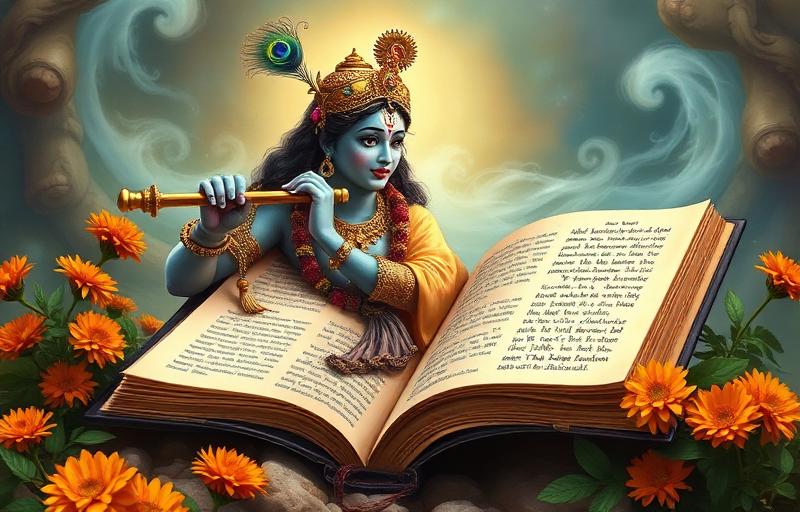
Around three hundred abhangas are attributed to him. They fall into recognisable groups.
The ones arguing about purity.
The sugarcane abhanga is the famous one: the cane is crooked, the juice is not; the bow is crooked, the arrow is not; the river winds, the water does not; Chokha is ugly, his feeling is not.
It is a formal argument by analogy, made by a labourer, and it dismantles the inference from external condition to internal worth in four lines.
Another takes the ritual vocabulary directly: he lists the things held to be pure, and observes that milk comes from an animal, that the sacrificial fire consumes everything without distinction, that the ground everybody stands on is the same, and that the categories do not survive examination.
The ones addressed to Vitthal as complaint.
He asks why he was made this way. He asks why he is kept out. He points out that the god is said to be everywhere and yet there is a wall.
These are not resigned poems. They are arguments with the deity, conducted at close range, by somebody who considers the relationship close enough to permit it.
The ones about the body and food.
Several abhangas deal with the humiliations directly: leftovers, being made to eat apart, being refused water. He does not aestheticise any of it.
And the ones that are simply devotional.
A large number are straightforward abhangas of longing for Pandharpur and for the sight of Vitthal, indistinguishable in form from anybody else's, which is itself the point: the poems the tradition would classify as ordinary devotion were made by a man standing at a door he could not enter.
On translation. Good English translations exist in anthologies of bhakti and Marathi poetry, and there is significant modern scholarship on the family. The abhangas are also widely sung and are easy to find as recordings.
Reading order:
- The sugarcane abhanga first
- Then two or three of the complaints
- Then Soyarabai on purity
- Then Karmamela, last, because he is the hardest and the tradition does not answer him
Visiting, and What to Do With Him
Pandharpur
- The samadhi is at the step, at the foot of the stairs on the eastern approach to the Vitthal temple
- The custom is to bow there before going in
- During the wari, the palkhis pass it
- Ashadhi and Kartiki ekadashis are the great days
Mangalvedha
- Around 25 kilometres from Pandharpur
- A Chokhamela temple and the place associated with the wall
- Also associated with Kanhopatra and Damaji Pant, who are treated in their own entries
Mehuna Raja, in Buldhana district, is given as his birthplace and has a shrine.
A note on temple entry today. Since this entry is about exclusion.
The Pandharpur temple was opened to all castes by the temple entry movement of the 1940s, in which Sane Guruji fasted for eleven days in 1947 to force it, and it was opened. That happened, it was recent, and it took a hunger strike.
In 2014 the Supreme Court ended the hereditary rights of the Badve and Utpat priestly families at Pandharpur, and the temple is now administered by a committee.
What to do with him
One. Read the sugarcane abhanga and keep it. It is four lines and it disposes of the whole logic of judging people by their condition. It applies to caste, and it applies to every other version of the same mistake: judging by accent, by clothes, by job, by disability, by where somebody is from.
Two. Bow at the step. If you go to Pandharpur, do what the Varkaris do and do it in the knowledge of why the samadhi is where it is.
Three. Do not treat his patience as the lesson. He was not patient. His poems are complaints, his wife's are arguments, and his son's are accusations. The tradition kept all of it.
Four. The exclusion is illegal and it still happens. If you encounter it, in a temple, a village, a workplace or a hostel, it is a criminal offence under the 1989 Act, and it is reportable.
A daily practice from this entry:
- Vitthal Vitthal, or Rama Krishna Hari
- One abhanga of his, read or sung
- And the plain undertaking that goes with reading him: that nobody is kept out of anything you control
A closing thought
He stood outside the door of a temple for his whole life, singing to the deity inside it, and was beaten for coming too close.
He was killed doing forced labour when a wall fell on him, and his bones could not be told from the other labourers' bones.
He was buried at the step, which is where he had always stood.
And the tradition that excluded him now instructs its pilgrims to bow there first, on the way in, which is either the most moving thing in the Varkari tradition or the clearest evidence of what it failed to fix, and the honest answer is that it is both.
The Short Version
Who: Chokhamela, fourteenth century Varkari saint, of the Mahar community, a labourer at Mangalvedha near Pandharpur.
What he could not do: enter the Vitthal temple, draw from the common well, walk certain streets, refuse assigned labour.
What he did: stood at the step and composed around three hundred abhangas, of which the best known argues that the cane is crooked but the juice is not.
His family: Soyarabai, his wife, sixty two abhangas, whose argument is that if bodies are impure then everybody is and the category is empty; Karmamela, his son, whose poems ask the deity why he was born to this; Nirmala, his sister; Banka, her husband. All five are in the canon.
How he died: a wall he was working on under forced labour collapsed at Mangalvedha and killed him and the other labourers.
What Namdev did: identified the bones and brought them to Pandharpur.
Where he is: at the step of the temple, outside the door, and Varkaris bow there before going in.
What the tradition says: that Vitthal came out to him.
What Ambedkar said: that six hundred years of veneration did not open the door, and that the position of the samadhi proves it.
What is true now: the temple was opened to all castes in 1947 after Sane Guruji fasted for eleven days; untouchability is illegal under Article 17 and the 1989 Act; and it still happens, which is why the law exists.
The line to keep: the sugarcane is crooked, but the juice is not.
What People Ask Most
Who was Chokhamela?+
A fourteenth century Varkari saint of Mangalvedha near Pandharpur, of the Mahar community, which under the caste system was untouchable. He was a labourer who could not enter the Vitthal temple, draw water from the common well, or refuse the duties assigned to his caste. He stood at the step outside the temple and composed around three hundred abhangas. He died when a wall he was working on under forced labour collapsed.
Why is Chokhamela's samadhi at the step of the Pandharpur temple?+
Because that is where he stood while alive, being barred from entering. When the wall at Mangalvedha killed him, the bodies could not be told apart, and the story says Namdev found the bones still saying Vitthal, Vitthal and brought them to Pandharpur, where they were placed at the foot of the steps rather than inside. Varkaris now bow there before entering the temple, so the man who was kept out is the first thing touched on the way in.
What is the sugarcane abhanga?+
Chokhamela's best known poem, and a formal argument by analogy. The sugarcane is crooked but its juice is not crooked. The bow is bent but its arrow is not bent. The river winds but the water does not. Chokha is called ugly, but is his feeling ugly? It dismantles the inference from external condition to internal worth in four lines, and it applies to caste and to every other version of the same mistake.
Who were Soyarabai and Karmamela?+
Soyarabai was Chokhamela's wife, who signs her abhangas Chokhyachi Mahari, Chokha's Mahar woman, and whose central argument is that if the body is impure, since every body is made of the same flesh and blood, then everybody is impure and the category collapses. Karmamela was their son, whose abhangas ask the deity directly why he was born into this life and whether it was a punishment. The tradition preserved his anger without editing it out.
What did Ambedkar say about Chokhamela?+
Ambedkar was born into the same Mahar community. His position was that the bhakti saints' achievement was real but their strategy failed: they proved a Mahar could be a poet and a spiritual authority, but the society that venerated them did not stop excluding Mahars, and the samadhi being at the step rather than inside is proof of the failure. He concluded that education, political rights, law and organisation were needed, and in 1956 he and hundreds of thousands of followers converted to Buddhism.
When was the Pandharpur temple opened to all castes?+
In 1947, after Sane Guruji fasted for eleven days to force it, as part of the temple entry movement of the 1940s. Untouchability was made illegal by Article 17 of the Constitution in 1950 and by the Protection of Civil Rights Act 1955, and the SC and ST Prevention of Atrocities Act 1989 exists because the practice continued afterwards. In 2014 the Supreme Court ended the hereditary rights of the priestly families at Pandharpur and the temple is now run by a committee.
About the author
Pandit Ravindra Sharma · Vedic Rituals & Bhakti, 22+ years
Pandit Ravindra is the Vandnaa editorial team's resident specialist on aarti, chalisa, and daily devotion. He has performed home and temple pujas across Varanasi and Delhi for over two decades and contributes the bhakti-focused articles on this site.
Meet the Vandnaa editorial team →