What Is Sandhya Vandanam?
Sandhya Vandanam is a traditional daily discipline built around prayer at the three sandhi kaal, the meeting points of day and night at dawn, noon and dusk. Historically observed by those initiated with the sacred thread through the Upanayan sanskar, it centres on the Gayatri mantra and an offering of arghya (water) to Surya.
While the full threefold practice with its Vedic structure is detailed, many households today follow a simpler version, a short prayer and arghya at sunrise and sunset, keeping the spirit of the discipline alive in a form that fits daily life.
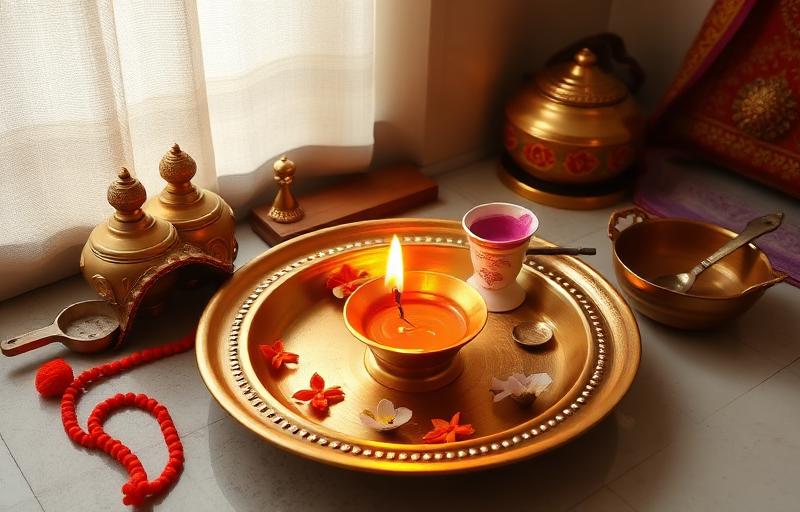
What Sandhya Vandanam Needs
- A copper vessel (lota) of clean water
- A clean seat or spot to stand, ideally outdoors or near an open window
- The sacred thread, for those who wear one
Sandhya Vandanam is deliberately simple in its materials, meant to be practised anywhere, without depending on an elaborate altar.
Step-by-Step Vidhi
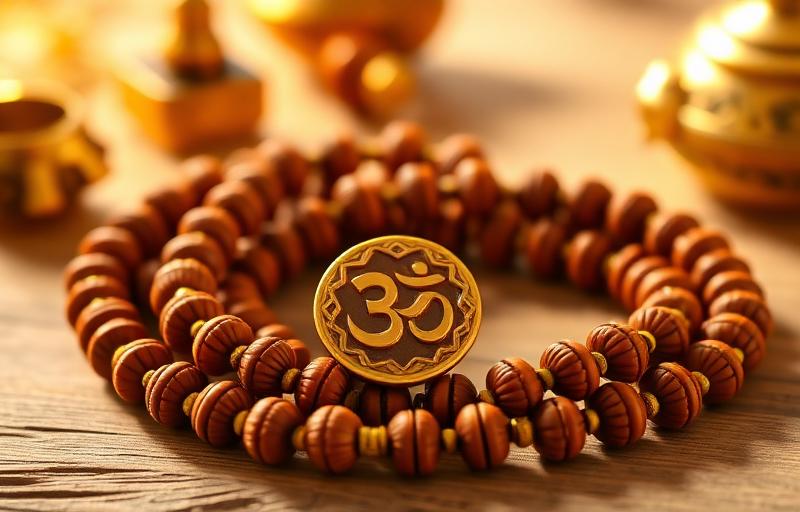
1. Achamana: Sip a little water from the palm three times, a simple act of purification before beginning. 2. Pranayama: Take a few slow, controlled breaths to settle the mind. 3. Sankalp: Silently resolve to perform the sandhya with a focused mind. 4. Arghya to Surya: Standing facing the sun, cup water in both hands and let it fall in a thin stream while reciting the Gayatri mantra, repeated for each of the three sandhya times. 5. Gayatri japa: Sit and chant the Gayatri mantra quietly for a fixed count, commonly on a mala. 6. Closing namaskar: Offer a namaskar to Surya and the directions before concluding.
A shortened version, kept to the arghya and a few rounds of Gayatri japa at sunrise and sunset, is what most households practise today.
Best Time and Rules to Keep in Mind
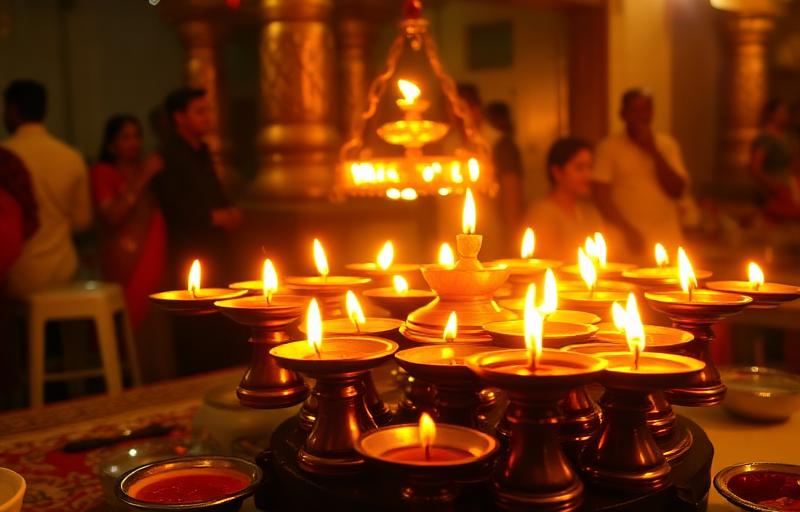
The three sandhya times are traditionally dawn, midday and dusk, considered especially potent windows for prayer as day turns to night and back again. Facing east in the morning and toward the setting sun in the evening is the customary direction.
Consistency is valued over perfection. Even a shortened version, done sincerely at sunrise and sunset every day, is considered a meaningful continuation of this very old practice.
Common Mistakes to Avoid
- Rushing through without the pause of pranayama or a settled mind
- Skipping the arghya, considered a central part of the practice
- Performing it well after sunrise or sunset has passed, missing the sandhi kaal it is built around
- Treating it as a mechanical formality rather than a few minutes of genuine reflection
Worrying over perfect pronunciation should not stop a beginner from starting; sincerity and regularity matter far more.
The Takeaway
Sandhya Vandanam, even in its shortened daily form, connects a devotee to one of the oldest disciplines in Hindu tradition. A few minutes of water, mantra and quiet attention at sunrise and sunset is enough to keep this old practice meaningfully alive.
Reader Questions Answered
Is Sandhya Vandanam only for those who wear the sacred thread?+
It was historically observed by those initiated through the Upanayan sanskar, but the underlying practice, prayer and gratitude at dawn and dusk, is something any sincere devotee can adapt in a simple form.
What is arghya in Sandhya Vandanam?+
Arghya is the offering of water to Surya, poured from cupped hands in a thin stream while facing the sun, usually accompanied by the Gayatri mantra.
Can a shortened version of Sandhya Vandanam still be meaningful?+
Yes, many households today practise only the morning and evening arghya with some Gayatri japa. Done sincerely and regularly, this shorter form is considered a meaningful continuation of the tradition.
About the author
Acharya Vinaya Kapoor · M.A. Sanskrit, Mantra & Stotra Studies
Acharya Vinaya holds an M.A. in Sanskrit from Banaras Hindu University and writes the mantra and stotra commentary on Vandnaa. Her focus is on accurate pronunciation, traditional context, and helping modern readers connect with classical texts.
Meet the Vandnaa editorial team →