The Day Vishnu Goes to Sleep
Of all 24 Ekadashis, Devshayani Ekadashi carries a unique significance: it is the day Lord Vishnu enters Yoga Nidra - cosmic sleep - for 4 full months. He lies down on the coils of Sheshnag in the Ksheera Sagar (cosmic ocean of milk), and from this day until Devuthani Ekadashi (when He awakens), the universe enters Chaturmas - the 'four months of pause'.
Devshayani Ekadashi 2026 falls on Thursday, 16 July 2026 - Ashadha Shukla Ekadashi. Also called Ashadhi Ekadashi, Padma Ekadashi, Hari Sayani Ekadashi, and (in Maharashtra) the day of the famous Pandharpur Ashadhi Wari pilgrimage.
For 4 months - until Devuthani Ekadashi on Tuesday, 12 November 2026 - Sanatan Dharma observes Chaturmas:
- No marriages, no engagements
- No housewarming (griha pravesh) ceremonies
- No starting of new businesses or major investments
- No purchase of vehicles, gold, or property
- No first-mundan or first-rice (annaprashan) for children
- Many devotees take vrats - no specific food, no haircuts, etc.
Why? Because all auspicious activities require Lord Vishnu's active blessing. When He sleeps, the cosmic wedding-witnessing, contract-blessing functions pause. To do major auspicious acts during Chaturmas is considered to start them without divine witness.
But Chaturmas is not 'dead time'. It is the most spiritually active period of the year. Without external distractions of weddings and festivals, the mind turns inward. Sadhus traditionally do not travel during Chaturmas - they stay in one place doing intense sadhana. Householders take small vrats. Reading the Bhagavata Purana (especially the 11th canto) is recommended.
🙏 The Vandnaa App's Chaturmas 2026 Tracker shows the full 4-month calendar with daily mantras, vrats and what to avoid each day.
Devshayani Ekadashi 2026 - Tithi, Muhurat & Parana Timing
📅 Vrat Date: Thursday, 16 July 2026 🕒 Ekadashi Tithi Begins: 9:14 PM, 15 July 2026 🕒 Ekadashi Tithi Ends: 7:42 PM, 16 July 2026
Sankalp Time (morning): 5:33 AM – 7:00 AM, 16 July Best Puja Muhurat: 7:00 AM – 11:30 AM, 16 July Vishnu Shayan Muhurat (Special - when Vishnu lies down): 6:00 PM – 7:42 PM, 16 July Abhijit Muhurat: 11:59 AM – 12:55 PM
🍎 Parana (Vrat Breaking): 5:34 AM – 8:18 AM, Friday 17 July 2026 Dwadashi Tithi Ends: 5:30 PM, 17 July (parana must be done well before this)
🌟 Special 2026 Yog - Pushya Nakshatra: Devshayani Ekadashi 2026 falls on Thursday + Pushya Nakshatra in the morning hours. This combination is called Guru-Pushya Yog - extremely rare and considered among the most auspicious yogas of any Ekadashi. Anything started today (in spiritual practice, not material ventures) bears 1000-fold fruit.
Avoid: Rahu Kaal on Thursday (1:55 PM – 3:35 PM) - do not begin any new puja during this window. Vishnu Shayan ritual at 6 PM is safe (after Rahu Kaal).
Why Vishnu Sleeps for 4 Months - King Mandhata's Story
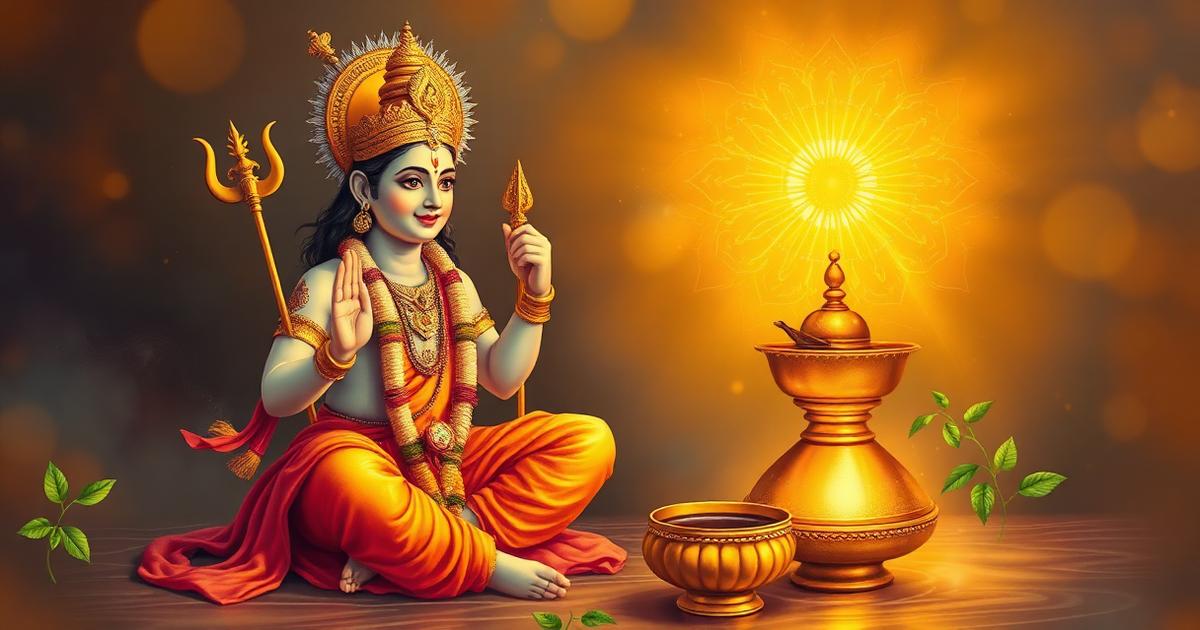
There is a beautiful katha from the Bhavishya Purana that explains why Vishnu specifically sleeps for these 4 months - and why Chaturmas is so sacred.
Long ago, in the kingdom of Ayodhya (yes, the same Ayodhya), reigned the great King Mandhata - an ancestor of Lord Rama. He was a Vishnu devotee, just, generous, and powerful. His kingdom was so prosperous that the very land yielded crops without seeds, the rivers ran with milk, and no one was ever hungry.
Then one Ashadha (June-July) month, a 3-year drought struck. The skies refused rain. Crops failed. Cattle died. People started starving.
Mandhata called all the wise men and astrologers. They studied the planets and consulted scriptures. They told him: 'O King, this is not a normal drought. Your kingdom is being tested. The remedy is in your hands. There is one single brahmin in your kingdom who has been performing wrong rituals - wrong fire mantras, wrong sacrifices. The entire cosmic balance has been disturbed because of him. Find him, correct him, and rain will come.'
Mandhata searched but could not find this one brahmin. The drought worsened.
Finally, the king went to Sage Angirasa - one of the seven supreme sages - and fell at his feet. 'Maharishi, I am willing to do anything to save my people. What must I do?'
Angirasa thought deeply. Then he said: 'King, only one being can fix this - Lord Vishnu Himself. But He has been disturbed by the wrong rituals and has gone into Yoga Nidra. He cannot be woken. The only way is for you, your queen, and your entire kingdom to take a vrat - fast on Devshayani Ekadashi, observe Chaturmas with strict rules, and pray continuously for 4 months. When Vishnu naturally awakens on Devuthani Ekadashi, He will see your devotion and immediately restore everything.'
Mandhata returned to Ayodhya. On Ashadha Shukla Ekadashi, he announced: 'From today, every household in my kingdom observes Devshayani Ekadashi. From today, no marriages, no celebrations, no major events. We all do tapasya for 4 months. Vishnu must wake to see our devotion.'
And that is what happened. The entire kingdom of Ayodhya - from the king himself to the poorest farmer - observed the strictest 4-month vrat ever recorded. They ate only one meal a day. They chanted Vishnu mantras. They donated everything they could. They did not light fires of celebration.
On the 4th month, on Devuthani Ekadashi, Vishnu opened His eyes. He looked down upon Ayodhya and was overwhelmed. 'I have never seen such collective devotion from any kingdom in any age. Mandhata, ask for any boon.'
Mandhata folded his hands. 'Only one boon, my Lord - let rain return.'
Vishnu smiled. The clouds gathered. Within hours, Ayodhya received the strongest, most blessed rain it had ever seen. The fields turned green within days. The cattle revived. People wept with joy.
And Vishnu Himself declared: 'From this day, every year, the 4 months from Devshayani Ekadashi to Devuthani Ekadashi will be sacred to those who turn inward. Anyone who observes Chaturmas with sincerity will receive the punya of feeding 100,000 brahmins. And on the day I wake, I will personally bless every devotee.'
This is why even today, Chaturmas is observed across every Hindu household - not because Vishnu is 'absent' but because we honour the 4-month tapasya that once saved Ayodhya.
Step-by-Step Devshayani Ekadashi Vrat Vidhi & Vishnu Shayan Ritual
Day Before (Dashami - July 15): Eat one satvik meal before sunset. Clean your puja room. Prepare a special small bed for Vishnu - a small wooden chowki with a soft white cushion or cotton padding, covered with a yellow silk cloth. This 'Vishnu shayya' is unique to today.
Step 1 - Morning Snan & Sankalp (5:30 AM, July 16): Bathe before sunrise. Wear clean yellow or white clothes. Sit before your mandir facing east. Hold water + akshat + tulsi in right hand and say:
'I, [name], on this Devshayani Ekadashi, take this vrat for the destruction of all sins, and dedicate the next 4 months of Chaturmas to inner devotion of Lord Vishnu. Om Namo Bhagavate Vasudevaya. Om Hari Sayanam Namamyaham.'
Pour the water on the floor.
Step 2 - Vishnu Puja: Bathe Vishnu's idol with panchamrit + Ganga jal. Apply yellow chandan tilak. Offer yellow flowers, tulsi leaves, fruits, panchamrit. Light a 5-wick ghee diya. Place a small image of Sheshnag (or 7-headed serpent) beside the Vishnu idol - symbolic of Vishnu's cosmic bed.
Step 3 - Mandhata Katha: Read or listen to the Mandhata-Chaturmas katha (from previous section). Tell to family members. This is essential.
Step 4 - Mantra Jap (Morning): Chant 'Om Namo Bhagavate Vasudevaya' on tulsi mala minimum 108 times. Today specifically, also chant the Vishnu Shayan Mantra: 'Om Hari Sayanam Namamyaham, Sukha Suptaye Tava Ksheera Sagare' (I bow to Hari who sleeps, may His sleep on the ocean of milk be peaceful).
Step 5 - Phalahar/Nirjal (whole day): No grains, salt (only sendha), onion, garlic, masoor. Permitted: water, milk, fruits, sabudana, makhana. Stay awake. Avoid argument, lying, anger.
Step 6 - Chaturmas Sankalp (Noon): This is unique to today. At noon (Abhijit muhurat 11:59 AM – 12:55 PM), take a formal Chaturmas vrat sankalp. Choose ONE of these (or more if you can):
- No specific food for 4 months (e.g., no leafy vegetables in Shravan, no curd in Bhadrapada, no milk in Ashvin, no urad dal in Kartik - these are the 4 traditional 4-month food restrictions, called Chaturmasik Vrat)
- Sleep on the floor (avoid bed) - for inner humility
- Eat only one meal a day (Ekabhakta vrat)
- Read Bhagavata Purana 11th canto completely over 4 months
- Daily Vishnu Sahasranama recitation
- No haircut, shaving for 4 months (extreme - for serious devotees only)
- No new clothes for 4 months (austerity)
Write down your sankalp on a piece of paper. Place it before Vishnu. Read it aloud. Then keep it in your puja room as a reminder for 4 months.
Step 7 - Vishnu Shayan Ritual (6:00 PM – 7:42 PM, July 16) - UNIQUE TO TODAY:
This is the most beautiful part. At sunset:
- Bring out the small white-cotton bed (Vishnu shayya) you prepared.
- Bathe the small Vishnu idol with rose water.
- Apply chandan paste lightly on the idol - like a soothing balm.
- Offer tulsi water (do not eat tulsi today).
- Sing a soft Vishnu lullaby (Vishnu lullabies are available in the Vandnaa App - they are traditional South Indian compositions called Hari Vasudeva Bhajan).
- Gently lay the Vishnu idol on the bed in yoga-nidra posture (lying on right side).
- Cover with a thin yellow cloth.
- Light a 5-wick lamp beside the bed (this lamp must continue burning till tomorrow morning).
- Sit beside the bed for at least 30 minutes in silent meditation. Imagine Vishnu sleeping peacefully on the cosmic ocean. Your prayers protect His sleep.
- Whisper: 'Sleep, my Lord. We will keep watch over the universe for 4 months until you wake.'
This ritual is what gives Devshayani Ekadashi its name - Devshayani literally means 'God who sleeps'.
Step 8 - Parana (Friday morning, July 17): Bathe at sunrise. Worship Vishnu (still on the bed - He continues sleeping). Eat first the bhog (yellow rice + kheer + tulsi). Donate before eating. Parana window: 5:34 AM – 8:18 AM.
Complete Chaturmas Rules - What to Do & Avoid for 4 Months (July 16 – Nov 12, 2026)
🌙 The 4 months of Chaturmas 2026:
- Shravan (16 July – 14 August) - Shiv puja month, Mondays sacred
- Bhadrapad (15 August – 13 September) - Ganesh Chaturthi, Pitru Paksha begins
- Ashvin (14 September – 13 October) - Sharad Navratri month
- Kartik (14 October – 12 November) - Karva Chauth, Diwali, Devuthani Ekadashi
❌ DO NOT do during Chaturmas (4 months):
Marriages & Auspicious Functions:
- No new marriages (existing marriages can continue)
- No engagement ceremonies
- No betrothals (rishta tay)
- No first wedding anniversary celebrations
- No vivaha-purvak rituals
Ceremonies:
- No griha pravesh (housewarming)
- No first mundan (head-shaving) of children
- No annaprashan (first solid food) of infants
- No janeu (sacred thread) ceremony
- No simantonayan (baby shower)
Material Acquisitions (avoid major):
- No buying of new vehicles
- No buying of new house/property
- No major gold or jewelry purchases (small purchases OK)
- No starting new businesses (running businesses continue)
- No major investments or stock entries
Travel & Activities:
- Avoid long pilgrimage during peak monsoon (Shravan-Bhadrapad)
- Avoid major surgeries unless emergency
- Avoid lending or borrowing large sums
✅ DO MORE during Chaturmas (4 months):
Spiritual Practice:
- Daily Vishnu mantra jap (108x minimum)
- Read one canto of Bhagavata Purana per week
- Visit any Vishnu temple every Ekadashi
- Donate every Friday (Vishnu's day) and every Ekadashi
Food Discipline (choose one or more):
- Avoid leafy greens in Shravan
- Avoid curd in Bhadrapad
- Avoid milk in Ashvin
- Avoid urad dal in Kartik
- Or: Eat only one meal per day (Ekabhakta) for entire 4 months
- Or: Eat only satvik food (no onion/garlic) for entire 4 months
Behavior & Discipline:
- Sleep on floor (Adhah-shayan vrat)
- No haircut for entire 4 months (popular vrat)
- Wake at Brahma muhurat daily
- Maintain silence (mauna) for at least 1 hour daily
- Donate food/clothes/water every week
- Speak only truth, avoid all gossip
Festivals to celebrate IN Chaturmas:
- All festivals continue normally - Janmashtami, Ganesh Chaturthi, Navratri, Karva Chauth, Diwali, Bhai Dooj, Govardhan Puja
- These are NOT 'auspicious starts' - they are remembrance/devotional festivals - so they are encouraged
- Diwali Lakshmi puja is especially powerful in Chaturmas because Lakshmi worship reaches Vishnu through her
The 4-month transformation: Devotees who observe Chaturmas with sincerity report dramatic inner shifts - old habits dropped naturally, mind becomes clear, relationships deepen, financial discipline improves, deeper sleep, lower anxiety. The cosmic withdrawal of Vishnu's outer activity invites the practitioner's inner shift.
Common Questions From Devotees
What if I have to do an emergency wedding or business launch during Chaturmas?+
Emergencies are exceptions in Sanatan Dharma. If a wedding cannot be postponed (foreign visa expiring, military deployment, terminal illness in family), perform a special Sankalp Puja before the event - invoke Lord Vishnu, light a 24-hour ghee diya, donate to 11 brahmins, and feed 11 needy people. This 'wakes Vishnu briefly' to bless the event. The same applies for business launches - if a business MUST start in Chaturmas, do a 11-day Vishnu Sahasranama paath before the launch. Scriptures are practical - they accommodate genuine emergencies, just not avoidable conveniences.
Can I observe Chaturmas if I have a demanding job or family responsibilities?+
Yes - and Chaturmas is actually DESIGNED for householders, not just sadhus. The full 'sleep on floor + only one meal + no haircut' version is for monks. For working householders, scriptures recommend a moderate version: (1) take any ONE small vrat (e.g., no leafy greens in Shravan), (2) chant 108 Vishnu mantras daily (15 minutes), (3) donate something every Friday, (4) read 1 page of Bhagavata Purana weekly. This 'micro-Chaturmas' takes 30 minutes daily but earns 70% of the full vrat punya. Consistency beats intensity. Don't take vows you can't keep.
Why do many people specifically take 'no haircut' vrat for Chaturmas?+
It is one of the most popular Chaturmas vrats for several reasons. First, it's a constant reminder - every time you look in the mirror, you remember the vrat. Second, hair is associated with vital energy in Ayurveda - preserving it during the cosmic 'dormant' phase is believed to build inner shakti. Third, by Devuthani Ekadashi (Nov 12), the visible change in your appearance is a celebration of completion - you go for a haircut on Devuthani as part of breaking the vrat, which is symbolically sacred. Fourth, the body is in a 'restoration' mode during Chaturmas - hair grows healthier, shines more. Many devotees report visible hair quality improvement after this vrat.
Is it true that no important Hindu festivals fall in Chaturmas?+
Actually the opposite is true - some of the BIGGEST Hindu festivals fall in Chaturmas: Guru Purnima (start), Hariyali Teej, Naag Panchami, Raksha Bandhan, Janmashtami, Ganesh Chaturthi, Pitru Paksha, Sharad Navratri, Vijayadashami, Karva Chauth, Diwali, Govardhan Puja, Bhai Dooj, Devuthani Ekadashi (end). The distinction is - these are devotional/remembrance festivals (rituals already established by tradition), not new beginnings (marriages, business launches, housewarmings). Chaturmas pauses NEW auspicious starts, not the EXISTING devotional calendar. In fact, Chaturmas is one of the most festival-rich periods of the year - just oriented inward rather than outward.
When does Vishnu finally wake up and how is that day celebrated?+
Lord Vishnu wakes up on Devuthani Ekadashi, also called Prabodhini Ekadashi - the 'awakening Ekadashi'. In 2026, this falls on Tuesday, 12 November 2026 (Kartik Shukla Ekadashi). The day is celebrated with great joy: Vishnu is gently woken with chimes, mantras, and the singing of 'Uthho Devo Hari, Jaagiye Govinda' (Wake up, Lord Hari, awake Govinda). The Tulsi-Vivah ceremony (symbolic marriage of Tulsi plant with Shaligram-Vishnu) is performed on this or next day, marking the official end of Chaturmas. From this day, all auspicious activities resume - the wedding season opens, businesses launch, housewarmings happen. The 4-month pause ends with the loudest possible spiritual celebration.
About the author
Pandit Mahesh Trivedi · Festival Traditions & Panchang
Pandit Mahesh leads the festival-date and Panchang content on Vandnaa. He cross-references multiple regional panchangs (Drik, Vaishnava, Bengali, Marathi) for every festival date published on the site.
Meet the Vandnaa editorial team →Explore on Vandnaa
Related Articles
Yogini Ekadashi 2026: Date, Vrat Vidhi, Hema Mali Katha & Why It Frees You from Curses
10 min read
Jagannath Rath Yatra 2026: Date, History, Three Chariots & How to Watch It from Home
12 min read
Guru Purnima 2026: Date, Significance, Puja Vidhi & 5 Mantras to Honour Your Guru
9 min read
Sawan Somwar 2026: Dates, Vrat Vidhi, Shiv Mantras & Why Mondays in Sawan Are So Powerful
10 min read