Who Is Dhanvantari
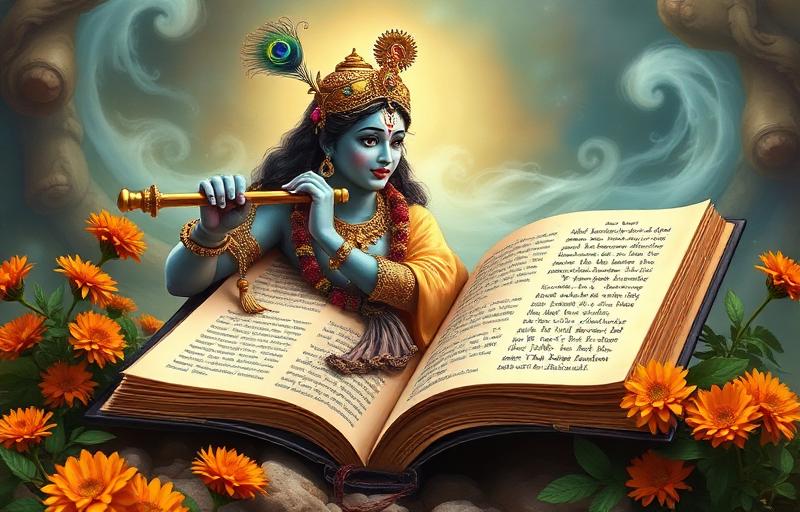
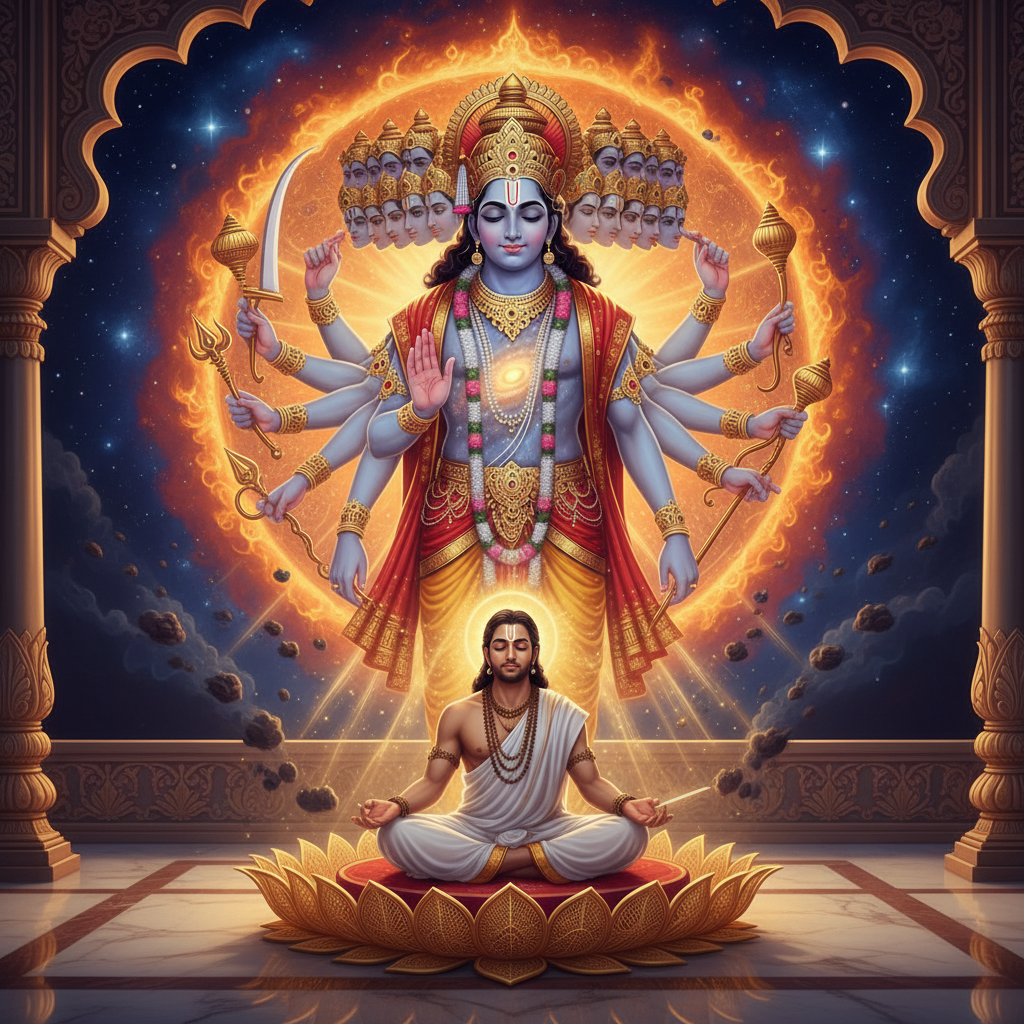
In Hindu tradition, Dhanvantari is worshipped as the divine physician, the source from which the science of Ayurveda is said to have come into the world. He is regarded as a form of Vishnu, associated with health, healing and the wellbeing of all living beings.
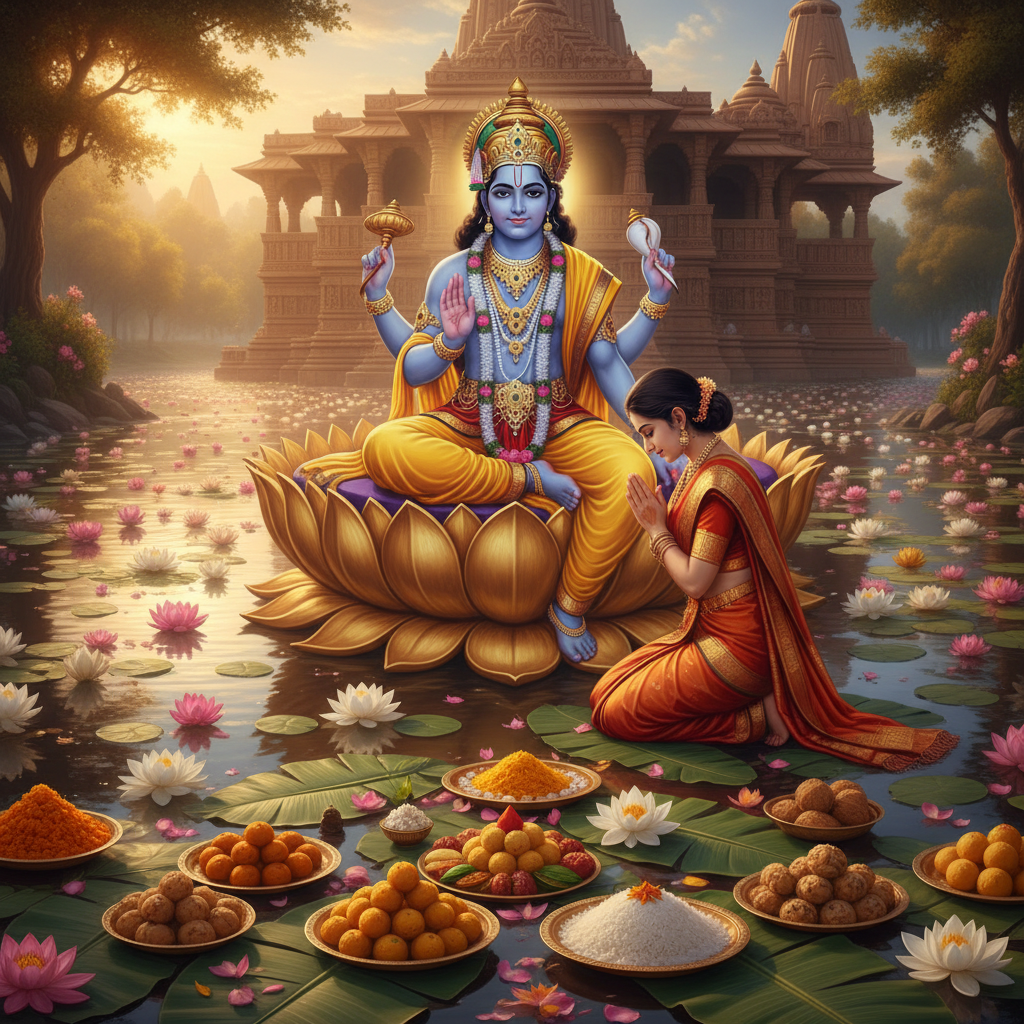
Dhanvantari is usually depicted with four arms, holding a conch and a chakra like Vishnu, along with a leech used in traditional healing and a kalasha (pot) containing amrita, the nectar of immortality, along with medicinal herbs. This imagery reflects his role as both a divine being and the guardian of the healing arts.
The Story of His Emergence
Dhanvantari's story is closely tied to the Samudra Manthan, the great churning of the ocean of milk by the devas and asuras in search of amrita. According to the Puranas, as the churning continued, several treasures rose from the ocean, and among the last to appear was Dhanvantari himself, holding a pot of amrita.
His appearance marked the moment the devas finally received the nectar that would restore their strength. Because he emerged carrying the means of healing and immortality, he came to be honoured as the physician of the gods and the origin point of Ayurvedic knowledge, which is traditionally believed to have been passed down from him to sages and healers on earth.
Significance for Devotees
Dhanvantari holds a special place for anyone seeking health and healing through faith. He is remembered as the one who bridges the physical and the spiritual, treating the human body as something sacred that deserves care.
- Devotees pray to him for freedom from illness and for strength in the body and mind
- Vaidyas (traditional physicians) and Ayurveda practitioners regard him as their guiding deity
- His day, Dhanatrayodashi, falls two days before Diwali and is widely known as Dhanteras
- In modern times, this day is also observed as National Ayurveda Day in India, connecting ancient tradition with present-day appreciation of Ayurveda
How Devotees Worship Him
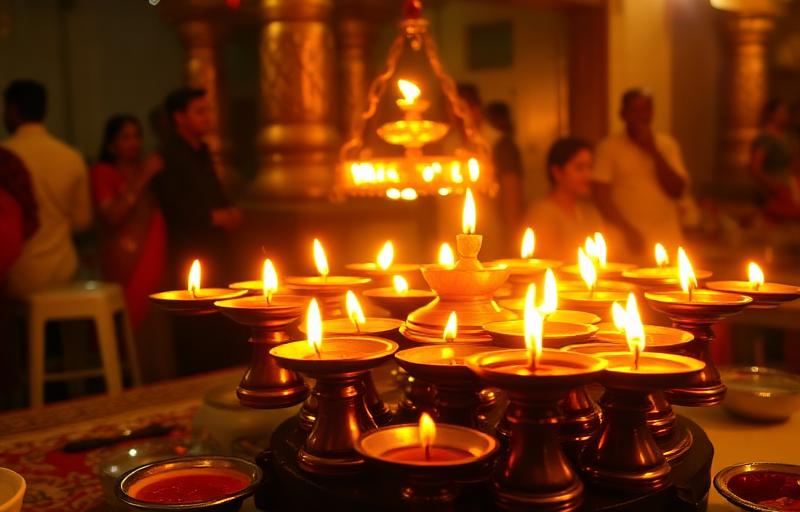
On Dhanteras, many households light a lamp for Dhanvantari alongside their evening prayers, offering flowers, incense and sometimes tulsi leaves, and praying for good health for the whole family. Some devotees also keep a small period of fasting or eat simply on this day as a mark of respect for the body's wellbeing.
A commonly chanted prayer is the Dhanvantari mantra: "Om Namo Bhagavate Maha Sudarshana Vasudevaya Dhanvantaraye, Amrita Kalasha Hastaya Sarva Bhaya Vinashaya Sarva Roga Nivaranaya Trilokya Pataye Trilokya Nathaya Sri Maha Vishnu Swarupa Sri Dhanvantri Swarupa Swaha", a prayer for freedom from fear and illness. In its simplest form, devotees also chant Om Dhanvantre Namah, asking for health and protection from illness.
A Reminder to Honour the Body
Dhanvantari's presence in Hindu tradition is a gentle reminder that physical wellbeing and spiritual life are not separate paths. Caring for health, eating mindfully and seeking timely healing are seen as part of a devotee's larger duty toward the body given to them.
Whether through a quiet prayer on Dhanteras or a moment of gratitude for good health on any ordinary day, remembering Dhanvantari connects ancient wisdom with everyday life. As with all such traditions, this remembrance is an act of faith and love, not a transaction.
What People Ask Most
Is Dhanvantari considered a separate god or a form of Vishnu?+
In most traditions, Dhanvantari is regarded as a divine form or avatar of Vishnu, sent specifically to bring the knowledge of healing to the world.
Why is Dhanvantari worshipped on Dhanteras?+
Dhanteras falls on Dhanatrayodashi, the day traditionally associated with Dhanvantari's appearance during the Samudra Manthan, so devotees pray to him for health as Diwali celebrations begin.
What does the pot in Dhanvantari's hand represent?+
The kalasha he holds is said to contain amrita and medicinal herbs, symbolising the gift of healing and long life that Ayurveda is believed to carry forward.
About the author
Acharya Vinaya Kapoor · M.A. Sanskrit, Mantra & Stotra Studies
Acharya Vinaya holds an M.A. in Sanskrit from Banaras Hindu University and writes the mantra and stotra commentary on Vandnaa. Her focus is on accurate pronunciation, traditional context, and helping modern readers connect with classical texts.
Meet the Vandnaa editorial team →