The Wound That Started It All - Spurned from a Father's Lap
The story of Dhruv comes from the fourth Skandha of the Bhagavata Purana. King Uttanapada, son of Svayambhuva Manu, had two queens: Suniti, the elder, gentle and neglected, and Suruchi, the younger and favoured. One day five-year-old Dhruv, Suniti's son, saw his half-brother Uttama playing on their father's lap and ran to climb up as well. Before the king could respond, queen Suruchi pulled the child away with words that would echo through the ages: "To sit on this lap you should have been born from my womb. Go, pray to the Lord that you may be born as my son." The king, weak with attachment, stayed silent. The little boy's eyes filled, but something deeper than tears was kindled in him. Stung not into hatred but into aspiration, Dhruv walked to his mother carrying a question that would change his destiny: where can I find a seat that no one can deny me?
Mother Suniti's Guidance - The First Guru
Wounded mothers often pass on bitterness; Suniti passed on a path. Holding her sobbing child, she did not curse Suruchi or the king. She told Dhruv the truth as she knew it: "What Suruchi said, however harsh, points somewhere real. Only Lord Narayana can grant what no one else can. Your great-grandfather Manu and the sages attained the highest by worshipping his lotus feet. If you want a place that cannot be taken away, child, seek him alone." She expected to console a five-year-old; instead she lit a fire. Dhruv resolved on the spot to leave the palace and find the Lord. Suniti's heart broke at the thought of her little son alone in the forest, yet she blessed him rather than bind him. The tradition honours her as Dhruv's first guru: the one who converted a child's humiliation into the highest aspiration, proving that a mother's words at the right moment can redirect an entire life toward God.
Narada and the Mantra - Om Namo Bhagavate Vasudevaya
As the small prince marched toward the forest, the celestial sage Narada appeared, as he so often does at the turning points of devotees' lives. First he tested the boy: the forest is full of dangers, tapasya is hard even for sages, go home and try in old age. Dhruv answered with disarming honesty that he wanted a position higher than any attained before and would not turn back. Recognizing an extraordinary soul, Narada initiated him with the great twelve-syllable mantra: Om Namo Bhagavate Vasudevaya, "I bow to Lord Vasudeva." He taught him precisely: go to Madhuvana on the banks of the Yamuna, a place charged with the Lord's presence; bathe, sit steadily, meditate on Vishnu's form from feet to crown, and repeat the mantra without break. This scene carries a teaching cherished across traditions: sincerity attracts the guru. Dhruv did not find Narada; his resolve summoned him. When the disciple is truly ready, the path and the mantra arrive together.
Six Months of Tapasya - The Child Who Out-Meditated the Sages
What followed has awed listeners for millennia. In Madhuvana, the five-year-old undertook austerities that escalated month by month: 1. In the first month he ate only fruits, taking food every third day. 2. In the second, he ate withered leaves and grass every sixth day. 3. In the third, he took only water every ninth day. 4. In the fourth, he lived on air alone, breathing once every twelfth day. 5. In the fifth, he stopped even breath, standing motionless on one leg, absorbed wholly in Vishnu's form. 6. In the sixth month, his concentration became so total that he was one-pointed on the Lord within his heart. The Bhagavata says that as Dhruv stood on one foot, the earth tilted under the pressure of his tapasya; when he held his breath, the breath of all beings choked, and the alarmed devas rushed to Vishnu. The Lord smiled: a five-year-old's resolve was shaking the cosmos. He lifted his conch and set out for Madhuvana himself.
Vishnu's Darshan and Dhruv Loka - The Immovable Star
When Vishnu appeared before him in the very form he had been meditating on, Dhruv's inner vision suddenly went dark, for the Lord within had stepped outside. Opening his eyes, the child saw Narayana with conch, discus, mace and lotus, and was overwhelmed beyond words, literally: he longed to sing praises but had no learning. The Lord lovingly touched Dhruv's cheek with his conch, and divine wisdom flooded the boy. The hymn Dhruv then sang, the Dhruva Stuti, remains a jewel of the Bhagavata. Vishnu granted him what no one had held before: Dhruva Loka, the immovable celestial station around which all stars, planets and even the saptarishis revolve, the pole star that sailors and seekers steer by to this day. Dhruv returned, was embraced by his repentant father and even by Suruchi, ruled the kingdom righteously for thirty-six thousand years, and at the end ascended bodily to his eternal seat. The boy denied a father's lap was given the lap of the universe.
Lessons for Devotees - Determination in Devotion
Dhruv's name itself means "firm, immovable," and his story is the scripture's definitive lesson on dridha sankalpa, unshakeable resolve, in spiritual life. 1. Turn wounds into fuel: the insult that could have made Dhruv bitter became the engine of his sadhana. Devotees can offer their hurts to God as motivation rather than nursing them as grievances. 2. Age is no barrier: a five-year-old reached what aged sages had not, proving bhakti measures intensity, not years. 3. Aim at the highest: Dhruv went seeking a kingdom and found the Lord. Even prayers that begin with worldly wishes, if pursued with full sincerity, ripen into pure devotion. 4. Method matters: he succeeded through a real mantra, a real place and disciplined stages, not vague longing. Structure serves intensity. 5. Steadfastness is rewarded with steadiness: the one who would not move was made the still point of the heavens. What we become outwardly mirrors what we practise inwardly.
Mantra and Prayer Connection - Practising Dhruv's Mantra Today
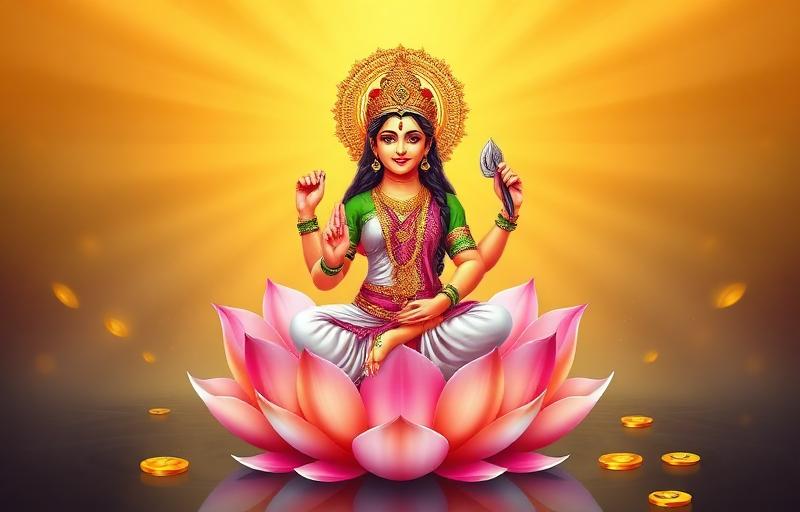
The mantra Narada gave Dhruv, Om Namo Bhagavate Vasudevaya, is among the most widely chanted mantras in Hinduism, called the dvadashakshari or twelve-syllable mantra and the mukti mantra. Dhruv's story is its living proof of power. A simple practice inspired by him: 1. Choose a fixed time and place, your own small Madhuvana, even a corner of one room. 2. Sit steadily, picture Vishnu's gentle form or the steady pole star, and chant the mantra 108 times on a mala. 3. Keep one resolve before the practice, naming what you seek, and then, like Dhruv, let the chanting itself become greater than the wish. 4. Practise for a defined period, forty days or six months, honouring Dhruv's principle of committed duration. Parents traditionally tell this story to children and show them the pole star afterwards, an unforgettable lesson that firmness in good resolve is written into the sky itself. The Vandnaa app's mantra player can support a daily Om Namo Bhagavate Vasudevaya practice with count tracking.
Common Questions From Devotees
Who was Dhruv and why did he perform tapasya?+
Dhruv was the five-year-old son of King Uttanapada and Queen Suniti, described in the fourth Skandha of the Bhagavata Purana. Humiliated by his stepmother Suruchi when he tried to sit on his father's lap, he resolved to attain a position no one could take away, and performed severe tapasya for Lord Vishnu.
Which mantra did Narada give to Dhruv?+
Sage Narada initiated Dhruv with the twelve-syllable mantra Om Namo Bhagavate Vasudevaya, meaning "I bow to Lord Vasudeva." He instructed the boy to meditate on Vishnu's form at Madhuvana on the Yamuna's banks while chanting it continuously. The mantra remains one of the most beloved Vishnu mantras today.
How long did Dhruv's tapasya last?+
Dhruv's tapasya lasted six months, intensifying each month: fruits in the first month, dry leaves in the second, only water in the third, only air in the fourth, then complete breath restraint while standing on one leg. By the sixth month his one-pointed meditation pressed upon the whole universe, bringing Vishnu himself to Madhuvana.
What is Dhruva Loka and is it really the pole star?+
Dhruva Loka is the immovable celestial station Vishnu granted to Dhruv, around which the stars, planets and saptarishis are described as revolving. In Indian tradition it is identified with the pole star (Polaris), which appears fixed in the northern sky while other stars circle it, a living symbol of steadfast devotion.
What happened to Dhruv after he received Vishnu's darshan?+
Vishnu touched Dhruv's cheek with his conch, granting him divine wisdom, after which the boy sang the famous Dhruva Stuti. He returned to a repentant father, later ruled the kingdom righteously for thirty-six thousand years, and finally ascended to Dhruva Loka, the eternal station promised to him.
What does the Dhruv story teach modern devotees?+
It teaches that hurt can be transformed into spiritual fuel, that no one is too young or unqualified for deep devotion, and that firm resolve with a proper method, mantra and discipline draws divine grace. Dhruv also shows that prayers beginning with worldly desires can mature into pure love of God.
About the author
Pandit Ravindra Sharma · Vedic Rituals & Bhakti, 22+ years
Pandit Ravindra is the Vandnaa editorial team's resident specialist on aarti, chalisa, and daily devotion. He has performed home and temple pujas across Varanasi and Delhi for over two decades and contributes the bhakti-focused articles on this site.
Meet the Vandnaa editorial team →