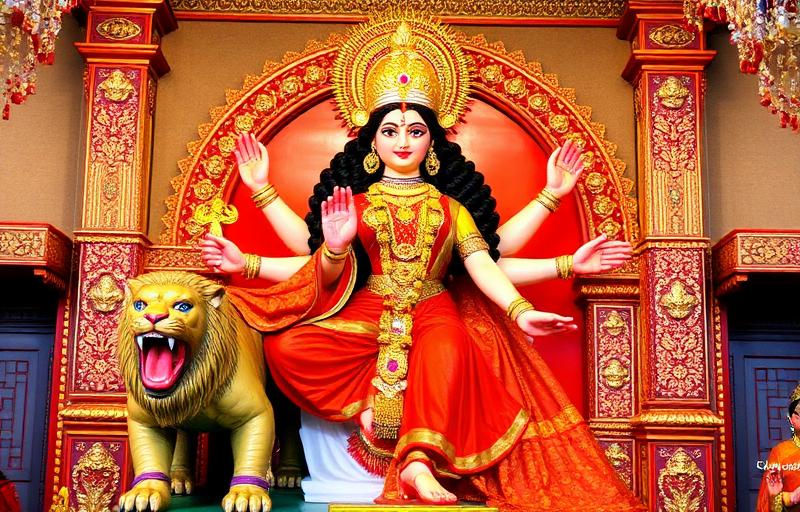
Who Is Maa Dhumavati?
Dhumavati is worshipped as the seventh of the Dus Mahavidyas, depicted as an elderly, widow-like figure associated with smoke, the crow, and all that ordinary life tends to set aside as inauspicious. Tradition holds that she represents the void between creation and destruction, teaching devotees to accept loss, impermanence and non-attachment as part of spiritual growth.
Of all the Mahavidyas, Dhumavati's worship is regarded as among the most austere, and is almost always approached only under the guidance of a qualified guru within an established tradition. This is not a form devotees are encouraged to explore casually on their own. What follows is the simple, humble reverence ordinary devotees may offer from a respectful distance, not a step-by-step sadhana.
Keeping the Offering Deliberately Simple
Tradition holds that Dhumavati does not desire festive or elaborate offerings. Those who wish to offer simple reverence at home keep it plain:
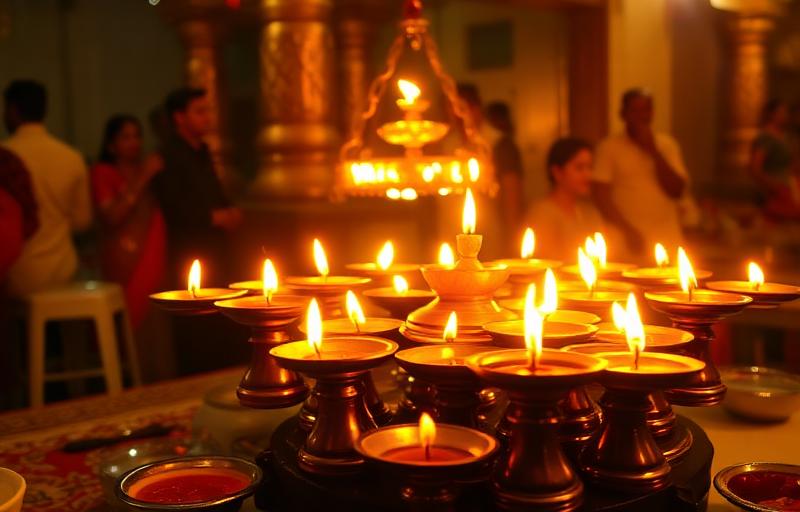
- A small diya with plain oil
- Plain water in a clean vessel
- Incense, kept simple rather than elaborate
- No sweets, decoration or festive items, in keeping with her austere nature
This is not a puja that calls for gathering many materials. Its spirit is restraint, not abundance.
A Simple Acknowledgment, Not a Full Ritual
1. Keep it simple: Sit quietly in a clean corner of the home, in ordinary clothes, without elaborate preparation. 2. Light a plain diya: This is often done at dusk, a time tradition associates with her. 3. Silent acknowledgment: Offer a few quiet moments of prayer, acknowledging her as the form of the Devi who governs endings, loss and detachment. 4. A simple mantra or her name: Some devotees softly repeat her name or Om Dhumavatyai Namah a few times, without elaborate ritual. 5. Close respectfully: End quietly, without aarti or festive elements, sitting with the stillness for a moment before returning to daily life.
Those who feel called to a fuller sadhana of Dhumavati are strongly advised to seek a learned guru rather than attempting elaborate rites alone.
Best Time and Rules to Keep in Mind
Some traditions associate Saturdays or the ashtami tithi with Dhumavati, and dusk, a transitional time between day and night, is often considered fitting for her simple acknowledgment. There is no requirement to perform this worship regularly; many devotees remember her only during Gupt Navratri, when all ten Mahavidyas are traditionally honoured together.
Above all, this worship calls for humility rather than expectation. Devotees are cautioned against approaching her with demands for quick material gain, and are encouraged instead to reflect on acceptance and letting go.
Common Mistakes to Avoid
- Treating her worship as a shortcut to remove misfortune without understanding her deeper symbolism
- Attempting an elaborate or showy ritual, which runs contrary to her austere nature
- Exploring tantric-level sadhana from books or videos instead of seeking a genuine guru
- Approaching her out of fear rather than quiet acceptance and respect
When in doubt, the safest and most respectful path is a few quiet moments of humility rather than any elaborate ritual.
The Takeaway
Dhumavati's presence among the Mahavidyas reminds devotees that loss, ageing and impermanence are also part of the sacred order, not separate from it. Ordinary devotees honour her best through simple humility and quiet acceptance, while her deeper tradition remains a path walked only with an experienced guide.
What People Ask Most
Why is Dhumavati's worship different from other Mahavidyas?+
Her form represents the void, loss and impermanence, so tradition keeps her worship deliberately plain and austere rather than festive, and reserves deeper practice for guidance under a qualified guru.
Can Dhumavati be worshipped at home like other deities?+
Ordinary devotees may offer simple, quiet reverence such as lighting a plain diya and sitting in silent acknowledgment. A fuller sadhana is traditionally undertaken only under a guru's guidance, not as casual home ritual.
What does Dhumavati teach devotees?+
She is understood to teach acceptance of loss, ageing and impermanence as a natural part of life, encouraging non-attachment rather than fear.
About the author
Pandit Mahesh Trivedi · Festival Traditions & Panchang
Pandit Mahesh leads the festival-date and Panchang content on Vandnaa. He cross-references multiple regional panchangs (Drik, Vaishnava, Bengali, Marathi) for every festival date published on the site.
Meet the Vandnaa editorial team →