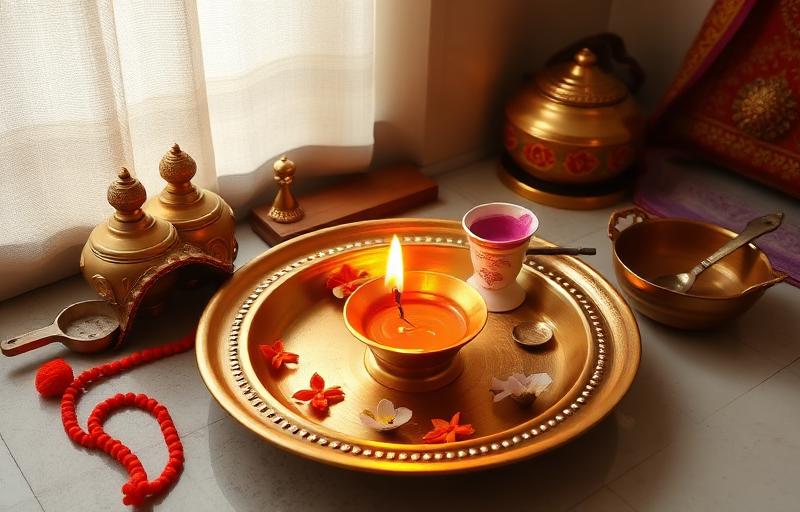
Why the Diya Is the Most Important Element of Every Puja
In every Hindu household, one ritual never stops - the lighting of the diya.
It is the first thing a woman does in the morning and the last thing before dusk settles. The Skanda Purana says: 'जहाँ दीया जलता है, वहाँ देवता निवास करते हैं।' - Where a diya burns, gods live.
The diya is not decoration. It is a cosmic antenna. In Sanatan Dharma, fire (Agni) is the only element that connects heaven and earth - he carries our prayers directly to the deities. A burning diya creates a continuous offering. As long as the flame burns, your puja continues even if you leave the room.
But here is what grandmothers never told us directly: the direction, the oil, the number of wicks - each one changes what kind of energy the flame generates.
A ghee diya with one wick placed in the north-east invokes Lakshmi. A mustard oil diya with two wicks in the south invokes Shani. A til (sesame) oil diya with four wicks in the west is for pitru shanti (ancestor peace). Use the wrong combination - and you invoke a different energy than intended.
In this guide you will learn the 9 strict rules, the direction-deity map, the oil-deity map, what each number of wicks means, and 5 most common mistakes every home makes without knowing.
🙏 Set a daily diya reminder at sunset in the Vandnaa App - this single habit is said to bring Lakshmi to every Hindu home.
Right Direction + Right Oil Map - Which Diya for Which Deity
Place the diya inside the home (never outside the threshold) based on which energy you want to invoke.
Direction Map:
🧭 North-East (Ishaan kona) - BEST DIRECTION Deities: Lakshmi, Vishnu, Shiva, Ganesh Energy: Prosperity, peace, health, moksha This is where most household puja rooms are built. A ghee diya here for 11 minutes daily = Lakshmi's direct blessing.
🧭 East - For Surya (sun god), new beginnings, career. Light before sunrise.
🧭 North - For Kuber (wealth god), business growth. Light at sunset.
🧭 West - For pitru (ancestors). Light til oil diya on amavasya or pitru paksha.
🧭 South - For Shani, Yamraj. ONLY for specific remedies. Mustard oil diya on Saturdays.
⛔ South-East (Agni kona) - Never place a diya meant for puja here. This is fire's own corner - the energy gets scattered.
⛔ South-West (Nairutya) - Never here. Stores negative energy.
Oil Map:
🟡 Pure Cow Ghee Diya - The supreme diya. Suits every deity, every direction, every time. Especially for Lakshmi, Vishnu, Ganesh. Burns clean, smoke is purifying. Costly but unmatched.
🟢 Sesame (Til) Oil Diya - For Shani, Hanuman, pitru, Saturn remedies. Cheaper than ghee, very powerful for removing dosha. Saturday evenings.
🟠 Mustard (Sarson) Oil Diya - For Shani remedies, banishing negative energy, vastu dosh clearance. Light outside the main door on Saturday nights.
🟣 Coconut Oil Diya - For Ganesh, Kartikeya, south-Indian traditions. Brings focus and removes obstacles.
🔴 Mahua/Chameli Oil Diya - For specific tantrik remedies. Not for regular household puja.
⛔ Castor Oil, Groundnut Oil, Refined Oil - Never use. Considered tamasic.
Number of Wicks (Batti) - What Each Number Means
The wick count dramatically changes the diya's energy. Never pick randomly.
1 Wick (Ekavarti) - Daily Puja Meaning: concentration, focus, single-pointed devotion. Use: daily puja, personal meditation, Lakshmi puja. Oil: ghee. This is the default for regular worship.
2 Wicks (Dvivarti) - Prosperity for Couple Meaning: unity of Shakti-Purush, husband-wife harmony. Use: married women lighting before puja, Vat Savitri, Karva Chauth. Oil: ghee or mustard.
3 Wicks (Trivarti) - Trinity Invocation Meaning: Brahma, Vishnu, Mahesh together. Use: major festivals, temple puja, sankalp day. Oil: ghee.
4 Wicks (Chaturvarti) - Pitru Shanti Meaning: four directions, four yugas, ancestor peace. Use: pitru paksha, amavasya tarpan, sraddh ceremonies. Oil: til (sesame).
5 Wicks (Panchvarti) - Pancha Mahabhuta Puja Meaning: earth, water, fire, air, space - five elements. Use: Mahalaxmi puja, Durga puja, major festivals, house warming. Oil: ghee.
7 Wicks (Saptavarti) - Divine Protection Meaning: seven chakras, seven planets, seven rishis. Use: navratri, special Durga/Kali puja, moksha prayers. Oil: ghee.
11 Wicks - Hanuman Puja Meaning: 11 Rudras. Use: Hanuman Jayanti, Tuesday special puja, Shani remedies. Oil: til oil or ghee.
21 Wicks - Maha Aarti Meaning: 21 limbs of devotion. Use: grand aarti at home/temple on major festivals only.
108 Wicks - Maha Diya Meaning: 108 is completeness. Use: in huge puja functions, never at home regularly. Diwali at some temples.
Important rule - Wick direction: All wicks must point east or north. Never south or west. The flame's tip direction decides whose energy your diya attracts.
9 Strict Rules Every Hindu Home Must Follow
Violating these rules weakens the puja and, in some cases, invites dosh.
1. Always light diya twice a day - morning (with bath) and evening (sandhya kaal, 5 minutes before sunset). Skipping evening diya is equal to asking Lakshmi to leave the home.
2. Light from your own diya, never borrow fire - never light your diya from someone else's diya or from a gas stove. Use matchstick or a sacred source. Fire carries vibration of its source.
3. Flame must face east or north - never south. Adjust wick direction before lighting.
4. Never let the diya extinguish before puja ends - sudden extinction is considered inauspicious. Keep extra ghee/oil ready. If it extinguishes naturally after puja completion, it's a good sign (lamp 'returned' after carrying prayers up).
5. Never blow out a diya with your mouth - saliva energy is tamasic. Snuff with a fresh flower or let it burn out.
6. Odd number of wicks for pooja, even only for specific remedies - 1, 3, 5, 7, 11, 21 for worship. 2 or 4 only for specific rituals (couple, ancestor).
7. Clean the diya daily - never use yesterday's oil/wick remains. Wash with water + a pinch of rock salt before relighting.
8. Do not place diya below any picture of a deceased family member - the flame will get tilted toward them and your ancestor puja will mix with deity puja. Keep a separate small diya for pitru.
9. At sunset, the entire house should see a diya glow - at least one diya visible from the entrance. This is the moment Lakshmi walks past every Hindu home. If she sees darkness, she passes by. If she sees a flame, she enters.
Bonus - The 'Akhand Jyoti' rule: A diya that burns continuously for 9 days (Navratri) or 1 year is called Akhand Jyoti. It brings extraordinary punya - but requires strict vigilance. Only attempt if someone can keep adding ghee every 2 hours. One extinction = restart the vow.
Diya Direction Rules for Each Deity: Which Way to Face the Flame
One of the most commonly asked questions in Hindu puja practice is: which direction should the diya's flame face? The answer is not one-size-fits-all - it depends on the deity being worshipped and the purpose of the lamp. Ancient Agama shastra (temple ritual texts) and the Griha Sutra (household ritual guides) both specify directional rules for different contexts.
East-facing diya: For general worship, prosperity, and new beginnings. The east represents the rising sun, new cycles, and divine light. Light a diya facing east for: morning puja, prayers before starting new ventures, studies, and all Surya (sun god) related worship. East is considered the most auspicious direction for the main puja lamp.
North-facing diya: For Lakshmi worship, health, and longevity. The north is the direction of Kubera (lord of wealth) and is associated with the magnetic north pole, which is linked to positive earth energy. A north-facing lamp is placed for financial prayers, prayers for good health, and during Diwali Lakshmi puja.
Northeast-facing diya: The northeast (Ishanya) is the most sacred direction in Vastu - it is the direction of Ishwara (God). The puja room itself should ideally be in the northeast. A lamp facing northeast is particularly powerful for all spiritual practice.
West-facing diya: For Saturn (Shani) worship and for removing obstacles. The west represents completion and release. On Saturday evenings, a lamp facing west with sesame oil is offered to Shani to reduce Saturn's malefic influence.
South-facing diya - special cases: A south-facing diya is prescribed ONLY for specific purposes: on Dhanteras, to honor Yama (the south is Yama's direction); during Pitru Paksha, for ancestral offerings; and at some temples, for specific protective rituals. In everyday puja, a south-facing lamp is avoided as it is associated with the direction of the departed.
Deity-specific rules:
- Ganesha: East-facing, placed to the right of the main image
- Lakshmi: North or northeast-facing
- Shiva: East or north-facing; never south during daily puja
- Durga/Kali: East or northeast; fire-facing for tantra puja
- Vishnu/Krishna: East or northeast-facing, ghee lamp preferred
- Hanuman: East-facing for general worship; south-facing only for specific protective rituals (facing the south = facing adversity and overcoming it)
- Surya: East-facing at sunrise; west-facing at sunset
The number of flames:
- 1 flame: Individual devotion
- 2 flames: Couples, marital harmony
- 3 flames: Prosperity, Trimurti worship
- 5 flames: Pancha Deva puja (most auspicious)
- 7 flames: Special occasion puja
The Vandnaa app provides an interactive diya placement guide for your specific deity and intention, with step-by-step audio for setting up the correct puja configuration.
Which Oil for Diya: Ghee, Sesame, Mustard, Coconut - Complete Guide
The choice of oil or ghee for the diya is not merely practical - it is a theological and Ayurvedic decision that affects both the spiritual quality of the flame and the atmosphere of the home. Ancient texts are specific about which substance to burn for which deity and which purpose.
Ghee (clarified butter) - the supreme offering: Ghee is the most sacred of all lamp fuels. Made from the finest milk, clarified through fire, it represents the purification of earthly substance into divine form. In yagna, ghee is the primary offering. In daily puja, a ghee lamp is the highest form of diya. Ghee flames are brighter, longer-lasting, and their smoke is considered purifying (ghee smoke has been shown to contain pyrones and other compounds with antimicrobial properties). Ideal for: Vishnu, Lakshmi, Rama, Krishna, and general Devi worship.
Sesame oil (til ka tel) - purification and Saturn: Sesame oil is prescribed for Shani (Saturn) worship on Saturdays, for Pitru Paksha lamps (honoring ancestors), and for removing Kaal Sarp Dosha effects. It has a darker, smoky flame associated with Saturn's quality of burning away impurities through patience and time. The smoke of sesame oil lamps is believed to reach the ancestral realm. Also used for Kala Bhairava worship.
Mustard oil (sarson ka tel) - protection and strength: Mustard oil is associated with protection, particularly against the evil eye (nazar) and negative entities. Hanuman is specifically pleased by mustard oil lamps. On Saturdays and Tuesdays, mustard oil lamps before Hanuman drive away malefic influences. The pungent quality of mustard oil is believed to repel negativity.
Coconut oil - Lakshmi and purity: Coconut oil gives a particularly clean, sweet-smelling flame. Associated with Lakshmi and the sattvic (pure) quality of consciousness. Preferred in South Indian puja traditions. Suitable for all Vishnu tradition deities.
Castor oil (arandi tel) - Kali and transformation: Castor oil is specifically used for Kali puja and other Shakta traditions. Its thick, dark flame corresponds to Kali's transformative energy - burning away what no longer serves. Not recommended for general daily puja.
Mahua oil, Karanja oil (regional): Various regional traditions use local plant oils with specific spiritual associations. Mahua (Madhuca) oil is used in tribal and folk traditions for ancestral worship.
Practical guide:
- Morning daily puja: Ghee lamp
- Saturday evening: Sesame oil
- Hanuman puja (Tuesday and Saturday): Mustard oil
- Lakshmi puja: Coconut or ghee
- Pitru Paksha: Sesame oil
- Diwali: Mustard oil for the row of diyas (traditional); ghee for the main altar diya
Wick materials: White cotton (rui) is standard. For Hanuman worship, red cotton thread is used. For Kali worship, untreated hemp wick. The wick itself should be soaked in the oil before lighting and replaced when it becomes too charred to sustain a steady flame.
The Vandnaa app includes a deity-specific diya configuration guide with the correct oil, direction, and timing for each major deity and festival throughout the year.
When to Light Diya: Auspicious Times, Sandhi Kaal, and Timing Rules
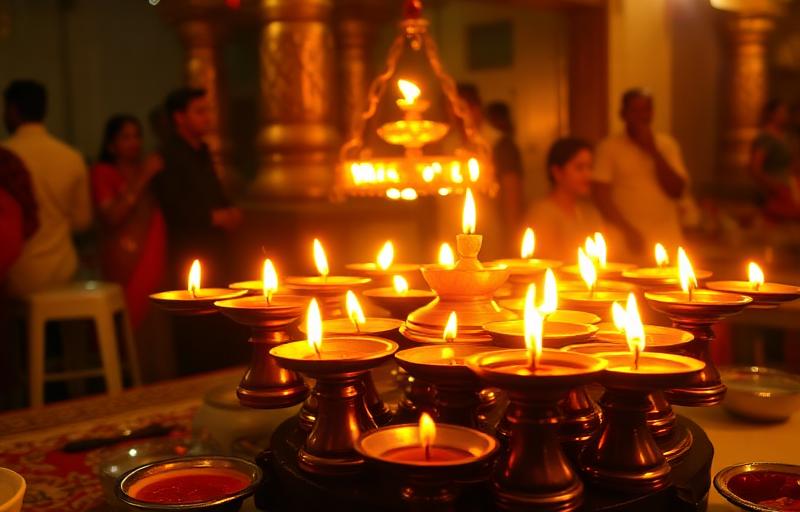
The timing of lighting the diya is as important as the direction and the oil. Hindu time science (Kala Vidya) recognizes that certain moments of the day carry heightened spiritual potency, and the diya lit in these windows has a disproportionate effect on the atmosphere of the home.
Brahma Muhurat (4:00–5:30 AM) - the highest window: Lighting a diya during Brahma Muhurat creates the most potent spiritual opening. The pre-dawn lamp - called "Pratah Diya" - is a Vedic prescription found in the Grihyasutras. This lamp, lit before the family wakes, bathes the home in divine light during the transition from darkness to dawn and sets the energetic tone for the entire day. Many devout families maintain an Akhand Jyoti (unbroken flame) from Brahma Muhurat - the flame never goes out throughout the day.
Sunrise (Pratah Kala, ~6:00 AM): Lighting the diya at sunrise - specifically at the moment the sun breaks the horizon - is the auspicious time for Surya puja. This is when Surya Arghya (water offering to the sun) is also performed. The diya lit at this moment should face east.
Sandhya (Twilight - Dusk, 6:00–7:30 PM) - the most important daily diya: The evening twilight (Godhuli Lagna - the time when cows return home and dust rises) is the most universally recognized diya time. This is the "Sandhya Diya" or "Sanj Ka Diya." The tradition is absolute: the evening diya must be lit before the first star appears. The lamp keeps divine light continuous as daylight ends - ensuring the home's spiritual protection is maintained through the night. This is the diya that Lakshmi is said to enter homes for, and it is the basis of all Diwali lamp-lighting.
What happens if the evening diya is missed: If the evening diya is not lit before the first star appears, the tradition considers it inauspicious - the home's light has gone dark before the divine replaces the sun's physical light. If you miss the exact time, light the diya immediately when you notice, with the prayer: "O Mother Lakshmi, forgive this delay; please accept this lamp." The intention to maintain the tradition is itself protective.
Nishita Kala (Midnight) - for advanced practice: Midnight, particularly on full moon nights and new moon nights, is prescribed for certain tantra practices and deep Devi worship. Not recommended for general householder practice.
Days with special timing significance:
- Amavasya (New Moon): The evening diya on Amavasya is particularly important - it is the darkest night, when ancestral souls are closest. A Navagraha diya (nine wicks for nine planets) lit on Amavasya evening is considered highly auspicious.
- Purnima (Full Moon): The diya lit at moonrise honors the full moon's energy - use a silver or white vessel.
- Ekadashi: Fast day - the evening diya should be especially fine, with pure ghee, as Vishnu's worship peak.
- Festival days: Each major festival prescribes specific diya timing. Diwali: diya all night. Navratri: from sunset through the night for the akhanda jyoti.
What to avoid:
- Never light a diya in a dirty or cluttered space - purify the space first
- Don't blow out a diya with your breath - use a small fan, your hand, or allow it to extinguish naturally
- Don't light a diya during eclipses (solar or lunar) - the traditional period of sutak (inauspicious time) prescribes no new lamp lighting
The Vandnaa app sends sunrise and sunset reminders by location, ensuring you never miss the Brahma Muhurat lamp or the evening Sandhya Diya - the two most important daily light-keeping practices.
What People Ask Most
Can I use electric diya or LED diya for puja?+
No, not for main puja. An LED has no agni (fire) - it is light without the sacred element. Electric diya can be used decoratively (for light effect on the veranda or as safety backup) but the puja diya must be a real flame. If you cannot have a real flame due to smoke detectors or health issues, use a small ghee diya inside a lantern. Real fire is non-negotiable for invoking deities.
Is it wrong if my diya extinguishes during aarti?+
It depends. If it extinguishes due to wind, low oil or being near a fan - it is a technical issue, not a spiritual one. Simply relight immediately (using matchstick, not a different flame) and continue. However, if it extinguishes mid-aarti without any external reason in still air - some believe it is a sign of negative energy or obstacle. Don't panic - complete the aarti, chant Hanuman Chalisa verse 29 once for protection, and continue next day. Never stop puja because of a blown diya.
How long should I keep the diya lit?+
Minimum 11 minutes for daily puja - this is the shortest sacred duration. 27 minutes or 108 minutes for special days. Let it burn naturally till oil/ghee finishes (typically 1–2 hours for a small diya). Morning diya should burn at least till you have bathed and eaten breakfast. Evening diya must burn through sunset into dusk - the most important window. Akhand jyoti burns continuously for 9 days or 1 year without ever going out.
About the author
Dr. Suresh Iyer · Vastu Shastra & Jyotish, 18+ years
Dr. Suresh has practiced traditional Vastu and basic Vedic Jyotish for over 18 years across South India. He contributes the Vastu, direction, and home-puja layout guides on Vandnaa.
Meet the Vandnaa editorial team →