The Temple and Its Sacred Tank
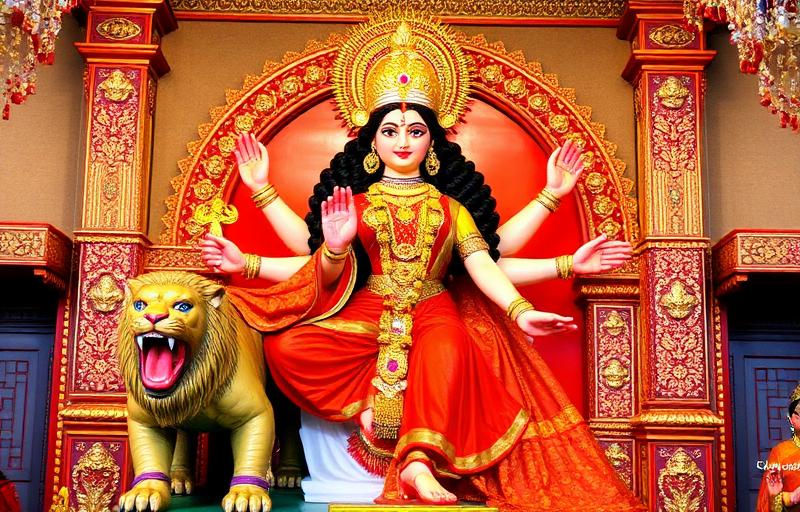
In the southern part of Varanasi, not far from Sankat Mochan and Tulsi Manas Mandir, stands the Durga Kund Temple, easily recognised by its ochre-red walls, a colour traditionally associated with the Goddess. Beside the temple lies a large rectangular tank, the Durga Kund, from which the temple takes its name.
Together, the temple and its tank form one of the most visited goddess shrines in the city, drawing devotees who come to seek Durga's protective strength in the middle of their everyday lives.
The Tradition Behind the Temple's Origin
Devotees hold this temple to be swayambhu, self-manifested, meaning the deity here is believed to have appeared on her own rather than being consecrated through the usual rites of installation. This belief adds a layer of special sanctity to the shrine, since a self-manifested form is regarded as the goddess choosing the very spot of her own worship.
The Durga Kund tank beside it has long been considered sacred in its own right, historically used by pilgrims for ritual bathing before darshan, tying the goddess and her waters into a single tradition of devotion carried forward across generations.
Why Devotees Seek Durga's Strength Here
Devotees come to Durga Kund Temple seeking courage in the face of difficulty, protection from harm and the inner strength to overcome obstacles in life. The goddess here is approached less as a distant power and more as a fierce, protective mother who stands firmly beside her children.
Tuesdays draw especially large crowds, since the day is considered dear to the goddess, and many devotees offer red flowers, vermilion and simple sweets as a token of their devotion, asking for both material and spiritual strength in equal measure.
Darshan Guide and Navratri Celebrations
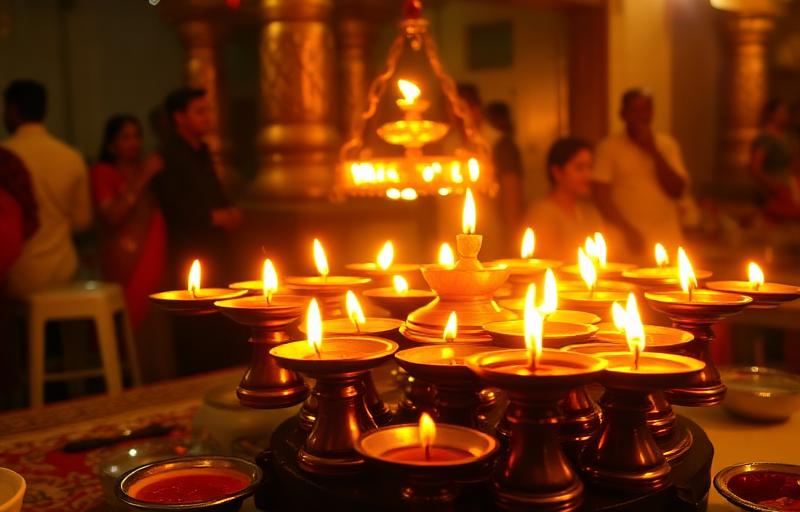
The temple observes a regular schedule of morning and evening darshan, with Tuesdays bringing the week's largest crowds. The atmosphere on ordinary days is devotional but unhurried, allowing for quiet, personal prayer.
Navratri is, without question, the grandest time to visit, when the temple is elaborately decorated, special worship is performed across all nine nights, and long queues of devotees form to seek the goddess's blessing during her most celebrated festival of the year.
How to Reach Durga Kund Temple
The temple is located in the southern part of Varanasi, close to Tulsi Manas Mandir and within easy reach of Sankat Mochan Hanuman Temple, making it simple to combine all three in a single visit. Auto-rickshaws and cycle rickshaws are readily available from most parts of the city.
Varanasi Junction, Varanasi Cantt railway station and Lal Bahadur Shastri International Airport provide the main connections to the city, with local transport covering the final stretch to this cluster of temples.
A Mantra to Durga and the Takeaway
Devotees at Durga Kund often chant this simple invocation:
Om Dum Durgayei Namah (Salutations to Goddess Durga)
Repeated quietly, this mantra is a call for the goddess's fierce, protective strength to enter one's life.
Durga Kund Temple reminds devotees that strength and compassion are not opposites, that a mother's love can also be fierce enough to guard against every harm. Worship here is an act of faith and love, not a transaction, a way of drawing courage from a goddess who is believed never to abandon those who seek her.
What People Ask Most
Why is Durga Kund Temple believed to be self-manifested?+
Devotees hold that the deity here appeared on her own rather than being installed through the usual rites, a belief known as swayambhu, which adds special sanctity to the shrine in the eyes of devotees.
What is the significance of the Durga Kund tank beside the temple?+
The tank has long been considered sacred in its own right and was historically used by pilgrims for ritual bathing before darshan, linking the goddess and her waters in a single tradition of devotion.
When is the best time to visit Durga Kund Temple?+
Tuesdays are considered especially auspicious through the year, while Navratri is the grandest time to visit, with elaborate decoration and special worship performed across all nine nights.
About the author
Pandit Mahesh Trivedi · Festival Traditions & Panchang
Pandit Mahesh leads the festival-date and Panchang content on Vandnaa. He cross-references multiple regional panchangs (Drik, Vaishnava, Bengali, Marathi) for every festival date published on the site.
Meet the Vandnaa editorial team →