The Elephant in Hindu Worship
Few animals appear across as many facets of Hindu devotion as the elephant, revered simultaneously as the very form of a beloved deity, a vahana of great gods, and a symbol woven into temple architecture and royal imagery alike. Lord Ganesha, the elephant-headed remover of obstacles, is perhaps the most familiar face of this reverence, worshipped before any new beginning across Hindu households.
Beyond Ganesha, the elephant appears as Airavata, the vahana of Indra, king of the devas, and stands beside Goddess Lakshmi in the form known as Gajalakshmi, where a pair of elephants shower her with water, an image found on ancient coins and temple walls alike.
Stories Behind the Sacred Elephant
Puranic tradition holds that Airavata emerged during the Samudra Manthan, the churning of the cosmic ocean, as one of its precious treasures, a magnificent white elephant fit to carry Indra himself. His pure white form and multiple tusks made him a fitting vahana for the king of svarga, the heavens.
Ganesha's own elephant head is explained through the well-loved katha in which Lord Shiva, not recognising his own son, severed the boy's original head, and upon realising his error, restored him to life by placing the head of an elephant upon his shoulders, granting him a form that devotees now cherish as uniquely auspicious among all the gods.
What the Elephant Represents
The elephant's immense size paired with its gentle, careful gait has made it a natural symbol of a rare combination: great strength held in restraint through wisdom. Its excellent memory is traditionally linked to Ganesha's role as the deity of knowledge and intellect, while its sturdy, unshakeable steps mirror his role as the steady remover of obstacles.
In the image of Gajalakshmi, the elephants pouring water represent the clouds bringing life-giving rain, connecting the Goddess of prosperity to abundance in its most literal, agricultural sense, while Airavata's association with Indra links the elephant further to rain, fertility and the sustaining forces of nature.
The Elephant in Worship and Festival
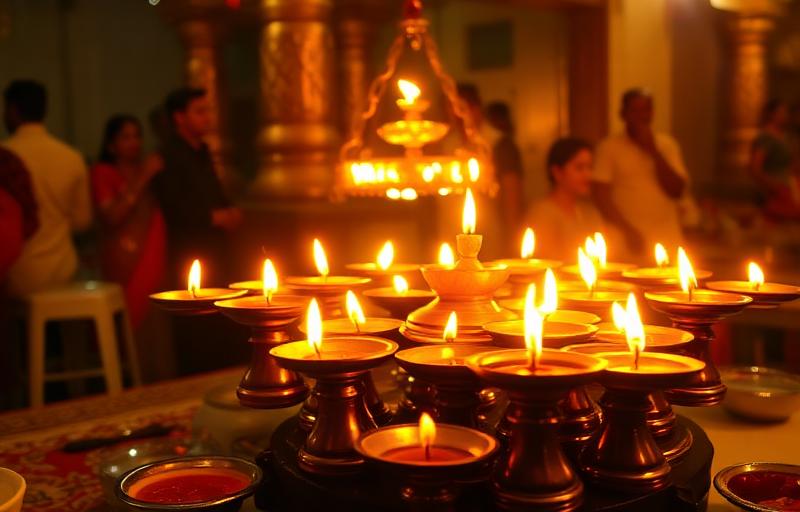
Ganesh Chaturthi, celebrated with great devotion across India and especially grand in Maharashtra, centres entirely upon the elephant-headed Lord, with elaborate idols installed in homes and pandals before immersion. Temple elephants, cared for as living participants in ritual life at several major shrines, are traditionally offered worship, decorated for processions and considered a blessing to encounter.
Images of Gajalakshmi are placed at temple entrances and on doorframes in many homes to invite prosperity, while depictions of Airavata appear in classical art associated with Indra and rain-related worship, reflecting the elephant's broad and enduring place in devotional life.
Significance and the Takeaway
As per tradition, devotees believe that the elephant's presence across Ganesha, Gajalakshmi and Airavata brings together wisdom, prosperity and life-sustaining abundance under a single gentle, powerful symbol. Reflecting on the elephant reminds devotees that true strength is best expressed through patience, memory of dharma and steady, unhurried progress.
Worship connected to the elephant, whether through Ganesha's blessing before new beginnings or Gajalakshmi's promise of abundance, is like all Hindu devotion an act of faith and love, not a transaction, inviting every devotee to carry great strength with equally great gentleness.
Frequently Asked Questions
Why is the elephant significant in Hindu worship?+
The elephant is significant because it appears as Lord Ganesha's own form, as Airavata the vahana of Indra, and beside Goddess Lakshmi as Gajalakshmi, symbolizing wisdom, royal power and prosperity.
Who is Airavata?+
Airavata is the divine white elephant said to have emerged during the Samudra Manthan and serves as the vahana of Indra, king of the devas.
What is Gajalakshmi?+
Gajalakshmi is a form of Goddess Lakshmi shown flanked by two elephants pouring water over her, symbolizing rain, fertility and abundant prosperity.
About the author
Anjali Mehta · Editor, M.A. Religious Studies
Anjali is the managing editor for Vandnaa and oversees the festival and vrat coverage. She holds an M.A. in Religious Studies and reviews every published article for accuracy, accessibility, and tradition-fidelity.
Meet the Vandnaa editorial team →