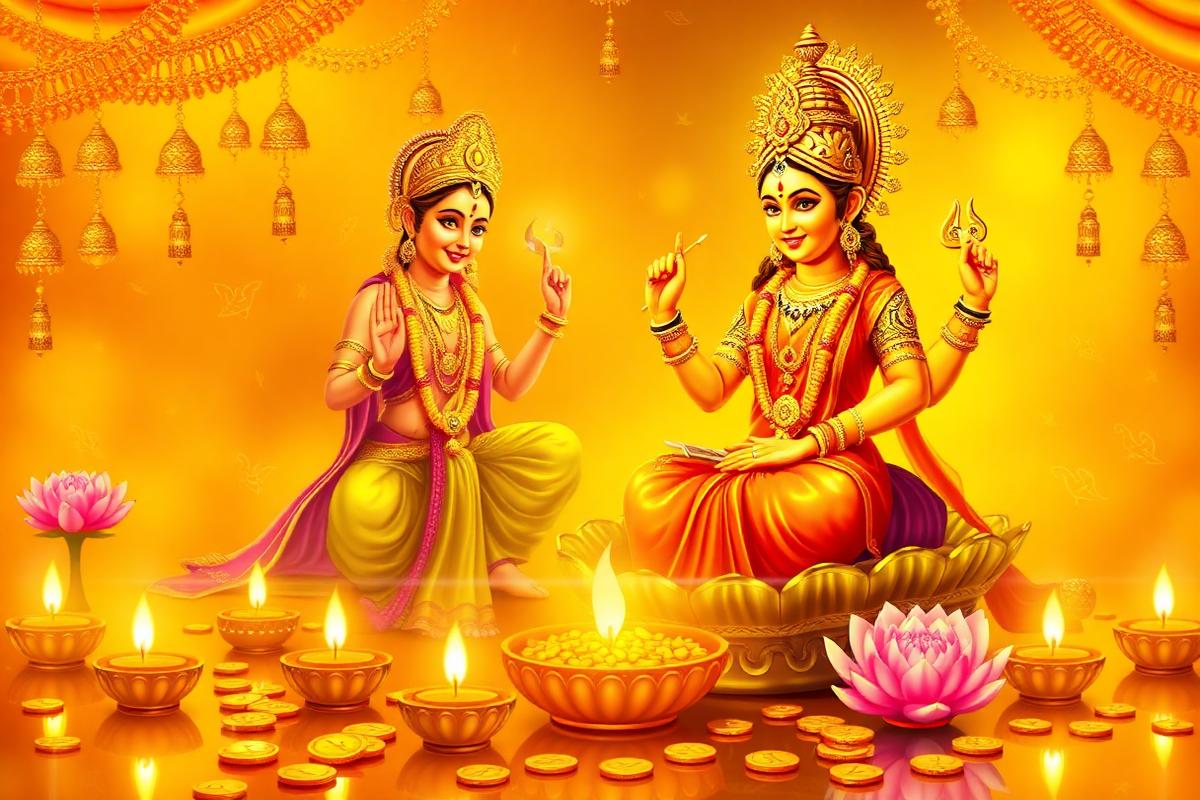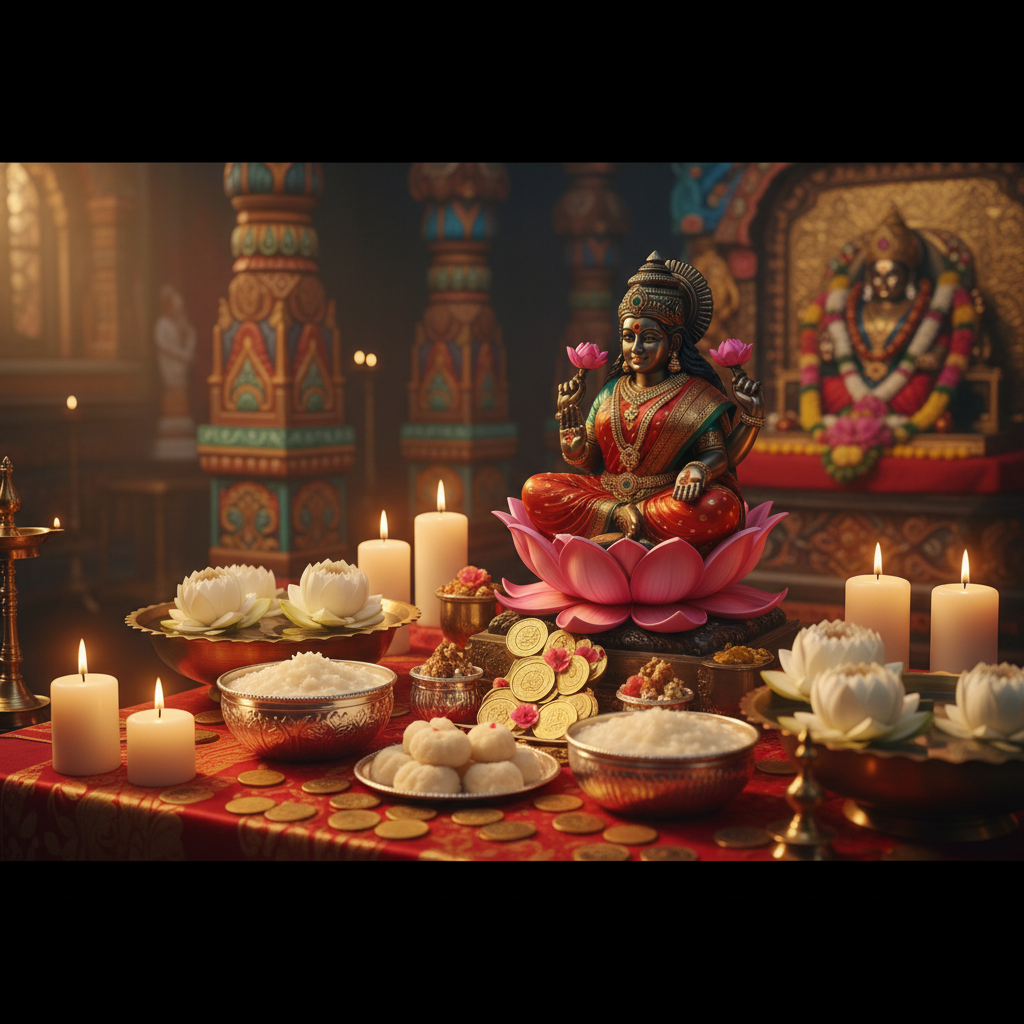
Who is Gaja Lakshmi?
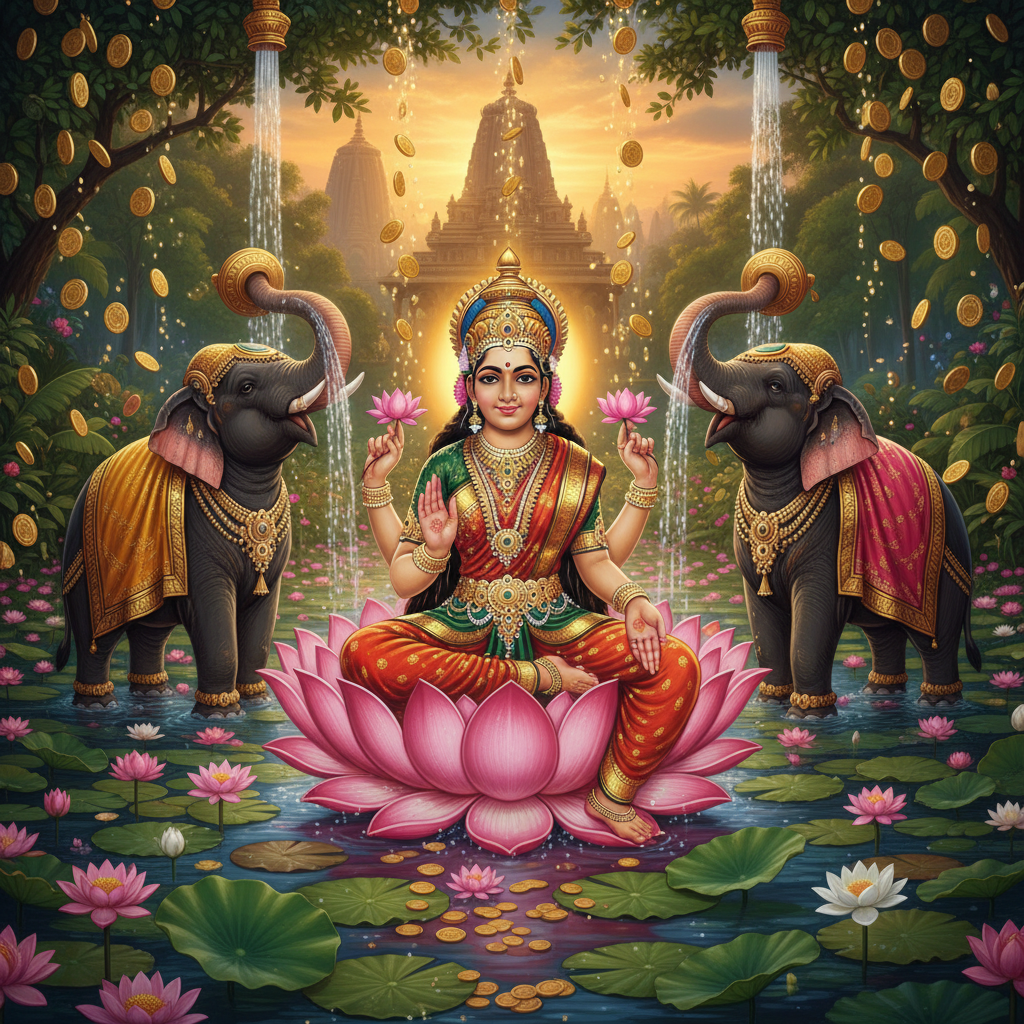
Gaja Lakshmi is perhaps the most visually recognised of the eight forms of Ashta Lakshmi. She is depicted seated on a lotus, being bathed or honoured by two elephants who raise their trunks holding pots of water above her. The word Gaja means elephant, and this form of the goddess represents royal glory, power, and grand good fortune.
Elephants in Hindu tradition symbolise strength, wisdom and royal stature - they were historically associated with kings and abundance. Gaja Lakshmi's imagery therefore does not represent ordinary wealth, but the highest, most magnificent form of prosperity and honour.
The Famous Elephant Iconography
The image of Gaja Lakshmi flanked by elephants is one of the oldest and most widespread motifs in Indian art, found carved on ancient temple walls, coins and gateways long before many later goddess iconographies took shape. This suggests how deeply the association between elephants, royalty and Lakshmi's blessing runs in Indian devotional history.
The elephants pouring water over the goddess are often understood as performing an abhishekam, a ceremonial bath offered to honoured deities and kings alike. In this sense, Gaja Lakshmi is depicted receiving the same royal welcome she is asked to bestow upon her devotees.
Significance of Gaja Lakshmi's Blessing
Devotees pray to Gaja Lakshmi for status, respect, authority and the kind of prosperity that brings dignity along with material comfort. Business owners, those seeking leadership positions, and families wishing to restore lost honour or standing often turn to this form of the goddess.
Unlike Dhana Lakshmi's focus on wealth alone, Gaja Lakshmi's blessing is understood as encompassing power used well - the strength and standing to protect one's family and community, not power for its own sake.
How Devotees Worship Gaja Lakshmi

Devotees offer a lamp, flowers and sometimes an image or small idol of elephants alongside the goddess while chanting Om Shreem Mahalakshmyai Namaha or reciting her dedicated verse from the Ashtalakshmi Stotram. Business premises and offices often display Gaja Lakshmi imagery near the entrance, seeking her blessing for growth and respectable standing.
Some devotees also visit temples where Gaja Lakshmi is carved or depicted prominently, offering prayers before starting a new venture or seeking a position of responsibility.
Prosperity with Dignity
Gaja Lakshmi's lasting teaching is that true prosperity carries dignity, not arrogance. Status and standing, in this tradition, are blessings to be used for protecting and uplifting others, not for display alone.
Devotees are reminded that seeking Gaja Lakshmi's grace means also striving to be worthy of it - honest in dealings, respectful of others, and generous with the standing one is given. Worship is an act of faith and love, not a transaction.
Frequently Asked Questions
Why is Gaja Lakshmi shown with elephants?+
In this iconography, two elephants pour water over Gaja Lakshmi as a ceremonial honour, similar to how kings were welcomed. Elephants symbolise strength, wisdom and royal stature, representing the highest form of prosperity and dignity.
What does Gaja Lakshmi's blessing represent?+
Gaja Lakshmi's blessing represents royal glory, status, authority and prosperity combined with dignity. Devotees seek her grace for respect, leadership and the strength to protect and uplift their family and community.
Who typically worships Gaja Lakshmi?+
Business owners, those seeking leadership roles, and families wishing to restore honour or standing often worship Gaja Lakshmi. Her image is commonly placed near entrances of homes and offices for growth and respectable standing.
About the author
Pandit Mahesh Trivedi · Festival Traditions & Panchang
Pandit Mahesh leads the festival-date and Panchang content on Vandnaa. He cross-references multiple regional panchangs (Drik, Vaishnava, Bengali, Marathi) for every festival date published on the site.
Meet the Vandnaa editorial team →