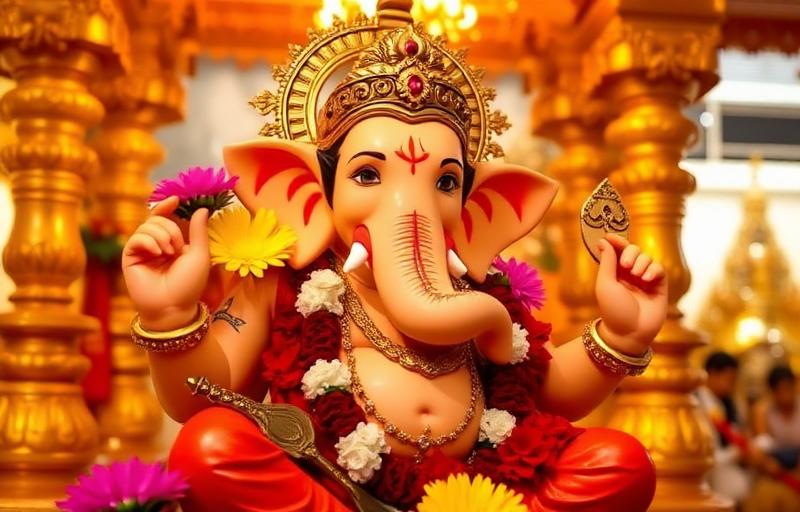
Why the Moment of Installation Matters So Much
Unlike Janmashtami, which centres on a single midnight moment, Ganesh Chaturthi's most important timing decision happens once, at the very start of the festival: the moment the idol is formally installed and invoked, called sthapana or pran pratishtha.
Sthapana is the ritual through which a devotee invites Lord Ganesha's divine presence into the clay or eco-friendly idol that will be worshipped for the next several days. Before this ritual, the idol is treated as a beautiful artistic object. After it, in the belief of devotees, it becomes a living vessel of the deity's energy for the duration of the festival, whether that's one and a half days or the full ten.
This is precisely why the timing of sthapana receives so much attention from priests and panchang-makers every year. Hindu tradition holds that certain windows of the day carry more auspicious energy than others, based on the position of the sun, the prevailing tithi, and the absence of inauspicious periods like Rahu Kaal. Installing the idol within the correct window is believed to invite a smoother, more powerful year-long connection with the deity, while installing it during an inauspicious window, even by accident, is something many families prefer to avoid out of caution and respect for tradition.
For Ganesh Chaturthi 2026, which falls on Monday, 14 September 2026, this single decision, when exactly to perform sthapana that day, is arguably the most researched timing question of the entire festival for millions of households across India. The good news is that the underlying principle is consistent and easy to understand, even though the exact clock time shifts from city to city.
Madhyahna Muhurat: The Principle Behind Ganesh Sthapana Timing
The single most important concept to understand about Ganesh Chaturthi timing is madhyahna kaal, the midday period, because this is when Lord Ganesha is traditionally believed to have been born.
What madhyahna kaal means: The period between sunrise and sunset is traditionally divided into five parts for muhurat calculations: pratahkal (morning), sangava (mid-morning), madhyahna (midday), aparahna (afternoon), and sayankal (evening). Madhyahna kaal refers specifically to the middle portion of the daylight hours, roughly the two-hour to two-and-a-half-hour window straddling solar noon.
Why midday specifically: According to the Ganesh Purana and popular tradition, Ganesha was born to Goddess Parvati at midday on Chaturthi tithi in the month of Bhadrapada. Because of this, madhyahna kaal on Chaturthi is considered the single most auspicious window for sthapana, distinct from Janmashtami where midnight plays that role, or Diwali where the evening Pradosh Kaal is prioritised.
How this translates practically: For most cities in India, madhyahna kaal on 14 September 2026 will fall somewhere in the late morning to mid-afternoon window, typically between roughly 11 AM and 1:30 PM local solar time, though the precise start and end minutes shift based on your city's actual sunrise and sunset times that day.
What if you can't perform sthapana during madhyahna: Life doesn't always accommodate the ideal muhurat. Many priests advise that if madhyahna kaal genuinely isn't possible (due to work schedules, travel, or other constraints), performing sthapana at any auspicious time on Chaturthi tithi itself, while avoiding Rahu Kaal, is an acceptable and widely practised alternative. The devotion behind the ritual matters more than hitting the exact ideal minute.
Understanding this one principle, midday is preferred because that's traditionally when Ganesha was born, explains almost everything else about why sthapana timing gets calculated the way it does every single year.
The Chaturthi Tithi Window for 14 September 2026
Beyond madhyahna kaal, the second key factor determining exactly when sthapana can be performed is the Chaturthi tithi window itself, since the ritual must fall within the correct tithi to carry full significance.
Why tithi timing matters: Every lunar tithi (day) in the Hindu calendar begins and ends at a specific time, not necessarily aligned with midnight or sunrise. Chaturthi tithi for Ganesh Chaturthi 2026 begins sometime before 14 September and extends into part of that day, and panchang calculations determine exactly when madhyahna kaal on 14 September actually overlaps with Chaturthi tithi being active.
What this means in practice: In most years and most cities, this overlap works out cleanly, madhyahna kaal on the main observance date falls comfortably within Chaturthi tithi, giving a clear multi-hour window for sthapana. In some years, tithi boundaries shift the ideal window earlier or later within the madhyahna period, which is exactly why panchang-calculated timings differ slightly year to year, even though the underlying principle (midday, during Chaturthi) never changes.
Regional sunrise variation adds another layer: Because India spans a wide longitude, sunrise in Gujarat can be roughly 30-40 minutes later than sunrise in West Bengal on the same calendar date, shifting when "midday" actually falls locally. A city in eastern India will generally have its madhyahna kaal window earlier in clock time than a city in western India, even though both are technically observing the same tithi-based principle.
The safest approach: Rather than relying on a single nationally-quoted time that may only be accurate for one reference city, check a panchang calculated specifically for your own city's coordinates, such as the one built into the Vandnaa app, for the precise start and end minute of your local sthapana window.
Rahu Kaal and Other Timings to Avoid
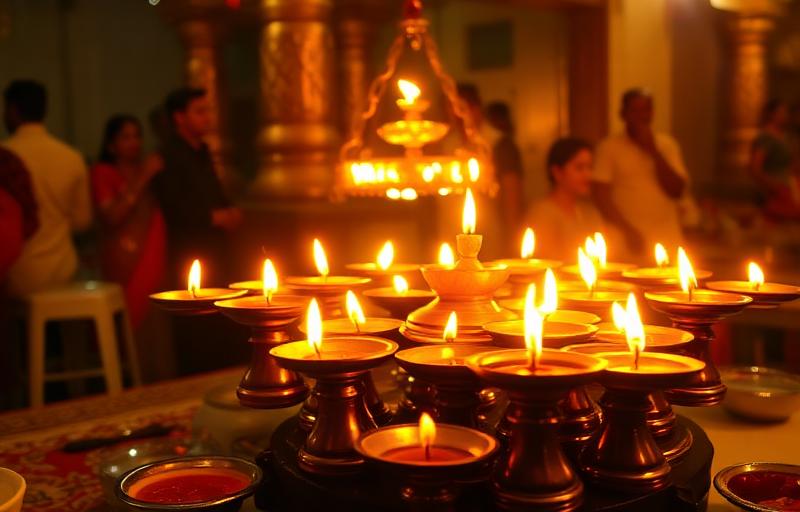
Beyond finding the right window to perform sthapana in, it's equally important to know which windows to actively avoid, since Hindu muhurat tradition treats certain daily periods as inauspicious for starting new ventures, including inviting a deity's presence into an idol.
Rahu Kaal: This is the most widely observed inauspicious period, occurring for roughly 90 minutes at a different time each day of the week, calculated by dividing daylight hours into eight parts. On a Monday, Rahu Kaal typically falls in the second part of the day, roughly mid-morning, though the exact window shifts based on your city's sunrise. Starting sthapana during Rahu Kaal is widely avoided.
Yamaganda Kaal: A second, somewhat less emphasised inauspicious period observed by some traditions, also calculated as one-eighth of the daylight period, falling at a different point in the day than Rahu Kaal.
Gulika Kaal: A third period some panchangs flag, generally considered less critical than Rahu Kaal but still avoided by more traditional households when possible.
Why these periods are avoided specifically for sthapana: Since pran pratishtha is considered the single most important moment of the entire festival, the moment that determines the idol's spiritual status for the following days, households tend to be more cautious about avoiding any traditionally inauspicious window for this specific ritual than they might be for smaller, everyday tasks.
What if Rahu Kaal overlaps with your only available time: If work schedules or family logistics mean the only time available for sthapana falls within Rahu Kaal, most priests suggest shifting even by 20-30 minutes before or after the Rahu Kaal window is preferable to performing the ritual squarely within it, and a panchang app makes it straightforward to see the exact start and end minute for your city and adjust accordingly.
Step-by-Step: What Happens During Sthapana
While the exact clock minute varies by city, the ritual sequence performed during the sthapana window follows a broadly consistent structure across most Ganesh-worshipping households and communities.
Step 1 - Preparing the space: The chosen spot for the idol, typically a raised platform (chowki) decorated with a clean cloth, flowers and rangoli, is finalised and cleaned before the muhurat window begins.
Step 2 - Sankalp (intention setting): The devotee performing the puja sits facing east or north, takes water, akshat (rice) and flowers in hand, and states their intention aloud, naming the puja being performed and the days it will span.
Step 3 - Idol placement: The Ganesha idol is carefully placed on the prepared platform, typically facing the entrance or the family's main puja direction, ideally right as the muhurat window opens.
Step 4 - Pran Pratishtha mantras: Specific mantras invoking life-force (prana) into the idol are chanted, most commonly verses invoking Ganesha's various names and attributes, along with the specific pran pratishtha mantra a family priest may use.
Step 5 - Shodashopachara puja (16-step worship): A more elaborate version of daily puja is performed only on installation day, covering steps like aavahan (invocation), asana (offering a seat), snana (bathing), vastra (clothing), and more, building up to the first aarti.
Step 6 - Modak and durva grass offering: Ganesha's favourite offerings, modak and durva grass (a type of sacred grass), are offered early in the sequence, often before other food items.
Step 7 - First aarti: The installation ceremony concludes with the first Ganesh aarti of the festival, marking the formal beginning of the devotee's days-long puja routine, whether that's one and a half days or the full ten.
Most households complete this full sequence in 45 minutes to just over an hour, depending on how elaborate the shodashopachara puja is.
Why Your City's Exact Muhurat Minute Will Differ
If you've ever compared Ganesh Chaturthi muhurat timings between two different cities and found them oddly different, even by 30-45 minutes, there's a precise reason, and it isn't an error in either source.
Sunrise is the anchor point: Almost all traditional muhurat calculations, including madhyahna kaal and Rahu Kaal, are calculated relative to local sunrise and sunset, not a fixed clock time. Since India spans roughly 30 degrees of longitude from Gujarat to the northeast, actual sunrise time on the same date can differ by 30-45 minutes between the far west and far east of the country, even though the whole nation uses a single time zone (IST).
Latitude adds a smaller effect too: Day length itself varies slightly by latitude, which subtly shifts the exact midpoint of daylight hours (used for madhyahna kaal) between, say, a city in Tamil Nadu and one in Punjab.
Why a single national muhurat time is misleading: Many general articles quote a single muhurat time for all of India, usually calculated for Delhi or a similar reference city. Applying that exact time in Kolkata or Ahmedabad can mean missing madhyahna kaal by a meaningful margin, or worse, accidentally landing inside a local Rahu Kaal window that doesn't match the reference city's.
The reliable fix: A panchang calculated specifically for your city's coordinates removes this guesswork entirely. This is precisely the kind of city-specific calculation that generic printed calendars can't provide but a location-aware panchang tool can.
📅 Get your city's exact Ganesh Chaturthi sthapana muhurat, calculated for your precise location, in the Vandnaa app's panchang section.
Reader Questions Answered
What is the exact sthapana muhurat time for Ganesh Chaturthi 2026?+
Ganesh Chaturthi 2026 falls on Monday, 14 September, and the traditionally preferred window is madhyahna kaal (midday), roughly late morning to mid-afternoon. The exact start and end minute depends on your city's sunrise and sunset that day, so check a panchang calculated for your specific location, such as the one in the Vandnaa app, rather than relying on a single national time.
Why is midday considered the best time for Ganesh sthapana instead of morning or evening?+
Tradition holds that Lord Ganesha was born at midday (madhyahna kaal) on Chaturthi tithi in Bhadrapada month, based on the Ganesh Purana. Because of this, midday is considered the most spiritually resonant time specifically for his idol installation, distinct from festivals centred on other times of day, such as Janmashtami's midnight focus.
What happens if I miss the ideal madhyahna muhurat window?+
It is not considered a serious problem. Most priests advise that performing sthapana at any auspicious time during Chaturthi tithi, while avoiding Rahu Kaal, is a widely accepted alternative. Sincere devotion during the ritual matters far more than hitting the exact ideal minute.
Why do Ganesh Chaturthi muhurat times differ between cities like Mumbai, Delhi and Kolkata?+
Muhurat calculations like madhyahna kaal and Rahu Kaal are based on local sunrise and sunset rather than a fixed clock time. Because India spans a wide longitude, actual sunrise can differ by 30-45 minutes between its eastern and western regions on the same date, shifting each city's precise muhurat window even though the underlying principle is identical.
Should I avoid Rahu Kaal specifically for the sthapana ritual?+
Yes, most households and priests recommend avoiding Rahu Kaal specifically for sthapana, since pran pratishtha is considered the most spiritually significant moment of the festival. Check your city's exact Rahu Kaal window for 14 September 2026 and plan the ritual comfortably outside it.
Can sthapana be performed by a family member, or is a priest required?+
Many households, especially for smaller home installations, perform sthapana themselves using a written or recorded vidhi as a guide. For larger community installations (sarvajanik mandals) or families who prefer traditional support, a priest is commonly invited to lead the pran pratishtha mantras, though it is not a strict requirement for a home puja.
About the author
Pandit Mahesh Trivedi · Festival Traditions & Panchang
Pandit Mahesh leads the festival-date and Panchang content on Vandnaa. He cross-references multiple regional panchangs (Drik, Vaishnava, Bengali, Marathi) for every festival date published on the site.
Meet the Vandnaa editorial team →