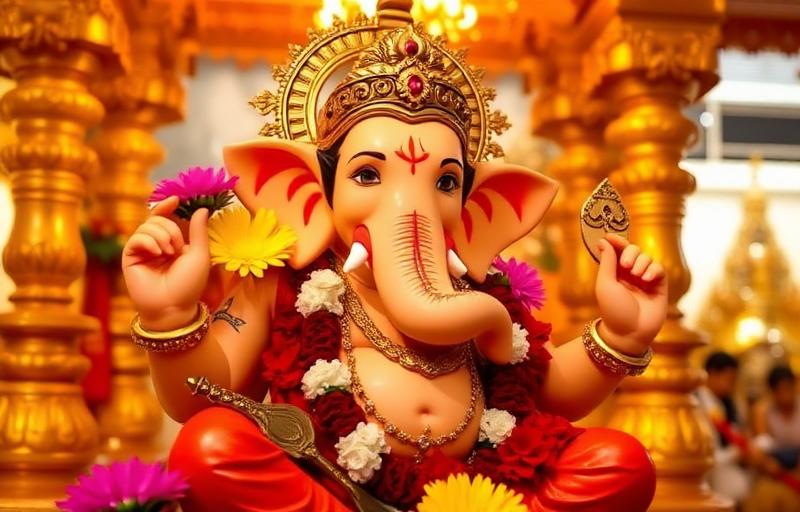
Who is Ganesha and When to Do This Puja
Ganesha, the elephant-headed son of Shiva and Parvati, is worshipped as the remover of obstacles and the god of wisdom and new beginnings. He holds a unique place in Hindu worship: he is invoked first, before any other deity, and before starting any new task, journey or ritual, which is why his puja is often called Prathama Puja, the first worship.
Many households keep a Ganesha idol or photo at home for daily worship, and also celebrate his elaborate ten-day festival, Ganesh Chaturthi. The Chaturthi tithi, the fourth day of both lunar fortnights, is considered especially sacred to him through the rest of the year as well.
Complete Samagri List for Ganesha Puja
Keep these items ready before you begin:
- Ganesha idol or photo, and a chowki draped with a red cloth
- Gangajal
- Roli/kumkum and akshat (whole rice)
- Durva grass, ideally twenty-one blades, one of his most loved offerings
- Red flowers, hibiscus if available, and a garland
- A red cloth as vastra
- Agarbatti and dhoop
- A deepak with ghee or oil, and a matchbox
- Naivedya: modak or laddoo, his favourite offerings
- Panchamrit ingredients: milk, curd, honey, ghee and sugar
- Betel leaves, supari, a coconut and a few coins
- Camphor and a small bell for aarti
- A copy of the Ganesh Chalisa or Ganesh Atharvashirsha, if you wish to recite it
If you can gather only one special item, make it durva grass; it is considered especially dear to him.
Step-by-Step Ganesha Puja Vidhi at Home
Follow these steps in order:
1. Clean and bathe - tidy the puja area and bathe before beginning. 2. Sankalp - sit facing east, take a little water in hand, and silently state your intention. 3. Aavahan - with folded hands, invite Ganesha into the idol or photo, and remember that he is traditionally invoked first, before any other deity, if you are doing a larger puja. 4. Snan - bathe a metal idol with water and then panchamrit, followed by clean water; for a photo, sprinkle a few drops of Gangajal. 5. Vastra - offer the red cloth. 6. Chandan-tilak - apply kumkum and chandan. 7. Durva and pushpa - offer the durva grass first, then red flowers and the garland. 8. Dhoop-deep - light incense and the lamp. 9. Naivedya - offer modak or laddoo, then a little water around the plate. 10. Mantra jaap - recite "Om Gan Ganapataye Namah" or read the Ganesh Chalisa. 11. Aarti - perform aarti with a lit lamp or camphor, ringing the bell gently. 12. Closing - do a pradakshina if space allows, offer pranam, and distribute the prasad. If an idol was installed for Ganesh Chaturthi, immerse it respectfully on the chosen day; for daily home puja, simply put the items away with care.
Best Time and Rules to Follow

The Chaturthi tithi, in both lunar fortnights, is especially sacred to Ganesha, and Wednesdays are commonly associated with his worship as well. Mornings after a bath are ideal for a daily puja, and Ganesh Chaturthi is his most significant annual festival.
A distinctive rule worth remembering: if you are performing any other puja or beginning an important task, it is customary to invoke Ganesha first, however briefly, before proceeding.
Common Mistakes to Avoid
- Tulsi leaves are traditionally not offered to Ganesha, unlike most other deities; use durva grass and flowers instead.
- A broken or chipped idol is generally not kept for regular home worship; if one breaks, immerse it respectfully and replace it.
- Do not skip durva grass if you can find it; it is considered one of his most loved offerings.
- If you are beginning any other puja or new work, remember to invoke him first.
- Offer the modak or naivedya fresh, and do not rush this step.
A Simple Devotional Note
Ganesha's puja reminds us that before any big effort, a moment of humility and an invitation to wisdom clears the way ahead. A simple daily offering of durva grass and a modak, given with sincerity, is enough to invite his blessing of a clear, obstacle-free path.
Frequently Asked Questions
Why is Ganesha worshipped before all other deities?+
He is regarded as the remover of obstacles, so tradition holds that inviting him first, before any other deity or new task, clears the way for that work or worship to proceed smoothly.
What is Ganesha's favourite offering?+
Durva grass and modak, or laddoo, are considered his most loved offerings, though any sincere naivedya offered with devotion is accepted.
Why are tulsi leaves not offered to Ganesha?+
Long-standing tradition holds that tulsi is not offered to Ganesha, unlike most other deities; durva grass and red flowers are used in its place.
About the author
Dr. Suresh Iyer · Vastu Shastra & Jyotish, 18+ years
Dr. Suresh has practiced traditional Vastu and basic Vedic Jyotish for over 18 years across South India. He contributes the Vastu, direction, and home-puja layout guides on Vandnaa.
Meet the Vandnaa editorial team →