The Day Ma Ganga Touched the Earth
There is no other river in the world worshipped as a living mother. There is no other day in the Hindu calendar dedicated entirely to the descent of a deity from heaven to earth.
That day is Ganga Dussehra - and Ganga Dussehra 2026 falls on Friday, 5 June 2026 (Jyestha Shukla Dashami).
Ganga is not just water. She is Maa. She is the only river that flows in the heavens, on the earth, and in the underworld (Mandakini in heaven, Bhagirathi/Ganga on earth, Bhogavati in patala). She is the daughter of Brahma, the wife of King Shantanu, the mother of Bhishma, and the sister of Yamuna. She washed the dust off Vamana's foot and stored it in Brahma's kamandalu.
From there, she came down - but only after one human being, Bhagiratha, performed an unimaginable tapasya for 60,000 years across three lifetimes to free his ancestors' souls from a sage's curse.
The word 'Dussehra' means 'destroyer of 10' - Ganga snan on this day washes away 10 types of sins: 3 sins of the body (himsa, theft, prohibited relationships), 4 sins of speech (lies, harsh words, gossip, useless talk), 3 sins of the mind (greed, anger, false beliefs).
A single bath in Ganga on Ganga Dussehra is said to equal 1000 normal Ganga snans on other days.
🙏 If you cannot reach the Ganga, the Vandnaa App's Ganga aarti and 108 Ganga mantras at sunrise activate the same energy at home.
Ganga Dussehra 2026 - Tithi, Snan Muhurat & Special Yog
📅 Date: Friday, 5 June 2026 🕒 Dashami Tithi Begins: 4:35 AM, 5 June 2026 🕒 Dashami Tithi Ends: 1:53 AM, 6 June 2026
Best Snan Muhurat - Brahma Muhurat: 4:02 AM – 4:43 AM Sunrise Snan: 5:23 AM – 7:00 AM Madhyahna Daan Muhurat: 11:50 AM – 12:46 PM Sandhya Aarti Muhurat: 6:50 PM – 7:30 PM
Special 2026 Yog: This year Ganga Dussehra falls on Friday (Shukravar) - Goddess Lakshmi's day. Ganga + Lakshmi together in one tithi creates Ganga-Lakshmi yog - extremely rare and considered a once-in-19-years combination. Wealth donations made today multiply 11 times.
Hastha Nakshatra Yog: Hastha nakshatra prevails for the first half of the day - best for sankalp and serious daan. The combination of Hastha + Dashami + Friday is mentioned in Shastra as 'Sarva-paap-vinashini yog' (combination that destroys all sins).
Avoid: Rahu Kaal on Friday (10:33 AM – 12:13 PM) - do not begin daan during this window. Daan after 1 PM is safer.
The Bhagiratha Katha - How One Man Brought Ganga to Earth
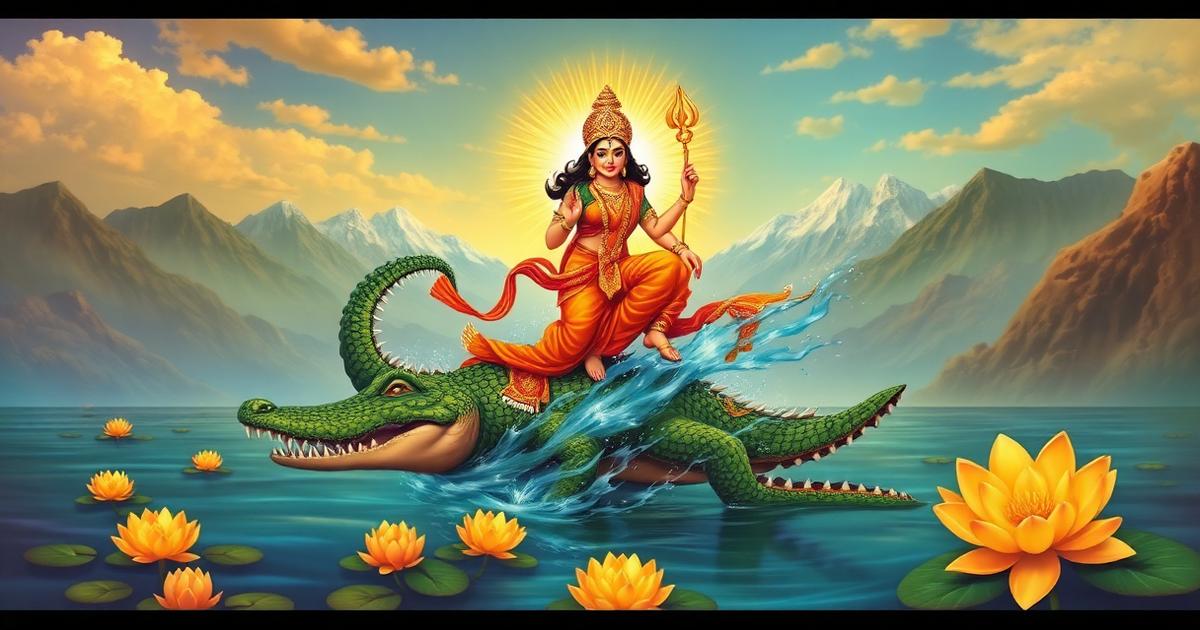
King Sagar of the Suryavansha (the dynasty into which Lord Rama was later born) had 60,000 sons. To prove his sovereignty, he performed the Ashvamedha Yagna - releasing a sacred horse to wander free for one year. Wherever the horse went unchallenged, those lands accepted his rule.
Lord Indra, jealous, secretly stole the horse and tied it in the ashram of Sage Kapila (an avatar of Vishnu, deep in meditation).
Sagar's 60,000 sons searched the earth and finally found the horse near Kapila Muni. Without checking, they accused the meditating sage of theft and prepared to attack him. Disturbed from samadhi, Kapila Muni opened his eyes - and the fire of his tapasya burnt all 60,000 sons to ash in a single moment.
Their souls were stuck in patala (underworld) - they could not attain moksha because their funeral rites were never performed. For generations the Sagar dynasty tried to free them.
King Anshuman (Sagar's grandson) approached Kapila Muni respectfully. The sage told him - 'Only Ganga of the heavens can wash away this sin. Get her down.'
Anshuman performed tapasya. Failed. His son Dilipa performed tapasya. Failed. Dilipa's son Bhagiratha vowed: 'I will not return to my throne until Ganga descends.'
Bhagiratha left the kingdom. He performed tapasya in the Himalayas for 1000 years, eating only air. Ganga finally appeared and said - 'Yes, I will come. But my fall from the heavens has the force to crush the earth in two. Who will catch me?'
Bhagiratha had no answer. He performed tapasya for another 1000 years - this time praying to Lord Shiva. Pleased, Shiva agreed to catch Ganga in His matted hair (jata).
Bhagiratha then signalled Ganga to descend. She came rushing down - proud, thinking she would wash Shiva himself away. Shiva caught her in His jata, and she got lost in the maze of His matted locks for another 1000 years, unable to flow further.
Bhagiratha performed tapasya a third time, begging Shiva to release her. Shiva smiled and let one stream out. That stream became the Bhagirathi - named after him - flowing from Gomukh in the Himalayas.
Bhagiratha rode his chariot ahead, and Ganga followed. She rushed through plains, washing away the ash of the 60,000 ancestors at last. Their souls attained moksha. The day she reached the spot of the ash and granted them moksha - that day is Ganga Dussehra.
Before returning to the heavens, Ganga said: 'I will stay here. Whoever bathes in me on Jyestha Shukla Dashami every year will be liberated of 10 lifetimes of sins. This is my promise.'
That promise still stands.
Ganga Snan Vidhi - At a Ghat or At Home
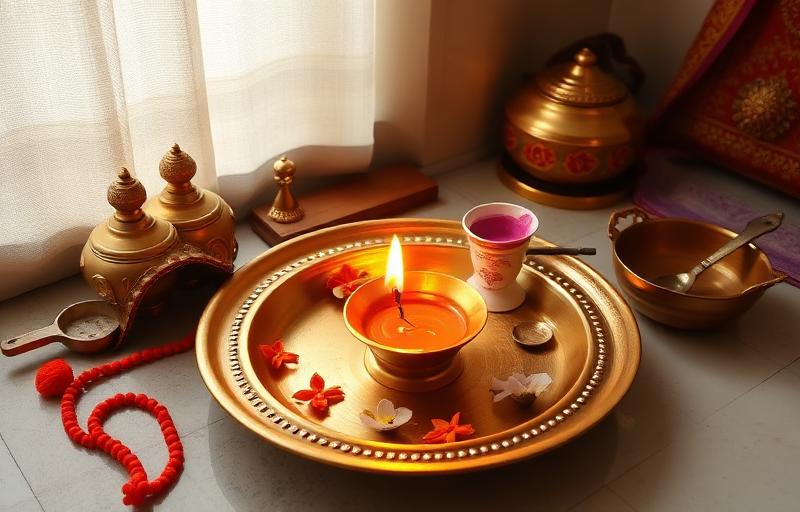
🌊 If you can reach the Ganga (Haridwar, Rishikesh, Varanasi, Prayagraj, Garh Mukteshwar, Patna, etc.):
Step 1 - Reach the ghat by 4:30 AM (Brahma Muhurat begins at 4:02 AM). The most auspicious snan is in pre-dawn darkness with a single diya floating in the water.
Step 2 - Sankalp on the ghat: Stand facing the river. Hold water + akshat + flowers in cupped hands. Sankalp:
'I, [name], on this Jyestha Shukla Dashami, take Ganga snan to wash away 10 types of sins of body, speech and mind, of this and all past lives. Ganga Mata, accept me. Om Namo Gangaye Vishva Roopinyai Narayanyai Namo Namah.'
Step 3 - The snan itself: Take 11 dips (or 21 if possible). With each dip, mentally chant 'Har Har Gange'. Do not open your mouth in the water - drink only after stepping out.
Step 4 - Surya Arghya & Ganga Arghya: After snan, while still in the water (waist-deep), offer water to Surya (sun) using cupped palms - 3 times. Then turn and offer water to Ma Ganga herself - 3 times.
Step 5 - Daan on the ghat: Donate to brahmins, beggars, sadhus on the ghat. Most powerful: 10 cups of water from your kalash to 10 needy people (one for each sin destroyed).
Step 6 - Sandhya Aarti: In the evening, attend the Ganga aarti at the ghat (Har Ki Pauri at Haridwar, Dashashvamedh ghat at Varanasi are world-famous).
🏠 If you cannot reach the Ganga (most people):
The Garuda Purana clearly states - 'Where Ganga water is invoked with the right mantra, that water becomes Ganga itself.' This is shastra-mandated home equivalence.
Step 1 - Add Ganga Jal to Bath Water: Pour just 1-2 spoons of Ganga jal (kept in a copper or silver pot) into your bath bucket. While pouring, chant: 'Om Gange Cha Yamune Chaiva Godavari Saraswati, Narmade Sindhu Kaveri Jale-asmin Sannidhim Kuru.'
Step 2 - Snan with Sankalp: Same sankalp as above. Take 7 mug-baths over your head, mentally chanting 'Har Har Gange' with each.
Step 3 - Ganga puja in the home mandir: Place a kalash filled with water + Ganga jal + tulsi leaf + akshat on a red cloth. Worship the kalash as Ma Ganga herself. Light a diya. Read or listen to Ganga Stotram.
Step 4 - Daan from home: Give water-filled earthen pots, hand fans, sattu, jaggery, white clothes, slippers to needy. Setting up a 'piaau' (free water station for travellers) on a hot June day is considered equal to bathing in the Ganga itself.
Step 5 - Evening Ganga Aarti: Light a 5-wick diya in front of a Ganga photo. Sing 'Jai Gange Mata' aarti. Float the diya in any water body if possible.
5 Ganga Mantras to Chant on Ganga Dussehra
1. Ganga Beej Mantra (108 times during snan) ॐ नमो गंगायै विश्वरूपिण्यै नारायण्यै नमो नमः Om Namo Gangaye Vishvarupinyai Narayanyai Namo Namah → Salutations to Ma Ganga, the form of the universe, the form of Narayan Himself.
2. Sapta-Nadi Mantra (chant while pouring Ganga jal in bath) ॐ गंगे च यमुने चैव गोदावरि सरस्वती। नर्मदे सिंधु कावेरि जलेऽस्मिन् सन्निधिं कुरु॥ Om Gange Cha Yamune Chaiva Godavari Saraswati, Narmade Sindhu Kaveri Jale-asmin Sannidhim Kuru. → I invoke the seven sacred rivers - Ganga, Yamuna, Godavari, Saraswati, Narmada, Sindhu, Kaveri - into this water. (This single mantra converts ordinary water into sacred sapta-nadi water.)
3. Ganga Stuti (short) देवी सुरेश्वरी भगवती गंगे, त्रिभुवन तारिणी तरल तरंगे। शंकर मौलि विहारिणी विमले, मम मतिरास्तां तव पद कमले॥ Devi Sureshvari Bhagavati Gange, Tribhuvan Tarini Tarala Tarange, Shankar Mauli Vihaarini Vimale, Mama Matir-aastaam Tava Pada Kamale. → O Goddess Ganga, queen of devas, who liberates all three worlds with her flowing waves, who plays in Shankar's matted locks - let my mind rest at your lotus feet.
4. Ganga Gayatri Mantra ॐ विश्वरूपिणी विद्महे नंदिन्यै धीमहि। तन्नो गंगा प्रचोदयात्॥ Om Vishvaroopini Vidmahe, Nandinyai Dhimahi, Tanno Ganga Prachodayat. → Awakens the Ganga consciousness within. Best chanted at Brahma muhurat.
5. Bhagirathi Mantra (for ancestor moksha) ॐ भगीरथी हे माँ, पिशाच निवारिणी। दुष्कृति हारिणी, गंगे माँ नमो नमः॥ → Specifically chant if you are praying for ancestors, for someone recently departed, or for moksha of family souls. Ganga Dussehra is the most powerful day to do shraadh-equivalent prayers.
🎧 Listen to all 5 mantras with proper Sanskrit pronunciation and the full Ganga Stotram (composed by Adi Shankaracharya) on the Vandnaa App - perfect for sunrise puja whether at home or on the ghat.
10 Things to Donate on Ganga Dussehra (Each Destroys 1 Sin)
Ganga Dussehra daan is unique - the number 10 is sacred today. Donate 10 of the same item, OR 1 each of the 10 traditional items below. Each item destroys one specific type of sin.
| # | Daan Item | Destroys | |---|---|---| | 1 | Water-filled earthen pot (matka) | Ego (ahankar) | | 2 | Hand fan / electric fan | Anger (krodh) | | 3 | Sattu (gram flour drink) | Greed (lobh) | | 4 | Jaggery / brown sugar (gur) | Attachment (moh) | | 5 | White cotton cloth | Pride (mada) | | 6 | Slippers / chappal | Jealousy (matsarya) | | 7 | Umbrella / shade | Lying (mithya) | | 8 | Watermelon / cucumber (cooling fruits) | Harsh speech | | 9 | Til / sesame | Theft (steya) | | 10 | Coins or currency to a brahmin | Doubting God (nastikta) |
Special daan options:
- Cow daan (Godan): Even sponsoring a day's feed for a goshala cow is considered equivalent
- Ganga jal daan: Give a small bottle of Ganga jal to someone who has no access - extremely punya-rich
- Tree planting: Plant any fruit tree, especially mango or peepal - life-long punya
- Setting up a 'piaau': A free water station on a busy summer road for travellers - sastras call this 'parmodaya daan', the highest form of giving
Important rule: Daan should be given before noon (before 12:46 PM on June 5). Donations made in the evening are reduced in punya unless given to a sadhu/brahmin specifically.
What to Avoid on Ganga Dussehra (To Preserve Vrat Punya)

🚫 Strict avoidance:
1. Do not pollute any water body - not your bath water, not your drinking water, not a river or pond. On Ganga Dussehra, water itself is sacred. Throwing anything dirty, even soap suds, into a river today is a major sin.
2. Do not waste water - leaving taps running, showering excessively, watering plants unnecessarily during peak heat. Water-respect is the central practice today.
3. No non-vegetarian food, no eggs, no alcohol, no smoking for the day - these contaminate the Ganga energy you've drawn into your home.
4. No anger, no harsh speech - especially towards parents, elders, or those serving you (drivers, helpers). Today is mother Ganga's day. Disrespecting any maternal figure dilutes the punya.
5. Do not eat onion, garlic, masoor dal, brinjal, mushrooms - same as Ekadashi-style satvik diet.
6. Do not borrow or lend money today - financial transactions are believed to transfer karma. Today's Ganga energy should remain pure of debt.
7. Do not gossip or speak ill of anyone - gossip is one of the 4 sins of speech that Ganga Dussehra is meant to wash away. Doing it on the very day defeats the purpose.
8. Do not visit cremation grounds or attend funerals unless absolutely unavoidable - the energy of moksha-granting that Ganga channels today should not be conflicted with grief energy.
9. Do not start new business ventures or sign property documents today - this day is for purification, not for material expansion. Begin those on Akshaya Tritiya (already past) or Vijaya Dashami.
10. Do not waste Ganga jal - even one drop is sacred. Use minimum, preserve in copper pot, never spill carelessly.
What People Ask Most
Is Ganga Dussehra the same as Ganga Saptami?+
No - they are different events in the Ganga story. Ganga Saptami (Vaishakha Shukla Saptami) is the day Ganga emerged from Lord Shiva's matted locks for the first time. Ganga Dussehra (Jyestha Shukla Dashami) is when she actually descended to the earth and met the ash of Bhagiratha's ancestors. Saptami is the 'release' from Shiva's jata; Dussehra is the 'arrival' on earth. Both are celebrated, but Ganga Dussehra is considered more significant because it commemorates the actual moksha-granting moment.
Can I take Ganga snan in any river or only in the Ganga?+
On Ganga Dussehra, all sacred rivers temporarily merge with Ganga - Yamuna, Godavari, Narmada, Krishna, Kaveri, Sindhu, Sarsasvati. If you cannot reach Ganga, snan in any of these rivers grants the same punya. If even those are not accessible, ANY natural water body - a river, a lake, a pond, even a well - becomes Ganga today if you invoke her with the Sapta-Nadi mantra. As a last option, your bathroom bucket with a few drops of Ganga jal works.
Is keeping Ganga jal at home in a copper pot really beneficial?+
Absolutely yes - and it has scientific backing. Ganga water has been studied to contain high oxygen content and bacteriophages that don't allow bacteria to grow even after months. When stored in a copper pot, copper ions further enhance its purifying properties. Keep the pot in your puja room. Add 1-2 spoons to bath water on full moons, Ekadashi, festivals. Sprinkle a few drops with a tulsi leaf in every room on Saturday for energy purification. Ganga jal kept properly never goes bad.
What is the connection between Ganga Dussehra and the moksha of departed ancestors?+
The original Ganga Dussehra story is about freeing 60,000 souls from patala - making it the day with the strongest pitru-moksha potential in the entire calendar. If a family member has passed away in the last 1-3 years, performing a 'Pitru-tarpan' (offering of water + til + flowers) on the bank of any river on Ganga Dussehra is considered as powerful as Pind Daan in Gaya. Chant the Bhagirathi Mantra while doing tarpan. This offering reaches the souls within hours according to scriptures.
Why is donating water-pots considered the most important daan today?+
Three reasons. First, Ganga Dussehra falls in Jyestha - the hottest month in north India. Water has the highest practical value. Second, the day's energy is water-energy itself; donating water amplifies the cosmic flow. Third, the Bhagiratha story is fundamentally about bringing water to where there was none (his ancestors' ashes lay in a desert plain). When you set up a free water station for travellers today, you literally become a small Bhagiratha - bringing relief through water. Skanda Purana says one matka donation today equals 100 cow donations on a normal day.
About the author
Acharya Vinaya Kapoor · M.A. Sanskrit, Mantra & Stotra Studies
Acharya Vinaya holds an M.A. in Sanskrit from Banaras Hindu University and writes the mantra and stotra commentary on Vandnaa. Her focus is on accurate pronunciation, traditional context, and helping modern readers connect with classical texts.
Meet the Vandnaa editorial team →Explore on Vandnaa
Related Articles
Ganga Saptami 2026: Date, Snan Muhurat, Mantras & Why a Single Dip Washes 7 Lifetimes of Sin
9 min read
Nirjala Ekadashi 2026: Date, Vrat Vidhi & Why It Equals All 24 Ekadashis Combined
9 min read
Vat Savitri Vrat 2026: Date, Katha, Puja Vidhi & The 7 Rules Every Married Woman Must Follow
10 min read

Daily Puja Routine at Home (घर पर रोज़ की पूजा विधि)
12 min read