What is Garba?
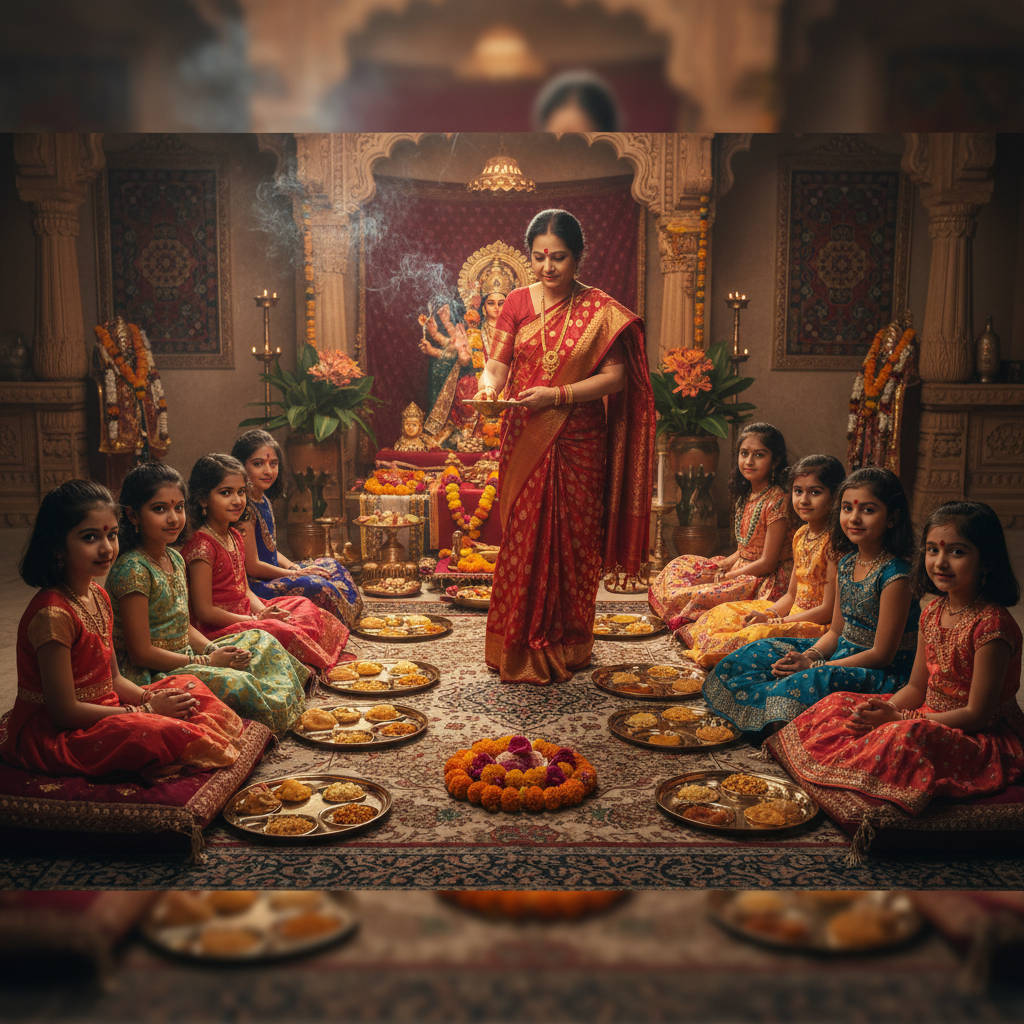
Garba is a traditional circular dance performed across Gujarat during Navratri, in which devotees move together in concentric circles around a central lamp or image of the Goddess. Far from being simply a festive dance, Garba is, at its heart, an act of devotion, its rhythmic claps and swaying steps offered as worship to the Divine Mother.
Performed in temple courtyards, village squares and, today, in vast community grounds across Gujarat and wherever Gujaratis have settled, Garba remains one of India's most visible and joyous expressions of Shakti worship.
The Symbolism of the Garbo
The word Garba is widely understood to derive from garbha, meaning womb, a reference to the perforated earthen pot, or garbo, traditionally placed at the centre of the dance with a lamp lit inside it. The light glowing through the pot's openings is seen by devotees as a symbol of life itself, the divine spark believed to reside within all creation.
In many traditional celebrations, the garbo represents the Goddess herself, or the womb of the universe from which all life emerges, making the dance around it an act of honouring creation, fertility and the sustaining power of Shakti.
The Circle and the Goddess at the Centre
The circular formation of Garba carries its own layer of meaning, understood by many devotees as representing the cycle of time and the continuous, unending nature of creation, preservation and dissolution over which the Goddess presides. Dancers moving around a fixed centre, whether a lamp, an image or an idol of the Goddess, echo the belief that she remains the still point around which all existence revolves.
This structure also carries a social significance, uniting entire communities, regardless of age or background, in a shared circle of devotion, with no single dancer positioned above another.
From Village Courtyards to a Global Stage
Garba's roots lie in rural, agrarian Gujarat, where it developed as a community celebration tied closely to the harvest season and to Navratri's honouring of the Goddess. Over generations, it has grown from an intimate village practice into one of the world's most widely recognised community dance traditions, celebrated today not only across Gujarat but wherever the Gujarati diaspora has settled.
Despite this growth in scale, devotees emphasise that the dance's devotional core has remained unchanged, with the Goddess still understood as the true centre of the celebration, however large the gathering.
Garba and Dandiya Raas
Garba is often celebrated alongside Dandiya Raas, a related dance performed with decorated sticks, believed by many to reflect the playful battle imagery associated with Krishna's raas leela. While the two are frequently combined in today's Navratri celebrations, they carry somewhat different traditional characters, Garba centred more directly on devotion to the Goddess, and Dandiya carrying its own distinct rhythm and symbolism.
Regional practices vary, and many communities blend the two traditions freely, treating the entire evening as one continuous celebration of devotion, joy and community.
A Devotee's Takeaway
For those who dance it with awareness, Garba offers a beautiful teaching, that devotion need not always be still and solemn, it can also be joyous, communal and full of movement, while remaining centred on the Goddess throughout.
Whether performed in a small village courtyard or a vast city ground, Garba remains, at its heart, an offering of light, rhythm and togetherness to the Divine Mother, an act of faith and love, not a transaction.
Frequently Asked Questions
What does the word Garba mean?+
Garba is widely understood to derive from garbha, meaning womb, referring to the perforated earthen lamp pot traditionally placed at the centre of the dance.
What is the difference between Garba and Dandiya Raas?+
Garba is traditionally centred more directly on devotion to the Goddess, while Dandiya Raas is performed with sticks and is often linked to Krishna's raas leela, though the two are commonly combined today.
Why is Garba performed in a circle?+
The circular formation is understood by many devotees to represent the cycle of time and creation, with the Goddess as the still centre around which all existence revolves.
About the author
Pandit Mahesh Trivedi · Festival Traditions & Panchang
Pandit Mahesh leads the festival-date and Panchang content on Vandnaa. He cross-references multiple regional panchangs (Drik, Vaishnava, Bengali, Marathi) for every festival date published on the site.
Meet the Vandnaa editorial team →