Arjuna's Fear of Death
The Gita's first real teaching answers the oldest human fear - death. Arjuna is overwhelmed by grief at the thought of his loved ones dying in battle. Krishna's reply does not begin with comfort but with truth: we grieve because we mistake the body for the self. What truly dies is only the outer body; the real 'you', the soul, is untouched. Understanding this transforms how we face death, loss and our own mortality.
The Soul Is Never Born and Never Dies - Shloka 2.20
Krishna describes the soul's true nature:
na jayate mriyate va kadachin nayam bhutva bhavita va na bhuyah ajo nityah shashvato 'yam purano na hanyate hanyamane sharire (2.20)
Meaning: the soul is never born and never dies; it has not come into being and will not cease to be. It is unborn, eternal, ever-existing and primeval; it is not slain when the body is slain. Death touches the garment, never the one who wears it. This single verse dissolves the root of the fear of death.
Changing Bodies Like Old Clothes - Shloka 2.22
Krishna gives his famous image for death:
vasamsi jirnani yatha vihaya navani grihnati naro 'parani tatha sharirani vihaya jirnany anyani samyati navani dehi (2.22)
Meaning: just as a person discards worn-out clothes and puts on new ones, so the embodied soul casts off worn-out bodies and enters new ones. Death is not an ending but a change of garments. Seen this way, the body's passing is as natural as changing clothes, and the soul's journey simply continues.
Finding Peace with Loss
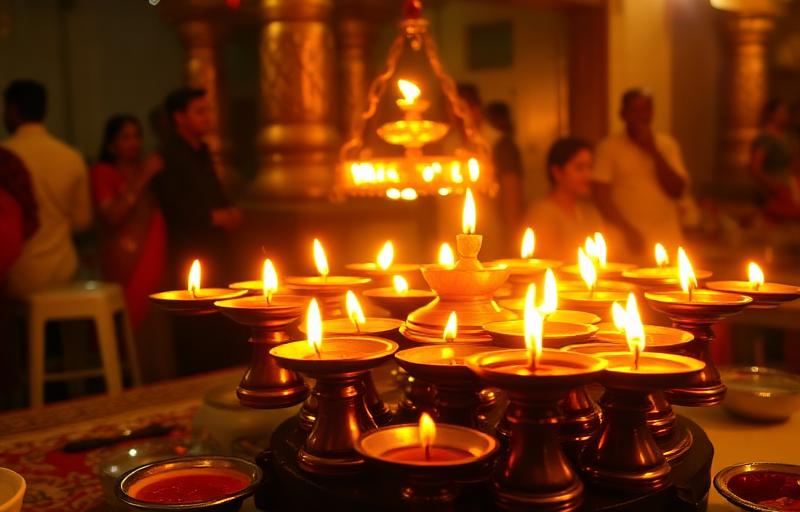
This teaching is not meant to dismiss grief but to deepen it into understanding. When we lose someone, the Gita invites us to mourn the parting while trusting that their essence is eternal. 1. Honour your sorrow; it is love, not weakness. 2. Remember that the soul of your loved one is untouched by death. 3. Hold the body lightly, the self firmly. 4. Let the certainty of death make life more sacred, not more fearful. Knowing the soul is eternal turns despair into a quiet, abiding peace.
A Contemplation on the Self
Sit quietly and gently observe your body, your breath and your changing thoughts. Notice that all of these come and go, yet 'you' - the silent witness aware of them - remain constant. Rest in that awareness for a few minutes. This simple atma-vichara (inquiry into the self) gives a direct taste of what Krishna teaches in 2.20: that your true nature is the unchanging witness, not the changing body. Practised regularly, it loosens the fear of death.
Living Fully in Light of the Eternal Self
Knowing the soul is deathless does not make us careless about life; it makes us braver and more loving. Freed from the terror of ending, we can do our duty wholeheartedly, as Krishna asks Arjuna to do. The one who knows the soul is eternal lives without clinging and without dread. This is the Gita's gift - a life of courage in the face of mortality, rooted in the knowledge that what is truly real can never be lost.
What People Ask Most
What does the Bhagavad Gita say about death?+
The Gita teaches that death affects only the body, not the soul. In 2.20 it says the soul is never born and never dies, and in 2.22 that it changes bodies like a person changing old clothes.
What does shloka 2.20 say about the soul?+
Shloka 2.20 says the soul is unborn, eternal, ever-existing and primeval. It is never born and never dies, and it is not slain when the body is slain.
What is the meaning of vasamsi jirnani in shloka 2.22?+
It means just as a person discards worn-out clothes and puts on new ones, the soul casts off worn-out bodies and enters new ones. Death is presented as a change of garments, not an ending.
Does the Gita say we should not grieve at death?+
The Gita does not dismiss grief but deepens it into understanding. It invites us to mourn the parting while trusting that the soul of our loved one is eternal and untouched by death.
How can the Gita help with the fear of death?+
By teaching that you are not the body but the eternal soul, the Gita removes the root of the fear. Knowing the real self can never die turns dread into a calm, abiding peace.
What is atma-vichara or inquiry into the self?+
Atma-vichara is quietly observing the body, breath and thoughts and noticing that they change while the silent witness aware of them stays constant. It gives a direct taste of the eternal self.
About the author
Anjali Mehta · Editor, M.A. Religious Studies
Anjali is the managing editor for Vandnaa and oversees the festival and vrat coverage. She holds an M.A. in Religious Studies and reviews every published article for accuracy, accessibility, and tradition-fidelity.
Meet the Vandnaa editorial team →Explore on Vandnaa
Related Articles

What the Gita Says About Fear & Worry - Overcoming Anxiety
10 min read
What the Gita Says About Detachment - Living Like a Lotus
9 min read
What the Bhagavad Gita Says About Anger - How to Control It
10 min read
Bhagavad Gita - All 18 Chapters Summary & Key Teachings
10 min read

Maha Mrityunjaya Mantra: Meaning & Benefits (महा मृत्युंजय मंत्र)
9 min read
Vishnu Sahasranama: The 1000 Names of Vishnu - Meaning, Benefits & Daily Recitation Vidhi
12 min read