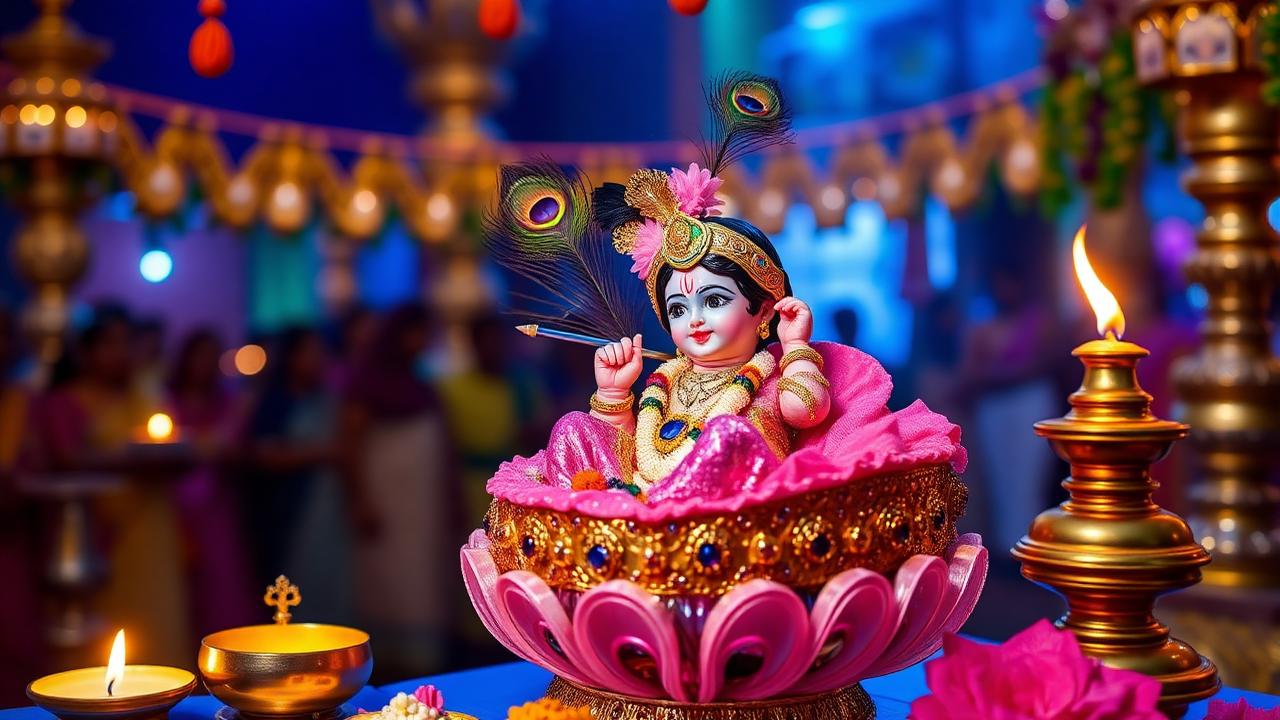
When a 7-Year-Old Lifted a Mountain to Protect His Village
Of all the leelas (divine plays) of Lord Krishna, Govardhan Lila is the one that humbled Lord Indra Himself - King of all gods.
Krishna was 7 years old. He saw that the people of Vrindavan were preparing to do an elaborate Indra Puja for rains. He stopped them and said: 'Why worship Indra when it is Mount Govardhan that gives you grass for cows, water for fields, and food for families? Worship that which actually feeds you. Stop performing rituals to invisible gods who do nothing for your daily life.'
The villagers, awe-struck by the boy's wisdom, agreed. They cooked 56 different dishes (Annakut - 'mountain of food'), made offerings to Govardhan hill, and ate together as one community. Indra received nothing.
Indra was furious. He sent his rain clouds to drown Vrindavan in punishment for 7 days and 7 nights of unrelenting torrential rain. Cows began to drown. Children cried. Elderly trembled.
Krishna walked calmly to Govardhan hill. With His little finger (kanishthika), He lifted the entire mountain - 1000 feet tall, weighing crores of tonnes - and held it like a giant umbrella. All of Vrindavan ran beneath. For 7 full days, Krishna held the mountain steady. He did not eat. He did not sleep. He did not move.
Indra realized his arrogance. He withdrew the rains and came down personally to apologise. Krishna gently set down Govardhan, smiled, and forgave Indra.
This is Govardhan Puja - celebrated as the day bhakti defeated arrogance, community defeated isolation, and earth-worship defeated god-worship. Krishna's message that day was - 'The food before you is more sacred than any deity statue. The hand that grew it, the cow that gave milk, the river that watered the field - these are God in living form.'
Govardhan Puja 2026 falls on Wednesday, 11 November 2026 - Kartik Shukla Pratipada, the day after Diwali. The Annakut tradition (mountain of 56 dishes) is the central ritual.
🙏 The Vandnaa App's Govardhan Puja module includes the full 56-bhog list with recipes, the Govardhan parikrama virtual tour from Vrindavan, and mantras to chant while building your home Annakut.
Govardhan Puja 2026 - Tithi & Auspicious Muhurat
📅 Date: Wednesday, 11 November 2026 (the day after Diwali) 🕒 Pratipada Tithi Begins: 6:14 AM, 11 November 2026 🕒 Pratipada Tithi Ends: 8:21 AM, 12 November 2026
Pratah Kaal (Morning Puja): 6:42 AM – 8:51 AM, 11 November (best time) Sayan Kaal (Evening Puja): 3:35 PM – 5:50 PM, 11 November Abhijit Muhurat: 11:43 AM – 12:27 PM
Govardhan Parikrama Best Time: Brahma Muhurat (4:00 AM – 5:30 AM) for those at Govardhan; otherwise 9 AM – 12 PM at home.
Why both morning AND evening puja: Krishna lifted the mountain in the morning of the original event, and set it down in the evening. Devotees re-enact both moments - morning puja celebrates the lifting, evening puja celebrates the safe return.
Special 2026 Yog - Sarvarth Siddhi + Amrit Siddhi: The day combines Sarvarth Siddhi Yog (full day) and Amrit Siddhi Yog (5:30 AM – 12:14 PM) - both indicate that ALL prayers made today will be fruitful. New beginnings, business openings, marriage announcements (Chaturmas ends on Devuthani Ekadashi a day before, so wedding-season-readiness happens today).
Avoid: Rahu Kaal on Wednesday (12:14 PM – 1:36 PM) - schedule no new puja during this window.
Annakut - The 56-Bhog (Chappan Bhog) Tradition Explained
When Krishna held Govardhan for 7 days, He did not eat once. After Indra apologised and Krishna set the mountain down, the entire Vrindavan community wanted to feed Him. But what to feed a god who had refused all food for 7 days?
The Gopis (cowherd girls) decided: 'He missed 8 meals a day for 7 days. That is 56 meals. Let us cook 56 different dishes - one for every meal He missed.'
Thus was born the 56-bhog (Chappan Bhog) tradition - a feast of 56 different foods offered to Krishna on Govardhan Puja, then to all guests, then distributed in the community. It is the largest single-deity offering in Sanatan Dharma.
The traditional 56 categories:
Sweets (Mithai) - 16: peda, barfi, ladoo, jalebi, gulab jamun, rasgulla, kalakand, malpua, gajak, halwa (suji + besan + lauki + gajar), kheer (rice + makhana + sabudana), rabri, mohanthal, mishri, sandesh, balushahi.
Salty Snacks (Namkeen) - 14: mathri, namak para, chakli, samosa, kachori, dahi vada, chana chaat, fruit chaat, papdi chaat, dabeli, sev, bhujia, gujhia (savoury), khasta puri.
Main Course (Pulse + Veg) - 12: dal makhani, chana masala, kadhai paneer, malai kofta, dum aloo, palak paneer, rajma, kadhi pakoda, mixed veg, baingan bharta, bhindi masala, lauki kofta.
Rice & Bread - 6: puri, paratha, naan, jeera rice, pulao, kheer.
Drinks - 4: lassi, thandai, panakam (jaggery water), buttermilk.
Pickles & Chutneys - 4: mango pickle, lemon pickle, mint chutney, tamarind chutney.
Strict Rules for Annakut:
- No onion, no garlic - Krishna does not accept these (they are tamasic). Use ginger, hing, jeera, dhania, til, and dairy as flavour bases.
- No salt in any sweet, no sugar in any namkeen - clean separation.
- All cooking by women of the household - bringing outside food is permitted but at least one dish should be home-cooked.
- First offered to Krishna, then to a cow, then to brahmins/elders, then to family. Order matters.
- Nothing is eaten before 12 noon in many traditional households on Govardhan Puja - the bhog is only offered after the morning Annakut puja completes.
Modern reality: Most households today cook 11, 21, or 31 dishes - the 56 number is a religious ideal, not a strict obligation. The Vandnaa App's Annakut module suggests 11/21/31/56 ready-to-cook menus based on your time and family size, with grocery lists.
Symbolic meaning: The 'mountain of food' (Annakut) is a tribute to Govardhan mountain itself. As you build the Annakut on a wide thali, you are recreating Govardhan in miniature. Each dish becomes a gift from Mother Earth, offered back to her keeper - Krishna.
Step-by-Step Govardhan Puja Vidhi (At Home)

Step 1 - Cow Dung Govardhan (Pratah Kaal, 6:30 AM): Make a small Govardhan murti from cow dung (gobar) on a wooden chowki - flat hill shape with a peak. If cow dung is unavailable in cities, use clean clay. Decorate with:
- Small twigs (representing trees)
- Tiny clay figurines of cows, calves, gopas (cowherds)
- A small Krishna statue OR a stone tilak in the centre (representing Krishna lifting Govardhan)
- Flowers, especially yellow marigold and white roses
Step 2 - Annakut Setup (8:00 AM): Place a wide thali in front of the Govardhan murti. On it, arrange your 11/21/31/56 dishes in a 'mountain' shape - taller items in the centre, shorter towards the edges. Light a 5-wick ghee diya. Burn dhoop (sandalwood preferred).
Step 3 - Sankalp & Krishna Smarana (Pratah Kaal, 6:42 AM – 8:51 AM): Sit before the Govardhan murti facing east. Hold water + akshat + tulsi in right hand:
'I, [name], on this Kartik Shukla Pratipada, do Govardhan Puja and offer Annakut to Lord Krishna and to Mount Govardhan. May my home be free of arrogance, my family bonded in love, and my food always shared with cows, brahmins, and the needy. Om Namo Bhagavate Vasudevaya. Govardhan Dhaaranaaya Namah.'
Step 4 - Govardhan Puja:
- Apply chandan + roli + akshat tilak on the Govardhan murti and the Krishna statue
- Offer fresh flowers - yellow marigold for Krishna, white for Govardhan
- Light 5 ghee diyas around the Govardhan murti (representing the 5 sacred elements)
- Offer 21 fresh tulsi leaves (Krishna does not accept any bhog without tulsi)
Step 5 - Govardhan Path (read aloud): Recite or listen to the Govardhan Lila katha (from the Bhagavata Purana, 10th canto, chapters 24-25). The Vandnaa App has audio narration.
Step 6 - Annakut Bhog Offering:
- Hold each dish before Krishna and Govardhan, mentally offer it
- Sprinkle a tulsi leaf and a few drops of Ganga jal on each dish
- Chant 'Om Krishnaaya Govardhana-Dhaaraay Namah' once per dish
- Begin with sweets, then namkeen, then main course, then rice/bread, then drinks
Step 7 - Aarti (Most Important):
- Sing the Govardhan Aarti (specific to today): 'Govardhan Maharaaja, tere shir mukut Murari, sundar braj-ko swaroop tu, tu Govardhan Murari.'
- Then sing Krishna Aarti: 'Aarti Kunj-Bihari ki, Shri Giridhar Krishna Murari ki.'
- Conclude with: 'Annapurnam sada poornam, Shankar pranavallabham. Mata cha Parvati Devi, pita devo Maheshwarah.'
Step 8 - Govardhan Parikrama (At Home): Physical Govardhan Parikrama (in Vrindavan) is 21 km long. At home, do a symbolic version:
- Walk 7 times clockwise around the Govardhan murti (cannot go counter-clockwise)
- At each round, chant 'Govardhana Dharaaye Namah'
- Carry a small amount of cow milk or panchamrit and pour a few drops at the start of each round
- Children and elderly may do 1 or 3 rounds - 7 is ideal
Step 9 - Distribution (Most Important Spiritual Act):
- First - feed a cow some sweets and chapati (cow daan in symbolic form)
- Second - feed 11 brahmins or 11 needy people from the Annakut
- Third - invite all neighbours; one of the unique features of Govardhan Puja is that EVERY household opens its kitchen, and people walk between homes tasting Annakut from each
- Fourth - finally, your family eats. Sit on the floor on a clean cloth, eat in silence for the first 5 minutes, contemplate what Krishna taught about food being God
Step 10 - Sayan Kaal Aarti (Evening, 5:00 PM): A second smaller aarti at sunset to celebrate the moment Krishna set Govardhan down. Light a single ghee diya. Sing one Krishna bhajan with family.
Visarjan: The cow-dung Govardhan murti is left on the puja altar overnight. Next morning (Bhai Dooj day), it is gently moved to your home garden, a peepal tree, or a clean garden corner - never thrown.
5 Krishna Mantras to Chant on Govardhan Puja
1. Govardhan Dhaaran Mantra (most specific to today, chant 108x) ॐ कृष्णाय गोवर्धन-धाराय वासुदेवाय नमः Om Krishnaaya Govardhana-Dhaaraay Vasudevaay Namah → Salutations to Krishna, the holder of Govardhan, son of Vasudeva. Specifically remembers the 7-day mountain-lifting feat.
2. Annapurna Krishna Mantra (for food blessing) ॐ नमो अन्नदेवाय अन्नदात्रे महात्मने। भुक्तं तुष्टं मे प्रदेहि अन्न-पाक-स्वरूप-धरम्॥ Om Namo Anna-devaaya Annadaatre Mahatmane, Bhuktam Tushtam Me Pradehi Anna-Paak-Swaroopa-Dharam. → Salutations to the great soul who gives us food. May the food I have eaten satisfy me. The form that holds the cooking of all food, please bless me. Chant before every meal on Govardhan Puja day.
3. Hare Krishna Maha Mantra (16-name jap) हरे कृष्ण हरे कृष्ण कृष्ण कृष्ण हरे हरे। हरे राम हरे राम राम राम हरे हरे॥ Hare Krishna Hare Krishna, Krishna Krishna Hare Hare, Hare Rama Hare Rama, Rama Rama Hare Hare. → The 16-name Maha Mantra of Kali Yuga. Chant 11 malas (1188 jap) on Govardhan Puja for purifying all karma.
4. Krishna Gayatri Mantra (for awakened devotion) ॐ देव-कीनंदनाय विद्महे वासुदेवाय धीमहि। तन्नो कृष्णः प्रचोदयात्॥ Om Devakeenandanaaya Vidmahe Vasudevaaya Dhimahi, Tanno Krishnah Prachodayat. → Awakens the Krishna consciousness within. Best chanted at Brahma muhurat.
5. Govardhan Stuti (composed by Sri Vishvanatha Cakravarti) निज-कनिष्ठा-धृत गोवर्धन गिरिवर। त्रैलोक्य-नायक प्रभु तेरी जय। गोप-गोपी सुख-दायक श्याम सुंदर। Nija-Kanishtha-Dhrita Govardhan Girivar, Trailokya-Naayaka Prabhu Teri Jay, Gopa-Gopi Sukha-Daayaka Shyam Sundar. → Victory to the Lord who lifted the great Govardhan with his little finger. Master of the three worlds. Giver of joy to the cowherds and gopis. Dark and beautiful.
🎧 All 5 mantras with proper Sanskrit pronunciation, the full Govardhan Lila katha audio, and 1188-jap guided session available on the Vandnaa App.
Govardhan Hill Parikrama: The Sacred Pilgrimage to Vrindavan
The Govardhan Hill (Giriraj) in Vrindavan, Uttar Pradesh, is one of Hinduism's most sacred pilgrimage sites - not merely because of the legend of Krishna lifting it, but because the hill itself is considered a form of Krishna. Every stone of Govardhan is Krishna's body; circumambulating the hill is direct darshan of the Lord.
The Parikrama (circumambulation): The complete parikrama of Govardhan Hill covers approximately 21 kilometers (about 13 miles) and is traditionally done barefoot. Most pilgrims complete it in 4-6 hours walking; some devotees do it prostrating - measuring their full body length along the path, rising, and prostrating again (dandavat parikrama), which can take 2-3 days.
Key stops along the parikrama path:
- Radha Kund and Shyam Kund - sacred twin ponds considered the most holy water bodies in Vrindavan. Bathing here on Ashtami days is believed to confer the same merit as visiting all pilgrimage sites.
- Kusuma Sarovar - a beautiful step-well where Krishna and the gopis played. The surrounding area is lush, meditative.
- Manasi Ganga - the "mind-born Ganges," a sacred kund at the foot of Govardhan where pilgrims bathe before beginning parikrama.
- Jatipura - a village known for the best Annakut (56-bhog) distribution during Govardhan Puja.
- Dan Ghati - the spot where Krishna playfully demanded "tax" (dan) from the gopis carrying their milk and butter - a beloved lila.
- Mukharavind - the "lotus face" of Govardhan Hill, where the hill is said to show the features of Krishna's face. This is the most sacred point, and pilgrims offer milk, butter, and flowers directly.
The stone as deity: Govardhan shilas (stones from the hill) are considered self-manifest forms of Krishna. Bringing home a small Govardhan shila and installing it in the home altar is considered highly auspicious - the stone is worshipped with milk, flowers, and butter just as Krishna is worshipped. These shilas are not sold but gifted. Govardhan Puja at home often involves worshipping a small Govardhan shila.
Govardhan Puja timing: The most auspicious time to do parikrama is on Govardhan Puja day itself (Kartik Shukla Pratipada) or on any Kartik month Monday or Ekadashi. The entire month of Kartik is considered especially sacred for Govardhan.
For those who cannot travel: The Vandnaa app provides a virtual Govardhan darshan series with high-quality images and audio commentary of each parikrama stop, so devotees worldwide can experience the pilgrimage mentally - a practice the tradition considers valid and meritorious.
Govardhan Puja Prasad: Traditional Recipes for the 56 Bhog
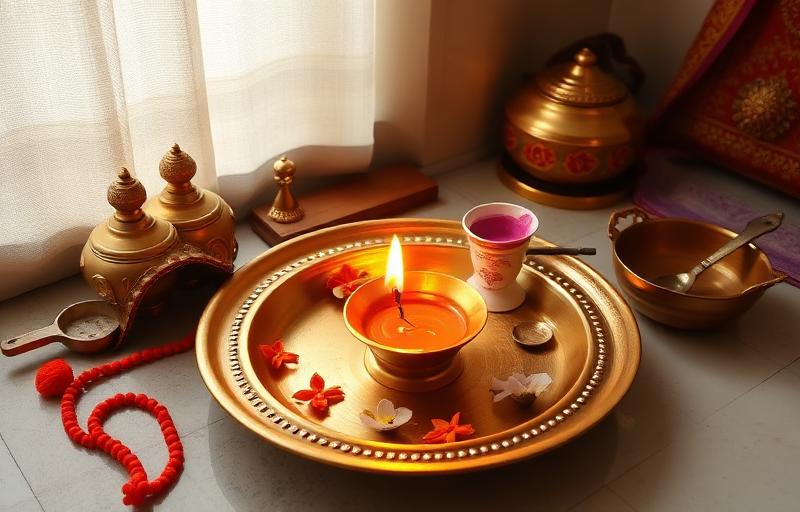
The Annakut (mountain of food) offered during Govardhan Puja is one of Hinduism's most joyful culinary traditions. The 56 items (Chhappan Bhog) represent every category of food that can be offered to Krishna - from simple grains to elaborate sweets. Here is a guide to preparing an authentic, home-scale Annakut.
Understanding the 56 categories: The Chhappan Bhog is not a fixed recipe list but a category system. Each of the six "Rasas" (tastes: sweet, sour, salty, pungent, bitter, astringent) must be represented across eight preparations each. In practice, most homes offer 21 to 56 items depending on capacity.
Essential items (must have): 1. Panjiri - roasted flour with ghee, sugar, and cardamom; the simplest traditional offering 2. Khichdi - rice and lentil porridge; Krishna specifically requested this humble dish 3. Raita - yogurt-based accompaniment; dairy is central to Krishna's identity 4. Makhan mishri - fresh butter with rock sugar; this is literally Krishna's favorite food per the Bhagavata 5. Panchamrit - five-ingredient nectar: milk, yogurt, honey, ghee, sugar
Traditional sweets for Annakut:
- Pedha (milk fudge) - particularly associated with Mathura, Krishna's birthplace
- Halwa - semolina or wheat flour cooked in ghee and sugar; must be made fresh
- Modak - though more associated with Ganesha, included in broad Annakut
- Kheer (rice pudding) - offer in earthen pots for maximum authenticity
Savory dishes:
- Poori with aloo sabzi (potato curry) - a festival staple
- Dal baati churma - particularly if you have Rajasthani family connection
- Kadhi - yogurt-based curry thickened with gram flour
Fruits: Offer whole fruits arranged in a mound - banana, coconut, apple, guava, seasonal fruits. The mountain shape is key - Annakut means "mountain of food."
Preparation approach: For home Govardhan Puja, prepare 7-11 dishes with care rather than 56 dishes hurriedly. Krishna is said to value the bhav (feeling) over the quantity. Each item should be tasted (mentally offered to Krishna) only after completing the puja.
Distribution: After the puja, Annakut becomes prasad and is distributed to family, neighbors, and if possible, to the community. In Vrindavan, the temple Annakut is distributed to thousands. At home, sending small portions to neighbors deepens the joy.
The Vandnaa app provides step-by-step video guides for traditional Govardhan Puja recipes, with authentic Braj-tradition versions of pedha, makhan mishri, and khichdi - accessed during the festival season.
What People Ask Most
Why is Govardhan Puja celebrated the day after Diwali?+
Diwali (Kartik Krishna Amavasya) celebrates Lord Rama's return to Ayodhya AND Goddess Lakshmi's choosing of devotees. Govardhan Puja (Kartik Shukla Pratipada) celebrates Krishna's lila and the worship of nature. The two festivals together teach a complete arc - Diwali invokes wealth from Lakshmi, Govardhan Puja teaches that wealth comes only when nature itself is honored. Without nature (Govardhan), there is no food, no water, no wealth. So Lakshmi's gifts of Diwali find their permanent home only when we worship nature on the next day. The two festivals are inseparable in spirit.
Can I do Govardhan Puja if I cannot get cow dung in my city?+
Yes - clean clay (chiknii mitti) is a fully accepted substitute mentioned in the Padma Purana. The cow dung is preferred for its symbolism (Krishna grew up among cows, gobar represents fertile earth that supports cows), but it is not strictly mandatory. Buy clean potter's clay, build the Govardhan murti the same way. The energy of the puja depends on bhaav (intention), not material. Some online stores also sell cow-dung patties from goshalas - these can be ordered 1 week in advance if you want the traditional version. Most urban families today use clean clay without any reduction in vrat punya.
Is the 21 km Govardhan Parikrama in Vrindavan actually possible to do?+
Yes - millions of devotees do it every year, and it is considered one of the holiest acts in Sanatan Dharma. The full parikrama is 21 km (13 miles), takes 6-8 hours walking, and traverses sacred sites like Manasi Ganga, Kusum Sarovar, and Radha Kund. There are two intensities: regular walking parikrama (6-8 hours) and Dandavat Parikrama (lying flat-faced and progressing one body-length at a time - takes 7-15 days). For first-timers: do the regular parikrama starting before sunrise (4 AM) on Govardhan Puja day or any Ekadashi. Wear comfortable cotton clothes, walk barefoot if possible, carry only water and a small towel. Several pilgrim hostels in Vrindavan offer affordable stay for parikrama days. Many devotees report life-changing experiences during the walk.
What is the deeper spiritual lesson of Govardhan Puja?+
Three layered lessons. First - humility over arrogance: Indra's pride that he 'controls rain' was crushed by a 7-year-old. Power without humility is destruction. Second - community over individualism: the entire Vrindavan ate together, slept together, laughed together under the mountain for 7 days. Krishna's leadership built a community, not a hierarchy. Third (the deepest) - nature is not separate from God; nature IS God. Krishna told the villagers to stop worshipping invisible Indra and instead worship the visible mountain that actually feeds them. This is the most ecological message in any scripture worldwide. In an age of climate crisis, Govardhan Puja's message is urgent - protect the earth that feeds you, share food openly, and never let your pride disconnect you from the soil under your feet.
Why are 56 dishes (Chappan Bhog) the specific number? Why not 64 or 100?+
The 56 number comes from a specific calculation. Krishna held Govardhan for 7 days and 7 nights without eating. In Vedic culture, a person typically eats 8 times a day - 4 main meals + 4 snacks. So 7 days × 8 meals/day = 56 meals missed. The 56-bhog tradition exactly compensates for those 56 missed meals. This is why the gopis specifically chose 56 - not 50, not 64, not 100. It is a meal-by-meal gratitude offering. Modern households who can manage only 11 or 21 dishes are still completing the spirit of the tradition; the number is symbolic of the depth of love Krishna received from His community.
About the author
Pandit Mahesh Trivedi · Festival Traditions & Panchang
Pandit Mahesh leads the festival-date and Panchang content on Vandnaa. He cross-references multiple regional panchangs (Drik, Vaishnava, Bengali, Marathi) for every festival date published on the site.
Meet the Vandnaa editorial team →Explore on Vandnaa
Related Articles
Diwali 2026: Lakshmi Puja Vidhi, Exact Muhurat, Mantras & 11 Things Every Home Must Do
11 min read
Tulsi Vivah 2026: Date, Katha, Puja Vidhi & Why This Marriage Begins Wedding Season
9 min read
Krishna Janmashtami 2026: Date, Midnight Puja Vidhi, Mantras & Complete Vrat Guide
11 min read
Hare Krishna Maha Mantra – Lyrics, Meaning & Benefits
9 min read