What is Govinda Damodara Stotram? (The Liberation Mantra)
Govinda Damodara Stotram is a Sanskrit devotional hymn composed by Saint Bilvamangala Thakura (also known as Lila Shuka) in the 13th century. It consists of 73 verses, each ending with the refrain 'Govinda Damodara Madhaveti' - three names of Krishna meaning 'the cowherd, the rope-bound one, the husband of Lakshmi'. The hymn is special because it is designed to be CHANTABLE at the moment of death. The Bhagavad Gita (Chapter 8, Verse 5) declares: 'Anta-kale Cha Mam Eva Smarana Mukta Kalevaram, Yah Prayati Sa Madbhavam Yati' - 'One who remembers Me at the moment of death attains My nature.' Govinda Damodara Stotram is the perfect tool for this - its repetitive 'Govinda Damodara Madhaveti' refrain ingrains Krishna's name so deeply in the subconscious that even on the deathbed, the name flows automatically. Historical use: For 800 years, Hindu families have recited this stotram by the bedside of dying relatives - to ensure they pass with Krishna's name on their lips. Many hospices in India offer Govinda Damodara recitation as part of palliative care. Even healthy people chant it daily to 'train' the mind for the final moment. Author's story: Bilvamangala was originally a devotee of a courtesan named Chintamani. One night during a thunderstorm, he was so consumed with desire that he crossed a flooded river by climbing a corpse (thinking it was a log) and entered her house by climbing a snake (thinking it was a rope). The courtesan, shocked, asked: 'Why don't you channel this devotion to Krishna instead?' That moment, Bilvamangala renounced everything, blinded himself with thorns (so he'd never lust again), and became one of the greatest Krishna saints. Govinda Damodara is his most famous composition - pure ecstatic Krishna-name chanting.
Opening + Key Verses with Meaning
Opening verse: 'Karaaravinde Na Padaaravindam, Mukhaaravinde Vinivesayantam, Vatasya Patrasya Pute Shayanam, Balam Mukundam Manasaa Smaraami' - 'In the lotus of his hand he holds the lotus of his foot, which he places in the lotus of his mouth. Lying on a banyan leaf - that baby Mukunda I remember with my mind.' (Beautiful image of baby Krishna sucking his own toe - the cosmic 'beginning meets end' meditation.) Verse 2 - the famous refrain: 'Govinda Damodara Madhaveti, He Krishna He Yadava He Sakheti, Itidvayam Naamasahasram Eva, Pathennarah Sa Sadyo Mukto Bhavedeva' - 'Chant 'Govinda Damodara Madhava' and 'He Krishna, He Yadava, He Sakha (friend)' - these two phrases together equal the thousand-name Vishnu Sahasranama. Whoever recites these is immediately liberated.' This is the GROUND verse - the entire stotra revolves around this principle that two simple invocations equal the thousand-name hymn. Verse 8: 'Krishna Twadiya Pada Pankaja Pinjarastam, Adyaiva Me Vishatu Maanasa Raja Hamsah, Praana Prayaana Samaye Kapha Vata Pittaih, Kanthavarodhana Vidhau Smaranam Kutaste' - 'O Krishna, may my mind-swan enter the cage of your lotus feet TODAY. At the time of death, when phlegm, gas, and bile block my throat, how will I remember you then?' (The most practical verse - explains why one must START Krishna remembrance NOW, not wait for the deathbed.) Verse 20: 'Vatsa Hartho Mahi Jadyateeva, Datro Vrindavanam Kareshu, Veda Stutim Mahanityam Pravrittam, Govinda Damodara Madhaveti' - 'He stole the cows, plays in Vrindavan with hands raised, the Vedas continuously praise him - Govinda, Damodara, Madhava.' Verse 73 (final): 'Idam Stotram Pavitrancha Bilvamangala Bhashitam, Yatraachyutam Smarennityam Krishnam Govinda Madhavam' - 'This pure stotra spoken by Bilvamangala - whoever remembers Krishna, Govinda, Madhava through it daily attains the eternal abode.' The stotram is built for memorization - by week 4 of daily chanting, the refrain 'Govinda Damodara Madhaveti' becomes automatic mental background.
7 Benefits + When to Chant
Benefits: 1. Liberation at death (Antima Mukti) - the primary purpose. Daily recitation ensures Krishna's name flows automatically at the final moment. 2. Cures fear of death - repeated Krishna-name exposure normalizes mortality without anxiety. 3. Helps dying relatives - recite by bedside; the dying person hears and absorbs Krishna's name even if unconscious. Many palliative care nurses in India recommend this stotra. 4. Deepens Krishna bhakti - the 73 verses describe Krishna's leelas vividly; reciting them builds visual memory of Krishna's form. 5. Calms the mind in chaos - the repetitive 'Govinda Damodara Madhaveti' refrain is itself a meditation rhythm. Useful during panic attacks, anxiety, grief. 6. Easier than Sahasranama - Vishnu Sahasranama takes 35-45 min; Govinda Damodara takes 25-30 min and is more melodious. Many devotees prefer this for daily chanting. 7. Memorial recitation for departed souls - During shradh, Pitru Paksha, or death anniversaries, this stotram offered to ancestors brings them spiritual elevation. When to chant: 1. Daily morning during regular puja (25-30 min). 2. Evening when winding down before sleep. 3. Beside a sick or dying relative - most important use. 4. During Pitru Paksha and Amavasya for ancestral peace. 5. On Ekadashi as part of complete Vishnu sadhana. 6. During illness or recovery for healing energy. How to learn: Start by memorizing just the 2nd verse (the famous refrain). Chant that 108 times daily for a week. Then add verses 1, 8, 20, 73 - five key verses. Then expand to the full 73. Most devotees complete full memorization in 6 months of daily practice.
Chanting Vidhi & Special Rules
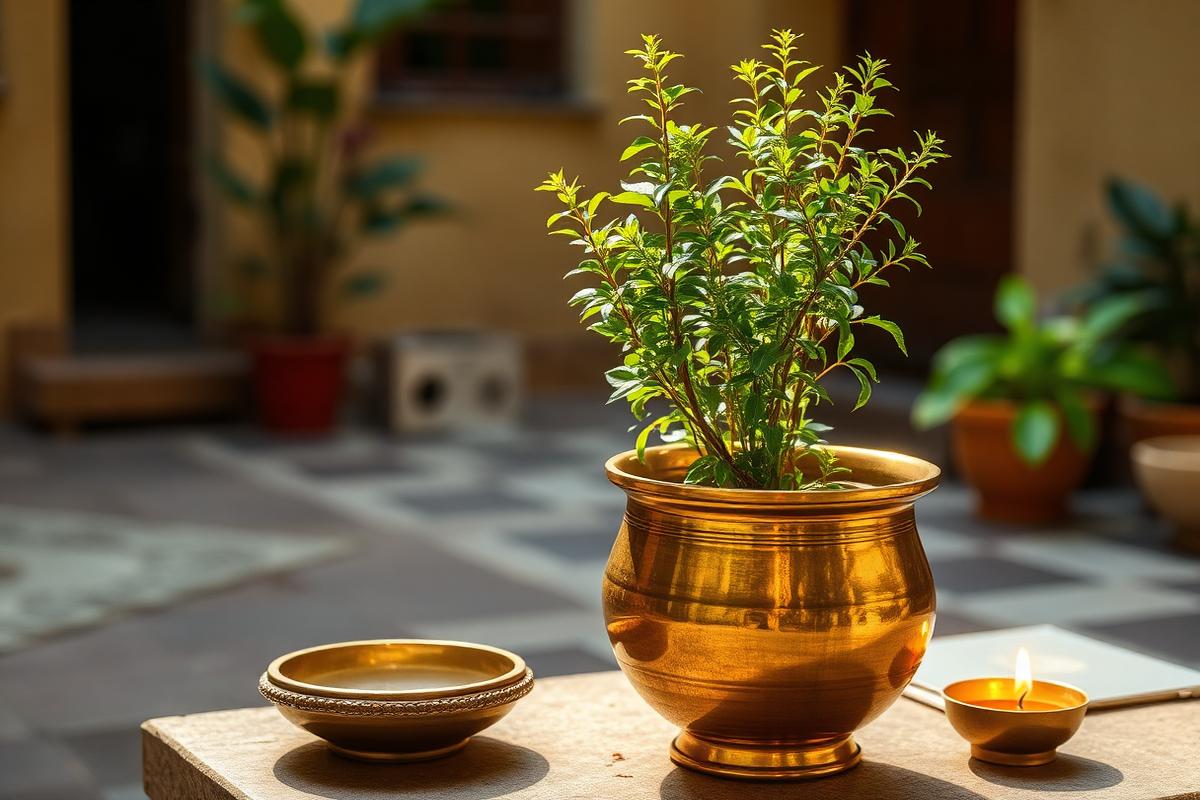
Materials: Krishna photo, tulsi mala, yellow flowers, white/yellow clothes, ghee diya, tulsi leaves. Best time: Brahma Muhurta (4-6 AM). Also 7-8 PM before dinner. Best days: Daily, but especially Ekadashi, Janmashtami, Krishna's birthdays in your local lineage. The vidhi: 1. Bath, wear clean clothes (yellow or white). 2. Sit on yellow asana facing east. 3. Apply Vaishnava tilak (vertical white sandalwood line). 4. Place Krishna photo, light ghee diya. 5. Offer tulsi leaves and yellow flowers. 6. Take sankalpa: 'I, [name], gotra [gotra], recite Govinda Damodara Stotram for [purpose: liberation at death / for [deceased relative's name] / for purification of mind]'. 7. Chant 'Om Namo Bhagavate Vasudevaya' 11 times to invoke Krishna. 8. Begin Govinda Damodara - read each verse slowly and let the refrain 'Govinda Damodara Madhaveti' echo in your mind. 9. After all 73 verses, sit silently for 5-10 minutes. 10. Offer the prepared tulsi-water as prasad to Krishna, then drink yourself. Critical timing - bedside recitation: When a family member is dying, the family should recite this stotra continuously by the bedside, especially the 2nd verse (refrain) and verse 73. Even one verse repeated 108 times at the moment of departure ensures the dying soul carries Krishna's name. The 73-verse continuous recitation is called 'Akhand Govinda Damodara Path' - done over 30-45 minutes - and is the supreme funeral assistance. Group chanting: Krishna devotees gather (especially in ISKCON, Madhva, and Vaishnava traditions) for collective Govinda Damodara recitation. Group bhajan-style with kirtan rhythm makes it especially uplifting and easier to memorize.
Common Questions From Devotees
Should I memorize the full stotra or is partial recitation OK?+
Partial is fine for daily practice - even reciting verse 2 (the refrain) 108 times daily earns major merit. But for the death-moment goal, memorize at least 11 verses (1, 2, 8, 20, 30, 40, 50, 60, 70, 72, 73). At the moment of dying, you'll not have time to read from a book - only memorized verses will flow. Aim to memorize the full 73 over 6-12 months, but don't delay starting because of perfectionism.
Can I recite this for a non-Hindu relative who is dying?+
Yes - the stotram works on the level of consciousness, not religion. Krishna is the cosmic intelligence; his name reaches any departing soul. However, respect the dying person's religious preferences: if they explicitly want their own religious texts (Bible, Quran, Buddhist sutras), prioritize those. You can silently recite Govinda Damodara mentally near them - the vibrations transfer. Many spiritual teachers say the soul, in its final moments, transcends religious labels and accepts any divine sound with love.
Is Govinda Damodara the same as Hare Krishna mahamantra?+
Related but distinct. Hare Krishna mahamantra (16 names: Hare Krishna Hare Krishna Krishna Krishna Hare Hare, Hare Rama Hare Rama Rama Rama Hare Hare) is a short, infinitely-repeatable kirtan mantra. Govinda Damodara Stotram is a structured 73-verse hymn where 'Govinda Damodara Madhaveti' is the refrain. Both invoke Krishna; both are powerful at death-moment. ISKCON tradition emphasizes Mahamantra; Bilvamangala's lineage emphasizes Govinda Damodara. Many devotees do BOTH - Mahamantra throughout the day, Govinda Damodara as a formal evening prayer.
Will this stotra really help my deceased relative get moksha?+
Faith-based question with practical reasoning. Per Bhagavad Gita and Garuda Purana: yes - recitations dedicated to deceased souls transfer merit to them and assist their journey. Beyond faith, the recitation also helps YOU as the living relative process grief in a constructive spiritual way. Even if the metaphysical claim is debated, the psychological and grief-healing benefit is undeniable. Do the recitation for 13 days after passing, on monthly tithi for first year, then annually on death anniversary. Many families report dream visits from the deceased after sincere Govinda Damodara recitation - they appear peaceful, indicating the soul has received the offering.
About the author
Acharya Vinaya Kapoor · M.A. Sanskrit, Mantra & Stotra Studies
Acharya Vinaya holds an M.A. in Sanskrit from Banaras Hindu University and writes the mantra and stotra commentary on Vandnaa. Her focus is on accurate pronunciation, traditional context, and helping modern readers connect with classical texts.
Meet the Vandnaa editorial team →Explore on Vandnaa
Related Articles
Krishna Ashtottara Shatanamavali - Complete 108 Names of Krishna with Meaning & Benefits
12 min read
Bhaja Govindam - Adi Shankaracharya's Vedanta in 31 Verses (Lyrics, Meaning & 7 Benefits)
11 min read
Bhagavad Gita on Death, Afterlife & Rebirth
9 min read
Krishna Janmashtami Vrat Rules: Complete Fasting & Food Guide
9 min read
Pitra Dosha - 7 Symptoms, Real Causes & Powerful Remedies (Complete Guide)
11 min read