The Cave Shrine
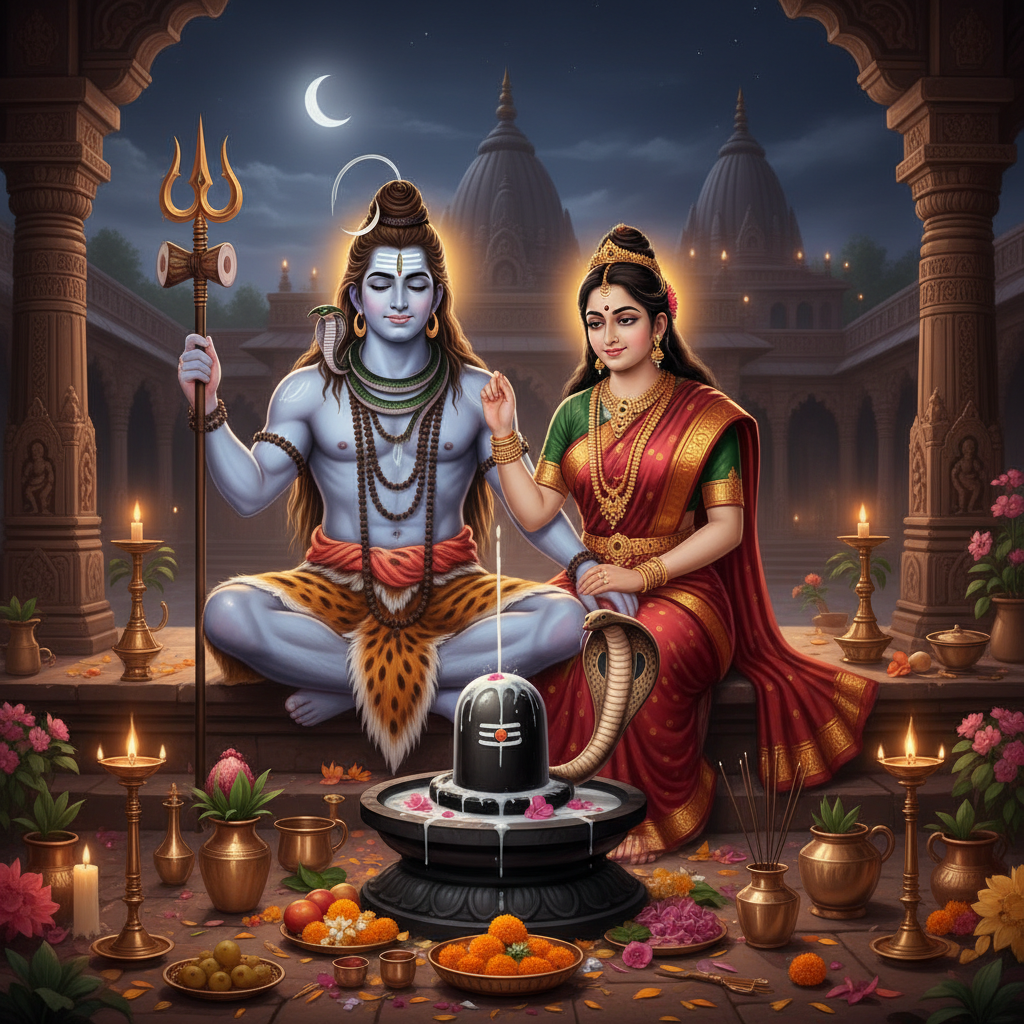
Gupteswar lies in Koraput district in southern Odisha, near the border with Andhra Pradesh, and the shrine is inside a limestone cave in a forested hill.
What is there:
- A Shiva linga inside the cave, in a chamber reached from the entrance
- A flight of steps, several hundred of them, climbing to the cave mouth through forest
- Limestone formations within the cave system, with further chambers beyond the shrine
- The Kolab river below, and the hills of the Eastern Ghats around
- Dense forest, which is genuine here rather than notional
The name Gupteswar means the hidden lord, and it refers to the linga's concealment in the cave.
What makes the visit distinctive is the setting rather than the structure. This is not a built temple with a shikhara. It is a natural cave with a linga in it, in country that remains heavily forested and tribal, at a considerable distance from the state's main pilgrimage circuit.
The shrine is significant across the Koraput, Jeypore and Malkangiri region and draws devotees from Andhra Pradesh as well.
The Rama Katha
The local tradition connects the cave to Rama during the forest exile.
As the tradition tells it:
- Rama and Lakshmana, moving through the Dandakaranya forest during the exile, came to this region
- Rama is held to have discovered the linga in the cave
- He is described as having worshipped there and named the deity Gupteswar, the hidden one
- The site has been in worship since, with the tribal communities of the region maintaining it long before it was known more widely
The Dandakaranya connection is worth understanding. In the Ramayana, the forest exile takes the party through a vast forest tract described as Dandakaranya, which is identified with the forested country of central and eastern India, running across present day Chhattisgarh, Odisha, Telangana and Andhra Pradesh.
Because that identification is broad, a great many sites across the region carry Ramayana associations. Villages, hills, caves, springs and rocks throughout the Dandakaranya country are named for episodes of the exile.
What this produces is a devotional map laid over some of the most heavily forested and most tribal districts in India, in which the epic's forest years are located in country that is still forest.
Worship at the Cave
Worship follows the standard Shaiva pattern, adapted to a cave.
- Jalabhishek on the linga, with water carried up by devotees
- Bel patra, flowers, dhatura and akshat offered
- Milk in abhishek on major days
- Lamps lit within the cave chamber, which is otherwise dark
- Prasad distributed at the base
The calendar:
- Mahashivratri, the greatest occasion, when the site receives very large crowds and the queue extends far down the steps
- Shravan, especially Mondays
- Kartik, when the weather is good and the forest at its best
- Somvati amavasya
What visitors consistently describe is the effect of the cave itself. The chamber is dark, cool and enclosed, the sound behaves differently inside, and coming into it after several hundred steps in forest heat is a physical experience before it is a devotional one.
Cave shrines occupy a specific place in Shaiva practice. Shiva is associated with caves, mountains and cremation grounds, with what is outside the settlement rather than within it. Amarnath, Shiv Khori, Patal Bhuvaneshwar and the cave temples of the Deccan all belong to the same understanding, and Gupteswar is the southern Odisha instance of it.
Koraput and the Southern Hills
Gupteswar sits in a part of Odisha very different from the coastal districts.
What the region is:
- Koraput and the adjoining districts of Rayagada, Malkangiri and Nabarangpur form the state's southern highlands
- The country is part of the Eastern Ghats, with hills, deep forest and river valleys
- The population includes a large number of Adivasi communities, with their own languages, deities and festivals
- The region is agriculturally distinct, with tribal farming systems, millets and the celebrated Koraput rice diversity
Other places of interest in the region:
- Duduma falls on the Machkund river
- Deomali, the highest peak in Odisha
- Jeypore, the old princely capital, and its palace
- Tribal markets across the district, held weekly, which are among the most significant cultural spaces in the region
- Sabara Srikhetra at Koraput, a Jagannath temple whose design allows access to all
A note on approach. Adivasi communities in this region have their own religious traditions, deities and observances, which are distinct and should not be treated as versions of anything else. Visitors to markets and villages should behave as guests, ask before photographing people, and buy what they buy at fair prices.
The forest around Gupteswar is protected, and the usual rules of forest areas apply.
Cave Shrines in the Tradition
Gupteswar belongs to a category of shrine that runs through Indian religious practice: the deity in a natural cave.
Some of them:
- Amarnath in Kashmir, the ice linga, the most famous of all
- Shiv Khori in Reasi, Jammu, a long natural cave with a linga
- Patal Bhuvaneshwar in Uttarakhand, an underground cave complex
- Vaishno Devi, approached through a cave passage
- Gupteswar in Koraput
- Borra caves in Andhra Pradesh, with a linga, a short distance across the border from Koraput
- The rock cut cave temples of Ellora, Elephanta and Badami, which are excavated rather than natural but belong to the same instinct
Why caves. Several things converge:
- A cave is a natural garbhagriha, dark and enclosed, which is what a sanctum imitates
- Caves are places of withdrawal, associated with ascetics and with practice away from settlement
- Water, dripping through limestone, forms shapes that are read as lingas, and many cave shrines centre on exactly such a formation
- The approach is difficult, and difficulty is itself part of the devotional structure
The built temple, with its dark sanctum under a tall tower, is in a real sense a cave reproduced in stone above ground. Places like Gupteswar are where the original is.
Visiting Gupteswar
Practical notes.
Getting there
- Gupteswar is in Koraput district, southern Odisha, near the Andhra Pradesh border
- It is roughly 55 km from Jeypore, which is the nearest town of size
- Koraput and Jeypore have rail connections, and Visakhapatnam is the nearest major airport, about 200 km
- Road access is through forest, and the last stretch is rural
When to go
- Mahashivratri, the greatest occasion, with very large crowds
- Shravan Mondays
- October to March for comfortable weather and the forest at its best
- Avoid heavy monsoon, when the forest roads become difficult
The climb
- Several hundred steps up to the cave mouth
- Take it slowly, carry water, and go early in the day
- The steps are exposed in sections
- Those with mobility difficulties should assess this before travelling
At the shrine
- The cave chamber is dark and cool, and lamps are lit within
- Offerings are water, bel patra, flowers and milk, available at the base
- Remove footwear at the designated place
- Move carefully inside, since the floor is uneven and can be damp
Combining the visit
- Jeypore and its palace
- Duduma falls and Deomali
- Borra caves across the border in Andhra Pradesh
- Araku valley, a further stretch into Andhra Pradesh
A closing thought. Southern Odisha is one of the least travelled parts of eastern India and among the most beautiful. Gupteswar is worth the journey on its own, and the country you cross to reach it is worth as much.
Common Questions From Devotees
What is Gupteswar?+
A Shiva linga inside a limestone cave in a forested hill in Koraput district of southern Odisha, near the Andhra Pradesh border. The name means the hidden lord, referring to the linga's concealment in the cave.
What is the katha of the shrine?+
Local tradition holds that Rama and Lakshmana, moving through the Dandakaranya forest during the exile, came to this region, that Rama discovered the linga in the cave, worshipped there and named the deity Gupteswar.
How hard is the climb?+
Several hundred steps lead up to the cave mouth through forest. Take it slowly, carry water and go early in the day, since the steps are exposed in sections. Anyone with mobility difficulties should assess this before travelling.
When is the largest gathering?+
Mahashivratri, when very large crowds arrive and the queue extends far down the steps. Shravan Mondays are also heavy, and October to March is the best season for weather and for the forest.
How do you reach Gupteswar?+
It is roughly 55 km from Jeypore, the nearest town of size, in Koraput district. Koraput and Jeypore have rail connections and Visakhapatnam is the nearest major airport at about 200 km. Road access is through forest and the last stretch is rural.
Why are so many Shiva shrines in caves?+
A cave is a natural garbhagriha, dark and enclosed, which is what a built sanctum imitates. Caves are also places of withdrawal associated with ascetics, and water dripping through limestone forms shapes read as lingas. Amarnath, Shiv Khori and Patal Bhuvaneshwar belong to the same understanding.
About the author
Pandit Ravindra Sharma · Vedic Rituals & Bhakti, 22+ years
Pandit Ravindra is the Vandnaa editorial team's resident specialist on aarti, chalisa, and daily devotion. He has performed home and temple pujas across Varanasi and Delhi for over two decades and contributes the bhakti-focused articles on this site.
Meet the Vandnaa editorial team →Explore on Vandnaa
Related Articles
Shiv Khori: The Jammu Cave Where the Shivling Was Never Installed
8 min read

The Badami Cave Temples of the Chalukya Dynasty
7 min read

Nilamadhava of Kantilo: The Blue Deity Who Was Worshipped Before Jagannath
8 min read
Bhoramdeo: The Chhattisgarh Temple Where a Gond Deity's Name Sits on a Stone Shrine
8 min read