Who is Hadimba Devi
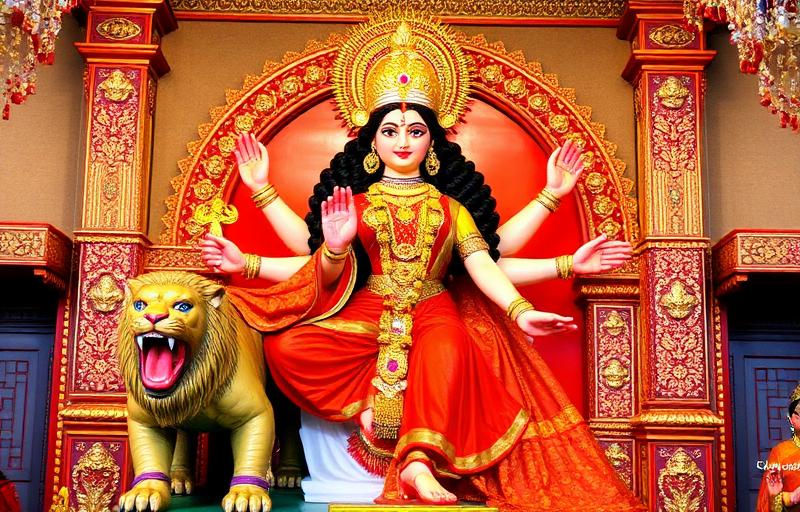
Deep within a grove of ancient deodar trees in Manali stands one of the most distinctive temples in the Himalayas, dedicated to Hadimba Devi. She is honoured as a form of the Devi and is remembered from the Mahabharata as Hidimba, the forest-dwelling woman who became the wife of Bhima and the mother of Ghatotkacha.
The temple is unlike most Devi shrines in that it holds no conventional idol. Instead, devotees offer worship to a natural rock formation inside the sanctum, believed to be the place where Hidimba is said to have meditated before attaining her divine status.
For the people of Kullu valley, Hadimba is deeply woven into local identity, honoured not only as a mythological figure but as a guardian deity of the region, invoked at the start of local festivals and processions.
History and the Mahabharata Legend
According to the Mahabharata, Hidimba and her brother Hidimb lived in these forests as rakshasas. When Hidimb sent his sister to lure and kill the Pandavas hiding nearby, Hidimba instead fell in love with Bhima. After Bhima defeated her brother, she married Bhima and their son Ghatotkacha was born, later becoming a celebrated warrior in the Kurukshetra war.
Local tradition holds that Hidimba later performed penance in these very forests and was elevated to the status of a Devi, worshipped ever since by the people of Kullu. The present pagoda-style wooden temple, with its distinctive tiered roofs, is said to have been built centuries ago by a local ruler in devotion to her, and it remains one of the finest examples of hill temple architecture in the region.
The temple's cave-like sanctum, built directly around the sacred rock rather than replacing it, reflects the belief that the goddess's presence here predates any structure raised in her honour.
Significance and What Devotees Pray For
Hadimba Devi is worshipped as a protective mother figure, particularly by the local communities of Kullu who consider her their guardian deity. As per tradition, devotees pray to her for family well-being, protection of children, and blessings before undertaking journeys into the surrounding mountains.
She is also honoured during important local ceremonies, and her idol, or a symbolic representation, is traditionally taken out in procession during the region's major festivals, accompanied by folk music and community celebration.
Visitors, whether devout pilgrims or curious travellers, often speak of the serenity of the surrounding deodar forest, feeling that the setting itself deepens the sense of the sacred, a reminder that devotion here is offered with humility rather than as any transactional exchange.
Darshan Guide - Timings and the Hadimba Fair
The temple is generally open through the day, from early morning until evening, making it an easy stop for both dedicated pilgrims and travellers exploring Manali. Unlike temples with strict aarti-based schedules, Hadimba temple's forest setting allows for a more continuous flow of visitors and quiet reflection.
The most significant celebration is the Hadimba Devi fair, held in May, when the temple and its surroundings come alive with folk music, dance and processions from villages across the Kullu valley, honouring the goddess as their guardian.
Devotees also visit during Navratri, and the temple's peaceful setting makes it a favoured stop through the summer months when Manali sees the most visitors.
How to Reach Hadimba Devi Temple
Hadimba temple is located a short distance from Manali's main town, within easy walking or short taxi distance from the Mall Road area, making it one of the more accessible pilgrim sites in the hills.
The nearest airport is Bhuntar (Kullu-Manali airport), while the nearest railhead is at Joginder Nagar, though most travellers arrive by road from Chandigarh or Delhi, a well-travelled route through the hills.
Once in Manali, local taxis and even a pleasant walk through the town lead visitors directly to the temple, set within its quiet forest clearing.
Mantra to Chant and Takeaway
Devotees at the temple often chant Om Hadimba Devyai Namah (I bow to Mother Hadimba), alongside the universal Devi invocation Om Aim Hreem Kleem Chamundayai Vichche, seeking her protective blessing.
What makes Hadimba temple memorable is the quiet coexistence of legend, nature and devotion, a sacred rock beneath a wooden roof, surrounded by trees older than most human memory, honouring a woman from epic history who became a mother goddess to an entire valley.
As always, worship here is an act of faith and love, not a transaction, a reminder that the divine can be found in a forest clearing just as surely as in a grand temple hall.
Frequently Asked Questions
Why does Hadimba Devi Temple have no conventional idol?+
The sanctum is built around a natural rock formation believed to be connected to Hidimba's penance, and devotees worship this rock rather than a sculpted idol, a tradition unique to this temple.
What is the connection between Hadimba Devi and the Mahabharata?+
Hadimba Devi is worshipped as the deified form of Hidimba, who married Bhima in the Mahabharata and became the mother of the warrior Ghatotkacha.
When is the Hadimba Devi fair celebrated?+
The Hadimba Devi fair is celebrated in May each year, bringing together folk music, dance and processions from villages across the Kullu valley in honour of the goddess.
About the author
Pandit Ravindra Sharma · Vedic Rituals & Bhakti, 22+ years
Pandit Ravindra is the Vandnaa editorial team's resident specialist on aarti, chalisa, and daily devotion. He has performed home and temple pujas across Varanasi and Delhi for over two decades and contributes the bhakti-focused articles on this site.
Meet the Vandnaa editorial team →