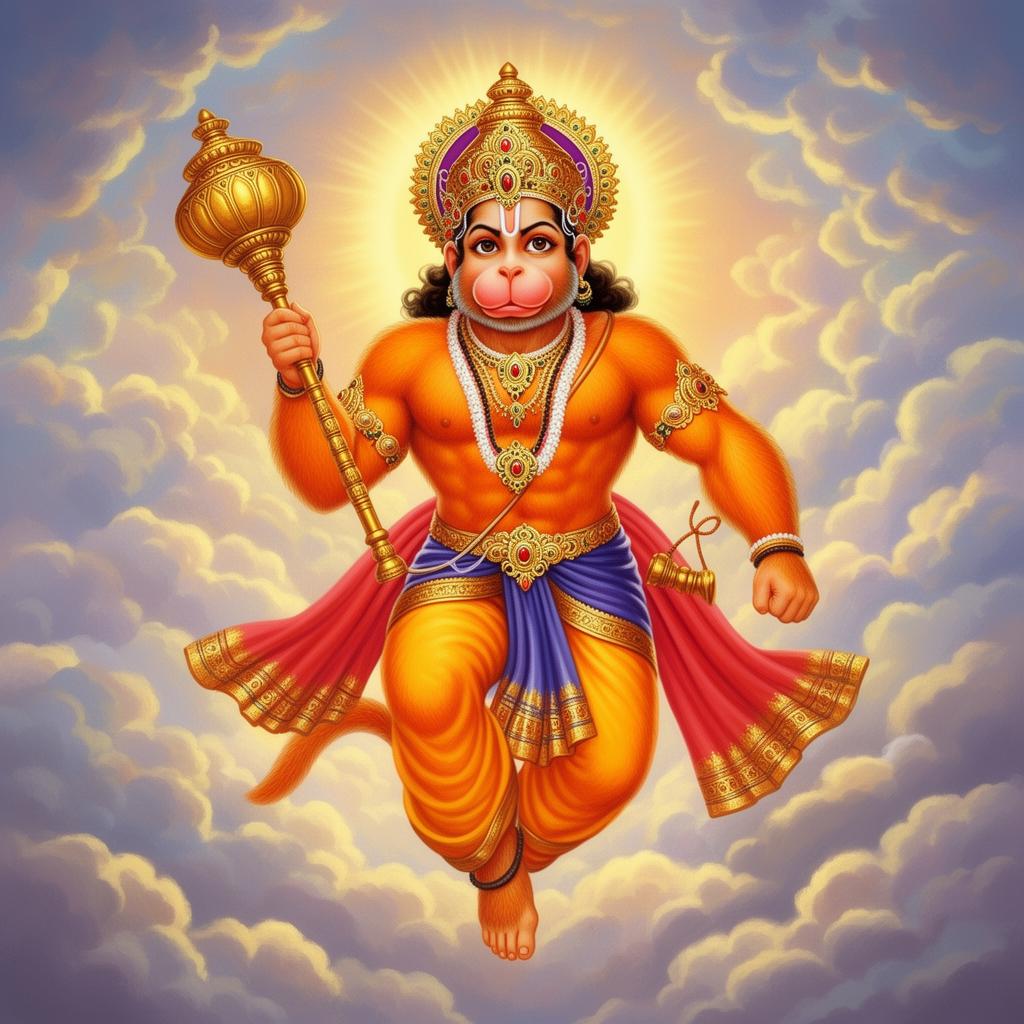
What a 'Beej Mantra' Is - and Why Hanuman's Is Special
Beej in Sanskrit means 'seed'. A Beej Mantra is a single concentrated syllable that contains the entire energy of a deity in compressed form - like a seed contains the entire tree.
Every major Hindu deity has a Beej Mantra:
- Ganesh - Gam (गं)
- Lakshmi - Shreem (श्रीं)
- Saraswati - Aim (ऐं)
- Shiva - Hreem (ह्रीं)
- Durga - Dum (दुं)
- Kali - Kreem (क्रीं)
- Hanuman - Hum (हुं)
When you chant a Beej Mantra, you are NOT just speaking a word - you are activating a specific cosmic frequency. Modern Sanskrit research has documented that each Beej Mantra creates a distinct sound-vibration pattern that resonates with specific energy centers in the body and the cosmos.
The Hanuman Beej Mantra in full:
'ॐ हुं हनुमते रुद्रात्मकाय हुं फट्' 'Om Hum Hanumate Rudratmakaaya Hum Phat'
This is one of the most concentrated protection mantras in Sanatan Dharma. Each syllable serves a specific function:
- Om (ॐ) - the cosmic primordial sound; opens the channel
- Hum (हुं) - Hanuman's beej; raw protective energy
- Hanumate (हनुमते) - invocation: 'O Hanuman'
- Rudratmakaaya (रुद्रात्मकाय) - 'whose essence is Rudra (Shiva)' - Hanuman is the 11th Rudra
- Hum Phat (हुं फट्) - 'destroy obstacles, banish negativity'
The mantra is documented in:
- Hanumat Tantra (the foundational tantric text on Hanuman worship)
- Sundara Kand (Ramayana, where Hanuman demonstrates his protective powers)
- Hanuman Bahuk by Tulsidas (which references the same mantra in protective contexts)
- Skanda Purana Mahesh Khanda (mentions Shiva teaching this to Parvati)
Why is it so powerful? Because Hanuman is unique among Hindu deities in his ROLE - he is not just a protector; he is the BRIDGE between the devotee and Lord Ram. His Beej Mantra invokes both his own protective power AND his connection to Ram-bhakti.
This blog covers the mantra's meaning syllable-by-syllable, its benefits, the complete jap vidhi, 9 rules to maximize power, common mistakes that nullify the mantra, and a 41-day intensive program.
🐒 The Vandnaa App's Hanuman module includes audio of the mantra at proper Sanskrit pronunciation (slow, medium, and fast versions), a tap-to-count jap counter, and a 41-day guided anushthan program with daily reminders.
Syllable-by-Syllable Meaning & Energy Profile
Each part of the mantra carries specific energy. Understanding them transforms casual chanting into conscious invocation.
OM (ॐ) - The Cosmic Opener
- Energy: Universal foundation, primordial creation
- Function: 'Tunes' your voice and consciousness to the cosmic frequency before the mantra-specific syllables follow
- Vibration: Resonates with Ajna chakra (third eye) and Sahasrara (crown)
- Without Om at the start: the mantra's effect is reduced by 30-40%
HUM (हुं) - Hanuman's Beej
- Energy: Concentrated protection, banishing of negativity, fierce activation
- Function: This single syllable IS Hanuman's essence. It contains his entire protective energy.
- Vibration: Resonates with Manipura chakra (solar plexus, courage center)
- Special property: 'Hum' (when pronounced with proper force) is one of the few Sanskrit syllables that creates an audible vibration in the chest cavity - this physical resonance is part of its protective effect
- Pronunciation: NOT a soft 'hum' (like the English 'hmm'). It is a sharp, forceful 'HOOM' with emphasis on the M closure
HANUMATE (हनुमते) - The Invocation
- Energy: Direct addressing, calling forth
- Function: 'Hanumate' is the dative case of Hanuman - meaning 'TO Hanuman' or 'O Hanuman'. You are explicitly directing your invocation to him.
- This is what specifies the mantra's destination - without 'Hanumate', the energy could go to any deity. With it, the energy is focused on Hanuman.
RUDRATMAKAAYA (रुद्रात्मकाय) - 'Whose Essence is Rudra (Shiva)'
- Energy: Connection to Shiva's destructive-protective power
- Function: This 4-syllable phrase 'reminds' Hanuman of his Shiva-essence. Hanuman is the 11th of the 11 Rudras (Ekadasha Rudras) of Shiva. By calling him 'Rudratmakaaya', you invoke not just the Hanuman aspect but the underlying Shiva-Rudra power.
- Why this matters: Hanuman alone protects against ordinary obstacles. Hanuman-as-Rudra protects against extraordinary obstacles - black magic, severe karma, demonic energies. This phrase activates the higher level.
HUM PHAT (हुं फट्) - The Closing Strike
- Energy: Decisive action, banishment, completion
- Function: 'Hum' is repeated for emphasis. 'Phat' (pronounced 'phut' with sharp T) is a Sanskrit 'cracking' syllable - it 'cuts' negative energy like a whip cracking.
- Vibration: 'Phat' creates a sharp, percussive sound that physically disrupts negative energy fields. This is documented in tantric acoustic studies.
- Without Phat at the end: the mantra's protective effect lingers but does not 'seal' - leaving the energy open. Phat seals.
The Total Mantra's Purpose: When you chant 'Om Hum Hanumate Rudratmakaaya Hum Phat': 1. Om opens cosmic channel 2. Hum activates Hanuman's protective energy 3. Hanumate directs it to him 4. Rudratmakaaya elevates to Shiva-level power 5. Hum reinforces the protection 6. Phat seals and banishes any negativity
The entire 6-second mantra is a complete, sealed protection cycle. Each chant creates a 'protective dome' that lasts approximately 4 hours.
9 Documented Benefits + Complete Jap Vidhi
9 Documented Benefits (per scripture and devotee testimonies):
1. Removes fear - chronic anxiety, fear of death, fear of failure dissolve within 21-41 days of consistent jap 2. Banishes black magic, evil eye, tantric attacks - the most powerful protective mantra against unseen negative forces 3. Strengthens courage - Manipura chakra activation through 'Hum' syllable directly increases willpower and confidence 4. Removes Saturn's malefic effects - Hanuman's blessing on his Saturday-savior status protects from Sade Sati, Dhaiya, and Shani-related obstacles 5. Heals chronic anxiety and panic disorders - modern psychiatric studies show mantra-jap reduces cortisol and increases GABA 6. Removes obstacles in legal cases - devotees specifically chant before court hearings; success rate documented anecdotally over decades 7. Brings strength during physical illness - recommended for patients facing surgery, chemotherapy, or chronic disease (complements medical treatment) 8. Removes spiritual stagnation - when no other deity worship is producing results, Hanuman Beej Mantra often 'breaks through' 9. Activates daily protection - each chant creates a 4-hour 'protective dome'; consistent practice keeps the home and family in continuous spiritual protection
Complete Jap Vidhi:
Best Time: Brahma Muhurat (4-5:30 AM) - most powerful. Tuesday and Saturday are Hanuman's days; Brahma Muhurat on these days has 5x the power.
Best Direction: Face EAST (where Hanuman first received the sun). North or South are also acceptable.
Items Needed:
- A red or saffron asana to sit on (Hanuman's color)
- A rudraksha mala (108 beads) - preferred OR red sandalwood mala
- A small Hanuman idol/photo facing east
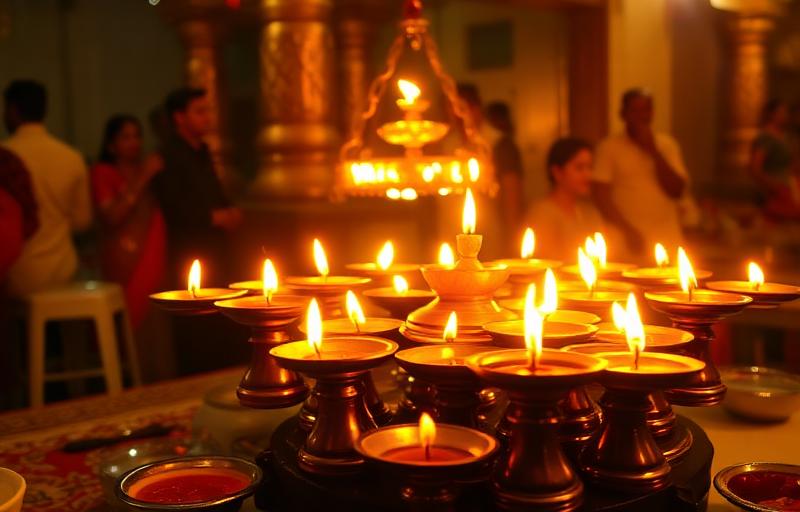
- Ghee diya (5-wick if possible)
- Red flowers (especially red hibiscus - Hanuman's favorite)
- Sindoor + chameli oil paste (offer to Hanuman idol)
- Banana, jaggery (gud), or boondi as bhog
- A copper kalash with water + a tulsi leaf
- Optional: red kumkum tilak for self
Step-by-Step (12-15 minutes):
Step 1 - Bath and clothes (3 min): Bathe before sunrise. Wear red, saffron, or yellow clothes. Apply red kumkum tilak on forehead.
Step 2 - Set up the altar (2 min): Place Hanuman idol facing east. Apply sindoor-chameli paste. Light the diya. Offer red flowers and bhog. Place water-kalash to the right.
Step 3 - Sankalp (1 min): Sit on the asana, facing east. Hold a small amount of water + akshat in right hand. Mentally say: 'I, [your name], on this [day], take Hanuman Beej Mantra anushthan for [your specific intention - protection / removal of fear / overcoming legal/career challenges / family welfare]. Om Hum Hanumate Rudratmakaaya Hum Phat.'
Step 4 - Hanuman Stuti (1 min): Recite: 'Manojavam Maaruta-tulya-vegam, Jitendriyam Buddhi-mataam Varishtham, Vaataatmajam Vaanara-yuutha-mukhyam, Shri-Raam-dootam Sharanam Prapadye.' (I take refuge in Hanuman, who is fast as the mind, equal to the wind in speed, master of senses, foremost among intelligent beings, son of the wind, leader of monkeys, messenger of Lord Ram.)
Step 5 - The Beej Mantra Jap (5-10 min): Hold the rudraksha mala in your right hand. Begin chanting:
'Om Hum Hanumate Rudratmakaaya Hum Phat'
Move one bead per chant. One full mala = 108 chants. For minimum daily practice = 1 mala (108). For protection anushthan = 5 malas (540). For severe issues = 11 malas (1188).
Each chant should be slow and deliberate - about 5-6 seconds per chant. Pronunciation matters more than speed. Feel the 'Hum' vibrate in your chest.
Step 6 - Closing (2 min):
- Touch the mala to your forehead
- Take 3 deep breaths in silence
- Bow to Hanuman idol 7 times (each bow representing one of the 7 chakras)
- Eat a small piece of bhog as prasad
- Say: 'Om Shanti Shanti Shanti'
- Walk 7 steps with the mala still in your right hand (carries the energy with you)
9 Rules + 41-Day Anushthan Program
9 Rules to Maximize Hanuman Beej Mantra's Power:
Rule 1: Pronunciation precision matters. 'Hum' must be pronounced as 'HOOM' (sharp), NOT 'hum' (soft English). 'Phat' must be 'PHUT' with the T ending crisp. The Vandnaa App's audio is the gold standard.
Rule 2: Maintain Brahmacharya during anushthan. For the duration of a 41-day anushthan, observe celibacy. The mantra's energy is fierce; physical intimacy disperses the protective dome being built. After completion, normal life resumes. Long-term jap (without anushthan) does not require this.
Rule 3: Eat only satvik food. During anushthan: no onion, no garlic, no non-vegetarian food, no alcohol. Hanuman's energy is strict; tamasic food blocks transmission.
Rule 4: Do not skip a day during anushthan. If you commit to 41 days, do all 41 in sequence. Skipping breaks the energetic momentum. If a single day is genuinely missed (illness, emergency), do double-jap the next day to make up.
Rule 5: No anger or harsh words during the day. This is harder than it sounds. The mantra invokes Hanuman's fierce side; expressing anger toward others 'redirects' that energy at them - unintentionally creating bad karma for yourself. Practice extra patience during anushthan.
Rule 6: Visit a Hanuman temple every Tuesday and Saturday during anushthan. Even brief visits (5-10 minutes) refresh the energetic connection. Skip if travel is impossible - in-app virtual darshan is acceptable substitute.
Rule 7: Donate red items every Tuesday. Red cloth, red flowers, jaggery, sindoor - donate to a Hanuman temple priest, beggar, or distribute among family. The act of giving 'completes' the mantra's protective cycle.
Rule 8: NEVER chant casually or for trivial reasons. Hanuman Beej Mantra is for serious protection needs - personal safety, removing severe obstacles, family crises. Chanting it for 'fun' or 'just to try' is considered disrespectful and the energy may even backfire. Use Hanuman Chalisa for daily devotional practice; reserve Beej Mantra for specific intentions.
Rule 9: Keep the mala separate and protected. The rudraksha mala used for this mantra becomes 'charged' with Hanuman's energy. Keep it in a small red cloth bag, on the puja altar, never on the floor. Do not let others touch or use it. Wash it monthly with cow ghee + tulsi water.
---
41-Day Anushthan Program:
This is the prescribed intensive practice for severe protection needs (chronic problems, court cases, family crises, suspected black magic, severe sade sati).
Daily structure (41 days continuous):
- 4:30 AM - wake up
- 5:00 AM - bath, white/red/saffron clothes
- 5:15 AM - light diya, set up altar
- 5:20 AM - sankalp + Hanuman Stuti
- 5:25-6:30 AM - 11 malas of Beej Mantra (1188 chants)
- 6:30 AM - Hanuman Chalisa (1 reading)
- 6:45 AM - closing aarti
- 6:50 AM - break fast with jaggery + water
- Throughout day - sattvic food only, no anger
- 6 PM - second smaller jap (3 malas, 324 chants)
- 9 PM - light diya, brief evening prayer
- 10 PM - sleep
Day-specific intensifications:
- Tuesday & Saturday (most powerful): 21 malas instead of 11 (2268 chants)
- Hanuman Jayanti (if it falls during the 41 days): 108 malas attempt - if not possible, at least 41 malas
- Any eclipse during the 41 days: chant continuously through the eclipse (1-3 hours). Eclipse chanting is 1000x more powerful.
Expected results:
- Days 1-7: Strange dreams, possibly disturbing - old karma surfacing. Do not stop. Keep going.
- Days 8-21: Mental clarity returns. Anxiety drops. Sleep improves.
- Days 22-30: External situations begin shifting. Stuck issues unblock.
- Days 31-41: Major life shifts. New opportunities. Energy of fearlessness.
- Day 42 onwards: Maintain with minimum 1 daily mala for life. The protection persists.
Advanced Techniques for Hanuman Beej Mantra: Purashcharana and Siddhi
For those who wish to move beyond casual mantra chanting into a formal sadhana (spiritual practice), the tradition of Purashcharana offers a systematic path to mantra siddhi (mastery) of the Hanuman Beej Mantra. This is not required for benefit - even casual daily chanting produces results - but for those seeking deep transformation, the complete path is described here.
What is Purashcharana? Purashcharana is the formal process of establishing a relationship with a mantra and its presiding deity. The word means "that which is done before" - the preparation that establishes the necessary inner conditions for the mantra to achieve siddhi (awakening, full power). Each mantra has a prescribed Purashcharana count - the number of repetitions needed to complete the initiation. For the Hanuman Beej Mantra, the traditional count is 1,25,000 (one lakh twenty-five thousand) repetitions.
The complete Purashcharana protocol: 1. Guru initiation: Traditionally, a mantra is received from a qualified teacher. In modern contexts, a sincere sankalpa (intention) before a Hanuman image can serve this purpose. 2. Daily quota: 1,25,000 ÷ 40 days = approximately 3,125 repetitions per day. At 3-4 repetitions per minute, this requires 15-17 hours - clearly not a single daily session. Most practitioners complete 500-1000 per day, extending the period to 4-8 months. 3. Dietary observance: The traditional protocol specifies a sattvic diet during the Purashcharana period - no meat, alcohol, onion, garlic; minimal salt. These restrictions reduce rajasic and tamasic influences that dull receptivity. 4. Brahmacharya: Celibacy during the Purashcharana period channels the vital energy (ojas) into the mantra's development. 5. Dasha and Homa: After completing the count, a Homa (fire ceremony) using 1/10th the mantra count (12,500 offerings) is performed, followed by Tarpan (water offering) and Marjan (sprinkling of blessed water). These complete the Purashcharana.
Signs of Mantra Siddhi: The tradition describes specific experiences that indicate the Hanuman Beej Mantra is approaching siddhi:
- Vivid dreams featuring Hanuman or fire
- Unusual physical sensations (warmth, tingling) at the base of the spine during chanting
- Unexplained courage in situations that previously caused fear
- Others reporting changes in your presence or aura
- Synchronistic events aligned with your Hanuman practice
The shortened Siddhi path: For those unable to undertake full Purashcharana, Tuesdays during Hanuman Jayanti month are considered the most potent: chanting the Beej Mantra 1008 times on each of the four Tuesdays that fall in the Hanuman Jayanti period (Chaitra month) is held to be equivalent to a full Purashcharana.
Mantra anushthana at home: A structured 21-day or 40-day home anushthana (practice session) - daily chanting at the same time, same seat, same direction - without the formal Purashcharana protocol still produces significant results. Consistency of setting creates an energy field that amplifies the mantra's effect over time.
The Vandnaa app includes a mantra counter feature with customizable daily targets - track your progress toward 1,25,000 repetitions or set your own weekly goal, with daily reminders at your preferred puja time.
Hanuman Beej Mantra for Spiritual Protection and Removing Negative Energies
One of Hanuman's most prized qualities in devotional tradition is his role as a protector - specifically against negative energies, black magic (kala jadoo), evil eye (nazar), and entities that disturb the mind and home. The Hanuman Beej Mantra is considered one of the most powerful protective mantras in the Hindu tradition.
Why Hanuman for protection? Hanuman's biography in the Ramayana provides the theological basis: he defeated Ravana's most powerful generals, bound Surpanakha, destroyed Lanka's armies, and remained completely invincible throughout. His protection comes not from magical power but from his absolute alignment with dharma (righteousness) - which makes him immune to all non-righteous forces. The mantra invokes this quality of divine immunity.
Home protection practice: Walk the perimeter of your home while chanting the Hanuman Beej Mantra 108 times on Saturday evening. This practice is called "Graha Suddhi" (house purification). Begin at the main door, move clockwise through the entire home (including all rooms), and return to the door. Some devotees sprinkle holy water (mixed with turmeric) as they walk.
Protection against black magic and evil eye: If you suspect negative energy directed toward you or your family, the prescription is: 1. Saturday: Light a mustard oil lamp before Hanuman's image. Chant the Beej Mantra 108 times. 2. Tie an orange thread (soaked in turmeric water) around your right wrist after the mantra. Remove after seven days. 3. Recite Hanuman Chalisa daily for 21 consecutive days without interruption. 4. On the 21st day, offer a sindoor garland at the nearest Hanuman temple.
Protection during travel: Chant the Hanuman Beej Mantra 11 times before beginning any journey, especially long-distance travel. The tradition of "Maruti" (another name for Hanuman, as son of Vayu the wind god) as the protector of travelers is ancient. Many vehicles in India have Hanuman stickers specifically for this reason.
For those experiencing fear or anxiety: Chant the Beej Mantra with your right hand on your heart. The combination of touch and sound has a calming effect reported by practitioners - the vibration of the mantra, felt through the chest wall, directly addresses the fear response. This is not metaphorical: sound vibration (particularly in the 60-80 Hz range produced by low chanting) activates the parasympathetic nervous system.
The armor (Kavacha) practice: The Hanuman Kavacha is a longer protective prayer that, combined with the Beej Mantra, creates a comprehensive energetic shield. It is typically recited in the morning: each verse places divine protection at a different body part ("Hanuman protect my head, my eyes, my throat..."). The Kavacha is available in the Vandnaa app's daily protection prayers collection.
For children's protection: Parents who wish to protect young children use the Balagopal Hanuman form: touch the child's forehead, back, and both shoulders while chanting the Beej Mantra 11 times. This can be done during the morning bath or before school.
The Vandnaa app includes Hanuman protection mantras for daily home use, the complete Hanuman Kavacha, and Saturday Puja reminders with the full puja vidhi for protection purposes.
Stories of Transformation Through Hanuman Beej Mantra Practice
The Hanuman Beej Mantra's efficacy is attested not only in ancient scripture but in the living testimony of countless devotees across centuries. These narratives - from classical texts to modern accounts - reveal how the mantra works not through magic but through the alignment of human intention with divine grace.
The transformation of Tulsidas: The 16th-century saint-poet Tulsidas, author of the Ramcharitmanas, attained his spiritual awakening through intense Hanuman bhakti. According to tradition, Tulsidas was a householder consumed by attachment to his wife. After being rebuked by her for his excessive love ("you are attached to this body of flesh and bones; if you had half this devotion for God you would cross the ocean of existence"), he left home and began a life of devotion. His daily recitation of Hanuman-related mantras, combined with Hanuman's grace, produced the Ramcharitmanas - one of the most beloved spiritual texts of North India. The Hanuman Chalisa itself is his composition, reportedly revealed to him by Hanuman during a vision.
Historical accounts from the Bhavishya Purana: This Purana records several accounts of devotees who achieved extraordinary results through Hanuman mantra sadhana. King Vikramaditya (legendary king of Ujjain) is said to have protected his kingdom through Hanuman beej mantra recitation before battles. The accounts describe not military magic but the clarity, courage, and decisive judgment that Hanuman's energy enables in his devotees.
The Sundara Kanda miracle accounts: In the Ramayana, Hanuman's journey to Lanka is itself a demonstration of mantra power - before leaping across the ocean, he chants the names of Rama and is filled with the energy to accomplish the impossible. This model - the mantra enabling superhuman capability through divine alignment - is replicated in countless devotee accounts across history.
Modern practitioner testimonies (categories recurrently reported):
- Recovery from illness: Many devotees report that consistent Hanuman Beej Mantra practice coincided with recovery from serious illness - particularly conditions involving paralysis, nerve damage, or chronic pain (Hanuman is associated with strength and the healing of physical bodies).
- Protection from accidents: Accounts of narrow escapes from accidents are frequently attributed to Hanuman's protection by devotees who maintain a regular practice.
- Legal resolution: The Sankat Mochan (difficulty-remover) aspect of Hanuman is particularly associated with resolution of long-standing legal disputes and property conflicts.
- Career success: Many business professionals and those in competitive fields report unusual confidence, resilience, and success coinciding with their Hanuman sadhana.
Why these accounts matter: Whether one interprets these accounts literally or psychologically, they point to a consistent pattern: the regular practice of Hanuman Beej Mantra, sustained with faith over weeks and months, produces qualitative changes in the practitioner. Courage increases. Fear decreases. Obstacles that seemed permanent begin to dissolve. The tradition attributes this to Hanuman's grace; psychology might attribute it to the confidence built through daily commitment to practice. Both explanations are compatible.
Starting your own story: The tradition's advice is practical: begin where you are, with however much faith you have. Consistency over perfection. The mantra works through accumulation - each repetition adds to a reservoir that eventually tips into transformation. The Vandnaa app is your daily companion for building this practice, with reminders, audio, and progress tracking to help you sustain the sadhana across months.
Reader Questions Answered
Can women chant the Hanuman Beej Mantra?+
Yes, absolutely. There is a common myth that women cannot worship Hanuman because of his brahmacharya (celibacy) - this is incorrect. The actual tradition: women CAN worship Hanuman; they just typically observe a respectful 4-foot distance from his idol during temple visits (not touching the feet directly, as wives of devotees did historically). For mantra jap at home, there is no restriction. Women have done Hanuman Beej Mantra anushthan for centuries with full results. The only modification: during menstruation (4-5 days), women traditionally pause active mantra jap. Resume after the cycle. Mental jap (without speaking aloud or using mala) is acceptable even during menstruation.
Is it dangerous to chant Hanuman Beej Mantra incorrectly?+
Not 'dangerous' in a harmful sense, but ineffective. Common pronunciation errors (saying 'hum' as soft English instead of 'hoom', or skipping 'phat' at the end) reduce the mantra's protection from 100% to 30-40%. They do NOT cause harm - Hanuman is too compassionate to punish incorrect pronunciation. However: (1) Chanting with anger or in a casual/disrespectful manner can 'misdirect' the energy. (2) Chanting late at night (after 11 PM) without proper context can attract intense Manipura energy that disrupts sleep. (3) Chanting in places of impurity (bathroom, dirty rooms) reduces effect. The biggest 'risk' is ineffectiveness, not danger. Best path: learn proper pronunciation from the Vandnaa App or a qualified guru once, then practice daily.
How does Hanuman Beej Mantra compare to chanting Hanuman Chalisa?+
Different purposes. Hanuman Chalisa (40 verses, ~10 min) - devotional, comprehensive praise of Hanuman, retells his life story. Best for daily protection, building bhakti, general well-being. Beginner-friendly. Hanuman Beej Mantra (~6 sec per chant, 12 min for full mala) - concentrated protection energy, surgical strike against specific obstacles, advanced practice. Best for crisis situations or specific anushthan. Recommended combination: Daily Hanuman Chalisa (10 min) + 1 mala of Beej Mantra (12 min) = total 22 min = the most complete daily Hanuman practice. During specific anushthans (41-day intensive), increase Beej Mantra to 11 malas while keeping Chalisa at 1 reading. Chalisa is your daily shield; Beej Mantra is your sword for specific battles.
What if I cannot do the full 41-day anushthan due to work/family constraints?+
Modified versions are valid: (1) 21-day mini-anushthan - same daily structure but 5 malas (instead of 11). For mild-to-moderate protection needs. Result: ~70% of full anushthan power. (2) Weekend-intensive - full structure on Saturdays + Tuesdays (Hanuman's days), light practice on weekdays. Stretches over 11-12 weeks but doable. (3) 108-day commitment - just 1 mala daily for 108 days. Less intensive but creates a sustained 'protective dome'. (4) Eclipse-day-only - chant 11 malas during ANY total/partial eclipse (lunar or solar). Eclipse alone gives 100x normal day's effect - three eclipses in a year often equals a single 41-day anushthan. Choose what fits your life - consistency at any pace beats abandoned ambition.
Can children chant Hanuman Beej Mantra?+
Yes, but adapted for age. Below 8 years: Chant with parents 11 times daily. Child should not do solo anushthan - too intense for young nervous system. Ages 8-12: Daily 1 mala (108) is fine, supervised by parent. Build over months. Teenagers: Full daily 1 mala alone, or 41-day anushthan if facing exam stress, bullying, or anxiety. Children with extreme anxiety/nightmares: Hanuman Beej Mantra is highly therapeutic - 1 mala chanted with the child by parent at bedtime calms night fears within weeks. Many traditional families teach this mantra alongside Hanuman Chalisa from age 5 - the child learns by listening and chanting along. By age 12, full Sanskrit literacy in this mantra. Hanuman is exceptionally protective of children - this mantra creates a strong protective shield around them.
About the author
Acharya Vinaya Kapoor · M.A. Sanskrit, Mantra & Stotra Studies
Acharya Vinaya holds an M.A. in Sanskrit from Banaras Hindu University and writes the mantra and stotra commentary on Vandnaa. Her focus is on accurate pronunciation, traditional context, and helping modern readers connect with classical texts.
Meet the Vandnaa editorial team →Explore on Vandnaa
Related Articles
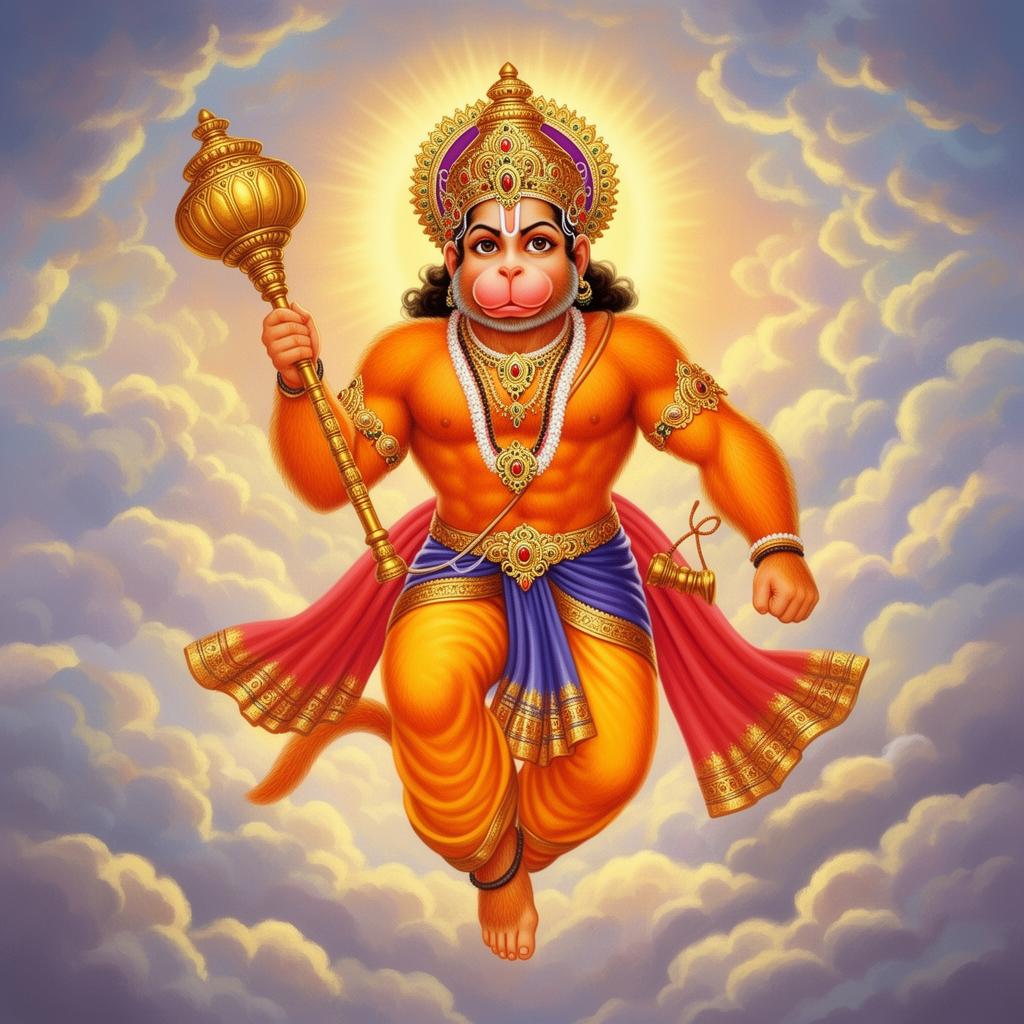
Ashta Hanuman: The 8 Forms of Lord Hanuman, Their Significance, Mantras & Which One to Worship
12 min read
Hanuman Chalisa Meaning, Benefits & How to Chant (हनुमान चालीसा अर्थ)
10 min read
Shani Sade Sati: 7½ Years of Saturn's Shadow - Symptoms, Phases, Remedies & Who's Affected in 2026
11 min read
Rahu Dosh: 11 Symptoms, 5 Real Causes, 9 Powerful Remedies & Mantras (Complete 2026 Guide)
11 min read