Opening Dohas - Lines of Praise Before the Main Chalisa
The Hanuman Chalisa opens with two dohas (couplets) by Tulsidas before the main 40 chaupais. These dohas set the spiritual tone and invoke Hanuman's grace.
Doha 1:
'श्रीगुरु चरन सरोज रज, निज मन मुकुर सुधारि। बरनउँ रघुबर बिमल जसु, जो दायकु फल चारि॥'
Transliteration: Shri-guru charan saroj raj, nij mann mukur sudhari. Baranau Raghubar bimal jasu, jo dayaku phal chari.
Line-by-line meaning:
- 'Shri-guru charan saroj raj' - The dust of the lotus feet of my divine teacher
- 'Nij mann mukur sudhari' - I purify the mirror of my mind with
- 'Baranau Raghubar bimal jasu' - I now describe the pure glory of Lord Rama
- 'Jo dayaku phal chari' - Who bestows the four fruits of life (dharma, artha, kama, moksha)
Doha 2:
'बुद्धिहीन तनु जानिके, सुमिरौं पवन-कुमार। बल बुधि बिद्या देहु मोहिं, हरहु कलेस बिकार॥'
Transliteration: Buddhihin tanu janike, sumirau Pavan-Kumar. Bal buddhi vidya dehu mohin, harahu kales bikar.
Line-by-line meaning:
- 'Buddhihin tanu janike' - Knowing myself as devoid of intelligence
- 'Sumirau Pavan-Kumar' - I remember/meditate on the Son of the Wind (Hanuman)
- 'Bal buddhi vidya dehu mohin' - Grant me strength, wisdom, and knowledge
- 'Harahu kales bikar' - Remove my afflictions and impurities
These two dohas are spiritually critical - they establish humility before chanting. Tulsidas himself called his own intellect 'devoid of merit' (buddhihin) before invoking Hanuman. This humility is the key that opens Hanuman's grace.
Chaupais 1-20: Describing Hanuman's Glory and Powers
Chaupai 1: 'जय हनुमान ज्ञान गुन सागर। जय कपीस तिहुँ लोक उजागर॥'
- Victory to Hanuman, ocean of knowledge and virtues. Victory to the Lord of monkeys, illuminator of three worlds.
Chaupai 2: 'राम दूत अतुलित बल धामा। अंजनि पुत्र पवनसुत नामा॥'
- Messenger of Rama, abode of unmatched strength. Son of Anjani, known as Son of the Wind (Pavan-Suta).
Chaupai 3: 'महाबीर बिक्रम बजरंगी। कुमति निवार सुमति के संगी॥'
- Great warrior with thunderbolt-like body (Bajrangi). You destroy bad thoughts and accompany the wise.
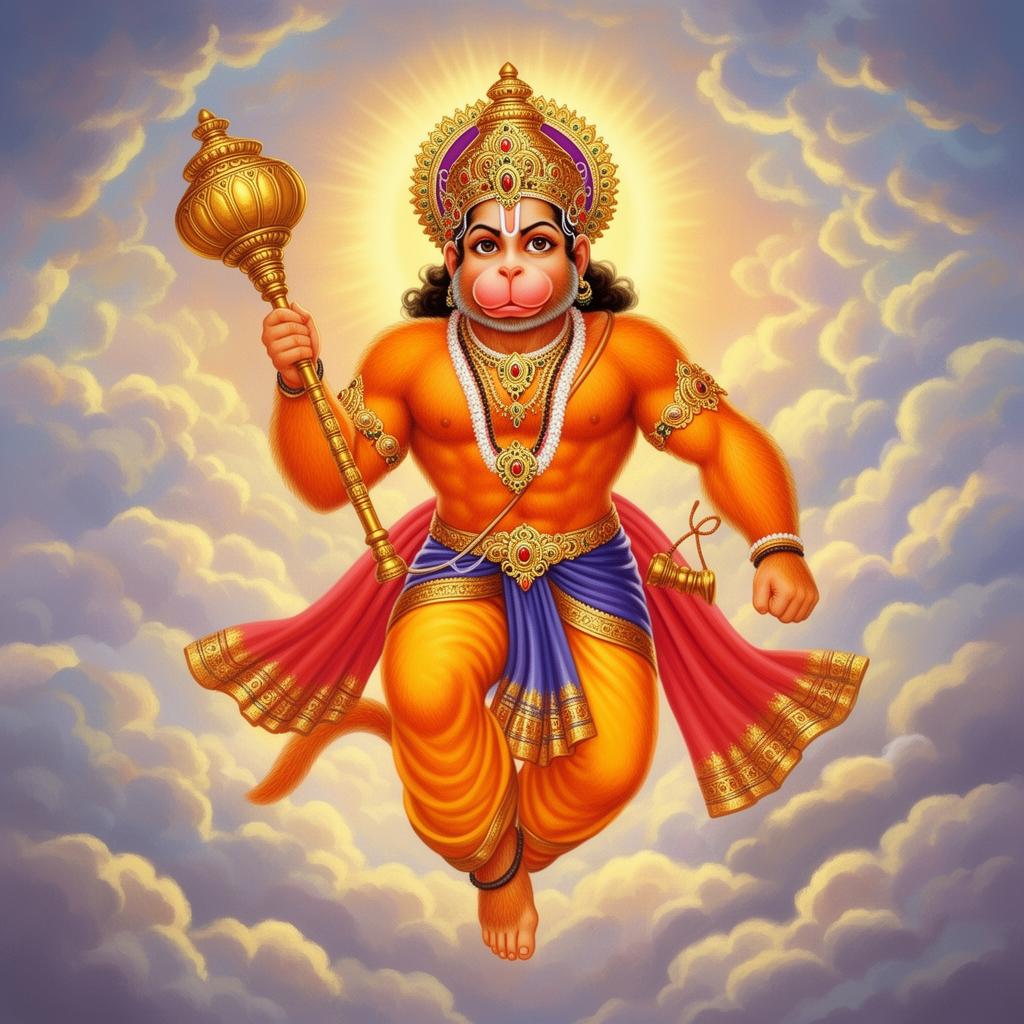
Chaupai 4: 'कंचन बरन बिराज सुबेसा। कानन कुंडल कुंचित केसा॥'
- Golden-bodied (kanchan-varn), beautifully adorned. Earrings in your ears and curly hair.
Chaupai 5: 'हाथ बज्र अरु ध्वजा बिराजै। काँधे मूँज जनेऊ साजै॥'
- Vajra (thunderbolt mace) in one hand, flag in the other. Sacred thread of moonj grass on your shoulder.
Chaupai 6: 'शंकर सुवन केसरी नंदन। तेज प्रताप महा जग बंदन॥'
- Son of Shankar (Shiva via Rudra-incarnation), beloved son of Kesari (your earthly father). Your glory and might are worshipped throughout the world.
Chaupai 7: 'विद्यावान गुनी अति चातुर। राम काज करिबे को आतुर॥'
- Most learned, virtuous, and clever. Always eager to do Rama's work.
Chaupai 8: 'प्रभु चरित्र सुनिबे को रसिया। राम लखन सीता मन बसिया॥'
- You delight in listening to the Lord's stories. Rama, Lakshmana, and Sita reside in your heart.
Chaupai 9: 'सूक्ष्म रूप धरि सियहिं दिखावा। बिकट रूप धरि लंक जरावा॥'
- You took tiny form to show yourself to Sita. You took huge form to burn Lanka.
Chaupai 10: 'भीम रूप धरि असुर सँहारे। रामचंद्र के काज सँवारे॥'
- You took terrible form to destroy demons. You accomplished all of Lord Rama's tasks.
Chaupai 11: 'लाय सजीवन लखन जियाये। श्री रघुबीर हरषि उर लाये॥'
- You brought the Sanjivani herb and revived Lakshmana. The joyful Lord Rama embraced you to his heart.
Chaupai 12: 'रघुपति कीन्हीं बहुत बड़ाई। तुम मम प्रिय भरतहि सम भाई॥'
- Lord Rama praised you greatly: 'You are as dear to me as my brother Bharata.'
Chaupai 13: 'सहस बदन तुम्हरो जस गावैं। अस कहि श्रीपति कंठ लगावैं॥'
- 'A thousand mouths will sing your praises,' saying this, Lord Rama (Lakshmi's husband) embraced you.
Chaupai 14: 'सनकादिक ब्रह्मादि मुनीसा। नारद सारद सहित अहीसा॥'
- Sages Sanaka and others, Brahma and other gods, Narada, Saraswati, and Sheshanaga -
Chaupai 15: 'जम कुबेर दिगपाल जहाँ ते। कबि कोबिद कहि सकैं कहाँ ते॥'
- Yama (death), Kubera (wealth), and rulers of directions - no poet or scholar can fully describe your glory.
Chaupai 16: 'तुम उपकार सुग्रीवहिं कीन्हा। राम मिलाय राज पद दीन्हा॥'
- You did a great favor for Sugriva. You united him with Rama and got him his kingdom back.
Chaupai 17: 'तुम्हरो मंत्र बिभीषन माना। लंकेस्वर भये सब जग जाना॥'
- Vibhishana followed your advice. He became the king of Lanka - the whole world knows this.
Chaupai 18: 'जुग सहस्र जोजन पर भानू। लील्यो ताहि मधुर फल जानू॥'
- The Sun is millions of yojanas away. You swallowed it thinking it was a sweet fruit (as a child).
Chaupai 19: 'प्रभु मुद्रिका मेलि मुख माहीं। जलधि लाँघि गये अचरज नाहीं॥'
- Carrying Rama's ring in your mouth, you leapt over the ocean - no surprise.
Chaupai 20: 'दुर्गम काज जगत के जेते। सुगम अनुग्रह तुम्हरे तेते॥'
- All difficult tasks in the world become easy with your grace.
Chaupais 21-40 + Closing Doha: Surrender & Blessings
Chaupai 21: 'राम दुआरे तुम रखवारे। होत न आज्ञा बिनु पैसारे॥'
- You guard Rama's door. Without your permission, no one can enter.
Chaupai 22: 'सब सुख लहै तुम्हारी सरना। तुम रच्छक काहू को डर ना॥'
- All happiness is found in your refuge. With you as protector, there is fear of none.
Chaupai 23: 'आपन तेज सम्हारो आपै। तीनों लोक हाँक तें काँपै॥'
- You alone can withstand your own power. Three worlds tremble at your roar.
Chaupai 24: 'भूत पिशाच निकट नहिं आवै। महाबीर जब नाम सुनावै॥'
- Ghosts and demons cannot come near, when one chants the name of Mahabir (great warrior).
Chaupai 25: 'नासै रोग हरै सब पीरा। जपत निरंतर हनुमत बीरा॥'
- All illnesses are destroyed, all pain removed, when one constantly chants 'Hanumat Bir'.
Chaupai 26: 'संकट तें हनुमान छुड़ावै। मन क्रम बचन ध्यान जो लावै॥'
- Hanuman frees one from troubles, if one meditates on him through mind, deed, and word.
Chaupai 27: 'सब पर राम तपस्वी राजा। तिन के काज सकल तुम साजा॥'
- Rama is the king of all ascetics. You accomplish all his tasks.
Chaupai 28: 'और मनोरथ जो कोई लावै। सोई अमित जीवन फल पावै॥'
- Whoever brings any wish to you receives unlimited fruit/blessings in life.
Chaupai 29: 'चारों जुग प्रताप तुम्हारा। है परसिद्ध जगत उजियारा॥'
- Your glory shines in all four ages (Satya, Treta, Dwapar, Kali). It is renowned, illuminating the world.
Chaupai 30: 'साधु संत के तुम रखवारे। असुर निकंदन राम दुलारे॥'
- You protect sadhus and saints. You destroy demons. You are beloved of Rama.
Chaupai 31: 'अष्ट सिद्धि नौ निधि के दाता। अस बर दीन जानकी माता॥'
- You grant the eight siddhis (mystical powers) and nine nidhis (treasures). This boon Mother Sita gave you.
Chaupai 32: 'राम रसायन तुम्हरे पासा। सदा रहो रघुपति के दासा॥'
- The elixir of Rama's name is with you. May you forever be the servant of Lord Rama.
Chaupai 33: 'तुम्हरे भजन राम को पावै। जनम जनम के दुख बिसरावै॥'
- Through devotion to you, one attains Rama. The sorrows of many births are forgotten.
Chaupai 34: 'अंत काल रघुबर पुर जाई। जहाँ जन्म हरि भक्त कहाई॥'
- At the time of death, one goes to Rama's abode. There, one is born as a devotee of Hari (Vishnu/Rama).
Chaupai 35: 'और देवता चित्त न धरई। हनुमत सेइ सर्व सुख करई॥'
- No need to think of other gods. Serving Hanuman brings all happiness.
Chaupai 36: 'संकट कटै मिटै सब पीरा। जो सुमिरै हनुमत बलबीरा॥'
- Troubles end, all pain ceases, for one who remembers Hanuman, the mighty warrior.
Chaupai 37: 'जय जय जय हनुमान गोसाईं। कृपा करहु गुरुदेव की नाईं॥'
- Victory, victory, victory to Hanuman, the master. Bless me as my guru would.
Chaupai 38: 'जो सत बार पाठ कर कोई। छूटहि बंदि महा सुख होई॥'
- One who recites this 100 times is freed from bondage and attains great joy.
Chaupai 39: 'जो यह पढ़ै हनुमान चालीसा। होय सिद्धि साखी गौरीसा॥'
- Whoever reads this Hanuman Chalisa attains accomplishment - Lord Shiva (Gaurish) himself witnesses this.
Chaupai 40: 'तुलसीदास सदा हरि चेरा। कीजै नाथ हृदय महँ डेरा॥'
- Tulsidas is forever the servant of Hari (Rama). O Lord (Hanuman), reside in my heart.
Closing Doha:
'पवनतनय संकट हरन, मंगल मूरति रूप। राम लखन सीता सहित, हृदय बसहु सुर भूप॥'
- Son of the Wind, destroyer of troubles, embodiment of auspiciousness - reside in my heart along with Rama, Lakshmana, and Sita, O king of gods.
Understanding deepens the practice:
After reading these meanings, return to chanting. Now each verse carries weight - chaupai 24 isn't just words; you're invoking protection from negative energies. Chaupai 25 isn't just sound; you're asking for healing. Chaupai 31 is requesting siddhis and prosperity. Comprehension transforms ritual chanting into active prayer.
Reader Questions Answered
Does the Chalisa work even if I don't understand the meaning?+
Yes - the Sanskrit/Awadhi mantras work through sound vibration, intention, and Hanuman's grace, even without comprehension. Many illiterate devotees have attained great fruit just through devotional chanting. However, understanding multiplies the effect because: (1) intention becomes specific and aligned, (2) attention doesn't wander, (3) faith deepens through knowing what you ask for, (4) the chanting becomes prayer rather than rote. Start with chanting; gradually learn meaning of 2-3 chaupais per week. Within a few months you'll know the full meaning and your devotion will deepen exponentially.
What does 'siddhi' and 'nidhi' mean in Chaupai 31?+
Ashta Siddhis (8 mystical powers): (1) Anima - becoming tiny, (2) Mahima - becoming huge, (3) Garima - becoming heavy, (4) Laghima - becoming light, (5) Prapti - obtaining anything, (6) Prakamya - fulfilling any wish, (7) Ishitva - lordship, (8) Vashitva - controlling others. Nava Nidhis (9 treasures of Kubera): Padma, Mahapadma, Shankha, Makara, Kachchhapa, Mukunda, Kunda, Nila, Kharva - the nine cosmic treasures of wealth. Chaupai 31 says Hanuman is the granter of all these. Mother Sita herself blessed him with this power after his service in Lanka. This is why Hanuman bhakti brings both spiritual powers AND material prosperity.
Why does Chaupai 18 say Hanuman swallowed the Sun - is that literal?+
This refers to a famous story from baby Hanuman's life. As a child, Hanuman saw the rising sun and mistook it for a sweet red fruit. He leapt into the sky and tried to grab/eat it. Indra threw his vajra (thunderbolt) to stop him - hitting his jaw (which is how he got the name 'Hanuman' = 'one with a broken jaw'). This story shows: (1) Hanuman's natural cosmic power from infancy, (2) his innocent desire (he didn't 'attack' the sun - he wanted a fruit), (3) the origin of his vajra-like indestructible body, (4) the cosmic significance of his strength. It is mythological narration of his divine nature, not historical event.
Is the meaning the same in Hindi and English - any nuance lost?+
Some nuance is unavoidably lost. Tulsidas wrote in Awadhi (a refined dialect of Hindi), which has poetic resonance and rhyme that English cannot fully capture. For example: 'Bajrang' literally means 'thunderbolt-bodied' but the word carries warmth and reverence in Hindi that 'Mighty Hanuman' doesn't convey in English. 'Tej pratap' means 'glory and might' but loses the specific Vedic association with solar radiance. For deepest understanding: chant in original Awadhi/Hindi script, refer to English meaning for comprehension, but rely on sound for devotional effect. Many bilingual practitioners report Hindi version creates more emotional response while English version creates more intellectual clarity. Use both.
About the author
Acharya Vinaya Kapoor · M.A. Sanskrit, Mantra & Stotra Studies
Acharya Vinaya holds an M.A. in Sanskrit from Banaras Hindu University and writes the mantra and stotra commentary on Vandnaa. Her focus is on accurate pronunciation, traditional context, and helping modern readers connect with classical texts.
Meet the Vandnaa editorial team →Explore on Vandnaa
Related Articles
Hanuman Chalisa Benefits in English - 11 Life-Changing Effects of Daily Recitation
10 min read
Hanuman Chalisa Lyrics in Hindi & English (हनुमान चालीसा)
12 min read
Best Time to Read Hanuman Chalisa – Morning or Evening? (सुबह या शाम?)
8 min read
Hanuman Chalisa Pronunciation Guide for English Speakers - Beginner's Help
8 min read