
Understanding Hanuman Chalisa – Meaning & Benefits
The Hanuman Chalisa is not merely a prayer - it is a life-changing spiritual tool. In just forty chaupais framed by two dohas, Tulsidas captured Hanuman ji's entire story and his divine powers in a form simple enough for anyone to memorise and profound enough to transform a life. Yet many devotees recite it every day without ever learning what the words actually mean.
In this article we will walk through the meaning of the Hanuman Chalisa in plain language - so that when you read it, you understand what you are saying. Understanding multiplies devotion, and devotion multiplies the benefit.
🎧 Listen to all aartis, mantras and bhajans in one place - download the Vandnaa App.
Doha (दोहा) Meaning – हनुमान चालीसा
First Doha: 'Shri Guru Charan Saroj Raj, Nij Manu Mukuru Sudhari' - 'With the dust from my guru's lotus feet, I polish the mirror of my own mind.'
The image is beautiful: just as a mirror must be cleaned before it can show a clear reflection, the mind must be purified by the grace of a teacher before it can truly see the divine. Tulsidas begins by bowing to his guru, because no real spiritual learning happens without that first gesture of humility.
Second Doha: 'Buddhiheen Tanu Jaanike, Sumirau Pawan Kumar' - 'Knowing my body to be dull in intellect, I remember Pawan-kumar (Hanuman).'
The meaning is both humble and powerful: we are all imperfect, all limited in understanding. Instead of pretending otherwise, Tulsidas asks Hanuman ji directly for bal (strength), buddhi (intelligence) and vidya (knowledge), and asks him to remove all suffering and distortion from within. This is how every devotee should approach a prayer - admitting weakness first, then asking for grace.
Key Chaupai Meanings (मुख्य चौपाइयों का अर्थ)
Chaupai 1: 'Jai Hanuman Gyan Gun Sagar' - 'Victory to Hanuman, ocean of knowledge and virtue.' The very first line sets the tone: Hanuman is not praised only for his physical power but for his vidya and his sheel - his learning and his character.
Chaupai 5: 'Mahabir Bikram Bajrangi, Kumati Nivar Sumati Ke Sangi' - 'You are the great hero with a body like a thunderbolt. You drive away wrong thinking and accompany those who think rightly.' Hanuman is not just a protector of the body; he is a protector of the mind.
Chaupai 20: 'Bhoot Pishach Nikat Nahin Aavai, Mahabir Jab Naam Sunavai' - 'No ghost or evil spirit comes near when the name of the great hero is chanted.' This is why, when people feel afraid or sense negative energy in a place, they are told to recite the Hanuman Chalisa. The mere sound of his name is a shield.
Chaupai 39: 'Jo Yeh Padhai Hanuman Chalisa, Hoy Siddhi Sakhi Gaurisa' - 'Whoever reads this Hanuman Chalisa attains siddhi, and Lord Shiva himself is the witness.' The closing guarantee of the prayer: the benefits are not mere hope - they are assured by Lord Shiva's own testimony.
10 Powerful Benefits of Hanuman Chalisa
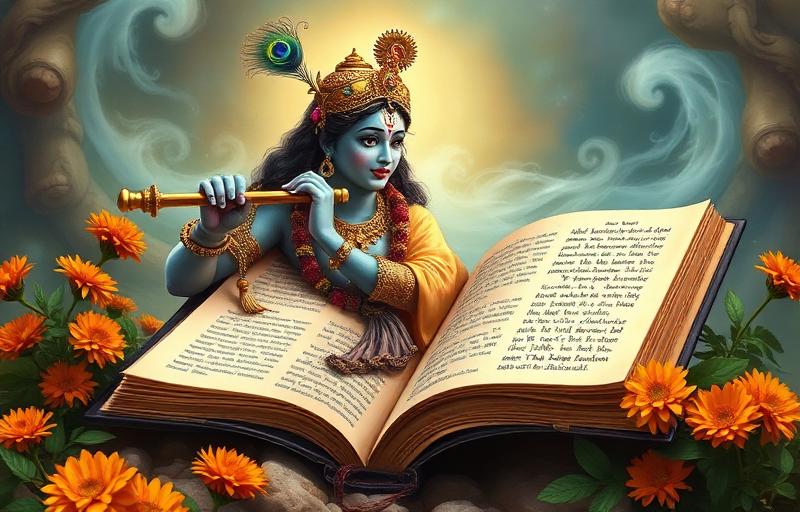
1. Removes fear - every kind of fear, from the everyday anxiety of daily life to the paralysing kind that keeps you awake at night, begins to fade 2. Protection from the evil eye and black magic - the very sound of Hanuman's name is considered a shield against negative influences 3. Relief from Shani dosha - the harsh effects of Saturn in one's horoscope soften for devoted readers 4. Victory in legal matters - many devotees turn to the Chalisa when facing long court cases, and speak of its help afterwards 5. Improvement in chronic health problems - not as a replacement for medicine, but as a quiet force that supports recovery 6. Growth in career and professional life - confidence and clarity increase, and the right opportunities begin to appear 7. Success in examinations - students regularly report better focus and calmer nerves after daily reading 8. Reduction of depression and anxiety - the rhythm of the verses has a measurable calming effect on the nervous system 9. Resolution of relationship conflicts - harmony slowly returns to homes where the Chalisa is read together 10. Spiritual growth - the deepest benefit is that the reader's own mind gradually becomes steadier, purer and more devotional
🎧 Listen to all aartis, mantras and bhajans in one place - download the Vandnaa App.
How to Chant Hanuman Chalisa Correctly
The correct method of chanting the Hanuman Chalisa:
1. Begin with a bath and clean clothes 2. Sit on a clean asana, facing east or north 3. Place a picture or idol of Hanuman ji in front of you 4. Light a diya, offer a small amount of sindoor 5. Start by chanting 'Om Hanumate Namah' three times to settle the mind 6. Then recite both dohas and all forty chaupais in order, without skipping 7. Keep your pronunciation clear - do not rush the words 8. As you read, let your attention rest on the form of Hanuman ji in your mind 9. After finishing, you may also recite the Bajrang Baan for extra protection
If you are unsure of the pronunciation, listen to the Chalisa on the Vandnaa App and follow along. Correct pronunciation multiplies the benefit, but sincere devotion always outweighs perfect Sanskrit.
Why Hanuman Chalisa Relieves Shani Dosha – The Deeper Meaning
One of the most widely-known benefits of Hanuman Chalisa is relief from the effects of Shani (Saturn) in the horoscope - Shani Sade Sati, Shani Dhaiya, or general Shani Mahadasha. But why should Hanuman's prayer reduce Saturn's influence?
The mythological reason: According to the Ramayana and Shiva Purana, when Saturn once tried to ride over Hanuman's head (claiming his right as a powerful graha), Hanuman held him captive between his armpit and a mountain, causing Shani to suffer great pain. When Shani pleaded for mercy, Hanuman released him - and in return, Shani agreed that his negative effects would not touch dedicated Hanuman devotees. This is the story, and it has real spiritual weight.
The deeper karmic reason: Shani represents karma, discipline, hard work, and patience - all qualities that Hanuman embodies perfectly. Hanuman never rested, never sought reward, never complained. He is the living embodiment of the qualities that please Shani. When you meditate on Hanuman's nature through the Chalisa, you begin to absorb those qualities - and Shani has no cause to apply pressure on a person who is already living with discipline and selfless dedication.
Practical guidance for Shani relief:
- Recite Hanuman Chalisa every Saturday (Shanivar) without fail.
- Light a mustard-oil lamp for Shani and a ghee lamp for Hanuman on the same day.
- During Shani Sade Sati (7.5-year Saturn transit over your moon sign), increase to daily recitation.
- Visit a Hanuman temple on Saturdays - offering sindoor is especially auspicious.
Hanuman Chalisa Anushthana – 40-Day & 11-Day Commitment Guide

An anushthana (अनुष्ठान) is a committed, disciplined recitation practice over a fixed period. Hanuman Chalisa lends itself perfectly to this because it can be recited in 10–15 minutes and the language is accessible.
40-Day Anushthana (Chalis Din Ka Anushthana): Commit to reciting Hanuman Chalisa once every day for 40 consecutive days. Begin on a Tuesday or Saturday. The number 40 matches the number of chaupais (40) - completing a full mandala. During this period: eat simple food, speak only truthful words, avoid anger and gossip, donate to the poor on at least one Tuesday, and visit a Hanuman temple on all Tuesdays within the period. The sankalpa (intention) can be anything - a health goal, a career aim, a relationship challenge, or simply deepening your spiritual practice.
11-Day Anushthana (Ekadashi Anushthana): For urgent situations - a court date, a health crisis, a major exam - commit to 11 days of Hanuman Chalisa recited 11 times each day. This is a total of 121 recitations over 11 days. This intensive path is considered especially powerful for removing acute obstacles.
108 Times in a Day: For the most extreme situations, Hanuman Chalisa recited 108 times in a single day (this takes 18–20 hours including breaks) is called a Shatasath Anushthana. Only undertake this with full sankalpa and preparation. Many devotees who have done this describe it as a physically and spiritually transformative experience.
Tracking your anushthana: Use the Vandnaa App to set daily reminders, track your streak, and record your sankalpa - it will hold you accountable.
Conclusion – Read the Chalisa As If It Were Written for You
The Hanuman Chalisa is, at its heart, a love letter from Tulsidas to Hanuman ji - and by extension, from every devotee who reads it to a being of infinite power, infinite devotion, and infinite grace. When you read 'Tumhare Bhajan Ram Ko Pava' (through your devotion, Ram is attained), you are being told something extraordinary: that Hanuman's love for Ram is itself the path, and that by loving Hanuman, you walk that same path.
The forty chaupais are not theology - they are relationship. They describe a being who is strong enough to lift mountains, gentle enough to carry a child on his shoulder (Angada), precise enough to identify a single herb on a mountain of herbs, and humble enough to call himself a servant. This being is available to you - through the Chalisa.
Read the meaning. Let it land. Let it change how you feel as you recite. A Chalisa recited with understanding is worth more than a hundred recited as mere habit.
For audio Hanuman Chalisa with meaning, Sade Sati guidance, and personalised puja reminders, download the Vandnaa App - your complete Hindu devotional companion.
What People Ask Most
What is the meaning of Hanuman Chalisa?+
The Hanuman Chalisa is a hymn of forty verses that describes the power, devotion and glory of Lord Hanuman. It begins with two dohas offered to the guru and to Hanuman ji, followed by forty chaupais that narrate his divine qualities, his service to Lord Rama, and the blessings he grants to his devotees. A detailed line-by-line meaning is given in the sections above.
What are the benefits of Hanuman Chalisa for students?+
For students, daily recitation of the Hanuman Chalisa improves concentration, strengthens memory and builds confidence before examinations. Fear and performance anxiety gradually fade, and many students report that the mind stays calmer and focused for longer during study sessions.
Can I read Hanuman Chalisa at night?+
Yes. Reading the Hanuman Chalisa before sleeping removes fear and gives peaceful, undisturbed rest. It is especially helpful for those who experience nightmares, fear of the dark, or unexplained night-time anxiety. Hanuman ji protects his devotees at every hour.
How many dohas are there in the Hanuman Chalisa?+
The Hanuman Chalisa has two dohas - one at the beginning and one at the end - and forty chaupais in between. The name 'Chalisa' itself comes from 'chalis', meaning forty, referring to those forty chaupais which form the heart of the prayer.
Is Hanuman Chalisa more powerful on Tuesday?+
Tuesdays and Saturdays are considered Hanuman ji's special days, and recitation on these days is believed to bring additional benefit. However, daily reading remains the most rewarding practice. Tuesdays are for intensification; consistency throughout the week is what builds a lasting connection.
About the author
Acharya Vinaya Kapoor · M.A. Sanskrit, Mantra & Stotra Studies
Acharya Vinaya holds an M.A. in Sanskrit from Banaras Hindu University and writes the mantra and stotra commentary on Vandnaa. Her focus is on accurate pronunciation, traditional context, and helping modern readers connect with classical texts.
Meet the Vandnaa editorial team →