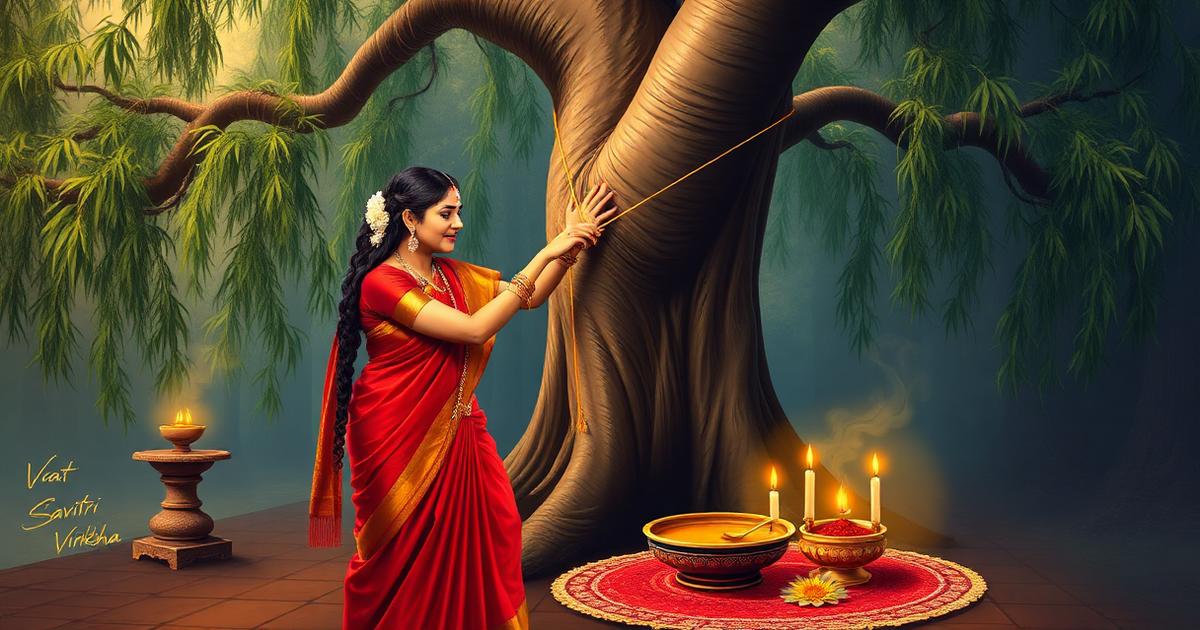
The Vrat That Gave Parvati Her Shiva
There is no other vrat in Sanatan Dharma in which a goddess herself fasted to get the husband she wanted - and won.
Goddess Parvati did. As a young princess, she refused every other suitor. She wanted only Shiva. Her father wanted her to marry Vishnu. So she ran away into the forest with one sakhi (friend) and observed a single 24-hour Nirjala vrat under a Shiva-ling she made of sand. She succeeded.
That vrat - observed by a goddess and immortalized by Markandeya Purana - is Hartalika Teej. Married women observe it for akhand saubhagya (unbroken married happiness, husband's long life). Unmarried girls observe it for manchaha var (a husband as ideal as Shiva - strong, devoted, faithful, kind to wife).
Hartalika Teej 2026 falls on Monday, 14 September 2026 - Bhadrapada Shukla Tritiya. The vrat is Nirjala (no food, no water for 24 hours from sunrise of Sep 14 to sunrise of Sep 15) - the strictest vrat in the entire feminine vrat calendar.
The word 'Hartalika' is a compound of Harat (snatched / taken away) + Aalika (sakhi / female friend). It refers to the moment Parvati's friend literally took her away from her father's palace into the forest to enable the vrat. The vrat begins with a literal escape from family pressure.
This is also why - uniquely among Hindu vratas - it is observed STRICTLY in groups of women. Husbands, fathers, brothers stay out of the puja entirely. Only women see, sing, and celebrate. Children below 12 typically do not observe (it is considered too strict for young bodies).
🙏 The Vandnaa App's Hartalika Teej module includes the full Parvati-Shiv katha audio in Hindi/English, the 16-shringaar checklist, and reminders for parana time so the vrat is broken at the exact muhurat.
Hartalika Teej 2026 - Tithi, Pradosh Kaal Puja & Parana Timing
📅 Vrat Date: Monday, 14 September 2026 🕒 Tritiya Tithi Begins: 4:42 AM, 14 September 2026 🕒 Tritiya Tithi Ends: 6:38 AM, 15 September 2026
🌅 Pratah Kaal Sankalp: 5:55 AM – 7:00 AM, 14 September (vrat begins) 🌇 MAIN PUJA - Pradosh Kaal: 6:32 PM – 8:54 PM, 14 September (most important muhurat - same time Parvati did puja) 🌅 Parana (Vrat Breaking): 5:56 AM – 6:38 AM, Tuesday 15 September 2026 (very narrow window - must complete before Tritiya tithi ends at 6:38 AM)
Why Pradosh Kaal is critical: Hartalika Teej puja MUST be done in Pradosh kaal (sunset to about 2.5 hours after) - same time of day Parvati performed her puja under the moon. Morning puja alone is invalid. If you cannot do Pradosh puja, the vrat is considered incomplete.
Special 2026 Yog - Sarvarth Siddhi + Ravi Yog: The day combines Sarvarth Siddhi Yog (5:55 AM – 5:42 PM) and Ravi Yog (full day) - both highly auspicious. Prayers made today during these yogs are said to be answered with multiplied speed.
Avoid: Rahu Kaal on Monday (7:30 AM – 9:05 AM) - do not start sankalp during this window. Wait till 9:30 AM if you want morning sankalp, or take pre-sunrise sankalp at 5:55 AM.
Pradosh Kaal puja must START at exactly 6:32 PM - set an alarm. Earlier or later by even 15 minutes reduces the punya significantly.
The Original Parvati-Shiv Katha - How a Goddess Got Her Husband
Parvati was born as the daughter of King Himavan (the personification of the Himalayas) and Queen Mainavati. From childhood, she had only one wish - to marry Lord Shiva. She had loved Him in her past life as Sati and chosen Him again in this birth.
But Shiva was a wandering ascetic. He sat in deep tapasya on Mount Kailash, smeared in ash, with snakes around His neck. Society did not consider Him a suitable groom.
King Himavan, like any worried father, decided to marry his daughter to Lord Vishnu - the most magnificent god in the universe. Vishnu agreed. The wedding was being planned.
When Parvati heard, she fell silent. She did not protest in front of her father. But that night, she shared her despair with her closest sakhi (female friend, often named Vijaya in scriptures).
The sakhi made a bold decision: 'If your father will not let you marry the one you love, then I will take you away myself. Let us escape into the forest. There, you can do tapasya for Shiva. He cannot refuse a sincere bhakta.'
That night, the sakhi literally 'snatched' Parvati away (this is the etymological root of 'Hartalika') from the palace. They walked through the deep forest until they reached a cave on the banks of a sacred river.
In the cave, on Bhadrapada Shukla Tritiya, Parvati made a Shiv-Ling out of river sand and her own hair. She sat before it without food, without water, without sleep, for 24 hours. She chanted Shiva's name continuously. The sakhi sat beside her, fanning her with a leaf, ensuring no insect disturbed.
At dusk on Tritiya - exactly the Pradosh kaal - the cave filled with light. Lord Shiva Himself appeared in His full form: tiger skin, snakes, third eye blazing.
'Parvati, your tapasya has won.' He said. 'Today, on Bhadrapada Shukla Tritiya, you are mine. From this day, any woman - married or unmarried - who does this same vrat with the same sincerity will be blessed by me. Married women will receive akhand saubhagya. Unmarried women will receive a husband as devoted as I am to you.'
This was the divine mantra. The vrat was born.
King Himavan, when he heard, came running with the entire palace. He embraced Parvati, sought her forgiveness, and married her to Shiva with full Vedic rites. The wedding of Shiv-Parvati became the cosmic wedding from which all married happiness in the universe is said to flow.
From that day, every Bhadrapada Shukla Tritiya, women across the Hindu world fast, build a Shiv-Parvati murti, and pray for the same blessing.
The deeper meaning: Hartalika Teej is not just a fast for a husband. It is the only major Hindu vrat that celebrates a woman's right to choose her partner - even against family wishes - through sincere tapasya. Parvati did not protest. She did not rebel. She simply went away and showed the universe she would not accept anything less than her truth. That spiritual integrity is what every Hartalika Teej devotee invokes.
Step-by-Step Hartalika Teej Vrat & Pradosh Puja Vidhi
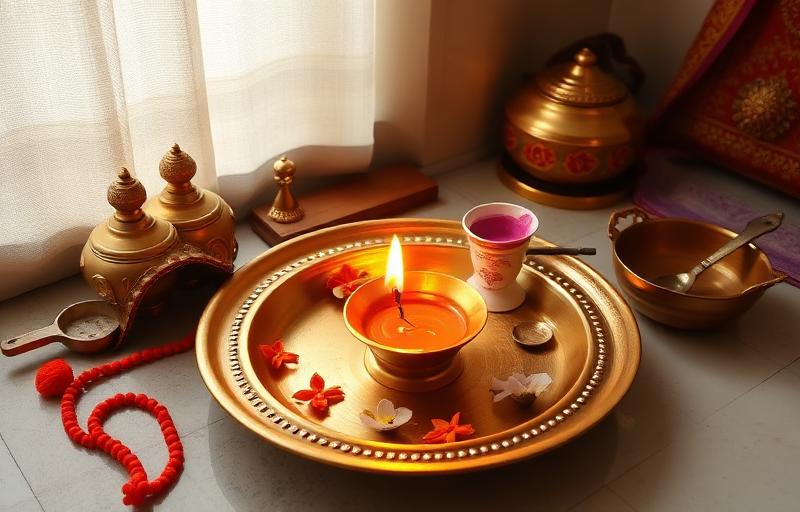
Day Before (Sep 13 evening): Eat one satvik meal before sunset. Apply mehendi on hands. Lay out the 16-shringaar items for next morning. Sleep early.
Step 1 - Pre-dawn Snan & Sankalp (5:00 AM, Sep 14): Bathe before sunrise. Dress in red, green, yellow, or pink saree (NOT black, white, or blue - these reduce vrat punya). Wear all 16 shringaar items: sindoor, bindi, kajal, mehendi, bangles, mangalsutra, payal, bichua, hair clip, comb, kumkum, perfume, flowers, mirror, earrings, alta. The 16-shringaar IS the puja for this vrat - without it, the punya is only 10%.
Sankalp (face east): 'I, [name], on this Bhadrapada Shukla Tritiya, take this Hartalika Teej Nirjala vrat. May my husband [name] live a long, healthy life and may we be together in this and seven future lifetimes. (Or for unmarried: May I receive a husband as ideal, devoted, and faithful as Lord Shiva is to Mata Parvati.) Om Namah Shivaya. Om Gauri-Shankaraay Namah.'
Step 2 - Morning Vrat (6:00 AM – 6:30 PM): No food. No water. No sleep during the day. Read Hartalika katha (above) at least once. Listen to bhajans of Parvati and Shiva. Avoid TV, phone scrolling, gossip. Stay in a clean room or near the puja altar. Married women may visit in-laws' or parents' homes for collective vrat - this is traditional.
Step 3 - Pradosh Puja Preparation (5:30 PM): This is THE vrat. Set up your puja:
- Place a wooden chowki (small platform) covered with red cloth in your puja room
- On it, build a mini shrine of Shiv-Parvati:
- Take fresh river sand or clean clay (about 2 cups)
- Form 3 small ling-shaped figurines: Shiv-Ling (centre), Parvati murti (right of Shiv-Ling), Ganesh murti (left)
- Adorn Parvati murti with a tiny red saree (cotton scrap), small bindi (red dot of kumkum), a small mangalsutra of black thread + gold bead
- Adorn Shiv with bilva (bel) leaves and white chandan
- Place Ganesh with a small modak
- 5-wick ghee diya, 2 small dhoop sticks (sandalwood)
- 16 separate small offerings - one for each shringaar item - placed in 16 small donas (bowls made of leaves)
- Fruits (apples, bananas, pomegranate), kheer, til-gur ladoos
- Bilva (bel) leaves - 21 fresh
- White flowers (datura, white hibiscus) for Shiv; red flowers (gudhal, marigold) for Parvati
Step 4 - Pradosh Puja (6:32 PM SHARP - Sep 14): Set an alarm. Light the diya at exactly 6:32 PM. Begin puja:
- Ganesh first: Offer 11 modaks, akshat, water. Chant 'Om Gan Ganpataye Namah' 11 times.
- Shiv abhishek: Bathe Shiv-Ling with: water, milk, curd, ghee, honey (panchamrit), then water again. Apply white chandan tilak. Place 21 bilva leaves on the ling.
- Parvati alankar: Apply roli + akshat tilak on Parvati. Drape the small saree. Place the mangalsutra. Apply sindoor. Offer red flowers.
- 16-shringaar arpan: One by one, offer each of the 16 shringaar items (from the 16 donas) to Parvati while chanting 'Om Maha-Saubhagyadayinyai Devyai Namah' for each.
- Aarti: Sing Parvati aarti, then Shiv aarti, then Ganesh aarti.
- Bhog: Offer fruits, kheer, til-gur ladoos. After aarti, distribute bhog among other women in the household (NOT to men).
Step 5 - Hartalika Katha & Geet (7:30 PM): Sit in a circle of women. Read the full Hartalika Teej katha aloud (one woman reads, others listen with folded hands). After katha, sing Teej geet (folk songs). Married women bless unmarried girls present with - 'May you receive a Shiva-like husband.'
Step 6 - Night Jaagran (9:00 PM – 4:30 AM): Stay awake the entire night. Do mantra jap, listen to Shiv bhajans, read Shiva Purana. The vrat is incomplete if you sleep before parana. Drink no water - even a sip breaks the vrat.
Step 7 - Parana (5:56 AM – 6:38 AM, Sep 15): Bathe. Do a brief morning aarti to Shiv-Parvati. Feed an unmarried girl (kanya) or a brahmin first - give her the 16-shringaar offerings. Then break the vrat with the bhog (kheer first, then fruits, then a regular satvik meal).
Visarjan: The clay/sand Shiv-Parvati murti is immersed in a pond, river, or your home garden - NOT thrown. Recite 'Punaragamanaaya Cha' (please come back next year) before visarjan.
7 Strict Niyam Every Hartalika Teej Devotee Must Follow
Break any of these and the vrat is reduced or nullified. Read carefully.
1. ABSOLUTELY NO WATER - including no liquid medicine, no chai, no juice, no fruits with high water content. This is true Nirjala. Even a single drop swallowed accidentally voids the vrat. Pregnant women, diabetics, breastfeeding mothers, and women above 60 should do Phalahar version (fruits + milk twice) - and this is religiously valid; do not endanger health.
2. NO sleeping during the day or night. Day naps are forbidden. Night jagran is mandatory. The reason - Parvati did not sleep for 24 hours of her tapasya. Following her, you must not. If you fall asleep accidentally, immediately bathe, do a small atonement puja, and resume.
3. NO arguments, harsh words, or anger - especially with husband (or future husband, in case of unmarried girls). The energy of the entire vrat is unconditional saubhagya. Negative speech to your partner today directly cancels the vrat.
4. Maintain complete 16-shringaar from sankalp to parana. Do not take off any shringaar item until parana is complete the next morning. If sindoor wears off, reapply. If a bangle breaks, immediately replace. Sleeping in shringaar is a deliberate part of the vrat.
5. NO black, white, or blue clothes during the entire 24 hours. These colours are associated with mourning or imbalance. Wear red, green, pink, yellow, orange, or maroon - colours of saubhagya.
6. NO contact with men during the puja. Even husbands, fathers, brothers stay away during Pradosh puja itself. Men should not see, touch, or interrupt the murti or the bhog. After puja and bhog distribution, husbands can take blessing prasad from wife - but not before.
7. NO eating before parana - and parana must happen before 6:38 AM on Sep 15. Even if you wake at 5 AM and feel desperately thirsty, wait. Parana before its muhurat OR after Tritiya tithi ends are both invalid. Set 3 alarms (5:30 AM, 5:50 AM, 6:00 AM) for safety.
Special situations:
- First Hartalika Teej after marriage: The new bride does the vrat at her parental home, not in-laws' (traditional). Mother gives the 16-shringaar set as a gift.
- Married woman whose husband is travelling: Vrat continues fully - speak to husband on phone with love before sankalp. Distance does not affect vrat punya.
- Widow who wishes to do vrat for her late husband's soul: Allowed - observe phalahar version, skip sindoor, pray for his peace and her own future bhakti life.
Complete Hartalika Teej Puja Mantras and Stotra for Shiva and Parvati
The mantras recited during Hartalika Teej puja directly invoke the divine marriage of Shiva and Parvati - asking that the devotee's own marital bond be blessed with the same divine quality. Understanding the mantras transforms the recitation from repetition into meditation.
Opening sankalpa mantra (take water in right hand while reciting): "Mama Akhanda Saubhagyam Suputra Phaladam, Sarva Dukha Prashamanam, Pati-Prana Raksha Karanam Hartalika Teej Vrat Aham Karishye" Meaning: "For the protection and abundance of my family, for the removal of all sorrows, I undertake this Hartalika Teej vrat."
The Shiva Puja mantras during Hartalika Teej: "Om Namah Shivaya" - the Panchakshara mantra, 108 repetitions, offered with bilva leaves. "Om Tryambakam Yajamahe Sugandhim Pushti-vardhanam, Urvarukamiva Bandhanan Mrityor Mukshiya Maamritat" (Mahamrityunjaya) - chanted during the water abhishek of the Shivalinga.
The Gauri Puja mantras: "Om Hreem Shree Gauryai Namaha" - 108 repetitions, offered with red flowers and kumkum. "Ya Devi Sarva Bhuteshu Matru Rupena Samsthita, Namastasyai Namastasyai Namastasyai Namo Namaha" - the great prayer from Durga Saptashati, honoring the goddess in her mother form.
The Hartalika Katha mantra (recited after the katha): "Jai Gauri Parvati Mata, Jai Giriraj Kumari, Gangadhara Shiva Shankar, Dev Namami Tari"
Saubhagya mantras specifically for married women: "Mangalyam Tantu-nanena Mama Jivana Hetuna, Kanthe Badhnami Shubhage Tvam Jiva Sharadah Shatam" - the mantra recited at Hindu weddings; chanting it on Teej renews the blessing of the marital bond.
Nirjala vrat dedication mantra (for the waterless fast): "Shivaya Gauryai Namaste Namah, Pitambaradhara Namah, Phalguna Priya Namah"
Moon prayer at night (Hartalika Teej falls in the evening; the moon is honored): "Om Som Somaya Namaha" - the lunar mantra, 21 repetitions when the moon rises.
Aarti for Hartalika Teej - to be sung at the conclusion of puja: Jai Jai Gaura Parvati Mata, Jai Jai Mahesh Ki Priya Brata...
The Vandnaa app provides audio recordings of all Hartalika Teej mantras with proper Sanskrit pronunciation, the complete Hartalika Teej katha, and the evening aarti - available offline during the fast.
Parvati's 108 Births and Her Devotion to Shiva: The Story Behind Hartalika Teej

Hartalika Teej is rooted in the most extraordinary love story in Hindu mythology - the multiple lifetimes of Parvati's devotion to Lord Shiva, through birth after birth, across cosmic ages. Understanding this story reveals why the festival is considered the highest vrat for married women and a model for devotional perseverance.
The cycle of births: According to the Shiva Purana, the soul we know as Parvati (daughter of Himavat, the mountain king) took 108 consecutive births solely to perfect her devotion to Shiva and earn the right to be his wife. In each birth, she renounced worldly pleasures and performed increasingly intense tapasya (austerity) until, exhausted of all obstacles, the marriage was granted.
The first major birth - as Sati: The primordial form was Sati, daughter of Daksha. She married Shiva against her father's wishes. When Daksha held a grand yagna and deliberately excluded Shiva from the invitation list, Sati went uninvited to confront her father. Daksha insulted Shiva publicly. Unable to bear the dishonor, Sati immolated herself in the yagna fire. This is the origin of the concept of "sati" - though the theological meaning (sacrifice of ego to protect the divine in the spouse) was later distorted historically.
Vishnu's sudharshana chakra and the 51 Shakti peethas: Shiva, devastated, wandered the universe carrying Sati's body. Vishnu, to restore cosmic order, used his sudharshana chakra to dismember Sati's body as Shiva carried it. Wherever a body part fell, a Shakti Peetha (seat of power) was established - there are 51 Peethas across the subcontinent, each housing a powerful goddess temple.
The birth as Parvati - the decisive life: In her most famous birth, as Parvati (daughter of Himalaya), she performed such extreme tapasya - standing on one foot for years, surviving on only leaves, then giving up even leaves (hence "Aparna" - the leafless one) - that the gods were alarmed. The sage Narada finally convinced Himalaya to give her in marriage to Shiva. The cosmic wedding was witnessed by all the gods.
The "Harit" episode and Hartalika: The literal meaning of "Hartalika" is "the one who was kidnapped by her friends." According to the katha, on the eve of the divine marriage, Parvati's friends (sakhi) secretly took her away from the palace and hid her in a forest. There, away from all distractions, Parvati made a clay image of Shiva from sand and performed the all-night puja with complete concentration. Shiva, moved by her devotion, appeared to her in person. The next morning, her friends brought her back and the wedding was arranged. This overnight puja is what devotees re-enact during Hartalika Teej.
The teaching for devotees: Parvati's story is not merely about getting a husband - it is about the soul's persistent, undiscouraged pursuit of union with the divine, across lifetimes of setbacks and purification. The vrat honors this archetypal devotion. For married women, it affirms that the marital bond is a divine arrangement and asks Shiva-Parvati to bless it. For unmarried women, it asks for the same grace that Parvati received - a partner worthy of her devotion.
The Vandnaa app provides the complete Hartalika Teej katha in both Hindi and English with audio narration, so families can listen together during the all-night vigil.
Quick Answers
Can unmarried girls really do Hartalika Teej for getting a husband?+
Yes - and the vrat was originally created by an unmarried Parvati for exactly this purpose. Unmarried girls modify the vrat slightly: they do NOT wear sindoor or mangalsutra (those belong to married women), they wear yellow, pink, or green saree (not red), and they pray for a husband 'as ideal as Lord Shiva is to Mata Parvati' - meaning devoted, faithful, kind, strong. Many young women observe this vrat for 3 consecutive years to receive their wished-for partner. The phalahar version is recommended for unmarried girls under 25 - full nirjala can wait until they are married.
How is Hartalika Teej different from Karva Chauth and Vat Savitri?+
All three are vratas for husband's well-being but differ significantly. Hartalika Teej (Sep, Bhadrapada) - the strictest, Nirjala 24 hours, both married and unmarried women, evening Pradosh kaal Shiv-Parvati puja. Karva Chauth (Oct, Kartik) - Nirjala but only sunrise to moonrise (~12-14 hours), only for married women, sieve-and-moon ritual seeing husband's face. Vat Savitri (May/Jun, Jyestha) - done under banyan tree with 108 thread parikrama, Nirjala or Phalahar both accepted. Many devout women observe all three; each carries different blessings. Hartalika is for choosing the right husband or maintaining akhand saubhagya. Karva Chauth is for husband's longevity. Vat Savitri is for protection from premature widowhood specifically.
Is it necessary to make the Shiv-Parvati murti from sand or clay every year?+
Yes - this is the central requirement of Hartalika Teej. Unlike other vratas where you use the same metal idol every year, Hartalika requires a NEW clay/sand murti each year, made by your own hands in the morning of the vrat. The reasoning: Parvati made it from river sand and her own hair in the cave. Replicating that act with your own hands invokes the same energy. Permanent metal/marble idols can be used FOR DAILY worship, but for the actual Hartalika puja, the sand-clay murti is mandatory. After the vrat, the murti is immersed (not kept) - this is also unique to Hartalika.
Can I drink water if I feel faint or dizzy during the vrat?+
Health comes before vrat - always. If you feel actually faint, dizzy, or unable to continue safely, drink water immediately and convert your vrat to phalahar from that moment. The vrat is now phalahar (not nirjala) - the punya reduces but is still valid. Health-driven necessity is religiously acceptable. After parana, you may do a smaller compensatory phalahar vrat on next Pradosh (Trayodashi) to make up the punya. NEVER let vrat-pride risk a medical emergency. Mata Parvati Herself would not want a devotee to harm her body for the vrat - Her message is sincerity, not self-injury.
Why is Hartalika Teej observed only by women - can men also fast?+
Hartalika Teej is fundamentally a feminine vrat - it celebrates Parvati's agency in choosing her partner, and the feminine power that won Shiva. Men can support the vrat but do not perform the puja themselves. However, husbands can observe a parallel silent fast (without doing the formal puja) on the same day, in solidarity with the wife - this is an emerging modern practice in conscious couples. Husbands typically do this as phalahar (not nirjala) and pray to Lord Shiva for their wife's well-being. This practice has no scriptural prohibition and many priests now bless it. The formal Hartalika Teej puja itself, however, remains a female-only space.
About the author
Pandit Mahesh Trivedi · Festival Traditions & Panchang
Pandit Mahesh leads the festival-date and Panchang content on Vandnaa. He cross-references multiple regional panchangs (Drik, Vaishnava, Bengali, Marathi) for every festival date published on the site.
Meet the Vandnaa editorial team →Explore on Vandnaa
Related Articles
Vat Savitri Vrat 2026: Date, Katha, Puja Vidhi & The 7 Rules Every Married Woman Must Follow
10 min read
Karwa Chauth 2026: Date, Vrat Vidhi, Moon Timing & Complete Katha for Husband's Long Life
10 min read
Sawan Somwar 2026: Dates, Vrat Vidhi, Shiv Mantras & Why Mondays in Sawan Are So Powerful
10 min read
Mahashivratri 2026: Date, 4-Prahar Puja Vidhi, Nishita Kaal Muhurat & Powerful Shiva Mantras
10 min read