Why Seven? The Theology Behind the Number
Hindu cosmology is built on seven. There are seven chakras in the body, seven dhatus (tissues), seven days in the week, seven musical notes (saptak), seven oceans, seven sages (Saptarishi), seven sacred rivers, seven layers of skin, seven layers of speech. Marriage - the most cosmic of human institutions - uses seven to signal that the union must integrate all dimensions of being. Each phera around the fire represents one layer of integration. Until all seven are completed, the marriage is technically incomplete - even if the priest has said 'I now pronounce you'.
The fire (Agni) is the witness because Agni is the only deity present at every Hindu sanskara - birth (he warms the new mother), upanayana (sacred thread), marriage (the seven vows), and death (cremation). To take vows in Agni's presence is to bind them to the very element that will carry the soul to its next destination. Lying to Agni at one's wedding is considered a sin so grave that the lie follows the soul across multiple lifetimes.
The direction of the circumambulation is clockwise (pradakshina) - the bride walks behind the groom for the first three phera (signifying she follows him into worldly life), then steps ahead for the last four (signifying she leads him into dharma, devotion and final liberation). This is an underappreciated detail: Hindu marriage explicitly recognises the wife as the spiritual leader of the couple. The man earns; the woman elevates.
The seven vows are taken in different orders by different communities. The most ancient sequence is from the Brihadaranyaka Upanishad and the Apastamba Grihya Sutra, both of which list: Aahar (food/sustenance), Bal (strength/health), Dhana (wealth), Sukh (comfort/happiness), Praja (progeny), Ritu (seasons/all-time companionship), Sakhya (friendship/spiritual bond). We follow this ancient order below.
Vows 1-3: Food, Strength, Wealth (Material Foundation)
1. FIRST PHERA - Food & Sustenance (Aahar)
Mantra: Om Eshe Ekapadi Bhava - 'You will be my first foot'
Bride's vow: I will care for our home so that there is always food, hospitality and order. I will not waste; I will share with guests and the needy.
Groom's vow: I will work to provide food and sustenance for our family. I will not be lazy. I will share my earnings transparently. I will respect the food you cook.
Meaning: The first phera locks down the most basic level - survival. Many marriages fail not because of lack of love but because of unresolved money-and-food anxieties. This vow asks the couple to commit before anything else: we will not let hunger or insecurity destroy us. The 'first foot' metaphor means: when life walks forward, this is the first step they take together.
2. SECOND PHERA - Strength & Health (Bal)
Mantra: Om Urje Dwipadi Bhava - 'You will be my second foot - of strength'
Bride's vow: I will protect your physical, mental and spiritual strength. I will not let you become weak through my words, my temper or my demands. I will keep our home a place of healing.
Groom's vow: I will keep myself fit and well. I will guard your strength and not exhaust it with insensitive expectations. I will be your shield when you are vulnerable.
Meaning: Health is the second pillar after food. A couple where one partner is constantly draining the other's energy cannot last. This vow makes both responsible for each other's vitality - not just disease-management but the daily energetic dynamic between them.
3. THIRD PHERA - Wealth (Dhana)
Mantra: Om Raysposhaya Tripadi Bhava - 'You will be my third foot - of wealth'
Bride's vow: I will manage household wealth wisely. I will not encourage extravagance. I will value what you earn. I will contribute through my own work and skill (this clause is increasingly explicit in modern weddings).
Groom's vow: I will earn through righteous means. I will not hide wealth from you. I will not be miserly toward you or your family.
Meaning: The third phera transitions from raw survival to surplus. Money is the most common reason couples fight; making the vow explicit at the wedding pre-empts many later conflicts. The Sanskrit word 'Rayi' implies not just money but all forms of prosperity - children, land, knowledge, reputation. Both must commit to growing all of these together, not separately.
Vows 4-7: Happiness, Children, Seasons, Friendship
4. FOURTH PHERA - Happiness (Sukh)
Mantra: Om Mayobhavaya Chatushpadi Bhava - 'You will be my fourth foot - of happiness'
Bride's vow: I will bring joy to our home through my words, music, festivals, hospitality and the way I welcome you each day. I will not let drudgery overtake celebration.
Groom's vow: I will make you happy. I will not take your happiness for granted. I will participate in festivals, gifts and small joys. I will not be a silent provider - I will be a present husband.
Meaning: Past three vows are about resources; this one is about quality of life. A home with food, health and money but no laughter is a failure. The vow makes happiness an active responsibility, not a passive hope.
5. FIFTH PHERA - Children (Praja)
Mantra: Om Prajabhyaha Panchapadi Bhava - 'You will be my fifth foot - of children'
Bride's vow: I will be a mother to our children - biological or adopted - with love, patience and the right values.
Groom's vow: I will be a father to our children. I will participate in their raising, not delegate everything. I will respect your role as mother and consult you in all decisions about them.
Meaning: For couples who have biological children, this vow is about parenting partnership. For couples who cannot or choose not to have biological children, the modern interpretation is broader: 'praja' includes any next-generation responsibility - adopting children, mentoring nieces/nephews, contributing to children of the community. The vow is about generativity, not just biology.
6. SIXTH PHERA - All-Time Companionship (Ritu)
Mantra: Om Rituvyaharaya Shatpadi Bhava - 'You will be my sixth foot - of all seasons'
Bride's vow: I will stay with you across all life seasons - youth and old age, prosperity and loss, health and illness, joy and grief.
Groom's vow: I will stay with you across all life seasons. I will not leave when you are unwell, ageing or facing difficulty. The promise is for all weather, not fair weather.
Meaning: This is the most explicit anti-divorce vow. 'Ritu' literally means season. Spring marriages are easy; winter marriages are hard. The vow specifically commits to winter - to being together when there is no romance, no money, no novelty, only mutual presence. This is also the vow that distinguishes Hindu marriage from a contract - a contract has exit clauses; this vow has none.
7. SEVENTH PHERA - Friendship & Spiritual Bond (Sakhya)
Mantra: Om Sakhi Saptapadi Bhava - 'You will be my seventh foot - of friendship'
Bride's vow: I will be your best friend, before being your wife. I will tell you the truth even when it hurts. I will be the soul-companion you walk dharma with.
Groom's vow: I will be your best friend. I will share my deepest thoughts. I will not relegate you to housekeeper or co-parent - I will be your equal in dharma and moksha. I will help you grow spiritually as you help me.
Meaning: This is the most subtle and most binding vow. The previous six are about life-management. This one transforms the marriage from a partnership into a soul-bond. The Sanskrit word 'sakha' is the same word Krishna uses for Arjuna - a friend with whom you can be entirely honest, before whom you have no masks. After the seventh phera, the priest declares 'Saat phere lekar Tum mere ho gaye' (after seven steps, you are mine) - Hindu law and shastra both consider the marriage complete only after this seventh circumambulation.
Modern Wedding Practice & How to Make the Vows Real
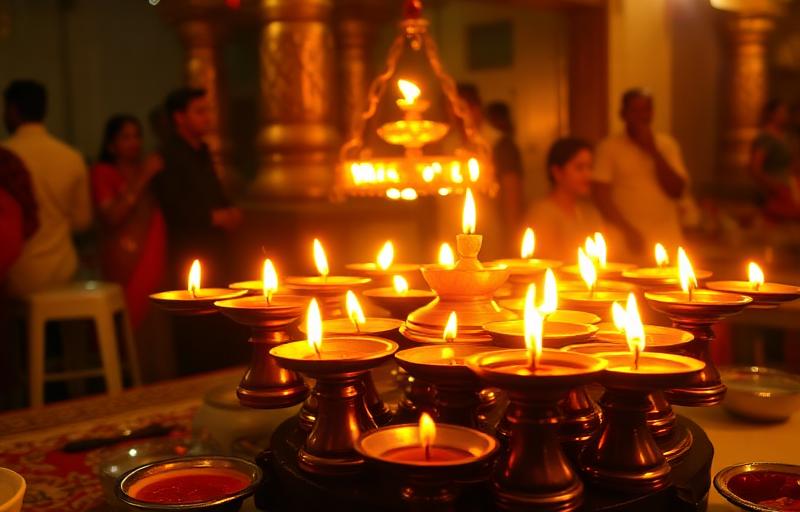
In most modern weddings, the seven vows are recited in Sanskrit by the priest in 90 seconds while the couple walks around the fire, and the bride and groom often don't understand a word. This is technically valid (the Sanskrit mantras carry the binding power) but spiritually thin. Here is how to make the saat phere meaningful in a contemporary ceremony.
Before the wedding (one week prior):
- Read the seven vows together with your partner. Discuss what each one means for your specific situation. Are there money conflicts you need to address before vow 3? Health issues before vow 2? Career-vs-children questions before vow 5?
- Write your own personal addition to each vow - a one-line specific promise that fits your relationship. Example for vow 4 (Happiness): 'I promise to put down my phone when you walk into the room.'
- Have the priest brief you the day before on the order and what he will chant. Most priests are happy to walk the couple through it if asked.
During the ceremony:
- Walk slowly. The default speed is too fast; ask the priest to pace at 30 seconds per phera. This is your most important religious act of life; do not rush it.
- At the start of each phera, exchange a brief eye-contact and a small nod - this silent gesture between two souls means more than the Sanskrit being recited.
- Have a translator (a relative or friend) speak the meaning of each phera in Hindi or English at a low voice, ideally for both family sides - it makes the ceremony intelligible without disrupting it.
After the wedding (the first year):
- Once a month, on the date of your anniversary (e.g., 14th of every month if you married on 14th), do a 'vow-check' - sit together for 10 minutes and ask: 'Which of the seven vows are we honouring? Which are we struggling with?' This monthly ritual catches problems early.
- On every anniversary (full year), repeat just the seventh vow (Sakhya) together. The seventh is the soul-vow and the one that can be re-strengthened any time.
Why this matters: A couple who knows what they vowed treats marriage differently from a couple who walked seven mechanical rounds. The Sanskrit binding works regardless, but the daily lived experience - the actual quality of the marriage - depends entirely on whether the vows are remembered or forgotten in the busy years that follow.
Frequently Asked Questions
Is the wedding legally invalid if we did not complete all 7 pheras?+
Under the Hindu Marriage Act 1955 (Section 7), a marriage is solemnised by 'customary rites and ceremonies of either party', and where the saptapadi (seven steps) is part of those customs, the marriage is complete only on the seventh step. The Supreme Court of India has ruled that for couples whose customs require saptapadi, an incomplete ceremony is technically not a valid Hindu marriage. However, registration under the Special Marriage Act, civil registration, and 7+ years of cohabitation can establish marriage by other means. If the saptapadi was incomplete due to a fire issue or interruption, repeat it on the very next auspicious muhurat - the rest of the ceremony does not need to be redone.
Do the bride and groom both speak vows aloud, or only the priest?+
Traditionally only the priest chants the Sanskrit mantras while the couple walks; the vows are taken on by intention, not by spoken consent. Modern weddings, however, often have the bride and groom repeat the meaning of each vow in Hindi or English after the priest - this is an excellent practice and explicitly recommended for clarity. Some couples also exchange a small ring or token after each phera as a physical reminder. The Sanskrit binding is sufficient; the spoken modern vows are additive devotion, not legal necessity.
What happens if one vow is genuinely broken (e.g., physical abuse)?+
Vows broken by abuse, infidelity, abandonment or chronic disrespect destroy the spiritual foundation of the marriage regardless of legal status. Hindu shastra recognises specific grounds for separation (Vasishtha Smriti permits a wife to remarry if husband is missing 8+ years, impotent, an outcaste, mentally ill, or abandoning her). The vows are sacred but not chains for victims. Modern interpretation: the wronged party is released from the vow that the other party has violated; counseling, family mediation and ultimately legal action are dharmic responses to vow-breaking. Staying in a vow-violated marriage 'for the sake of dharma' is itself adharma.
Can same-sex couples take saat phere in a Hindu ceremony?+
Hindu shastra is more permissive than commonly assumed - there are temple references (Khajuraho, Konark) and Puranic stories (Ila's gender transformation, Shikhandi) showing acceptance of gender fluidity. The 2018 Supreme Court decriminalisation of homosexuality and the 2023 same-sex marriage debate are recent legal developments. Some progressive priests (particularly in cities and abroad) do conduct full Hindu wedding ceremonies for same-sex couples including saat phere. The vows themselves are gender-neutral in spirit - food, strength, wealth, happiness, generativity, all-season companionship and friendship apply to any two committed souls. Whether the wedding is legally registered depends on the country and state, but the spiritual ceremony itself is increasingly available.
About the author
Anjali Mehta · Editor, M.A. Religious Studies
Anjali is the managing editor for Vandnaa and oversees the festival and vrat coverage. She holds an M.A. in Religious Studies and reviews every published article for accuracy, accessibility, and tradition-fidelity.
Meet the Vandnaa editorial team →