How Hindu Faith Came to Fiji
Hindu presence in Fiji began in 1879, when the first ship carrying Indian indentured labourers, known in later years as girmitiyas after the girmit or agreement they signed, arrived to work the islands' sugar plantations. Over the following decades, tens of thousands more arrived from across India, bringing with them the worship of Rama, Krishna, Shiva and Devi that would take root across the Pacific islands.
The hardships of indenture were considerable, yet devotion endured, passed down through families who built the first small shrines from whatever materials were at hand, long before grand temples became possible.
Temples and Organisations That Sustained the Faith
As the community grew and prospered, mandirs both grand and modest rose across Fiji's towns and villages, tended by devotees descended from Hindi, Tamil and Telugu-speaking indentured families alike. Organisations such as the Then India Sanmarga Ikya Sangam (TISI Sangam) and various Sanatan Dharma bodies have long worked to maintain temples, run schools and preserve traditional practice across the islands.
Some South Indian temples in Fiji also observe the traditional devotional walk of Thimithi, undertaken by devotees as a vow of faith to Goddess Mariamman, a practice carried faithfully from South India and still honoured today.
Significance for Devotees
For Fiji's Hindu community, faith has long served as an anchor of identity in a nation shared with Indigenous Fijian and other communities. Devotees believe that the perseverance of their ancestors through the girmit years was itself sustained by unwavering faith, and temples today stand as living memorials to that endurance.
As per tradition, families continue to observe daily puja, seasonal vrats and life-cycle samskaras, ensuring that the devotional practices carried across the Pacific over a century ago remain very much alive.
Festivals That Keep the Faith Alive
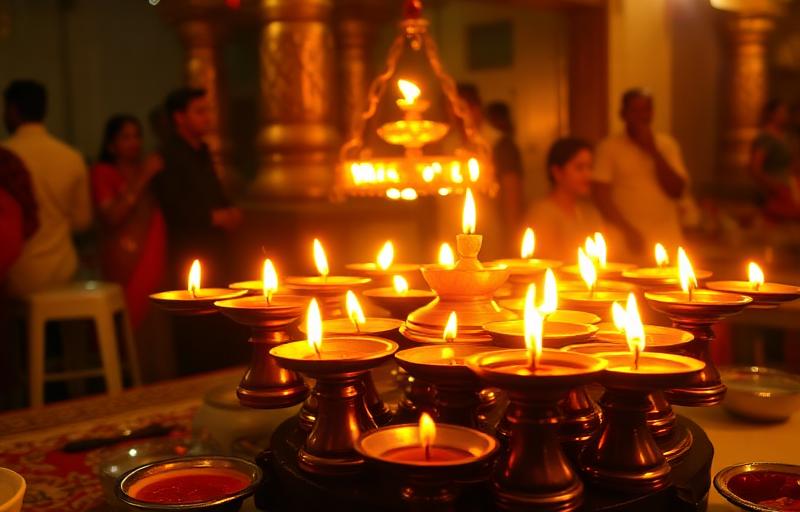
Diwali is observed as a public holiday in Fiji, celebrated with lit homes, sweets and community gatherings across the islands, while Holi and various temple utsavams also draw devotees together each year. Girmit Day, observed on 14 May, honours the memory of the ancestors who first arrived, a date now woven respectfully into the community's calendar alongside its religious festivals.
These celebrations, held far from India yet true to its traditions, keep younger generations of Fijian Hindus connected to a heritage carried across the ocean by their great-grandparents.
Experiencing Fiji's Hindu Heritage Today
Visitors to Fiji can find mandirs across major towns such as Nadi, Lautoka and Suva, many welcoming respectful guests during regular puja hours. The Sri Siva Subramaniya Temple in Nadi, with its brightly painted South Indian style gopuram, is among the most visited by travellers curious about the island's Hindu community.
As with any mandir, modest dress and quiet respect within the sanctum are appreciated by devotees and priests alike.
A Simple Mantra and the Takeaway
Devotees across Fiji often begin their prayers with "Om Namah Shivaya" or the Hanuman Chalisa, verses that travelled with the girmitiyas and are still recited in homes and temples today. Elders often remind younger family members that the very presence of these prayers on the islands is a testament to faith that refused to fade.
Fiji's Hindu heritage is, at its core, the story of a small agreement, a girmit, that could not contain the far larger devotion carried within it. Worship here, as everywhere, is an act of faith and love, not a transaction.
Quick Answers
Who were the girmitiyas?+
The girmitiyas were Indian indentured labourers who came to Fiji from 1879 onward under agreements, called girmit, to work on sugar plantations; their descendants form much of Fiji's Hindu community today.
Is Diwali celebrated as a public holiday in Fiji?+
Yes, Diwali is a national public holiday in Fiji, celebrated with lit homes and community gatherings across the islands.
What is a well-known Hindu temple visitors can see in Fiji?+
The Sri Siva Subramaniya Temple in Nadi, known for its colourful South Indian style gopuram, is among the most visited by travellers interested in Fiji's Hindu heritage.
About the author
Pandit Mahesh Trivedi · Festival Traditions & Panchang
Pandit Mahesh leads the festival-date and Panchang content on Vandnaa. He cross-references multiple regional panchangs (Drik, Vaishnava, Bengali, Marathi) for every festival date published on the site.
Meet the Vandnaa editorial team →