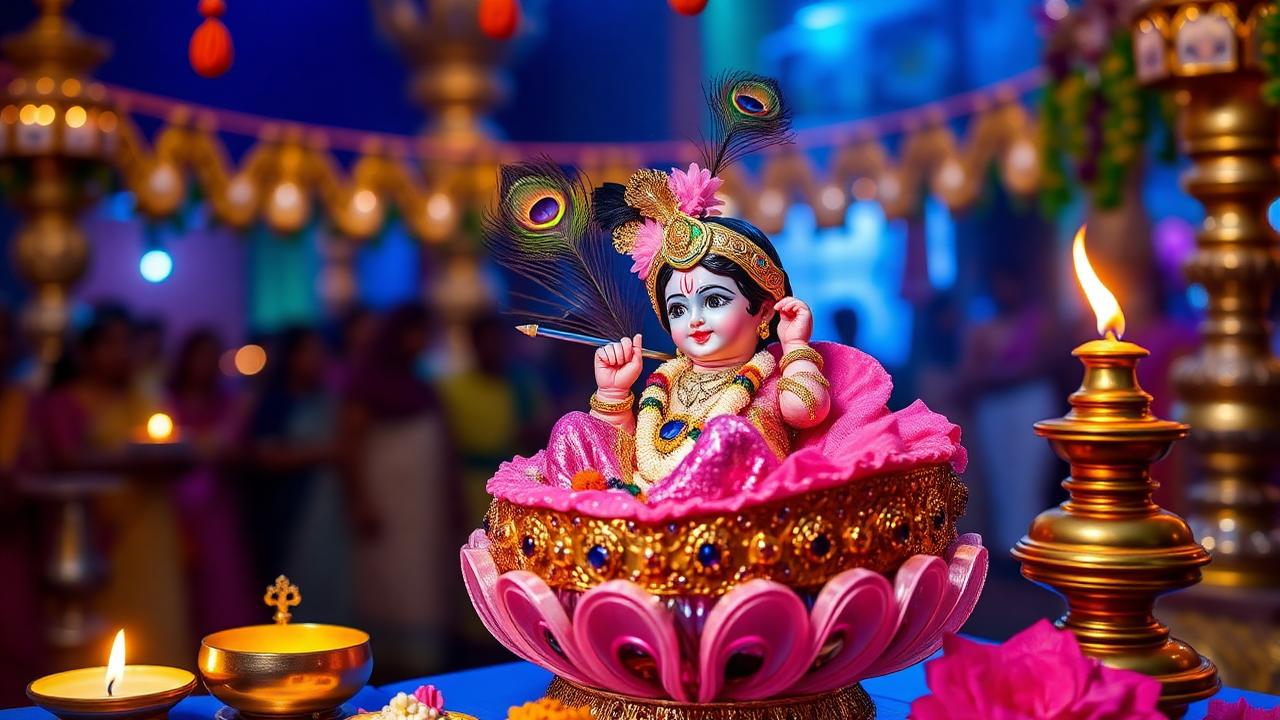
The Festival of Two Stories - and the Loudest Joy in Hinduism
Of all Hindu festivals, Holi is perhaps the most universally recognized internationally - even non-Hindus across the world hold 'Holi colour parties'. But few realize that what looks like a fun colour-throwing celebration is actually built on two profound spiritual stories woven together.
Story 1 (Holika Dahan, the night before): Prahlad - the 5-year-old devotee of Vishnu - was saved from his evil aunt Holika's fire. The bonfire on Phalguna Purnima night burns the symbolic Holika and celebrates devotion's victory over arrogance.
Story 2 (Rangwali Holi, the day): Young Krishna, dark-skinned, asked his mother Yashoda why fair-skinned Radha would not love him because of his complexion. Yashoda smiled and said, 'Then go colour her face with whatever colours you like - and she will be like you.' Krishna chased Radha through Vrindavan, painted her face, and the gopis joined in. That day's chaotic colour-play became the festival of Rangwali Holi.
Holi 2027: Holika Dahan falls on Wednesday, 3 March 2027 evening. Rangwali Holi (the colour day) is Thursday, 4 March 2027.
Holi marks the END of winter and the FULL ARRIVAL of spring (Vasant Panchami announced spring 40 days earlier; Holi celebrates it). It is also the largest community festival in the Hindu calendar - caste, age, gender, even social status dissolves on Holi day. This is intentional and scriptural - Krishna designed Holi to be the day humanity forgets all separations.
🙏 The Vandnaa App's Holi module includes the full Prahlad-Holika katha audio, the 12 colour-mantras chanted while exchanging colors with elders, and a 'safe Holi' chemical-free natural colour guide.
Holika Dahan 2027 - Date, Muhurat & Step-by-Step Bonfire Vidhi
Holika Dahan must happen at the right muhurat - too early or too late significantly reduces punya. Get this right and the year ahead is purified for your entire family.
📅 Holika Dahan Date: Wednesday, 3 March 2027 🕒 Purnima Tithi Begins: 3:11 AM, 3 March 2027 🕒 Purnima Tithi Ends: 12:09 AM, 4 March 2027 🔥 Holika Dahan Muhurat: 6:42 PM – 9:11 PM, 3 March 2027 (during Pradosh Kaal, after Bhadra ends) Bhadra Tithi: 5:21 PM – 6:42 PM (Holika Dahan should NOT happen during this - wait until 6:42 PM)
Why timing matters: Holika Dahan during Bhadra is considered inauspicious and can bring family discord for the year. Many people make the mistake of lighting the bonfire at sunset (around 6 PM in north India) without checking - but in 2027, Bhadra ends at 6:42 PM, so the safe start is 6:42 PM.
Bonfire Setup (start preparing 1 week in advance):
- Choose a location: outdoor courtyard, residential park, community ground (not inside the house)
- Gather wood: dry mango branches preferred; cow dung cakes (4-5)
- An effigy of Holika (made of dried grass, twigs, old cloth) tied to a central pole - this is what gets burnt
- Items for offerings: raw chana (chickpeas, still in green pods), wheat ears, gehun ki bali, til, mustard seeds, gud
- Coconut, supari, paan, akshat
- Red kalawa thread, roli, kumkum
Step 1 - Pre-Dahan Worship (5:30 PM): Before lighting, perform a brief Ganesh + Holika worship. Apply roli + kumkum tilak on the central pole (representing Holika). Tie a red kalawa around it 7 times while chanting 'Om Hreem Holikaayai Namah'. Place coconut, supari, akshat at the base.
Step 2 - Family Gathering (6:30 PM): All family members gather around the bonfire. Each person carries a small bundle of their personal offerings (raw chana, wheat ears, gud, til). The eldest male of the family holds the lighting torch.
Step 3 - Lighting at 6:42 PM: The eldest lights the bonfire from the south side (Yama's direction - symbolises burning of negative karma). The fire grows. Everyone stands in a respectful circle.
Step 4 - 7 Parikramas (Most Important): The entire family walks 7 times clockwise around the bonfire, carrying their offerings. With each round, throw your offerings into the fire while saying:
'Om Holikaayai Namah. May my mistakes of this year be burnt. May my fears be burnt. May my anger be burnt. May my arrogance be burnt. As Holika was reduced to ashes for her cruelty to Prahlad, may all my wrong tendencies be reduced to ashes today.'
Step 5 - Roasting Wheat & Chana (Symbolic): Children traditionally roast some chana and wheat-ears in the bonfire and eat them - this signifies that the harvest of the past year is offered to Agni first before being eaten.
Step 6 - Closing Aarti (8:30 PM): Sing the Holika Aarti, then the special Narsimha Aarti (because Narsimha protected Prahlad from Holika's fire - He is the protector of Holi devotees). Conclude with collective chant of 'Holika Mata ki Jai! Bhagavan Vishnu ki Jai!'
Step 7 - Collect ashes next morning: On Holi day morning, collect a small handful of ash and store in a clean cloth pouch. This is sacred - it is said to remove evil eye when sprinkled around a home or applied to a baby's forehead.
The Prahlad-Holika Story - Why Devotion Always Defeats Cruelty
King Hiranyakashipu had received a boon from Brahma making him nearly invincible: he could not be killed by man or animal, by day or night, indoors or outdoors, by weapon or any element. He declared himself God and banned all worship of Vishnu in his kingdom.
His own son Prahlad was born a Vishnu devotee - a fact Hiranyakashipu could not tolerate. From age 5, Prahlad would not stop chanting 'Om Namo Narayanaya'. Hiranyakashipu tried multiple times to kill him: pushing him off a cliff, feeding him poison, having elephants trample him. Each time, Vishnu protected him invisibly.
Then Hiranyakashipu remembered his sister Holika. She had received her own boon: a special shawl that made fire unable to burn her. Hiranyakashipu had a plan.
'Holika, my dear sister,' he said. 'Sit on a pyre with Prahlad on your lap, draped in your fire-proof shawl. The boy will burn while you are protected. Then this devotion-disease in my family will end.'
Holika agreed. The pyre was built. She climbed onto it with Prahlad - who, all the while, was peacefully chanting Vishnu's name with closed eyes. The pyre was lit.
As the flames rose, something miraculous happened. A sudden gust of wind blew the protective shawl OFF Holika and ONTO Prahlad. Holika was instantly engulfed in flames. Prahlad sat untouched, still chanting Hari's name, the shawl wrapped around him.
Holika died screaming. Prahlad walked out unharmed.
Hiranyakashipu was shaken but not yet defeated. (He was finally killed by Lord Vishnu's Narsimha avatar 2 months later, on Vaishakha Shukla Chaturdashi - Narasimha Jayanti.) Prahlad eventually became king of his lineage and the great-grandfather of Bali, who would later be tested by Vamana avatar.
The night Holika died, the entire kingdom - the same kingdom that had been forced to ban Vishnu's name for years - gathered around bonfires to celebrate their freedom. They threw whatever they had at hand into the fire - old grudges, fears, regrets - symbolically burning their old self alongside Holika.
From that day, every Phalguna Purnima night, every Hindu home lights a Holika Dahan bonfire. The flames represent every form of arrogance burning. The boy who walked out unharmed represents every devotee who survives life's worst tests through Vishnu's name.
The deeper lesson: Holika did not die because of weakness - her shawl was perfect, her boon was real, the fire was burning her body. She died because she used a divine gift (her shawl) for an evil purpose. The universe took the shawl back. This is the warning embedded in every Holika Dahan: gifts, talents, blessings, even spiritual powers - used for harm, return to the giver as ash. Used for protection of the innocent, they multiply infinitely.
Rangwali Holi (March 4) - Krishna Katha, Colour Significance & 7 Mantras
Why does Krishna play Holi? When young Krishna was growing up in Vrindavan, his dark complexion bothered him. Radha and the gopis were fair-skinned. He worried Radha would not love him. He went to his mother Yashoda crying. She laughed and gave him a wise answer:
'Krishna, do not worry about colour. Go and colour Radha's face yourself. Then she will be the same colour you choose. Go play with colours together - and let them know that LOVE has no colour at all.'
Krishna ran into Vrindavan with bowls of colour and chased Radha. The gopis joined. The boys joined. Soon the whole of Vrindavan was a kaleidoscope of laughing, colour-stained, no-longer-distinguishable bodies.
That day was Phalguna Purnima - the day after Holika Dahan. From that day onwards, every Hindu plays Holi remembering: caste, status, colour, age, gender - all dissolve when love takes over.
Rangwali Holi 2027: Thursday, 4 March 2027.
The 7 Traditional Colours and Their Meanings:
- Red (lal) - Love, fertility, marriage; thrown on married couples for blessings
- Yellow (peela) - Knowledge, friendship, harvest; thrown on children for protection
- Green (hara) - Health, new beginnings, vegetation; thrown on the sick for healing
- Pink (gulabi) - Joy, romance; thrown on young couples
- Blue (neela) - Krishna's complexion, vastness; thrown on devotees seeking Vishnu's grace
- Orange (narangi) - Saffron, renunciation; thrown on saints and the spiritually inclined
- Purple (baigani) - Royalty, mystery; thrown sparingly, on wise elders
7 Holi Mantras (One Per Colour Application):
1. When applying red: 'Om Aim Hreem Kleem Chamundayai Vichche.' (Devi blessing for vitality.)
2. When applying yellow: 'Om Saraswatyai Namah.' (Knowledge bless to the receiver.)
3. When applying green: 'Om Namo Bhagavate Dhanvantaraye.' (Lord Dhanvantari, healer.)
4. When applying pink: 'Om Kleem Krishnaaya Govindaaya Gopijana-Vallabhaaya Swaha.' (Krishna's love mantra.)
5. When applying blue: 'Om Vishnave Namah.' (Vishnu's protection.)
6. When applying orange: 'Om Namah Shivaya.' (Shiva's grace.)
7. When applying purple: 'Om Namo Bhagavate Vasudevaya.' (Krishna's 12-syllable blessing.)
The First Application (Family Tradition): Before stepping outside, family members apply colour to each other in a specific order: 1. Children touch elders' feet first 2. Elders apply a tilak of colour on each child's forehead, blessing them 3. Couples apply colour on each other (married women apply on husband first) 4. Then the family steps out to community Holi
Bhang & Thandai (Cultural): A traditional Holi drink is Thandai - milk + almonds + cardamom + rose syrup. In some regions, bhang (a mild cannabis-leaf paste) is added. Bhang is religiously associated with Lord Shiva. Modern Hindus do this responsibly - bhang is not for children, pregnant women, or those on medication. Pure thandai (without bhang) is the safer family option.
Holi Foods:
- Gujiya (sweet stuffed pastry)
- Malpua (sweet pancake)
- Dahi vada
- Pakora
- Rasmalai
- Thandai
Natural Holi Colors: How to Make Herbal Gulal at Home Safely
The chemical colors sold commercially for Holi often contain harmful substances - lead, industrial dyes, glass powder, and caustic chemicals - that cause skin, eye, and lung problems. The ancient tradition of Holi used entirely natural, plant-based colors that were beautiful, safe, and often medicinal. Here is how to recreate them.
Red (Lal rang) - Rose petals and hibiscus: The most traditional red is made from dried red rose petals or dried hibiscus flowers. Dry the petals completely, then grind to a fine powder. Mix with dried arrowroot powder (50:50) for the base. This creates a soft, fragrant red gulal that is gentle on skin. Alternatively, boil beet roots in water, let it cool, and use as liquid color. Deep red can also be made from powdered red sandalwood (rakta chandan).
Yellow (Peela rang) - Turmeric and marigold: Mix turmeric powder with gram flour (besan) or arrowroot powder in equal parts. Add dried marigold flower powder for a deeper, richer yellow. This mixture is cooling, antiseptic, and beneficial for skin. Note: turmeric stains clothing and skin for several days - this is considered part of Holi's beauty.
Green (Hara rang) - Henna and neem: Dry mehendi (henna) powder creates a natural olive green that deepens to a richer green when mixed with neem leaf powder. Mix equal parts henna, arrowroot, and dried spinach leaf powder. This is conditioning for hair and healing for skin. Pure green can be made from dried spinach or mint leaf powder alone.
Blue (Neela rang) - Indigo and Aparajita flowers: The Blue Aparajita (Clitoria ternatea) flower creates a stunning natural blue when dried and powdered. Mix with arrowroot base. Indigo (neel) can also be used. The blue is the hardest natural color to create - commercial blue is almost always synthetic.
Pink (Gulaabi rang) - Rose water and pomegranate: Pink liquid color: blend rose water with pomegranate peel powder. For dry pink gulal: mix dried beetroot powder with arrowroot at 1:3 ratio. A softer pink comes from dried rose petals powder alone.
Safe playing practices:
- Apply a layer of coconut or mustard oil on all exposed skin before playing - creates a barrier that makes colors easier to remove
- Wear old, full-coverage clothing
- Protect eyes with sunglasses during vigorous play
- Rinse with cool water first, then mild soap - hot water sets colors deeper
- Never use synthetic silver or gold colored powders - these often contain metal particles
The significance of colors in Holi theology: Red represents love and fertility (the color of Radha's dupatta in the Holi lila). Yellow represents the warmth of the sun and the mustard fields of spring. Green represents new life and growth. Blue represents Krishna's complexion - the divine infinity. When all colors mix, they create the mud of life - the undifferentiated divine from which all forms emerge.
The Vandnaa app provides safety guides for Holi celebrations, the complete Holika Dahan vidhi, and a natural color recipe guide for families wanting a safe, traditional Holi.
Holi of Radha and Krishna: The Spiritual Teaching of Divine Play
Holi's deepest spiritual meaning is found in the Braj tradition - the stories of Krishna playing Holi with Radha and the gopis (cowherd women) in Vrindavan. These stories are not merely charming tales but profound theological statements about the nature of divine love.
The Braj Holi: In Vrindavan and the surrounding Braj region, Holi is celebrated for multiple days with elaborate rituals. The most famous is Lathmar Holi at Barsana (Radha's village) - where the women of Barsana playfully beat the men of Nandgaon (Krishna's village) with bamboo sticks. This reversal of social roles - women asserting power over men - is celebrated as the play of divine love transcending all hierarchies.
The theological meaning: Krishna's Holi with the gopis represents the soul's relationship with the divine - not the distant, formal relationship of worshipper and worshipped, but the intimate, joyful, uninhibited play of love. The gopis do not treat Krishna with reverence but with the freedom of pure love - they throw colors on God himself, they run from him, they scold him. This is Madhurya Bhava (the sweetness mode of devotion) - the highest form of bhakti according to the Gaudiya Vaishnava tradition.
The colors as divine attributes: When Radha asks Krishna why he is blue and she is fair, Krishna replies that he wishes to see Radha's complexion on himself. He smears the color of her face on his own body - a gesture of wanting to merge identities, to lose the distinction between self and beloved. This is the theological meaning of mixing colors in Holi: the dissolution of individual identity in divine love, the merging of the drop into the ocean.
Chanting on Holi: The traditional Holi chant is "Radhe Radhe" or "Jai Sri Radhe Shyam" - honoring the divine couple. The Holi Phag songs (Braj bhasha songs of Holi) are among the most beautiful in Indian devotional music, expressing longing, playfulness, and the ecstasy of divine encounter.
Why Holi burns ego: The underlying theology of Holi is the burning of Holika - the ego, the arrogance, the darkness that separates us from divine joy. When Holika burns, what is left is Prahlad - the pure devotee who survived by holding the divine name in his heart. Holi is thus a festival of ego-death and resurrection in joy.
The silence after the colors: After the ecstatic color play of Holi morning, many devotees observe a period of quiet in the afternoon - a natural exhaustion that is itself a form of surrender. Lying down in rest after Holi play is considered the appropriate conclusion to the morning's liberation.
The Vandnaa app provides the Braj Holi traditions, Radha-Krishna Holi leela stories in audio, Holi bhajans and phag songs, and the complete Holika Dahan puja vidhi.
Complete Holi 2027 Celebration Guide: Holika Dahan to Dhulendi
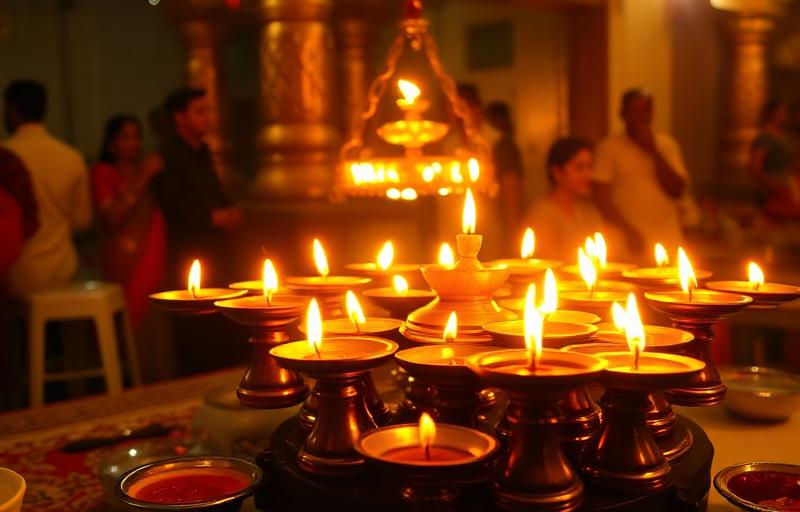
Holi 2027 brings the complete two-day festival of Holika Dahan (bonfire evening) followed by Dhulendi (the main color-play day). Here is your complete preparation guide.
Holika Dahan (Choti Holi) - the evening before: When: Holi 2027 Holika Dahan falls on the Purnima (full moon) of Phalguna month. What to do: The community (or neighborhood) collects dry wood and cow dung cakes for weeks in advance. The pyre is arranged in a circular pattern with Holika at the center. A coconut is placed atop the pyre to represent Prahlad. The puja is performed at an auspicious muhurat (check the Vandnaa app for exact time). Family members circle the pyre 3 or 7 times (clockwise) while carrying raw barley stalks. The stalks are thrown into the fire - a remnant of the ancient grain offering. As the fire burns, everyone sings, plays drums, and calls out "Holi Hai!"
What to offer to the Holika fire: New season grain (barley), coconut, turmeric, sesame seeds, and dried cow dung. Offering the first barley of the new spring to the fire is an ancient Vedic practice that predates the Holika story.
Dhulendi (Rang wali Holi) - the main day: Morning: Begin with puja before stepping out - offer red flowers to Krishna or Radha-Krishna image, and receive the first application of color from an elder. Playing Holi as a ritual means beginning it with gratitude, not with frantic rushing.
The color play: Play for 2-3 hours - by late morning, natural colors should be completely washed. Neighbors visit each other for color exchange. Share traditional foods: gujiya (sweet dumplings), thandai (cold milk drink with spices and sometimes bhang), and seasonal fruit.
After colors - cleaning up: Use coconut oil to remove color from skin - oil breaks down color more effectively than soap alone. Apply coconut oil, massage into colored skin, then wash with mild soap and cool water. For hair, oil before washing, then use a gentle shampoo.
Thandai recipe: Soak 1/4 cup almonds, 2 tbsp melon seeds, 2 tbsp cashews, 1 tsp fennel seeds, and 1 tsp rose water. Grind to a smooth paste. Mix with 1 liter full-fat milk, 3 tbsp sugar, 1/4 tsp cardamom, and a pinch of saffron. Strain and serve cold.
Holi mantras for the day:
- At Holika Dahan: "Om Holika Devyai Namaha" - 3 times while circling the fire
- At color play: "Radhe Shyam, Radhe Shyam, Shyam Shyam Radhe" - sing continuously
- For protection during play: "Om Namo Bhagavate Vasudevaya" - the protection mantra of Vishnu who saved Prahlad
The Vandnaa app provides the complete Holi 2027 puja timings by location, Holika Dahan vidhi audio, Holi songs and mantras, and a natural colors guide for safe celebration.
What People Ask Most
What if I cannot do Holika Dahan in my apartment building?+
Most modern apartments do not allow open fires due to safety. Three options: (1) Symbolic Home Holika Dahan - light a single ghee diya in your puja room at exactly 6:42 PM, place a small effigy of dried grass beside it, mentally throw your wishes into the diya flame. The bhaav reaches Holika Mata. (2) Community Holika Dahan - most apartment complexes organize a community bonfire in the parking or garden. Participate in this; the punya is shared among all participants. (3) Local park or temple - many local temples host Holika Dahan. Visit with your family and offerings between 6:42-9:11 PM. The home symbolic version + community participation is the recommended combination.
Are chemical Holi colours really that harmful - should I avoid them entirely?+
Yes, chemical colours can cause serious skin and eye damage. Many cheap synthetic colours contain lead, mercury, copper sulphate, and chromium - known carcinogens and irritants. Always use natural / herbal / organic colours marked 'gulal' or 'rang' from trusted brands. Even better: make your own at home - turmeric (yellow), beetroot (pink/red), spinach (green), Indigo (blue from plants), tomato (red). Pre-Holi: apply coconut/mustard oil generously on skin and hair as a barrier. Wear old full-sleeve clothes. Avoid eyes - keep sunglasses or close eyes when colour is being thrown. Wash thoroughly with cool water (NOT hot - hot water sets chemicals deeper into skin). Children below 5 should ideally play with only flowers or kumkum dots, not full colours.
Why is Holi played differently in different parts of India?+
Each region celebrates a different aspect of Holi's stories. Vrindavan-Mathura plays Phoolon ki Holi (with flowers - Krishna-Radha romance theme). Barsana plays Lathmar Holi (women playfully beat men with sticks - Radha's gopis 'punishing' Krishna's friends). Bengal plays Dol Yatra (idols of Krishna-Radha are placed on swings, songs are sung). Gujarat plays Matki Phod (boys form human pyramids to break a hanging pot of butter - Krishna's bal-leela). Punjab plays Hola Mohalla (Sikh martial arts demonstrations). Manipur has Yaoshang (6-day version with traditional sports). The core spiritual meaning is the same - community, love, color, dissolution of differences. Each region just emphasizes one element of the story.
Is bhang on Holi religiously sanctioned?+
Bhang has a complicated religious status. The cannabis plant (specifically its leaves) is associated with Lord Shiva, and bhang is offered at Shiva temples in Varanasi, Mathura, Vrindavan year-round. Holi is a day when bhang consumption increases socially because Krishna and Shiva - through different stories - both connect to it. However: modern Vaishnav (Krishna-focused) traditions discourage it; only Shaiva (Shiva-focused) traditions sanction it. The Bhagavata Purana specifically advises Vaishnavs to avoid intoxicants. The Hindu code is: bhang at Shiva temples in moderation = traditionally accepted; bhang at parties for fun = not sanctioned. Children, pregnant women, and those on medication should NEVER consume bhang. If the spirit of Holi is community joy, plain thandai serves the purpose without health risks.
What is the spiritual lesson of Holi for someone who does not like the loud, messy version?+
Holi's loud-messy form is its outer expression - the inner essence is subtler. The spiritual lesson is dissolution of separation. You can experience Holi as: (1) Burning your past year's negative tendencies in Holika Dahan with sincerity; (2) Spending the next day in internal Holi - visit elders you have ignored, forgive someone you have been angry at, eat with people you would normally avoid; (3) Listening to Krishna-Radha bhajans and contemplating how love transcends every visible difference. You don't need to throw colour to celebrate Holi. Some traditional saints and Vaishnav widows celebrated Holi entirely through bhajans, fasting, and visiting elders - never touching colour. The festival's heart is the SPIRIT of dissolution, not the medium. Find the form that suits your nature.
About the author
Acharya Vinaya Kapoor · M.A. Sanskrit, Mantra & Stotra Studies
Acharya Vinaya holds an M.A. in Sanskrit from Banaras Hindu University and writes the mantra and stotra commentary on Vandnaa. Her focus is on accurate pronunciation, traditional context, and helping modern readers connect with classical texts.
Meet the Vandnaa editorial team →Explore on Vandnaa
Related Articles
Narasimha Jayanti 2026: Date, Story of Hiranyakashipu, Puja Vidhi & Powerful Mantras
11 min read
Vasant Panchami 2027: Saraswati Puja Vidhi, Yellow Significance & 7 Mantras for Knowledge
9 min read
Hare Krishna Maha Mantra – Lyrics, Meaning & Benefits
9 min read
108 Names of Lord Krishna: Complete List with Meaning, Benefits & How to Chant Daily
12 min read