When God Comes Down to Meet His Devotees
In every other Hindu temple, devotees come to God. Here, God comes to devotees.
Jagannath Rath Yatra is the world's oldest and largest chariot festival. Once a year, Lord Jagannath (a form of Lord Krishna), His elder brother Balabhadra, and His sister Subhadra are brought out of the great Jagannath Temple in Puri, Odisha. They are placed on three towering wooden chariots - built freshly every year from sacred neem trees - and pulled by lakhs of devotees through the streets of Puri to Gundicha Temple, considered the home of their aunt.
They stay at Gundicha Temple for nine days. On the tenth day, they return.
Jagannath Rath Yatra 2026 falls on Monday, 6 July 2026 - Ashadha Shukla Dwitiya. The 9-day festival concludes with Bahuda Yatra (return) on Wednesday, 15 July 2026.
Why is this festival unique? Because a person who pulls the rope of the Jagannath chariot - even for one second - is freed from the cycle of birth and death. The Skanda Purana says: 'Rath-aagre tu yat punyam, tat-koti-gunam ihaiva.' (The punya earned by walking before the chariot is multiplied 10 million times.)
The deities Themselves do not look like normal idols. Their eyes are huge round circles. Their mouths are wide. Their arms are stub-like. They look incomplete - and that incompleteness is the most loved aspect of Jagannath worship. The story behind it (next section) is one of the most moving stories in all of Sanatan Dharma.
🙏 If you cannot reach Puri, the Vandnaa App livestreams the Rath Yatra and Snana Yatra each year, with mantras, mahaprasad rituals, and a guided home darshan.
Jagannath Rath Yatra 2026 - Complete 12-Day Schedule
The Rath Yatra is not a single day - it is a 12-day cosmic drama. Each day matters.
| Date (2026) | Event | Significance | |---|---|---| | Sun 14 June | Snana Yatra | The deities receive a public bath of 108 pots of water. After this, They 'fall sick' (catch a fever) and are kept in private convalescence for 14 days. | | Mon 15 June – Sun 28 June | Anasara | The deities are kept hidden behind a special curtain. Devotees cannot see Them. Only the Daitapati priests can. New paintings are done. | | Mon 29 June | Netra Utsava (Nava Yauvana) | The deities are 'restored' - eyes painted afresh, new clothing. They appear young and renewed. | | Mon 6 July | 🌟 RATH YATRA (Main Day) 🌟 | The three chariots are pulled from Jagannath Temple to Gundicha Temple. Lakhs of devotees pull the ropes. | | Tue 7 July – Mon 14 July | Gundicha Stay | The deities stay at Gundicha Temple. Devotees visit Them there. | | Wed 15 July | Bahuda Yatra (Return) | The chariots return to Jagannath Temple. Special 'Hera Panchami' day for Goddess Lakshmi. | | Thu 16 July | Suna Vesha | The deities are decked in golden ornaments worth crores. The most photographed darshan of the year. |
🚩 Main Rath Yatra Day Timings (6 July 2026):
- 3:00 AM - Mangala Aarti at Jagannath Temple
- 5:00 AM - Mailam (procession of priests with sacred items)
- 6:00 AM - Tahia bhog (ornamental crowning of the deities)
- 8:00 AM – 11:00 AM - Pahandi Bije (the deities are walked to the chariots - Balabhadra first, Subhadra next, Jagannath last)
- 11:00 AM – 12:30 PM - Chera Pahanra (the King of Puri sweeps the chariots with a golden broom - symbolic that even kings are servants of Jagannath)
- 12:30 PM - Chariots begin to be pulled
- 5:00 PM – 7:00 PM - Chariots reach Gundicha Temple (depending on rope-puller energy)
🎟️ Best place to watch in Puri: Bada Danda (the Grand Avenue) - the route between Jagannath Temple and Gundicha Temple. Get there by 6 AM for a good spot.
Why the Three Deities Look Incomplete - King Indradyumna's Story
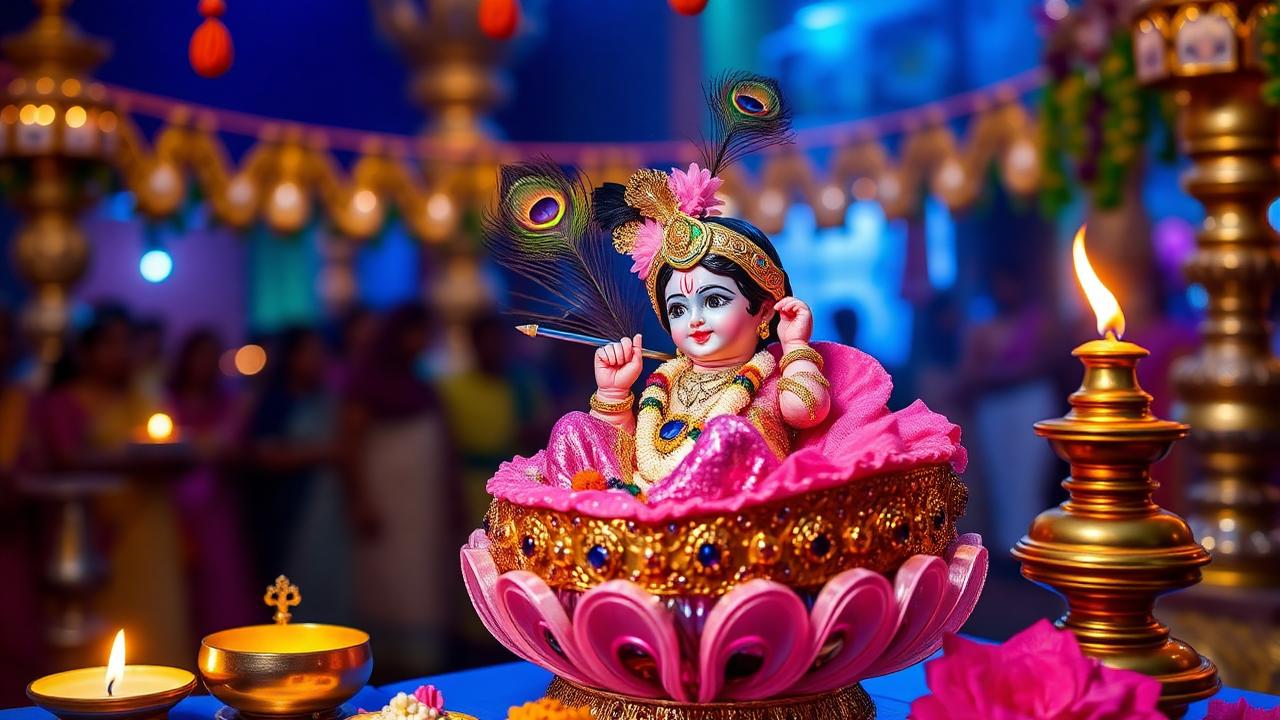
Long ago in Satya Yuga, King Indradyumna of Avanti was a great Vishnu devotee. One day a wandering brahmin told him: 'In the eastern forests of Utkala (modern Odisha), the Lord Himself has appeared as a living tree-deity called Nila Madhava. Worship Him there.'
Indradyumna sent his priest brother Vidyapati to find this deity. Vidyapati travelled for months. He met a Sabar (forest tribal) chief named Vishvavasu who secretly worshipped Nila Madhava - a beautiful image carved naturally inside a sacred banyan tree, lit only by the rays of dawn each day.
Vishvavasu took Vidyapati to see the deity, but blindfolded - to keep the location secret. Vidyapati cleverly dropped mustard seeds along the path. After the rains, mustard plants grew and revealed the secret path.
Indradyumna sent his soldiers. But when they reached the spot, Nila Madhava had vanished. The image was gone. Only sand remained.
Indradyumna fell to his knees, devastated. He vowed to fast unto death.
That night Lord Vishnu appeared in his dream and said: 'I will come to you in another form. Tomorrow, on the seashore, you will find a giant log of wood - Daru. From that wood, build my form. Build a temple. Worship Me as Jagannath - Lord of the Universe.'
Next morning, exactly as foretold, Indradyumna found a massive fragrant Daru log floating ashore at Puri. He could not move it. Vishvavasu, the forest chief, came forward and lifted it effortlessly - the wood came willingly to its devotee.
Indradyumna built the temple. But who would carve the deity from this divine log? No sculptor was good enough.
Then an old carpenter appeared at the temple. He said: 'I will carve the deity. But on one condition - I work alone, behind closed doors. No one is to look at me for 21 days. If anyone opens the door, my work stops permanently.'
Indradyumna agreed. The carpenter went into the workroom with the log and shut the door.
For 15 days, the king and his priests heard the chisel. Then on the 15th day, the sounds stopped. Two more days passed in complete silence.
The king's wife, Queen Gundicha, became alarmed. 'The old man may have died of starvation behind that door,' she said. 'We cannot let a holy carpenter die in our temple. Open the door.'
Indradyumna, against his promise, opened the door.
Inside, there was no carpenter. Only three half-finished idols - Jagannath, Balabhadra and Subhadra - with their large round eyes, wide smiling mouths, and stub-like arms. The arms had not been completed. The features were not refined. They were just blocks with faces.
The carpenter had been Vishvakarma Himself - divine architect of the gods, working in disguise. The promise had been broken. He vanished, leaving the deities incomplete forever.
Indradyumna was crushed. He cried. He prayed. Then a divine voice spoke: 'These deities are not incomplete. THIS is the form I want to be worshipped in. Carry these three to the temple. Let the world worship Me as I AM - incomplete in physical form, but complete in love.'
And so, every Jagannath idol in every temple in the world is built in this exact incomplete form - with stub arms, huge eyes, smiling mouth. The lesson: God does not need to be perfect to be loved. Devotion fills in everything that the form lacks.
And Queen Gundicha, the very person who broke the promise - was honoured. The temple where Jagannath visits every Rath Yatra is named Gundicha Temple after her. Even her mistake became part of the divine plan.
The Three Chariots - Names, Sizes, Wheels & Symbolism
The chariots are built FRESH every single year. They cannot be reused - they are dismantled after the festival and burnt for the temple kitchen fires. No nails. No metal. Only sacred neem wood, joined with wooden pegs.
🟡 Nandighosha - Lord Jagannath's Chariot
- Color: Yellow (sometimes red and yellow)
- Wheels: 16
- Height: 45 feet 6 inches
- Weight: ~280 tonnes
- Pulled by: 4 ropes simultaneously
- Symbol: Garuda (Vishnu's vahan) on top
- Charioteer: Daruk
- Name meaning: 'The roar of joy' - the sound of devotees pulling Him
🟢 Taladhwaja - Lord Balabhadra's Chariot
- Color: Red and green
- Wheels: 14
- Height: 45 feet (slightly shorter)
- Weight: ~270 tonnes
- Symbol: Palm tree (tala-dhwaja means 'one with palm-tree flag')
- Charioteer: Matali
- Significance: Balabhadra (Krishna's elder brother) leads the procession - elder always goes first
🔴 Darpadalana - Goddess Subhadra's Chariot
- Color: Red and black
- Wheels: 12
- Height: 44 feet 6 inches (smallest)
- Weight: ~250 tonnes
- Symbol: Lotus on top
- Charioteer: Arjuna
- Name meaning: 'Destroyer of pride' - the goddess who humbles the ego
Why no nails or metal? Iron is associated with Kali Yuga and weapons of war. Jagannath chariots represent the pre-Kali Yuga purity - built only with the love of carpenters using ancient joinery techniques. Each chariot uses ~1100 pieces of wood, joined entirely by pegs, ropes and ancient wisdom.
Why these wheel numbers? 16 (Jagannath), 14 (Balabhadra), 12 (Subhadra) - totaling 42. The 42 wheels symbolize the 42 cycles of cosmic time the universe passes through. Each year the chariots are pulled, one cosmic cycle is renewed.
Touching the chariot: Even touching the chariot or the rope grants moksha. Pulling it for ANY distance - even one centimetre - destroys 1000 lifetimes of sin. This is why crowds in Puri reach 10-15 lakh devotees on Rath Yatra day.
How to Watch Rath Yatra from Home - Complete Home Vidhi
Most devotees cannot reach Puri. The good news: scriptures say a sincere home darshan on Rath Yatra day grants the same punya as physical attendance. Here is how.
🌅 Morning Preparation (5:00 AM, July 6):
- Bathe before sunrise. Wear clean yellow, red or saffron clothes.
- Clean your puja room thoroughly. Place a clean yellow cloth on a wooden chowki facing east.
- Place THREE images on the chowki - Jagannath, Balabhadra, Subhadra. If you don't have images, even printouts work. If you have only one Jagannath image, that's also fine.
- Decorate with yellow marigold and tulsi leaves.
- Light a 5-wick ghee diya.
🌅 Sankalp (6:00 AM): Sit before the deities. Hold water + akshat + tulsi in right hand and say:
'I, [name], on this Ashadha Shukla Dwitiya, observe the Jagannath Rath Yatra puja from my home. Lord Jagannath, Balabhadra and Subhadra - I cannot reach Puri but my heart is at Bada Danda today. Please accept my home seva. Om Namo Bhagavate Shri Jagannathaya.'
🌅 Live Darshan (8:00 AM onwards): The chariot pulling begins around noon. Live streams are available on:
- Doordarshan National (telecast since 1985)
- Odisha TV (Odia commentary)
- YouTube live (search 'Puri Rath Yatra Live')
- Vandnaa App (with mantras playing alongside the live feed)
Watch the entire pahandi bije and the moment of chera pahanra (king sweeping the chariot) at 11:00 AM-12:30 PM. This is the most punya-rich moment.
🚩 Symbolic Rope-Pulling at Home (12:30 PM): When the chariot pulling begins on screen, take a yellow rope or a piece of new cotton cloth. Tie one end to a small Jagannath image on the chowki. Hold the other end yourself. As the live chariot moves, gently pull your rope while chanting:
'Jai Jagannath! Jai Jagannath! Jai Jagannath!'
This simple act at the same moment as Puri grants you the punya of pulling the actual Nandighosha. Skanda Purana confirms - 'The intention of the devotee, not the geography, decides the fruit.'
🍚 Bhog (1:00 PM): Prepare or buy traditional Mahaprasad bhog: rice, dal, mixed vegetables (no onion/garlic), kheer, and one sweet (rasagulla, malpua, or chenna poda - all Jagannath's favorites). Offer first to the deities, then eat with family. Sharing the same plate as family is auspicious today (this is unique to Jagannath culture - no caste, no separation).
🌅 Evening Aarti (6:30 PM): Watch the live darshan again at evening when the chariots reach Gundicha Temple. Light an evening diya at home. Sing the Jagannath aarti - 'Jaya Jagannatha Swami Naina Patha Gaami'.
🤲 9-Day Home Practice (July 6 – 14): After the main day, the deities stay at Gundicha Temple for 9 days. During this period:
- Continue daily Jagannath darshan via the app
- Chant 'Om Namo Bhagavate Shri Jagannathaya' 108 times each evening
- Donate yellow food (kheer, mango, sweet rice) to children/needy
- On 15 July (Bahuda Yatra return), do a special evening aarti welcoming Jagannath back to His main temple
By the end of these 9 days, you will have done what scriptures call a 'complete Rath Yatra from home' - equivalent to one Puri visit.
Mahaprasad - The Most Sacred Food in Sanatan Dharma
Of all prasads in all temples in India, only the Jagannath Temple food is called Mahaprasad - 'the great prasad'. Here is why.
🍳 The world's largest temple kitchen: The Jagannath Temple kitchen prepares 56 different items (called Chappan Bhog) every day for the deities. Over 600 cooks work in 752 wood-fired clay ovens. The food is cooked in 7 earthen pots stacked one above the other - and (impossibly) the topmost pot cooks first. This is considered Jagannath's miracle.
🚫 No caste, no separation: Once food is offered to Jagannath, it becomes Mahaprasad. From that moment, anyone can share the same plate as anyone else - high caste, low caste, foreign, Indian, rich, poor. This is the only temple kitchen in India where caste rules of food-sharing are completely abolished.
🍚 What's in the Chappan Bhog: Plain rice (anna), khichdi, dal, multiple vegetable curries (no onion/garlic), saag, kheer (multiple types), poda pitha (baked sweet), malpua, rasagulla, chenna poda (Odisha's signature sweet), arsa pitha, kakara pitha, and many more. Each item is offered first to the deities, then to Goddess Bimala (a tantric goddess in the same temple complex), then becomes Mahaprasad.
🛒 How to get Mahaprasad in 2026:
- In Puri: Buy directly from the temple's Anand Bazaar (the world's largest food market) - about ₹50-200 per plate.
- Outside Puri: Several authorized Iskcon centers and Odisha Bhawans across India sell sealed Mahaprasad packets. The Vandnaa App lists official Mahaprasad delivery services for Rath Yatra week.
- Symbolic Mahaprasad at home: Make plain rice + dal + kheer + one sweet, offer to Jagannath, accept it as Mahaprasad. The bhaav matters more than the source.
🤲 Rules for eating Mahaprasad:
- Never refuse - even a small portion. Refusing Mahaprasad is considered a sin.
- Never throw it away. Eat all of it, share with others, or give to a cow.
- Eat with both hands respectfully (not just three fingers).
- Do not check the temperature, the taste, or compare with other food. It is divine food. Eat it as it is.
- Do not drink water during eating Mahaprasad - finish, then drink.
- Mahaprasad can be eaten by anyone of any age, including infants and the very sick. It is medicinal.
🌟 The Mahaprasad miracle: Although the Jagannath Temple feeds about 25,000 people daily and 1 lakh+ on Rath Yatra day, there is never any food wastage and nobody goes hungry. Devotees and historians have noted this for centuries. Jagannath Himself is said to multiply the food.
Common Questions From Devotees
Is Jagannath the same as Lord Krishna?+
Yes - Jagannath is considered an incarnation of Lord Krishna, specifically the form Krishna takes in His old age in the city of Dwarka. The story goes that after Krishna's body was cremated, His heart did not burn - and that uncremated heart still beats inside the Jagannath idol at Puri. This is why every 12-19 years, in the secret Nabakalebara ritual, the heart-substance (called Brahma Padartha) is transferred from the old idol to a new wooden one. Only specific priests can witness this - and they say their hands are blindfolded during the transfer. So yes, Jagannath = Krishna, but in His most mysterious, incomplete, and beloved form.
Can non-Hindus see the Jagannath Rath Yatra?+
Yes - the Rath Yatra is one of the few times non-Hindus can have direct darshan of Jagannath. The Jagannath Temple itself does not allow non-Hindus inside the inner sanctum. But during Rath Yatra, the deities come OUT of the temple onto the public chariots - and at that moment, anyone of any religion, nationality, caste can see Them, touch the chariot, pull the rope, and receive equal blessings. This is the radical inclusivity Jagannath represents - and the most important reason He is called 'Lord of the Universe' (Jagat-natha), not just 'Lord of Hindus'.
What happens if the chariot wheel breaks during the procession?+
It is considered a divine signal. Historically, when wheels break (which has happened multiple times in the past 800 years), it is interpreted as Jagannath wanting to slow down or pause at a particular spot. The chariot is repaired on the road itself by skilled carpenters - usually within 1-2 hours. Devotees consider it sacred to be present near a wheel-repair spot, as Jagannath has chosen that location. The pulling resumes when the wheel is fixed. This is why the procession sometimes takes 6+ hours instead of the planned 4.
Is it true that Jagannath gets sick after Snana Yatra?+
Yes - and this is one of Jagannath's most human and beloved aspects. After the public bath of 108 pots of water on Snana Yatra (June 14, 2026), the deities catch a 'fever' (just as humans do after sudden cold water immersion). They are kept hidden behind a curtain for 14 days, given Ayurvedic decoctions, light food, and rest. This period is called 'Anasara'. Devotees cannot see the deities during this time - they pray to the painted images called Patta Chitra instead. On the 15th day (Netra Utsava), Jagannath emerges 'cured', with new eyes and renewed body. This entire human-like illness-and-recovery cycle is unique to Jagannath worship and shows how He participates in human experience itself.
Why are women given a special day during Rath Yatra (Hera Panchami)?+
This is one of the most charming stories. When Jagannath leaves His main temple to stay at Gundicha Temple for 9 days, His wife Goddess Lakshmi is left behind alone. After 5 days (Hera Panchami - July 10, 2026), an enraged Lakshmi takes a palanquin to Gundicha Temple, scolds Jagannath for leaving her without telling, and SYMBOLICALLY breaks a wheel of His chariot to prevent His return. Jagannath placates her with sweets, jewels, and apologies. She returns to the main temple. He follows on Bahuda Yatra (return day, July 15). This entire 'lover's quarrel' enacted between the deities is considered a sacred drama where Lakshmi represents the devotee's loving demand and Jagannath represents God's playful response. Women devotees particularly celebrate Hera Panchami.
About the author
Acharya Vinaya Kapoor · M.A. Sanskrit, Mantra & Stotra Studies
Acharya Vinaya holds an M.A. in Sanskrit from Banaras Hindu University and writes the mantra and stotra commentary on Vandnaa. Her focus is on accurate pronunciation, traditional context, and helping modern readers connect with classical texts.
Meet the Vandnaa editorial team →Explore on Vandnaa
Related Articles
Devshayani Ekadashi 2026: Date, Vrat Vidhi & Why Vishnu Sleeps for 4 Months (Chaturmas)
11 min read
Yogini Ekadashi 2026: Date, Vrat Vidhi, Hema Mali Katha & Why It Frees You from Curses
10 min read

Hare Krishna Maha Mantra – Lyrics, Meaning & Benefits
9 min read
Krishna Janmashtami 2026: Date, Midnight Puja Vidhi, Mantras & Complete Vrat Guide
11 min read