Who is Lord Jagannath?
Lord Jagannath, whose name means 'Lord of the Universe', is worshipped in Puri, Odisha as a form of Lord Krishna. He is enshrined along with his elder brother Balabhadra and sister Subhadra, in a sacred triad that devotees across India hold dear.
Unlike most temple deities carved from stone or metal, Jagannath, Balabhadra and Subhadra are fashioned from sacred neem wood. Their form is simple, almost abstract, with large round eyes and no visible hands or feet in the traditional sense. Devotees believe this simplicity reflects that the divine is beyond form, and that Jagannath welcomes every devotee regardless of caste, status or background.
Every twelve to nineteen years, as per an ancient tradition, the wooden deities are ceremonially replaced in a rite called Nabakalebara, meaning 'new body'. This is one of the many customs that make the Puri temple unique among Vishnu and Krishna shrines of India.
The Legend of King Indradyumna
According to tradition, the Puri temple's origin is linked to the devout King Indradyumna, who wished to install an image of Lord Vishnu that had never before been seen or worshipped. Guided by divine signs, he found a sacred log of wood washed up on the shore.
The king then sought a sculptor, and it is said that Lord Vishwakarma, the celestial architect, himself came in the guise of an old carpenter to carve the deities. He agreed on one condition, that he must not be disturbed while he worked behind closed doors.
After many days, the queen grew anxious at the silence and the doors were opened before the work was complete. The carpenter had vanished, leaving the images of Jagannath, Balabhadra and Subhadra unfinished, with stumps for hands and large, wide eyes. King Indradyumna, guided in a dream, was told to install the deities exactly as they were. Devotees believe this incomplete form is itself complete, a reminder that the divine cannot be bound by human craft.
The Nila Chakra and the Daily Flag Ritual
Atop the main temple spire stands the Nila Chakra, a sacred wheel made of an eight-metal alloy, believed to represent the Sudarshan Chakra of Lord Vishnu. Rising high above the ground, it is visible from far across Puri and is considered one of the most sacred symbols of the temple.
Every single day, without exception, temple priests climb to the summit to change the flag atop the Nila Chakra. Devotees hold deep faith that this ritual has continued unbroken for centuries, and that a day without the flag change is considered unthinkable. A popular belief among devotees is that the flag always flutters in a direction opposite to the wind, a mystery devotees regard as one of Jagannath's many wonders.
Pilgrims often stand in the temple courtyard simply to gaze upon the Nila Chakra and offer a silent prayer, considering the sight itself to be auspicious.
Darshan Guide: Timings and What to Expect
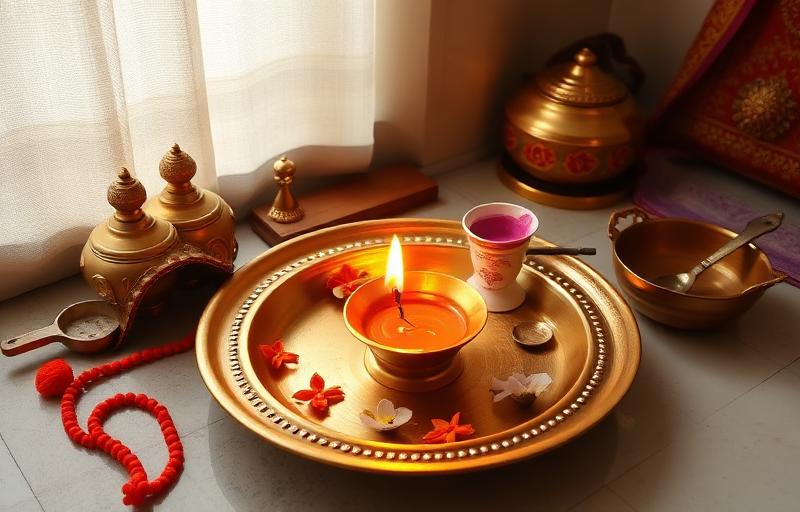
The temple generally opens early in the morning and remains open through the day with a set pattern of rituals, from the Mangala Aarti at dawn to the closing rites at night. Devotees are advised to check the current schedule locally, as timings can shift around festivals and special sevas.
- General darshan is free and open to all devotees, and involves standing in the queue that leads through the main temple hall for a view of the deities
- Sarvadarshan hours are typically the busiest, especially on weekends and during festival months
- Devotees should dress modestly, and note that non-Hindus have traditionally not been permitted inside the main temple, though the deities can be viewed from outside points such as the raised platform nearby
- Photography is generally not permitted inside the sanctum
Devotees who wish for a longer, unhurried darshan may inquire locally about special sevas offered by the temple, though the simplest darshan in the queue is considered equally meritorious in the eyes of devotees.
How to Reach Puri
Puri is a well-connected pilgrim town on the eastern coast of Odisha. The Puri Railway Station is the nearest and most convenient point, with regular trains connecting it to major cities across India.
The nearest airport is at Bhubaneswar, roughly an hour and a half away by road, from where taxis and buses are readily available to Puri.
Many pilgrims choose to combine their visit to Jagannath temple with other sacred sites nearby, and the town itself is easily walkable around the temple precinct, with several dharamshalas and guesthouses catering to devotees.
Mantra to Chant and a Devotee's Takeaway
Devotees at Puri often chant the simple invocation 'Jai Jagannath', meaning 'Victory to the Lord of the Universe', or the mantra 'Om Jagannathaya Namah', meaning 'salutations to the Lord of the Universe'.
The story of Jagannath, with his unfinished hands and wide, ever-watchful eyes, carries a gentle teaching for every devotee: that devotion does not require perfection, only sincerity. Whether one visits in grand pilgrimage or offers prayer from afar, worship at Puri is an act of faith and love, not a transaction.
Quick Answers
What is the best time to visit Jagannath Temple Puri?+
Devotees can visit throughout the year, though many prefer the cooler months and avoid the peak of summer. The Rath Yatra festival period draws especially large crowds, so devotees seeking a quieter darshan often choose other times of year.
Can non-Hindus enter Jagannath Temple?+
Traditionally, entry into the main temple has been reserved for Hindu devotees, a custom the temple has followed for generations. Visitors of other faiths can still view the temple's exterior and the sacred Nila Chakra from outside.
What is mahaprasad and can devotees take it home?+
Mahaprasad is the sacred food offered to Lord Jagannath in the temple kitchen and later distributed to devotees. It is considered deeply auspicious, and devotees often carry a portion home to share with family as a blessing from the Lord.
About the author
Pandit Ravindra Sharma · Vedic Rituals & Bhakti, 22+ years
Pandit Ravindra is the Vandnaa editorial team's resident specialist on aarti, chalisa, and daily devotion. He has performed home and temple pujas across Varanasi and Delhi for over two decades and contributes the bhakti-focused articles on this site.
Meet the Vandnaa editorial team →