What the Rite Is
Jatakarma: jata, born, and karma, the act. The rite done at birth.
The fourth of the sixteen samskaras, and the first one performed on a person who exists.
When
Immediately. The classical instruction is that it is done before the umbilical cord is cut, and before the newborn is bathed or fed.
In practice, where it is done at all now, it is performed after the birth is over and the family has the baby, which is usually some hours later.
The parts of the rite
One. Medhajanana, the producing of intelligence.
The father gives the newborn a taste of honey and ghee, mixed, from a gold implement, a ring or a small spoon, while reciting a mantra asking for medha, intelligence and mental capacity.
The mantra, in substance: I give you honey and ghee, which are given by the wise; may you be preserved, may you live a hundred autumns in this world.
Some texts add curd, and the combination of honey, ghee and curd is called madhuparka elsewhere in the ritual literature, where it is the offering made to an honoured guest. The newborn is being received as one.
Two. Ayushya, the rite for long life.
The father speaks into the child's ear, the right ear in most texts, mantras invoking Agni, Soma, Indra and the other deities for a long life.
The formula runs: be a stone, be an axe, be gold that does not perish; you are the self called son, live a hundred autumns.
Three. The secret name.
In many traditions a name is given at this point, a guhya nama, known only to the parents, and it is different from the public name given later at the namakarana.
Why: the accounts give protection as the reason, on the general principle that a name that nobody knows cannot be used against the person. Whether or not you take that seriously, the practice is harmless and rather good.
Four. The touching and the smelling.
The father touches the child's shoulders, and then smells the top of the child's head three times.
This last one is worth pausing on, because it is not symbolic and it is not doctrinal. It is in the Grihya Sutras, prescribed with mantras, and it is a description of what a parent actually does with a newborn.
A ritual manual from roughly three thousand years ago instructs a father to put his face into his newborn's hair and breathe in, three times, and gives him words to say while doing it.
Five. The mother.
Several texts include a mantra for the mother, for her recovery and her milk, and prescribe that the first feeding follows.
Six. The offerings.
A homa in some traditions, gifts to the assembled, and food distributed.
What survives today
Very little in the classical form, and what does survive is usually:
- A drop of honey on the baby's tongue, often by the grandmother rather than the father
- Something written on the tongue with honey or gold: Om, or the name of the family deity, using a gold ring
- Words spoken into the ear: the family mantra, a deity's name, the Gayatri
- Sweets distributed, and the announcement to the extended family
And the honey part is the problem.
Do Not Give a Newborn Honey
This is the most important paragraph in this entire series of entries, so it is stated without any softening.
Do not give honey to a baby under one year old.
Not a drop. Not on a gold ring. Not on the tip of a finger. Not for the jatakarma. Not because your grandmother did it. Not at all.
Why
Honey can contain spores of Clostridium botulinum.
In an adult or an older child, those spores pass through harmlessly, because a developed gut flora prevents them germinating.
In an infant under twelve months, the gut is not yet developed enough to stop them. The spores germinate in the intestine and produce a toxin.
The result is infant botulism. The symptoms are constipation, a weak cry, poor feeding, floppiness, drooping eyelids and, as it progresses, difficulty breathing. It can require ventilation and it can kill.
This is not a theoretical risk and it is not a modern superstition. It is why every paediatric authority in the world, including the Indian Academy of Pediatrics and the World Health Organization, says the same thing: no honey before one year.
The rite predates the knowledge. The Grihya Sutras were written by people who had no way of knowing this, and there is no dishonour in saying so. The instruction is wrong and it should not be followed.
What to do instead
If your family wants to perform a jatakarma, everything else in it is fine.
- The words in the ear: keep them. Say the mantra, the deity's name, whatever your family says
- The secret name: keep it
- The touching, the blessing, the smelling of the head: keep all of it
- The gold: touch the gold to the baby if you want, and do not put anything on it
- The taste: give nothing at all. The baby's first taste should be the mother's milk, and there is no ritual substitute that improves on it
If somebody insists that something must be given, the answer is that the first feed is the offering, and that giving the child anything else actively works against it.
The larger problem: prelacteal feeds
The honey is one instance of a much bigger practice, and the bigger practice does far more damage.
A prelacteal feed is anything given to a newborn before breastfeeding is established. In India this includes:
- Honey
- Ghutti or janam ghutti, herbal preparations sold for newborns
- Sugar water, jaggery water, gripe water
- Plain water
- Cow's milk, goat's milk, buffalo milk, formula
- Ghee
- Mustard oil on the tongue or in the mouth
All of it should stop, and the reasons are specific:
One. Infection. A newborn's gut is sterile and its immune system minimal. Anything given by hand, spoon, cloth or bottle carries organisms, and newborn sepsis and diarrhoea are among the largest causes of infant death in India.
Two. It displaces colostrum. A newborn's stomach holds a very small amount. Filling it with sugar water means the baby does not feed properly at the breast, and this is exactly the period when the feeding pattern is being established.
Three. It reduces the mother's supply. Milk production runs on demand. Every feed the baby does not take is a signal to produce less, and supply problems that begin in week one persist.
Four. Ghutti is not regulated in any meaningful way and preparations sold for newborns have been found to contain things that should not be given to an infant.
The colostrum problem, which has to be named
Colostrum is the thick yellowish milk of the first two to three days.
In many Indian households it is discarded, on the grounds that it is old, stale, dirty, or impure, and the baby is given something else until the mother's milk comes in properly.
This is exactly backwards.
Colostrum is the single most valuable thing the child will ever be given. It is dense with antibodies, it is the newborn's first immune protection, it clears meconium, and there is no substitute for it in existence.
Called peela doodh, khees, or by a dozen regional names, and thrown away by families who love the child and believe they are doing right.
Do not throw it away. Feed within the first hour. Early initiation of breastfeeding within one hour of birth is standard national guidance and is what the ASHA and the delivery facility will tell you.
The First Days: What Actually Matters
A newborn checklist, since this is the entry where it belongs.
In the first hour
- Skin to skin contact with the mother, on her chest, uncovered against her, with a blanket over both
- The first feed, colostrum, within the hour
- Do not bathe the baby. National guidance is to delay the first bath by at least twenty four hours, and preferably longer. The vernix is protective and the risk in the first day is cold, not dirt
- Delayed cord clamping, at least one to three minutes, which is now standard and which improves the baby's iron stores. The classical rite is also performed before the cord is cut, and while that is a coincidence rather than a vindication, it is a pleasant one
In the first days
- Exclusive breastfeeding. No water, no honey, no ghutti, no top feed, no formula unless a doctor has said so. Not even water, including in summer, because breast milk is mostly water and a newborn does not need more
- Feed on demand, and that will be very often, at least eight to twelve times in twenty four hours
- Keep the baby warm. Hypothermia in newborns is a serious and under recognised danger, particularly for small babies and in winter
- Kangaroo Mother Care for small or preterm babies: continuous skin to skin, which is one of the highest impact interventions in newborn care and costs nothing
- Cord care: keep it clean and dry, and nothing applied to it. No ash, no oil, no turmeric, no cow dung, no kajal. This is a leading cause of newborn sepsis in India
- Nothing in the eyes. No kajal, which contains lead in many preparations
Newborn danger signs. Go to a facility immediately for any of these:
- Not feeding or stopping feeding
- Lethargy, floppiness, or difficulty waking
- Fever, or the body being cold to the touch
- Fast breathing, grunting, or the chest pulling in with each breath
- Convulsions
- Yellowness in the first twenty four hours, or deep yellow, or yellow reaching the palms and soles
- Redness, swelling or discharge at the umbilical stump
- Persistent vomiting, a swollen abdomen, or no passing of urine or stool
- Bleeding from anywhere
Home Based Newborn Care: the ASHA worker visits on scheduled days in the first six weeks, and those visits are the safety net. Let her in and let her weigh the baby.
The mother, who is usually forgotten
The sutika period, the ten to eleven days or forty days of postpartum seclusion, exists in every Indian community, and it has a good half and a bad half.
The good half: she is not expected to work, she is fed, she is looked after, and she is not receiving visitors all day.
The bad half, and it should be named:
- Food restrictions. She is often denied whole categories of food at exactly the point where she needs the most nutrition of her life. There is no evidence for any of it. She should eat well, eat a lot, and eat what she likes
- Not being allowed to bathe, which is a hygiene risk after delivery
- Confinement to a closed, unventilated room, sometimes with a fire, which is dangerous
- Being treated as polluted, which is what the word sutika encodes, and which this app rejects along with the equivalent rules about menstruation
- Isolation, at the point when she is most likely to be struggling
Postpartum depression
It affects a very large number of women, in India and everywhere, and it is very badly under recognised here.
Signs: persistent sadness, inability to sleep even when the baby sleeps, no interest in the baby, overwhelming anxiety, feeling like a failure, and in severe cases thoughts of harming herself or the baby.
It is an illness. It is treatable. It is not a character failing and it is not ingratitude.
Tele MANAS 14416, free, twenty four hours, in many Indian languages. And any doctor, including the one doing the postnatal check.
If there are thoughts of self harm or of harming the baby, that is an emergency and it needs help today.
The administrative part, which nobody mentions and everybody needs
Register the birth.
- Within twenty one days, free, at the hospital or the local registrar
- The birth certificate is required for school admission, passport, Aadhaar and every later document
- Hospitals usually initiate it, but confirm that it has actually been done and collect the certificate
- Late registration is possible and gets progressively more difficult, so do it now
Also: the Mother and Child Protection Card for the immunisation schedule, and the first vaccines, BCG, Hepatitis B and OPV zero dose, are given at birth and are free.
What Is Worth Keeping
Having spent two sections saying what not to do, here is what the rite is genuinely good for.
One. The child is received as a guest.
Madhuparka, the honey mixture, is elsewhere in the ritual literature the offering made to an honoured guest arriving at a house: a teacher, a king, a son in law, a person to whom the household owes respect.
And the same offering is made to a newborn.
Which is a specific claim about what has just arrived: not a possession, not an extension of the parents, not a continuation of the line. A guest, who is owed hospitality, and who has come from somewhere else.
Two. The words in the ear.
The first thing the child is told is that it should live a long time.
Be a stone, be an axe, be gold that does not perish, live a hundred autumns.
And the mantra is spoken directly into the ear, quietly, by a parent, in the first minutes.
Newborns respond to voice, and specifically to the voices they heard in the womb, and this is one of the very few classical instructions that is both moving and physiologically sensible.
Three. The smelling of the head.
A three thousand year old ritual manual instructs a father to put his face into his newborn's hair and breathe in, three times, and gives him a mantra to say while he does it.
Nobody had to write that down. It is not doctrine, it is not symbolic, and no theological point rests on it.
It is in there because it is what people do, and because whoever compiled the text thought it was worth prescribing.
Four. The secret name.
A name known only to the parents, given at birth, separate from the public name.
Harmless, private, and rather lovely. Keep it if you want it.
Five. Somebody has to say something.
Which is the real function of every samskara and it is worth stating directly.
A birth is enormous and the household is exhausted and frightened and relieved all at once, and the thing that a rite provides is a script: words to say, an order to do them in, and a reason for everybody to be in the room at the same time.
Without the script, people stand around not knowing what to do. With it, the father has something to say, the grandmother has something to hand over, the family has a moment that is marked, and the child is formally received rather than merely produced.
A simple jatakarma, done safely
- When the mother and baby are settled and the feeding has happened
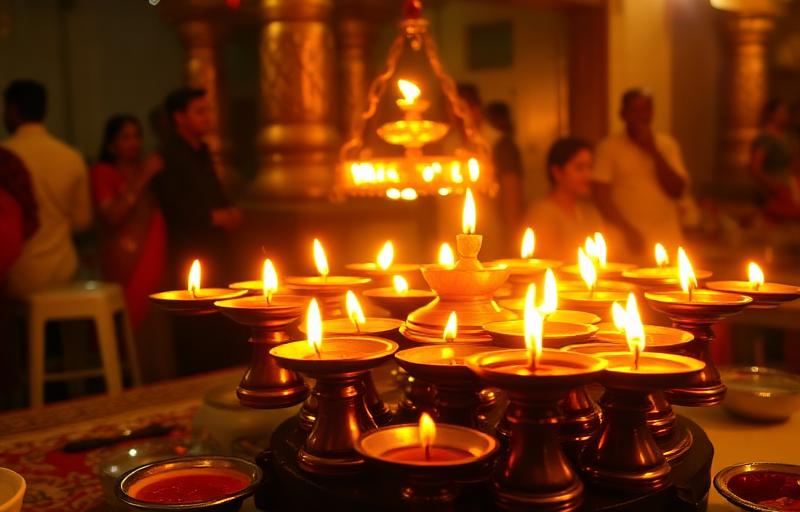
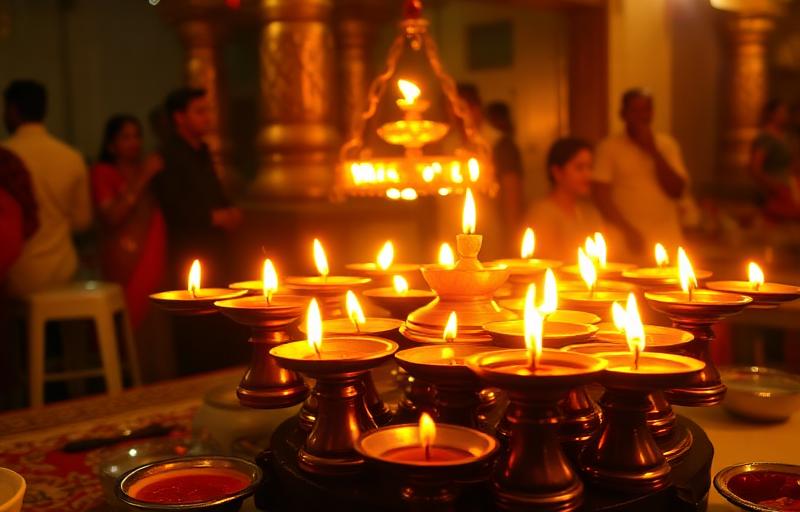
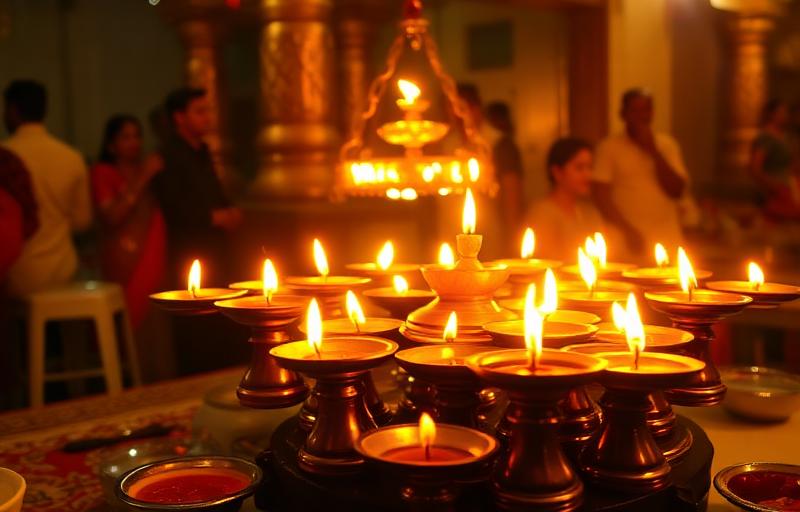
- Light a lamp, if it is safe where you are, and not in a closed room with a newborn
- Touch gold to the baby, if your family does that, and put nothing on the baby's tongue
- Speak into the ear: your family mantra, the deity's name, the Gayatri, or simply the wish for a long life, in your own language
- Smell the top of the head, three times, which the text prescribes and which you will do anyway
- Give the secret name, if you want one
- Bless the mother, and mean it, because she has just done the hardest physical thing a human body does
- Distribute sweets to everybody except the baby
And the closing statement of this entry, which is the one that matters most
No honey before one year. Nothing but colostrum and breast milk in the first days. Nothing on the cord, nothing in the eyes. Feed within the first hour. Register the birth within twenty one days.
Everything else in the rite can be kept, and it should be.
The Short Version
What it is: jatakarma, from jata, born, and karma, the act. The fourth of the sixteen samskaras and the first performed on a person who exists. Classically done immediately, before the umbilical cord is cut and before the newborn is bathed or fed.
Its parts: medhajanana, in which the father gives a taste of honey and ghee from a gold implement with a mantra asking for intelligence; ayushya, in which he speaks mantras for long life into the child's right ear, saying be a stone, be an axe, be gold that does not perish, live a hundred autumns; the giving of a guhya nama, a secret name known only to the parents and different from the public name given later at namakarana; the touching of the shoulders and the smelling of the top of the head three times; a mantra for the mother's recovery and her milk; and offerings and distributed food.
The one thing that must not be done: do not give honey to a baby under one year. Honey can contain spores of Clostridium botulinum which an infant gut cannot stop from germinating, causing infant botulism, whose signs are constipation, weak cry, poor feeding, floppiness and drooping eyelids, and which can require ventilation and can kill. Every paediatric authority including the Indian Academy of Pediatrics and the WHO says no honey before one year. The rite predates the knowledge, and the instruction is wrong.
The larger issue: prelacteal feeds of any kind, honey, ghutti, sugar or jaggery water, gripe water, plain water, animal milk, formula, ghee or mustard oil, all carry infection risk, displace colostrum, and reduce the mother's supply. Colostrum, the thick yellow milk of the first days, is often discarded in Indian households as impure, and it is the single most valuable thing the child will ever be given. Feed within the first hour.
Newborn essentials: skin to skin in the first hour, delayed bathing by at least twenty four hours, delayed cord clamping, exclusive breastfeeding with not even water, feeding on demand eight to twelve times a day, keeping the baby warm, Kangaroo Mother Care for small babies, nothing applied to the cord and nothing in the eyes, and the ASHA's Home Based Newborn Care visits.
What is worth keeping: the child received as an honoured guest, since madhuparka is elsewhere the offering to a guest owed hospitality; the words in the ear, since newborns respond to voices heard in the womb; the smelling of the head, which is in a three thousand year old manual because it is what parents do; the secret name; and the script itself, which gives an exhausted household something to say and a moment to mark. Register the birth within twenty one days.
Common Questions From Devotees
What is the jatakarma samskara?+
The rite performed at birth, and the fourth of the sixteen samskaras, from jata, born, and karma, the act. Classically it is done immediately, before the umbilical cord is cut and before the newborn is bathed or fed. Its parts are medhajanana, giving a taste of honey and ghee from a gold implement with a mantra for intelligence; ayushya, speaking mantras for long life into the right ear; the giving of a secret name known only to the parents; touching the shoulders and smelling the top of the head three times; a mantra for the mother; and offerings with food distributed.
Can I give my newborn honey for the jatakarma?+
No. Do not give honey to a baby under one year old, not a drop, not on a gold ring, not on a fingertip. Honey can contain spores of Clostridium botulinum, which pass harmlessly through a developed gut but germinate in an infant's, producing a toxin. The result is infant botulism, whose signs are constipation, weak cry, poor feeding, floppiness and drooping eyelids, progressing to difficulty breathing, and it can require ventilation and can kill. Every paediatric authority including the Indian Academy of Pediatrics and the World Health Organization says no honey before one year. The rite was written by people who had no way of knowing this. Keep everything else in the ceremony and give the baby nothing at all, since the first taste should be the mother's milk.
What is a prelacteal feed and why does it matter?+
Anything given to a newborn before breastfeeding is established: honey, ghutti or janam ghutti, sugar or jaggery water, gripe water, plain water, cow, goat or buffalo milk, formula, ghee, or mustard oil on the tongue. All of it should stop. It carries infection, since a newborn's gut is sterile and its immune system minimal, and newborn sepsis and diarrhoea are among the largest causes of infant death in India. It displaces colostrum, since a newborn's stomach holds very little and filling it with sugar water means the baby does not feed at the breast. It reduces the mother's supply, since milk production runs on demand and supply problems that begin in week one persist. And ghutti is not meaningfully regulated.
Should colostrum be thrown away?+
No, and this is exactly backwards. Colostrum is the thick yellowish milk of the first two to three days, called peela doodh, khees or by a dozen regional names, and in many Indian households it is discarded on the grounds that it is old, stale, dirty or impure, with the baby given something else until the mother's milk comes in. Colostrum is the single most valuable thing the child will ever be given: it is dense with antibodies, it is the newborn's first immune protection, it clears meconium, and no substitute for it exists. Feed within the first hour. Early initiation of breastfeeding within one hour of birth is standard national guidance.
What are the newborn danger signs?+
Go to a facility immediately for any of these: not feeding or stopping feeding; lethargy, floppiness or difficulty waking; fever, or the body being cold to the touch; fast breathing, grunting, or the chest pulling in with each breath; convulsions; yellowness in the first twenty four hours, or deep yellow, or yellow reaching the palms and soles; redness, swelling or discharge at the umbilical stump; persistent vomiting, a swollen abdomen, or no passing of urine or stool; and bleeding from anywhere. The ASHA worker's Home Based Newborn Care visits in the first six weeks are the safety net, so let her in and let her weigh the baby. Put nothing on the cord, no ash, oil, turmeric, cow dung or kajal, since that is a leading cause of newborn sepsis in India, and nothing in the eyes.
What should be done for the mother after birth?+
The sutika period of ten to eleven or forty days exists in every Indian community and has a good half and a bad half. The good half is that she is not expected to work, is fed and is looked after. The bad half should be named: food restrictions denying her whole categories of food at the point where she needs the most nutrition of her life, with no evidence for any of it; not being allowed to bathe, which is a hygiene risk after delivery; confinement to a closed unventilated room; being treated as polluted, which this app rejects; and isolation when she is most likely to be struggling. Postpartum depression affects a very large number of women and is badly under recognised in India. Its signs are persistent sadness, inability to sleep even when the baby sleeps, no interest in the baby, overwhelming anxiety, and in severe cases thoughts of harming herself or the baby. It is an illness and it is treatable. Tele MANAS 14416 is free and available in many Indian languages, and thoughts of self harm are an emergency needing help today.
About the author
Anjali Mehta · Editor, M.A. Religious Studies
Anjali is the managing editor for Vandnaa and oversees the festival and vrat coverage. She holds an M.A. in Religious Studies and reviews every published article for accuracy, accessibility, and tradition-fidelity.
Meet the Vandnaa editorial team →