Krishna's Three Roads to the Same Mountain Top
When Arjuna sat down in despair on the battlefield, Krishna did not give him a single answer. He gave him three. Across 18 chapters of the Bhagavad Gita, Krishna unfolds three distinct paths to liberation - and explicitly says all three lead to the same destination: union with the Divine, freedom from the cycle of birth and death, and the unshakable peace called sthitaprajna.
The three paths are:
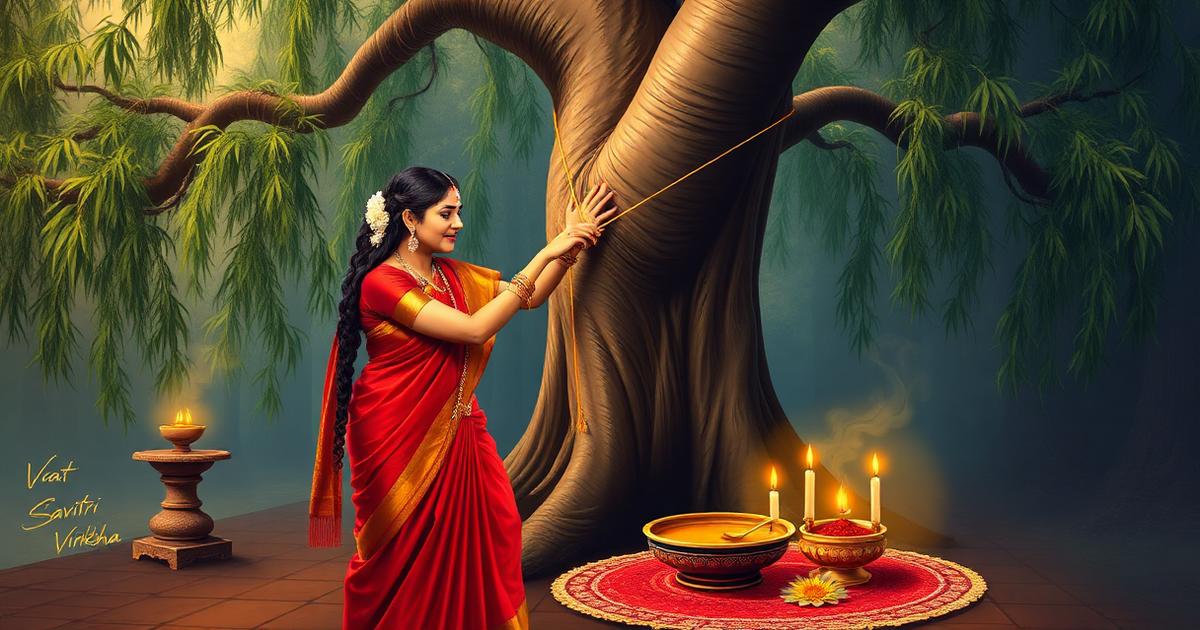
- Karma Yoga - the path of selfless action. You stay in the world, do your duty, but offer the fruits of every action to God. Suitable for warriors, householders, professionals, parents - anyone whose life is structured around responsibilities and obligations.
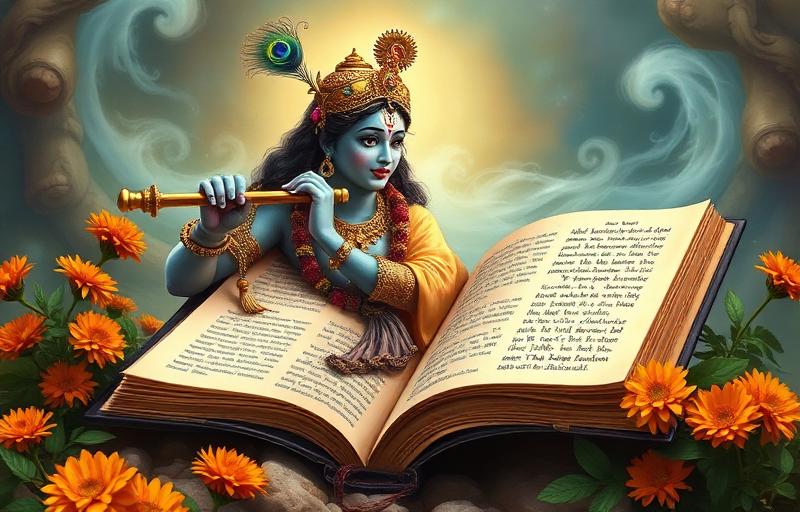
- Bhakti Yoga - the path of loving devotion. You see God as the supreme beloved, surrender to that love, and let the relationship purify everything else in your life. Suitable for emotional, devotional, relationship-oriented temperaments.
- Jnana Yoga - the path of discriminative knowledge. You inquire deeply into the nature of self and reality, distinguish the eternal from the temporary, and realise that you are not the body or mind but pure consciousness. Suitable for intellectual, introspective, analytical temperaments.
Krishna's revolutionary teaching was that NONE of these is superior. The classical Hindu tradition before the Gita had ranked Jnana Yoga as highest (the brahmin's path), Karma Yoga as middle (the kshatriya-vaishya's path), and Bhakti Yoga as lowest (the women-shudra path). Krishna inverts this hierarchy: the temperament-fit path is the best for that person; all three reach the goal.
In modern terms: Karma Yoga is for doers, Bhakti Yoga is for lovers, Jnana Yoga is for thinkers. Most people are a mix of all three but one tends to dominate. Identifying your dominant temperament - and then choosing the matching path as your primary practice while using the others as supports - is the practical key to spiritual progress without burnout.
A fourth path, Raja Yoga (the royal path of meditation and inner control, codified by Patanjali), is sometimes added but is usually considered the technical infrastructure underlying all three rather than a separate fourth option. Pranayama, asana, dhyana - these support whichever main path you choose.
Karma Yoga - The Path of Selfless Action
Krishna's first major teaching to Arjuna (Chapter 2) is Karma Yoga. The famous verse: Karmanyevadhikaraste maa phaleshu kadachana / maa karmaphalaheturbhuh maa te sango'stwakarmani - 'You have a right to action alone, never to its fruits. Do not let the fruit be your motive, nor cling to inaction.'
Core teaching: Action is unavoidable - even sitting still is a form of action (thought-action, breath-action). The question is not whether to act but how. Karma Yoga is the science of acting without attachment to results. You do the work because it is your dharma (duty, calling, role); you offer the fruit to God; you remain unaffected by success or failure. Over time, this practice purifies the mind because the ego cannot survive without attachment to outcomes. When the ego falls, the Self shines.
The four-step Karma Yoga practice: 1. Identify your dharma: Your dharma is what you genuinely should be doing at this point in life - based on your skills, your role (parent, child, professional), your stage of life, and the needs of those around you. A soldier's dharma is to fight; a teacher's is to teach; a parent's is to raise children. Don't take on someone else's dharma. 2. Do the action with full attention and excellence: Karma Yoga is not lazy work. The action must be done with skill (yogah karmasu kaushalam - 'yoga is excellence in action'). 3. Offer the result to God before starting: Mentally say 'O Lord, whatever fruits this action produces - success, failure, money, recognition, criticism - all of it is yours.' This is the spiritual move. Without it, the action is just work; with it, work becomes worship. 4. Accept the actual result without ego-disturbance: When the outcome arrives - good or bad - observe it without elation or despair. The same equanimity in success and failure is the sign of a settled Karma Yogi.
Daily-life examples:
- A doctor who treats every patient with full skill, charges fair fees, but does not get emotionally crushed if a patient dies despite best efforts.
- A mother who cooks the family's meals with love and care but does not become bitter if her children don't compliment her food.
- An entrepreneur who builds a startup with full commitment but does not lose her sense of self when the startup fails or is acquired for less than she hoped.
- A student who studies hard for exams but does not have a breakdown over the final grade.
Who is suited for Karma Yoga:
- People with major responsibilities they cannot drop (parents, breadwinners, professionals)
- People who feel calmest when they are doing something useful
- People whose minds get restless in pure meditation
- People who get suspicious of pure devotion as 'lazy'
- Practical, action-oriented temperaments
Karma Yoga is the most accessible of the three paths - anyone with a job or family is already doing the actions; the practice is to add the inner offering. No new time commitment, no special technique, no Sanskrit memorisation required. The shift is purely in the attitude carried through the day.
Bhakti Yoga - The Path of Loving Devotion
Bhakti Yoga is the path of the heart. Krishna teaches it most fully in Chapter 12 of the Gita, where he says: 'Those who fix their mind on Me, ever-devoted, full of supreme faith - them I consider most united with Me.' Throughout the Gita, Krishna uses 'My devotee' more often than any other category of seeker, suggesting Bhakti is his personal favorite among the three.
Core teaching: God is not an abstract principle to be intellectually understood; God is a person, a beloved, with whom you can have an intimate, emotional, transforming relationship. You do not realise God by analysing the world; you realise God by falling in love with him. The bhakta does not seek liberation as a state of consciousness - he seeks God himself. And in that seeking, the ego naturally dissolves, because love is the only force that can melt the ego without violence.
The 9-fold practice of Bhakti (Navadha Bhakti, from Srimad Bhagavatam 7.5.23): 1. Sravana - listening to God's stories, hymns, kirtans. 2. Kirtana - singing the divine names. 3. Smarana - constant remembrance. 4. Pada-sevana - serving at God's feet (offering, decorating, caring for the deity). 5. Archana - formal worship with offerings. 6. Vandana - bowing and prostrating. 7. Dasya - servant-attitude (acting as God's instrument). 8. Sakhya - friendship with God (Arjuna's mode). 9. Atma-nivedana - total self-surrender.
A bhakta practices one or more of these continuously. The simplest entry: pick any one of the nine that comes naturally and intensify it.
Daily-life examples:
- Mirabai, the Rajput princess, gave up her royal life and wandered as a singer of Krishna's songs. Her devotion did not require sitting in meditation; her every breath was already in love with him.
- Hanuman, who is the supreme example of dasya bhakti, lives only to serve Rama. He has no separate identity, no preferences of his own, no ambitions.
- A modern Krishna-devotee who plays bhajans every morning while making breakfast, mentally offers each meal to Krishna before eating, visits a temple every Friday, and has Krishna's image in her wallet - her entire day is woven with divine remembrance without disrupting her work and family life.
- A grandmother who reads the Hanuman Chalisa every evening for her grandchildren's wellbeing - her bhakti is her contribution to the family, more important than the formal puja she might also do.
Who is suited for Bhakti Yoga:
- Naturally emotional, relationship-oriented people
- People who feel God's presence rather than reason it out
- People who love music, poetry, beauty, stories
- People whose love-life has been transformative (positive or painful - both can be channeled to God)
- People who find meditation 'dry' and rituals 'mechanical' but feel alive when singing or storytelling
The transformation Bhakti brings: A mature bhakta begins to see God in every face, every situation, every joy and sorrow. The pain of separation from God (viraha) becomes more sacred than the bliss of mundane pleasures. Eventually, the duality of devotee and God dissolves into one continuous loving consciousness - which is liberation, reached through love rather than thought.
The most accessible single bhakti practice for modern life: mentally chant the name of your chosen deity (Krishna, Ram, Shiva, Devi, Hanuman, your ishta-devta) 108 times daily, with feeling. This 15-minute practice, sustained for a year, opens the heart in ways no philosophical study can match.
Jnana Yoga & How to Choose Your Path

JNANA YOGA - The Path of Knowledge
Krishna explains Jnana Yoga in Chapters 13-15 of the Gita, with the famous teaching of kshetra (the field/body) and kshetrajna (the knower of the field). Adi Shankara later developed this into a full philosophical system called Advaita Vedanta, which became the dominant intellectual framework of Hindu philosophy.
Core teaching: The world you experience - your body, mind, emotions, relationships, possessions, even your sense of being an individual - is an appearance, not the ultimate reality. The ultimate reality is Brahman, pure consciousness, which is identical with your innermost Self (Atman). Brahma satyam, jagat mithya, jivo brahmaiva naparah - 'Brahman is real, the world is illusory, the individual self is none other than Brahman.' Liberation is not achieved by adding anything to yourself; it is achieved by removing the misidentification with body and mind. You ARE already free - you just have to recognise it.
The four-step Jnana Yoga practice: 1. Sravana - hearing the teaching from a qualified teacher who has realised it (not just learned it from books). The Upanishads, Brahma Sutras and Bhagavad Gita are the canonical texts. 2. Manana - reflection. Use your reason to deeply analyse the teaching, raise objections, satisfy your doubts. Do not accept anything blindly; the path is not faith-based. 3. Nididhyasana - meditation on the truth. Once intellectually convinced, drop the analysis and rest in the direct experience of being pure awareness. 4. Anubhuti - direct realisation. The 'I am consciousness, not the body' becomes not a thought but a lived reality.
Sample inquiry questions for daily Jnana practice:
- 'I am aware of my thoughts. Therefore the awareness is not the thoughts. Who is this awarer?'
- 'My body has changed dramatically since childhood, but I remain. Therefore I am not the body. Who is the I that remains?'
- 'Even in deep dreamless sleep, when there are no thoughts, no body-feeling, no world - something witnesses the absence. Who is that?'
Sit with these questions for 20 minutes daily. Don't seek intellectual answers - let the question itself dissolve the assumption that you are limited.
Who is suited for Jnana Yoga:
- Naturally analytical, intellectual people
- People who feel ritual is hollow and emotion is shallow
- People who can sit alone for long periods without distraction
- People who have already exhausted worldly pursuits and find no satisfaction in them
- Mature seekers - Jnana is hardest as a starting path; usually it follows after Karma or Bhakti have purified the mind
HOW TO CHOOSE YOUR PATH:
A simple self-test. Imagine you have one free hour with no obligations. What would naturally feel like 'good time' to you?
- If you would help a neighbour, fix something around the house, write code, plan a project, organise your finances, or do something that creates tangible result - you are Karma Yoga dominant.
- If you would listen to bhajans, read a religious story, visit a temple, call your mother, journal about a relationship, or do anything emotionally connective - you are Bhakti Yoga dominant.
- If you would read philosophy, sit quietly with a notebook to think, watch a documentary about consciousness, debate ideas with a friend, or do anything contemplative - you are Jnana Yoga dominant.
Most people are a mix. Identify the strongest, make it your primary path (60-70% of practice time), use the others as supports. Example: Someone who is 60% Karma + 30% Bhakti + 10% Jnana should structure their spiritual life around their work as offering to God (Karma primary), with a daily bhakti routine (chanting before bed, temple on Friday - Bhakti support), and occasional contemplation of consciousness questions (a Sunday-morning hour of Jnana for depth).
The unity of the three at the highest level: At advanced stages, the three paths converge. The mature Karma Yogi develops natural devotion to the One whose work he is doing. The mature Bhakta develops natural wisdom because his love opens the eye to reality. The mature Jnani develops natural action and natural love because his realisation removes the artificial separation between Self and world. So you cannot ultimately go wrong by picking any one of the three sincerely - all paths complete each other when traveled to the end.
Frequently Asked Questions
Can I follow all three yogas simultaneously?+
Yes, in fact most mature practitioners do - but with clear hierarchy. Choose ONE as primary (the one matching your dominant temperament) and let it occupy 60-70% of your spiritual time and attention. Use the other two as supports. A primarily-Karma-Yoga householder may still do daily Bhakti chanting (15 min) and weekly Jnana reading (1 hour Sunday). A primarily-Bhakti devotee may still do Karma Yoga during work hours and occasional Jnana contemplation. The danger is doing all three with equal intensity - your spiritual life becomes scattered and shallow. Depth in one with light support from others is the optimal structure.
I am atheist - can I still do Karma or Jnana yoga without belief in God?+
Yes - Krishna himself says (Gita 9.23): 'Even those who worship other gods worship me, knowingly or unknowingly.' The 'God' in Karma Yoga's offering is not necessarily a personalised deity; it can be the universe, the highest good, the impersonal absolute, your future better self, all humanity, future generations - any 'something larger than your ego'. The technical work is identical: do the action, release the fruit to the larger, observe equanimity. Atheist Jnana Yoga is essentially what most secular meditation traditions teach - observe the mind, recognise that you are not your thoughts, discover the witnessing awareness. Bhakti Yoga is the one that genuinely requires belief in a divine person; if you cannot manufacture that belief, the other two paths are more honest for you.
Which yoga did Krishna actually consider best?+
Krishna's stated position is that all three lead to the same goal, but his personal preference (as revealed in multiple verses) is Bhakti. He explicitly says (Gita 18.66): 'Abandon all dharmas and surrender to me alone' - a Bhakti instruction. He says (Gita 9.22) that those who think of him constantly receive whatever they need without asking - Bhakti's promise. However, he equally praises Karma Yoga as 'easier and safer than Jnana Yoga in this age' (Gita 5.2). He concludes Jnana Yoga sections by noting Bhakti makes it easier. So the order of his explicit preference seems to be: Bhakti as ultimate, Karma as most practical for most, Jnana as highest for the rare temperament. But this is preference, not ranking - all three are valid and effective.
How long before I see results from following one of these paths?+
Internal results (calmer mind, less reactivity, more meaningful days) appear within 30-90 days of sincere daily practice. Visible life-changes (better relationships, easier work flow, fewer dramatic incidents) appear within 6-12 months. Major transformation (a clear sense of being on a meaningful path, ability to handle previously overwhelming challenges, periodic experiences of grace) appears within 2-5 years. Full liberation as described in the Gita (sthitaprajna, abiding peace, complete dissolution of fear of death) typically takes a lifetime or more. The reason most people give up before results: they want major transformation in 30 days. The reason the paths work for those who persist: they were designed for lifetime practice, not quick fixes. Choose a path you can sustain for decades, not one you can sprint for weeks.
About the author
Pandit Ravindra Sharma · Vedic Rituals & Bhakti, 22+ years
Pandit Ravindra is the Vandnaa editorial team's resident specialist on aarti, chalisa, and daily devotion. He has performed home and temple pujas across Varanasi and Delhi for over two decades and contributes the bhakti-focused articles on this site.
Meet the Vandnaa editorial team →