Who Is the Velichappad?
In many temples across Kerala, particularly those dedicated to the Devi in her various forms, a designated figure known as the Velichappad serves a distinctive ritual role, acting as a traditional oracle through whom devotees believe the deity communicates. The word Velichappad is often understood to mean one who reveals light, reflecting the role's function as a channel between devotees and the divine.
A Velichappad is typically recognisable by a striking, traditional appearance, dressed in red with long hair sometimes left loose, and carrying a curved ceremonial sword known as a val, an attire that sets this figure apart from ordinary temple staff.
The Velichappad's Role in Temple Life
During specific rituals, especially at festivals connected to Devi worship such as Bharani, the Velichappad enters an ecstatic, trance-like state, believed by devotees to be a moment of possession by the temple deity. In this state, the Velichappad may dance, whirl the ceremonial sword and speak words that devotees interpret as coming directly from the deity, offering blessings or guidance in response to their concerns.
This is generally not a paid or casual position but a role tied to specific ritual occasions, often hereditary and maintained across generations within particular families connected closely to a temple's history and worship.
Why the Velichappad Tradition Matters to Devotees
The Velichappad tradition holds a distinctive place in Kerala's devotional culture for several reasons.
- It gives devotees a direct, personal channel through which to seek the deity's guidance during moments of difficulty
- It is central to festivals such as Bharani and other major Devi celebrations across the state
- The hereditary nature of the role connects specific families to a temple's history across many generations
- It reflects a form of Kerala temple culture built on direct, felt experience of the divine rather than formal ritual alone
Where the Velichappad Tradition Is Found
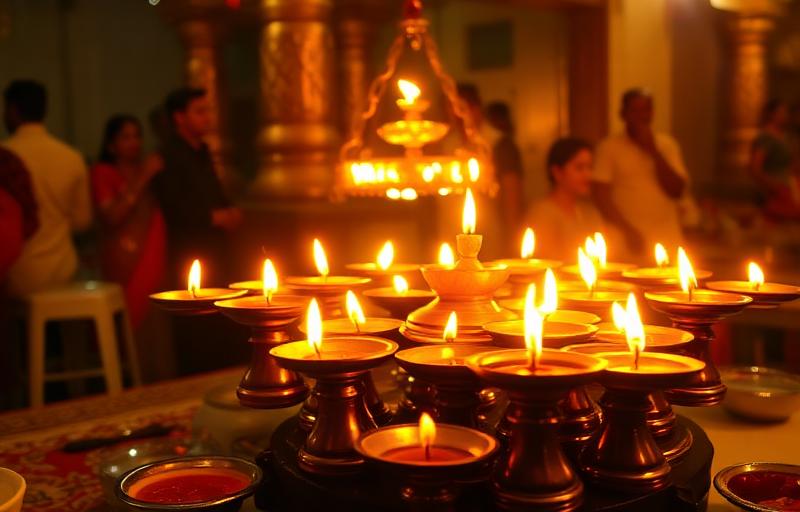
The tradition is especially prominent at Devi and Bhadrakali temples across Kerala, with Kodungallur Bhagavathy Temple among the best-known settings where the Velichappad plays a central role, particularly during the Bharani festival. Related oracle functions also appear within North Kerala's Theyyam tradition, where the possessed performer similarly offers guidance to devotees.
Across these different settings, the underlying belief remains consistent, that in specific ritual moments, a chosen human vessel can become a direct channel for the deity's voice.
How Devotees Approach a Velichappad
Devotees typically approach a Velichappad with the same respect and humility they would bring before the deity's own idol, often waiting in line, offering respects and posing questions about family or personal matters before receiving words understood as guidance.
Within Kerala's devotional framework, this tradition is understood as the deity's own voice speaking through a chosen vessel during sacred ritual, and is approached as a matter of faith rather than as a system of fortune-telling or prediction.
The Takeaway
The Velichappad tradition reminds devotees that Kerala's temple culture has long made room for the divine to speak directly and personally, through ritual, trance and a chosen human vessel, alongside more familiar forms of worship.
Approaching a Velichappad is an act of faith, met with the same sincerity and reverence one would bring to any sacred encounter, never as a casual curiosity.
Common Questions From Devotees
What does the word Velichappad mean?+
Velichappad is generally understood to mean one who reveals light, describing the role's function as a channel between devotees and the deity during sacred ritual.
Is the Velichappad a permanent temple position?+
It is generally tied to specific ritual occasions rather than being a daily role, and is often hereditary, passed down within particular families connected to a temple across generations.
At which temples is the Velichappad tradition most prominent?+
The tradition is especially prominent at Devi and Bhadrakali temples across Kerala, with Kodungallur Bhagavathy Temple among the best-known settings during its annual Bharani festival.
About the author
Pandit Ravindra Sharma · Vedic Rituals & Bhakti, 22+ years
Pandit Ravindra is the Vandnaa editorial team's resident specialist on aarti, chalisa, and daily devotion. He has performed home and temple pujas across Varanasi and Delhi for over two decades and contributes the bhakti-focused articles on this site.
Meet the Vandnaa editorial team →