Who Is Lalita + Why 1000 Names Matter
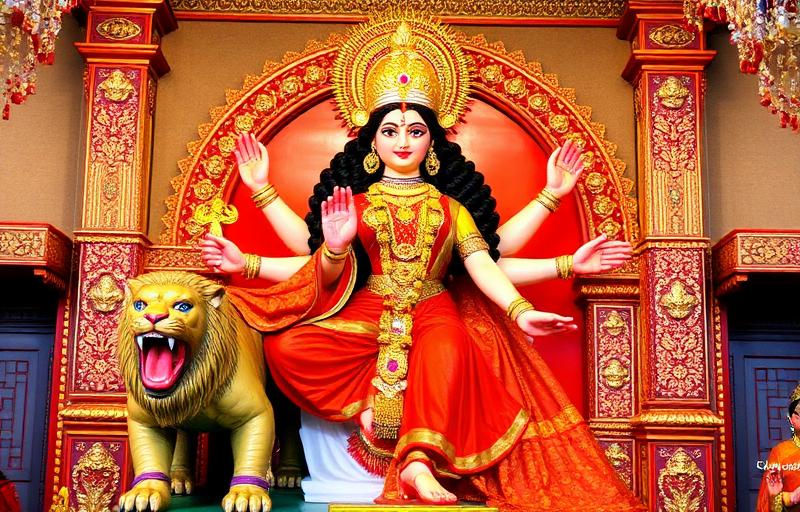
Goddess Lalita Tripurasundari:
Lalita means 'she who plays' - the goddess who plays with the universe as her divine sport (leela). Tripurasundari means 'the beautiful one of the three cities (tripura)' - the three worlds, three states of consciousness, three gunas, or the three aspects of cosmic creation.
Lalita is the central deity of the Sri Vidya tradition - the most ancient and esoteric path of goddess worship in Hinduism. She is identified with:
- Adi Shakti - the primordial feminine cosmic power.
- Para Brahman - the absolute supreme reality in feminine form.
- Shiva's eternal consort - inseparable from Shiva.
- The source of Lakshmi, Saraswati, Durga - all goddesses emerge from her.
- The deity of Sri Chakra - the most powerful yantra in Hindu tradition.
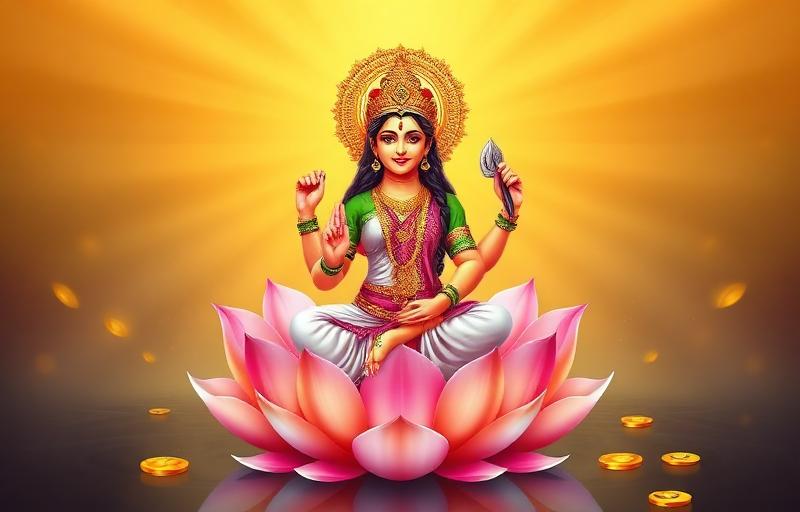
Her appearance and symbols:
- Body color: ruby red (representing love, passion, life-force).
- Four arms holding: sugarcane bow, five-flower arrows, noose (pasha), goad (ankusha).
- Seated on a lotus throne with Brahma, Vishnu, Rudra, Maheshvara as the four legs (gods are her support, she is supreme).
- Crown studded with jewels.
- Smiling, blissful face.
- Eternally young.
The 1000 names (Sahasranama):
The Lalita Sahasranama is contained in the Brahmanda Purana and is recited daily by Sri Vidya upasakas (worshippers). The 1000 names are organized as:
- Names 1-25: Describe her physical form (Sindurarunavigraham - red as sindoor; Trinayanaim - three-eyed).
- Names 26-100: Describe her divine attributes (compassion, fearlessness, omniscience).
- Names 101-300: Describe her cosmic functions (creation, sustenance, dissolution).
- Names 301-500: Tantric and yogic dimensions (chakras, mantras, yantras).
- Names 501-700: Her victory over demons (especially Bhandasura).
- Names 701-900: Philosophical aspects (Brahman, Maya, Lila).
- Names 901-1000: Praise, salutation, and the supreme reality.
Why 1000 names specifically:
In Hindu numerology, 1000 = completeness. While there are sahasranamas for many deities (Vishnu Sahasranama, Shiva Sahasranama), Lalita Sahasranama is considered the most comprehensive because:
1. She is the totality. Other deities are aspects of her supreme being. 2. The 1000 names span all categories - form, attributes, cosmic functions, tantric esoterism, philosophical absolutes. No dimension is missing. 3. Each name is a mantra. Unlike praise poems, each name has been composed as a stand-alone mantra capable of independent worship. 4. The structure reveals the cosmos. Reading all 1000 names in order is a journey through the entire spiritual landscape - from form to formless, from manifest to unmanifest.
Famous opening name and meaning:
Name 1: Sri Mata - The Divine Mother. The first name establishes her relationship with all beings: she is mother before she is anything else.
Name 2: Sri Mahārājñī - The Great Queen. She rules all that exists.
Name 3: Srimat-Simhāsaneśvarī - The Empress of the Lion Throne. Her power is grounded yet majestic.
Name 4: Chid-agni-kunda-sambhūta - Born from the fire-pit of consciousness. Her origin is pure consciousness itself.
Name 5: Deva-kārya-samudyatā - Manifesting for the welfare of the gods. She incarnates not for her own sake but for cosmic service.
Who should chant Lalita Sahasranama:
- Women of all life stages - it's the supreme prayer for feminine power.
- Spiritual seekers wanting deep transformation.
- People with major life challenges - financial, relational, health.
- Those seeking complete spiritual evolution.
- Sri Vidya initiates as part of their daily practice.
- Devotees of Durga, Lakshmi, Saraswati - Lalita encompasses all three.
- Couples seeking children (specifically female children, or healthy children).
- Anyone wanting beauty, wisdom, prosperity simultaneously.
Daily Chanting Vidhi + Transformative Benefits
Daily Vidhi - Step-by-Step:
Best timing:
- Fridays - Goddess's preferred day.
- Full moon (Purnima) - extra powerful.
- Tuesdays (Mangalwar) - also auspicious.
- Time of day: Sunrise to 10 AM is ideal; alternatively, sunset to 8 PM.
- Special days: Navratri (9 days), Lalita Jayanti (Magha Shukla Purnima), Akshaya Tritiya.
Pre-recitation preparation: 1. Take bath, wear clean clothes (preferably red or pink). 2. Sit on a clean mat facing east. 3. Place a picture/yantra of Lalita Tripurasundari. 4. Light a ghee lamp. 5. Light dhoop (sandalwood preferred). 6. Offer red flowers (especially red hibiscus or lotus). 7. Offer kumkum (red sindoor) at the deity's feet. 8. Take Sankalpa (resolution) stating your intention.
Recitation methods:
Method 1 - Full 1000 names (Pradhana paath):
- Read all 1000 names in proper Sanskrit order.
- Takes approximately 30-45 minutes.
- Do once daily for deep transformation.
- Best for serious seekers and Sri Vidya upasakas.
Method 2 - Section method:
- Recite 100 names per day.
- Complete all 1000 in 10 days.
- Restart on day 11.
- Good for those with limited time but commitment.
Method 3 - Highlights method:
- Recite famous shlokas only (about 20-30 names).
- Takes 10-15 minutes.
- Good for beginners and busy people.
- Build up to full recitation gradually.
Method 4 - Selective namesnames:
- Choose names matching your current need.
- Chant 108 times each.
- Example: 'Sri Mata' for motherly love and family harmony; 'Sarva-Mangalā' for general auspiciousness.
Post-recitation: 1. Offer aarti with camphor. 2. Sit silently 5-10 minutes feeling the goddess's presence. 3. Take parikrama (circumambulation) of the deity 3 times if possible. 4. Distribute prasad (sweets, fruits) to family. 5. Offer red flowers to a married woman or feed a girl child (Kanya Pujan).
Transformative Benefits:
Material benefits: 1. Wealth and prosperity - Lalita Tripurasundari includes Lakshmi's energies. Daily recitation removes financial obstacles. 2. Beauty and grace - she is the embodiment of cosmic beauty. Devotees report skin glow, magnetic presence, charisma. 3. Marital harmony - she is Shiva's beloved. Honors the relationship between spouses. 4. Fertility and progeny - especially for couples wanting healthy children. 5. Career success - removes professional obstacles and brings recognition.
Mental/emotional benefits: 1. Removal of fear and anxiety - her supreme power dissolves all fears. 2. Increased confidence - women especially feel empowered. 3. Decision-making clarity - she is the goddess of wisdom. 4. Emotional stability - moods balance, depression lifts. 5. Improved relationships - love flows more easily.
Spiritual benefits: 1. Awakening of inner shakti (kundalini). 2. Removal of karmic patterns from past lives. 3. Direct experience of divine feminine - many devotees report visions or strong presence. 4. Progress toward moksha - the final goal of human life. 5. Mastery over the mind - mind becomes a tool, not a tyrant.
Special results from sustained practice (41+ days):
Daily recitation for 41 days (mandala period) creates measurable shifts. For 108 days, profound transformation. For 1 year (mandala-vatsara), one becomes 'Lalita-bhakta' - the goddess's recognized devotee, with continuous grace.
Specific name-based intentions:
If seeking specific outcomes, recite particular names 108 times daily:
- Wealth: Name 'Sri Mahalakshmi' (within the 1000) - 108x daily.
- Beauty: 'Lalita-rupa-sundari' - 108x.
- Removing enemies: 'Mahishasura-mardini' (also one of her names) - 108x.
- Spiritual awakening: 'Kundalini' (yes, this is one of her names) - 108x.
- Removing obstacles: 'Vighnesh-janani' - 108x.
- Children: 'Putra-prada' - 108x.
- Marriage: 'Sumangali' - 108x.
Frequently Asked Questions
Is Lalita Sahasranama too advanced for beginners?+
Not at all - though it has tantric depth, the surface practice is accessible to anyone. Beginners can: (1) Start with just reading 1 page (about 50-100 names) daily. (2) Use English transliteration if Sanskrit is difficult. (3) Focus on the famous shlokas first. (4) Don't worry about understanding every meaning - the sound vibration alone is transformative. (5) Build up over months from 100 names to 1000. Within 6-12 months of daily practice, you'll naturally know meanings of many names. Spiritual texts say even one sincere recitation gives benefits; mastery comes from consistency, not initial perfection.
Can men chant Lalita Sahasranama or is it exclusively for women?+
Men can absolutely chant - and many of the greatest Lalita devotees historically have been male sages. Sri Vidya tradition has produced renowned male masters - Adi Shankaracharya himself was a Lalita devotee. The Soundarya Lahari (cosmic beauty hymn) by Adi Shankara is a famous Lalita praise. Modern masters like Swami Chinmayananda, Pujya Swami Chidanand Saraswati have promoted Lalita worship. Men benefit specifically from: balancing their inner feminine, gentleness, intuition, creativity, and emotional intelligence. The Divine Mother loves all her children regardless of gender.
Is special initiation needed for Lalita Sahasranama?+
No - Lalita Sahasranama is accessible without initiation. However, Sri Vidya UPASANA (formal worship with Sri Chakra yantra) does require initiation from an authentic Guru. The two are different: (1) Lalita Sahasranama recitation: open to all, no initiation needed. (2) Sri Vidya sadhana with yantra puja, complex mantras, kundalini work: requires Guru initiation. Most devotees recite Sahasranama for years before considering formal Sri Vidya initiation. Start where you are - the goddess herself will guide you to a Guru when you're ready.
What if I can't pronounce Sanskrit properly?+
Devotion overrides pronunciation imperfection. The Divine Mother is THE mother - she understands her children's babble. Practical tips: (1) Listen to authoritative recordings (M.S. Subbulakshmi, Vidya Bhushan Bharati versions are excellent). (2) Chant along with audio for first few weeks. (3) Read translation in your native language to feel meanings. (4) Don't stop chanting due to pronunciation anxiety - that's the bigger spiritual loss. (5) Pronunciation improves naturally over months of daily practice. (6) The deeper purpose is opening the heart, not perfect phonetics.
About the author
Acharya Vinaya Kapoor · M.A. Sanskrit, Mantra & Stotra Studies
Acharya Vinaya holds an M.A. in Sanskrit from Banaras Hindu University and writes the mantra and stotra commentary on Vandnaa. Her focus is on accurate pronunciation, traditional context, and helping modern readers connect with classical texts.
Meet the Vandnaa editorial team →